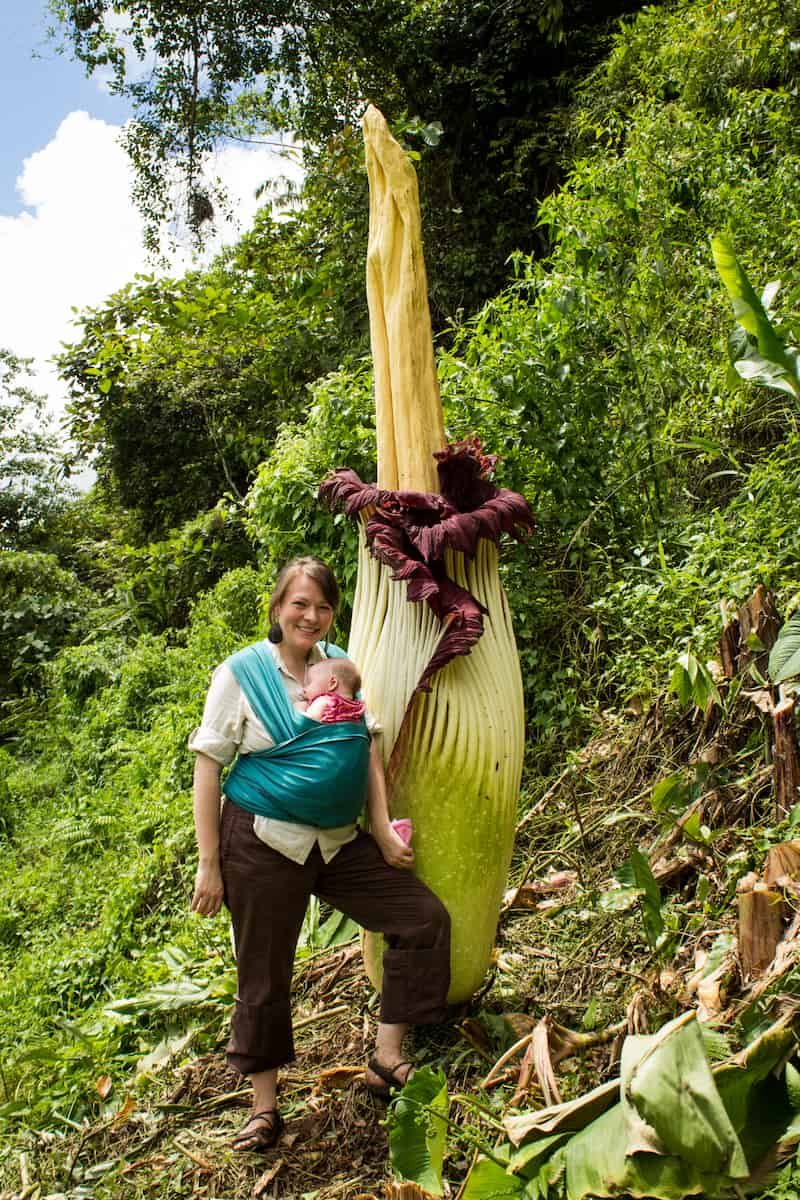

If you were at Kew Gardens this week, you would have had the chance to see, and smell, the Titan Arum, Amorphophallus titanum, also known as the Corpse Flower. Some people say that it’s the biggest flower in the world. They’re wrong, that would be Rafflesia tuan-mudae, but it does have the largest unbranched inflorescence in the world, which means that it’s not an unreasonable mistake to make. But there’s a lot more to the Titan Arum than its size.
Amorphophallus titanum is endemic to Sumatra, meaning you’ll find wild Titan Arums in Sumatra and nowhere else. You’ll find it on hillsides, rather than the flat, which suggests it likes drainage. It sits in sandy, humic to calcareous soils in open, young, secondary tropical forest, according to Yudaputra and colleagues (free paper link).
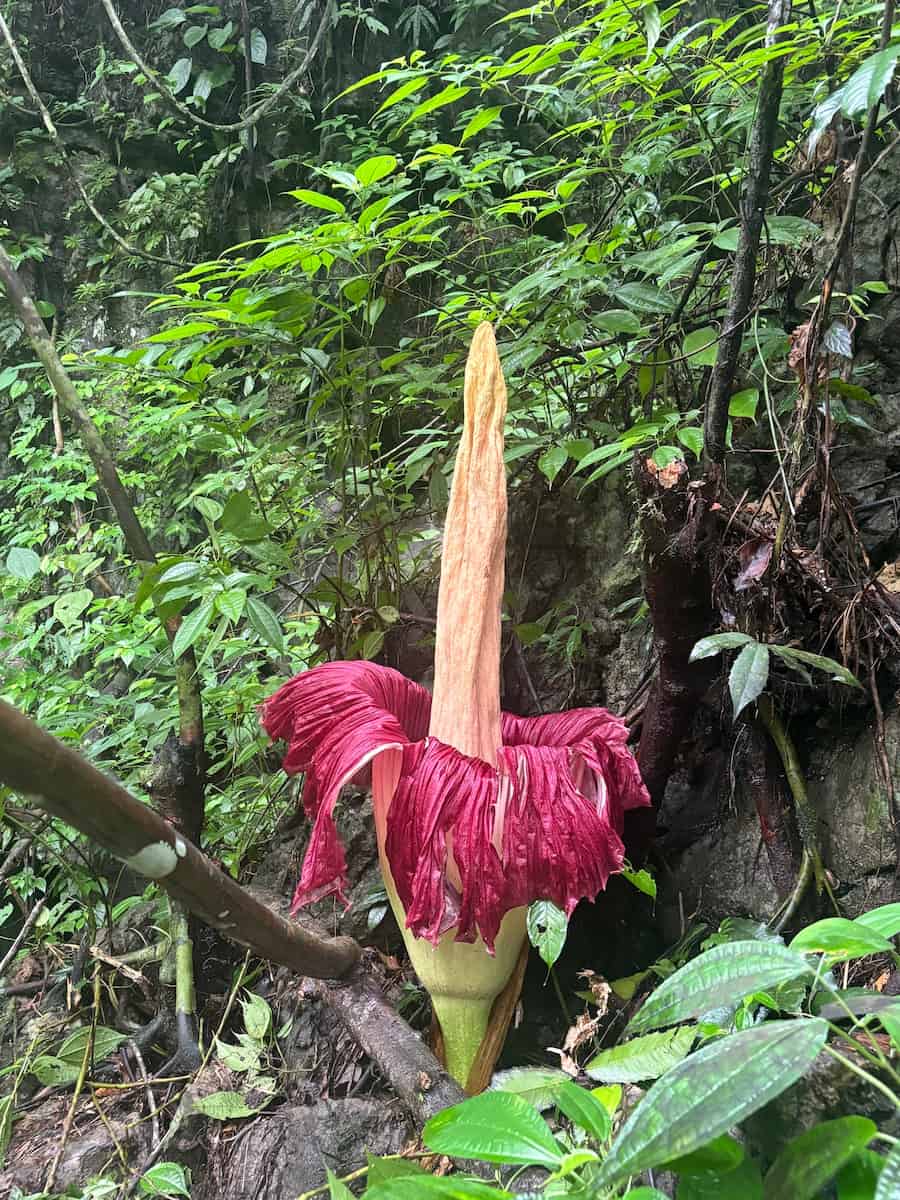
It’s hard to be sure how many of these plants there are to see. It’s listed as Endangered on the IUCN Red list. It’s losing habitat to palm oil plantations, like many species in southeast Asia. Also, finding a plant might be difficult as it can spend between 2 and 15 months dormant as a tuber resting in the soil. It’s this tuber that’s the key to Amorphophallus titanum’s success.
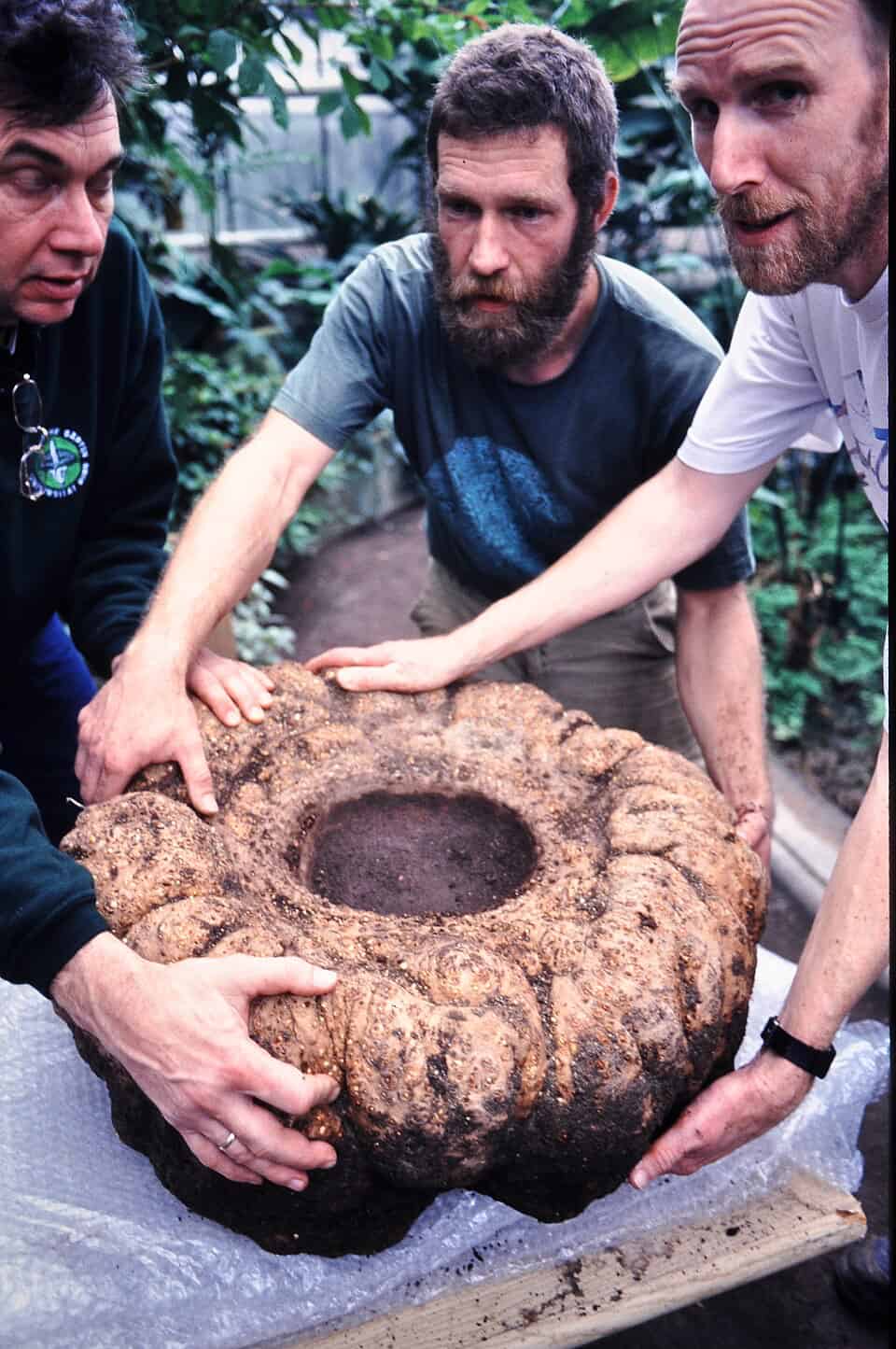
Amorphophallus titanum spends most of its life growing and managing a tuber to store its energy. An example of a tuber is a potato, but it’s not a very good example in this case because an A. titanum tuber can grow to a massive 100kg. The Titan Arum spends much of its time putting up one leaf to charge this tuber with energy. The single leaf is huge and oddly shaped, so that you could mistake it for a small tree. After a while this leaf will die back, and the tuber has a rest before pushing up another leaf. This continues until the tuber is mature. Then instead of a leaf it may choose to flower.
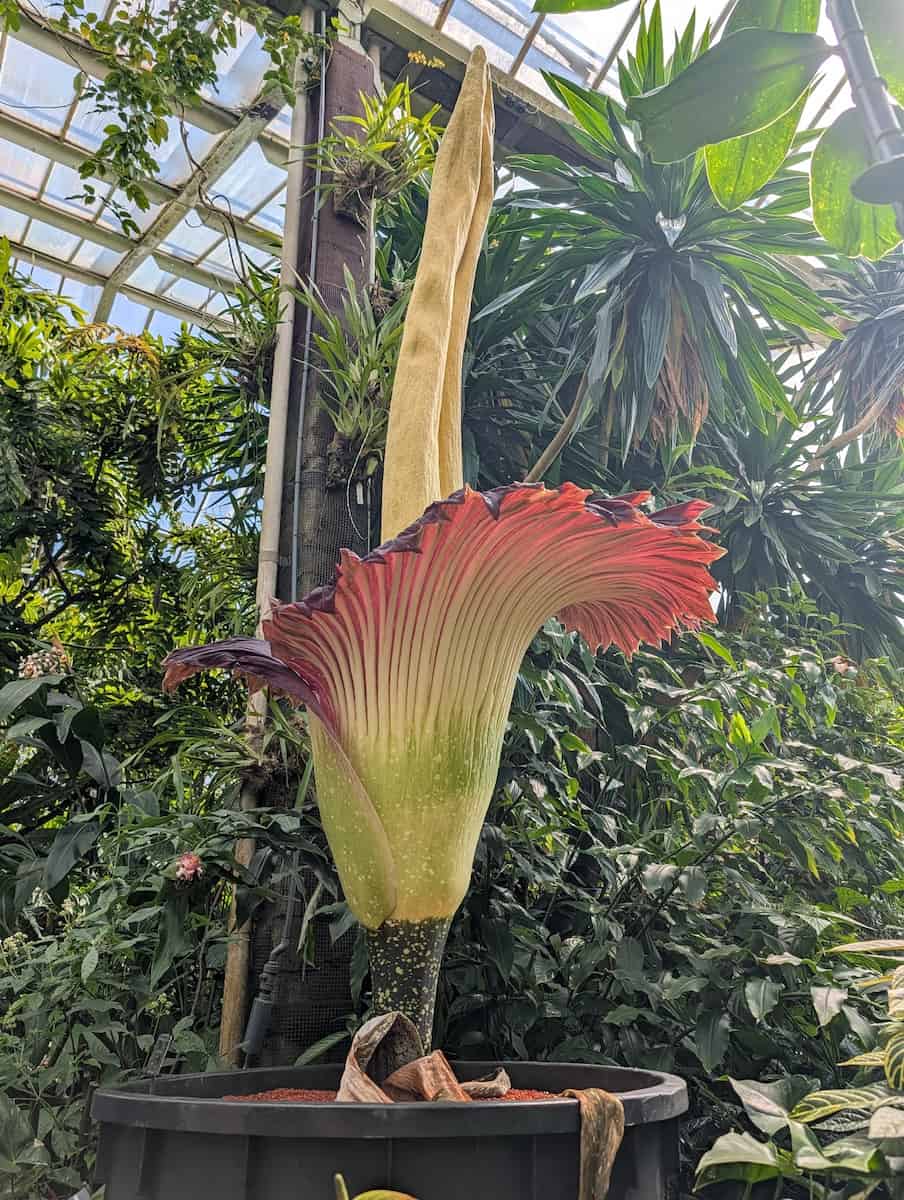
The Amorphophallus titanum flower is an odd sight, which explains the genus name Amorpho-, mis-shapen, and phallus, penis. It’s said the name Titan Arum was invented by David Attenborough, so he could talk about the plant on family television. Technically you don’t see a flower, what you see is a spadix and spathe. A spadix is a fleshy stem. It grows up with the actual flowers being hidden in the base of the spadix enclosed by the spathe. The spathe is a specialised leaf that surrounds the spadix and acts as a giant petal. When A. titanum flowers, what you’re looking at is the combination of spathe and spadix, unless you’re at a botanic garden where someone has helpfully cut away some of the spathe so you get to see the flowers inside.
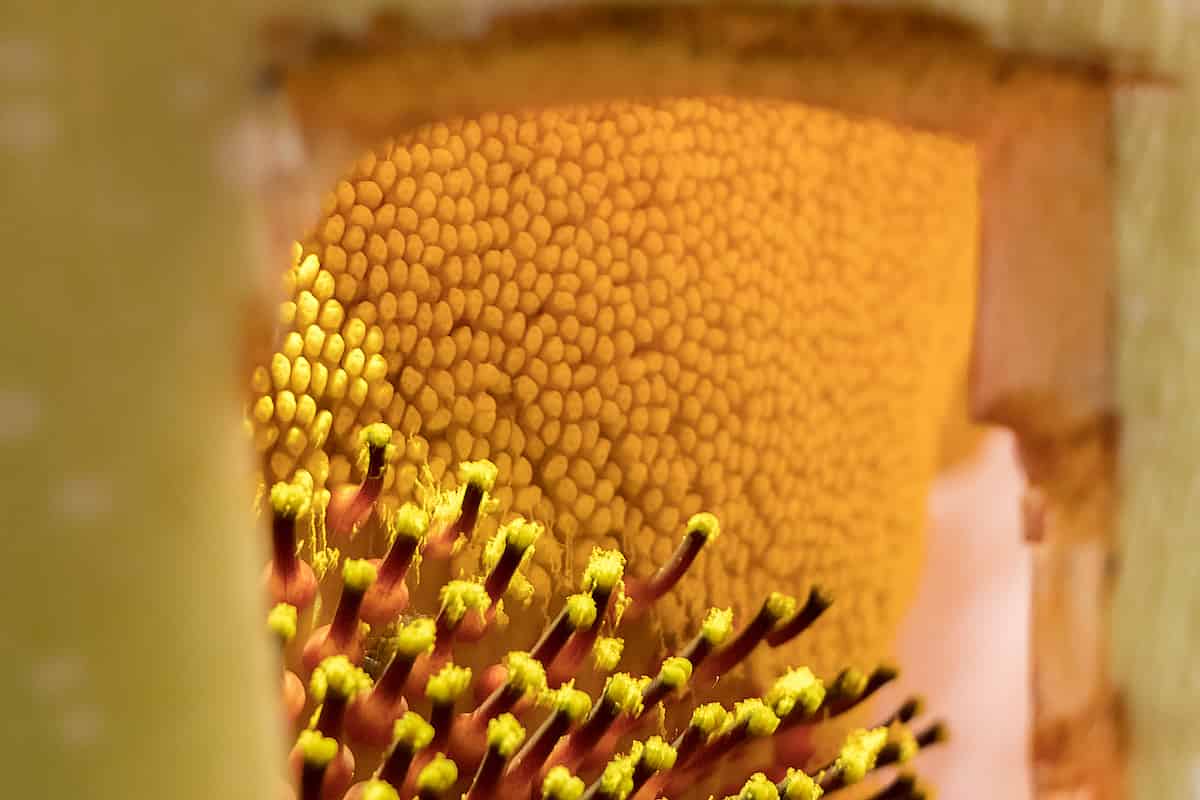
If the spadix can be over two metres tall, how big is the pollinator? Pretty small. The plant’s pollinators in the wild haven’t been studied extensively recently, but it seems to be beetles, flies and possibly a few bees. The size of the spadix helps not as a place to receive pollinators, but as a beacon. The spadix heats up, when the plant is ready to bloom. It gets hot, around 36 degrees centigrade or injured mammal temperature. This helps lift the plant’s perfume into the air. In this case the perfume is of carrion or rotting flesh, to help attract flies and beetles to what smells like a feast.
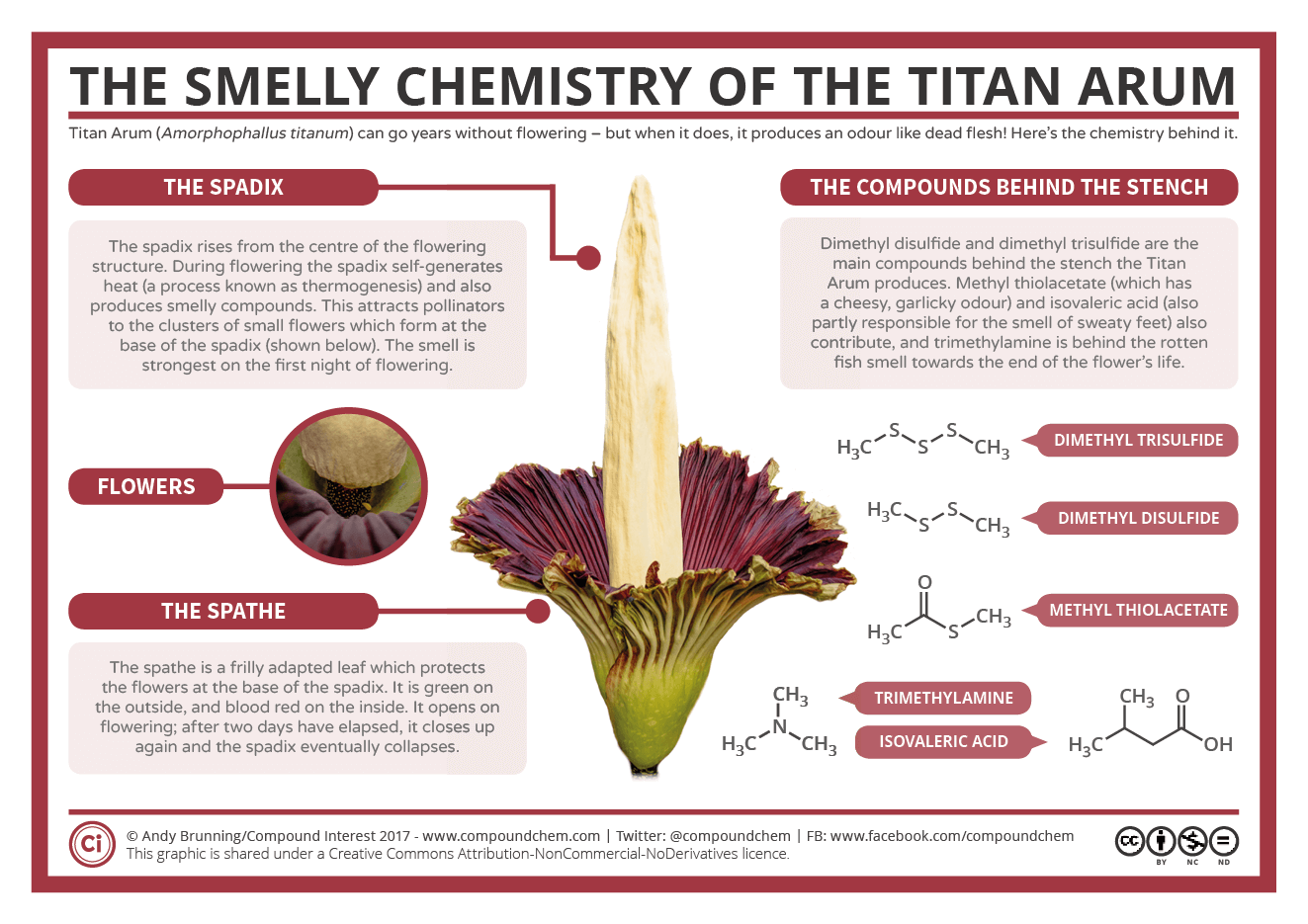
Titan Arum flowers for just two or three days. With so much effort compressed into so few hours, it’s important for the plant that it maximises its chances of sex with other plants instead of self-pollinating. It separates its male and female flowers with timing. On the first night, the female flowers open, so they can only receive pollen from outside. Once inside, pollinators are trapped. For the second night, it’s the male flowers that open, and these are brushed by pollinators as they leave the plant, looking for new meat or maybe another Titan Arum. If they didn’t have this separation in time, the plants could self-pollinate, so this timing is crucial to preventing inbreeding.
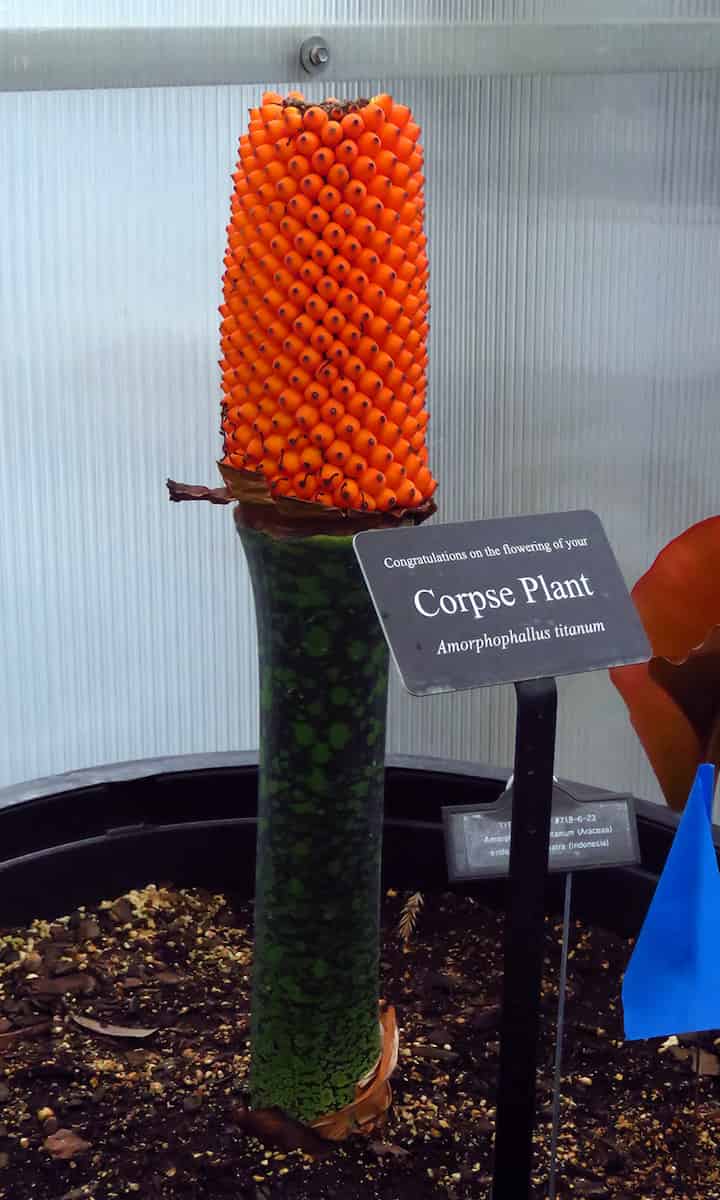
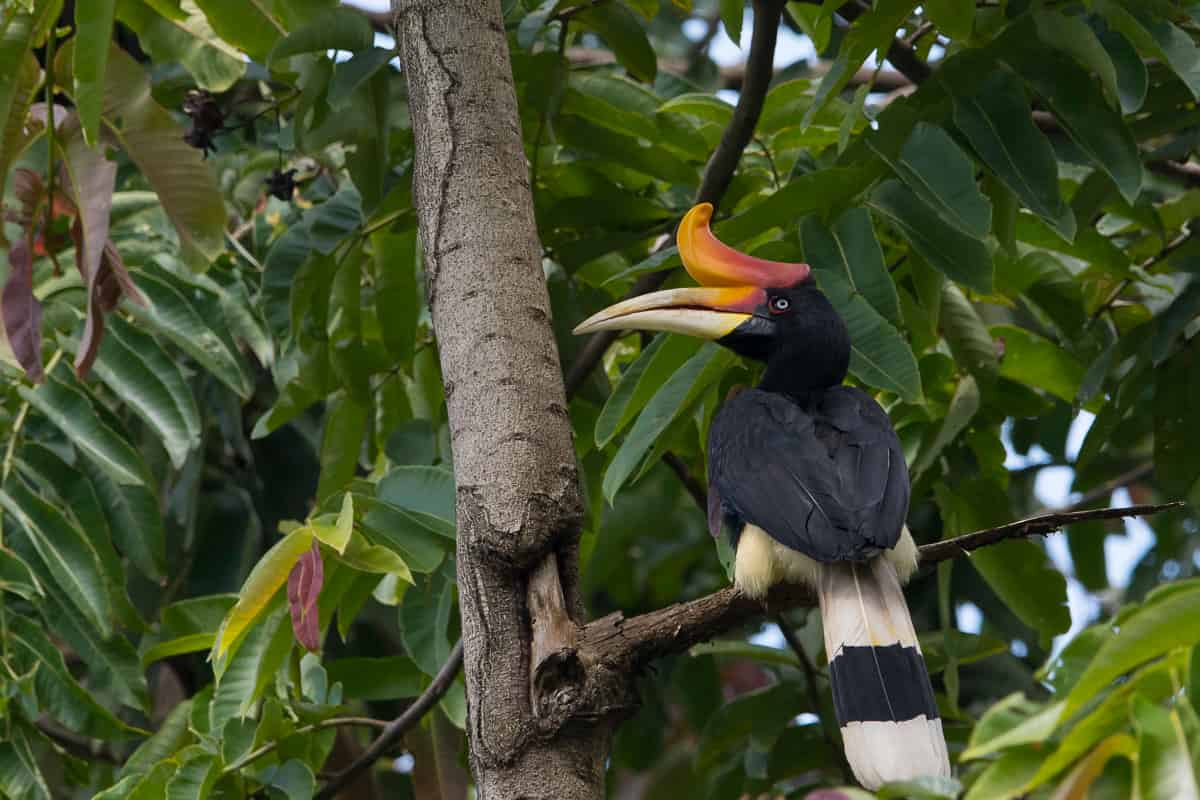
Once the pollinators have left, it’s time to develop the fruits. The ovaries of the flowers swell into bright red-orange berries. It is a bad idea to eat them, as they contain calcium oxalate crystals, which will do bad things to your throat, unless you’re a rhinoceros hornbill, Buceros rhinoceros. These birds eat the berries and, when they’ve passed through the bird’s gut, they’re released to grow somewhere new.
If you want to see this plant for yourself, then timing and location matter. It’s thought that just 1000 plants survive in the wild and, for most of us, Sumatra is a long way to go on the off chance one is blooming. The bloom at Kew is the latest of a series of successes for botanical gardens around the world that started with the first flowering of a Titan Arum in captivity, at Kew, in 1889. Now, there are Titan Arums in over 100 botanic gardens around the world. In theory, the opportunity exists for scientists to exchange material to help conserve genetic diversity for the species. At the moment, this isn’t happening. It may be a while before there’s restoration of the plant to the hills of Sumatra.
Cover image: Amorphophallus titanum by Wild Sumatra / iNaturalist CC BY-NC




_Titan_Arum,_tuber_117_kg,_May_2006,_Foto_%C2%A9_W._Barthlott,_Bot.Gard._Bonn.jpg?ref=botany.one)