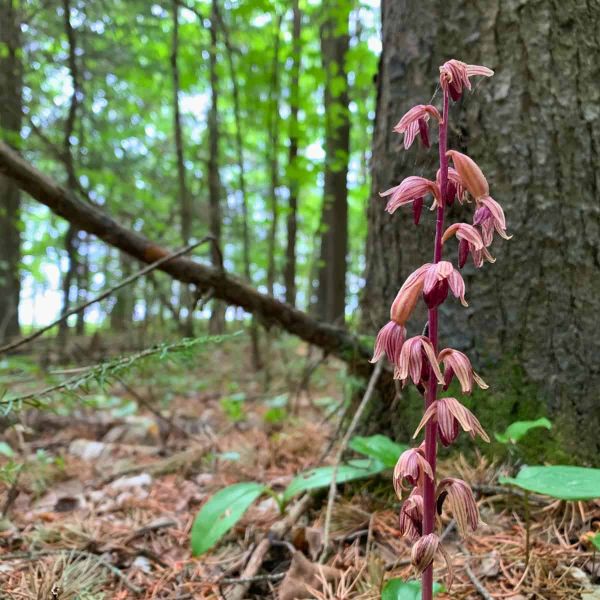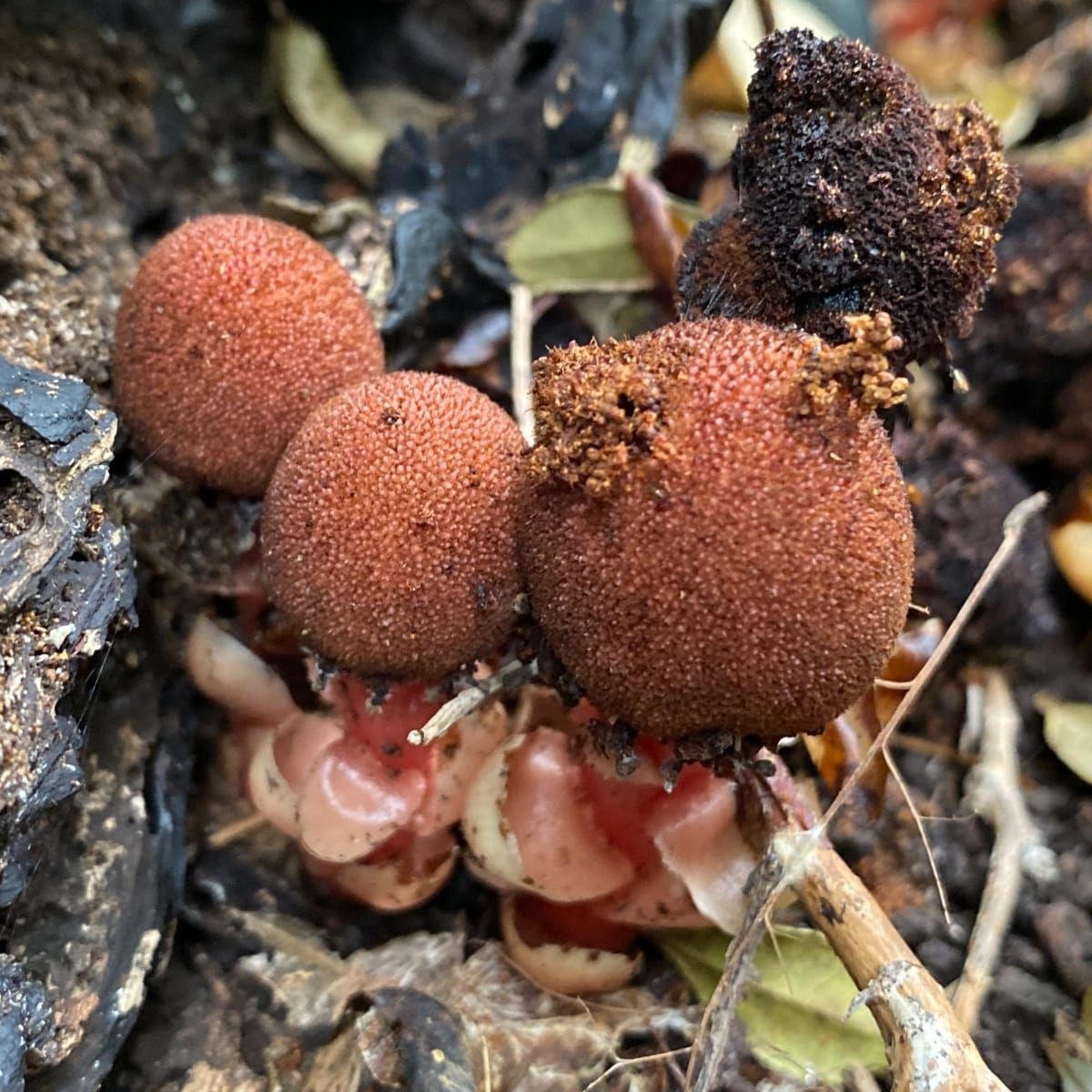

Species from the genus Balanophora are anything but the typical plants we are used to. They do not photosynthesise, they parasitise the roots of other plants, and they can be easily mistaken for fungi. And their unusual biology does not stop at their appearance: they also interact with animals that we wouldn’t normally associate with plants.
Seed dispersal is the perfect example. Some Balanophora species rely on remarkably eccentric dispersers. In Balanophora tobiracola, for instance, seeds are transported by cockroaches and crickets, while ants do the job for Balanophora subcupularis. The key seems to lie in how easy it is to reach and access the seed within the fruits. In the case of Balanophora tobiracola, the fruits are firmly attached, so cockroaches and crickets can disperse the seeds because their strong mandibles allow them to detach them. In contrast, in Balanophora subcupularis, the outer fruit layer detaches more easily, making dispersal by ants possible.
For Balanophora fungosa, however, the story is less clear. Previous studies suggested that seeds simply fall close to the parent plant under the force of gravity. Yet because its fruit resembles those of Balanophora subcupularis, researchers suggest that ants might also play a role. However, a recent study by Dr Kenji Suetsugu revealed another plot twist worthy of Balanophora.
Instead of ants, Suetsugu found a rather more unexpected pair of visitors: the land hermit crab Coenobita brevimanus and the cockroach Periplaneta australasiae, both of which were observed feeding on the fruits and the club-shaped structures of Balanophora fungosa. The hermit crab was particularly surprising. Although Coenobita brevimanus is an omnivore known to eat seeds, fruits, faeces, carrion, seedlings, and stranded animals, this is the first record of this species dispersing seeds internally and externally. So, how did Suetsugu discover this?
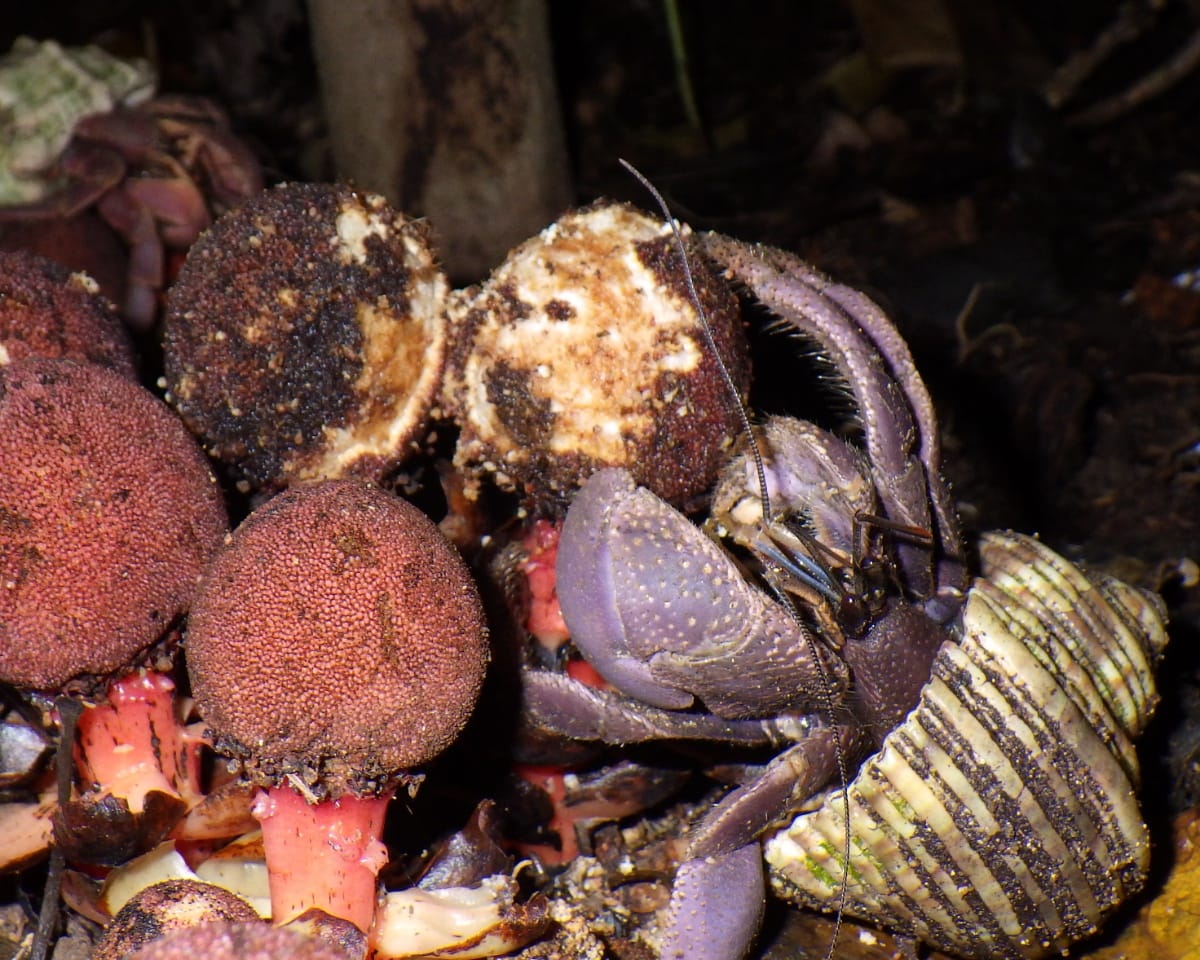
Suetsugu documented these interactions through direct observations and time-lapse photography on Ishigaki Island, Japan. Multiple animals sometimes gathered around the same infructescence, allowing him to compare how often each species visited and how much fruit they consumed. Cockroaches visited more frequently, but land hermit crabs ate considerably more during each visit. Using their chelae, or claws, the crabs detached the fruits and could remove almost an entire infructescence overnight.
Land hermit crabs were also carrying numerous fruits externally, both while feeding and after moving away from the plant. For instance, one crab carrying fruits was recorded more than 5 meters from the nearest Balanophora fungosa. Intact seeds were also recorded after passing through the crab’s digestive system, although some fragmented seeds were found in its faeces. Together, these observations provide evidence that land hermit crabs can transport Balanophora fungosa away from parent plants both externally and internally. Intact seeds were also recovered from the cockroach faeces, although in lower numbers than in the land hermit crab.
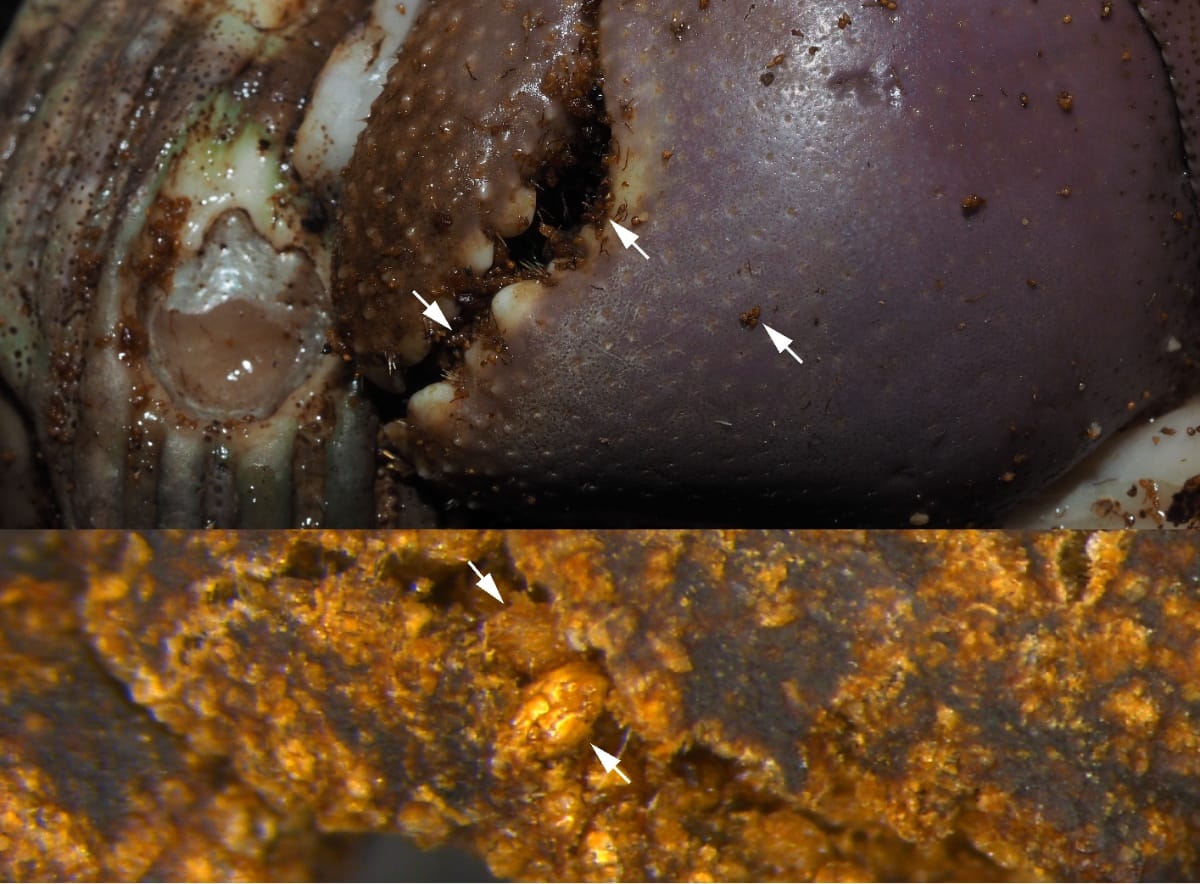
But how do the land hermit crab and the cockroach find Balanophora fungosa? The answer may lie in the smell of its ripening infructescences. Both animals were observed mainly during visiting mature infructescences, which produced a noticeable fermented odour. Still, the volatile compounds produced by Balanophora fungosa remain unknown, and future studies will be needed to identify the specific components that attract these species.
Whether the land hermit crab disperses Balanophora fungosa in other localities and populations or other Balanophora species remains uncertain. Still, if we consider its omnivorous habits and abundance in coastal forests, this may be a more general pattern. So, with this study, it seems we might need to add another unlikely invertebrate group to the to the list of Balanophora seed dispersers.
READ THE ARTICLE:
Suetsugu K. 2026. Unexpected allies: Land hermit crabs and cockroaches contribute to seed dispersal in a non‐photosynthetic plant. Ecology 107. https://doi.org/10.1002/ecy.70462
Portuguese translation by Giovana O. Reis
Cover Picture by htrm_hoge (iNaturalist, CC BY-NC 4.0).