


One of the hottest areas in biology at the moment is ‘omics. It’s a catch-all term for a number of high-throughput technologies that let researchers study biological systems at scale, and it probably features in at least half the papers I see in a week. Genomics sequences DNA, transcriptomics captures which genes are active, proteomics catalogues proteins, and metabolomics profiles the small molecules in cells. It even captures ionomics, the study of the chemical make-up of plants. It’s a set of tools that are transforming how we understand everything from mycorrhizal symbioses to crop stress responses. But these technologies aren't cheap, and they're not equally available.
Running a genomics pipeline requires not just sequencing equipment but bioinformatics expertise, computational infrastructure, and often access to well-stocked reference databases. For researchers at institutions or in countries where these resources are limited, whole avenues of investigation can be effectively closed off. This doesn’t just shape individual careers but also which questions get asked and which ecosystems get studied. It’s a problem, but how big a problem?
An international team is going to find out. They're asking researchers around the world what access they have to 'omics tools. Their survey, developed following a workshop at the 45th New Phytologist Symposium in Brazil, aims to map where access gaps exist and what can be done about them. You don't need 'omics experience to take part. In fact, hearing from researchers without access is the point.
Deborah Narh, one of the scientists leading this project said the idea of surveying researchers had its seed planted at the symposium:
“During day 2 of the New Phytologist Pre-conference Workshop dubbed ‘Application of multi-omics to plant-fungal interactions’ held at the University of Campinas, Brazil, June 24-25, 2024, participants were expected to develop the concept for a Community Resources paper in New Phytologist. These papers were expected to provide a methodological overview of a topic ‘of significant use and interest to the plant science community.’ During the discussions held in this section, it became apparent that most participants were concerned about their limited access to omics technologies and how this has/might impact their research outputs and outcomes while others noted that they had not given disparities in resource allocation for omics research a thought. There was also the question of ‘What is good enough science in the absence of these resources?’ This was then penned downed as a possible research topic for further brainstorming with a large proportion of workshop participants volunteering to form a group to address these questions.”
It’s an important issue to address if we want all talents to participate in science, as Jason Hoeksema at the University of Mississippi makes clear:
"Advancements in omics-based technologies have accelerated research efforts, but these advancements may be driving research inequities across the globe. This survey aims to understand whether, and to what extent, access to emerging technologies affects the global scientific community and/or research outputs. Survey results will therefore help to identify potential ‘access hot-spots’, ‘vulnerable areas’, and potential solutions, which will inform academic and societal policies to enhance equitable access to omics-based technologies."
If you'd like to take part, here's the email inviting contributors:
Dear colleagues,
My name is Jason Hoeksema, and I am a Professor in the Department of Biology at the University of Mississippi.
I am writing to ask if you and other members of your group or institution would be willing to participate in a research study, the purpose of which is to understand whether, and to what extent, access to emerging 'omics technologies affects the global scientific community and/or research outputs. Our analyses will therefore help to identify potential ‘access hot-spots’, ‘vulnerable areas’, and potential solutions, which will inform academic and societal policies to enhance equitable access to ‘omics technologies.
Translation is available into 13 languages, including those most commonly used in science. Some included language translations were not checked by native speakers.
We will accept responses until March 1st, 2026. Please ensure that you complete and submit the survey (using the arrow at the bottom of the final page) before the deadline.
The research team behind this survey comprises researchers at different career stages and from different countries globally, who participated in a workshop during the 45th New Phytologist Symposium held in Brazil in June 2024, as well as other scientists who attended the symposium and/or were invited to collaborate.
Your participation is completely voluntary and your responses will remain strictly confidential and anonymous. Expertise and/or experience in omics technologies are not required to participate in this survey. This survey will take approximately 15-20 minutes of your time in total, and is taken through Qualtrics online.
By proceeding, you confirm that you understand the purpose of this study and consent to participate. This study has been reviewed and determined to be Exempt by the University of Mississippi's Institutional Review Board (IRB).
Thank you for taking the time to participate in this survey. Your responses are invaluable to this research, and your honest feedback is highly appreciated.
If you have any questions about the study, please contact me.
To participate in this study, please click this link: https://uofmississippi.qualtrics.com/jfe/form/SV_0OO2XdqgPb84uyi
Please forward or share this email with any group or individuals who may be interested in completing it.
Thank you for taking the time to assist us in this research.
Jason Hoeksema
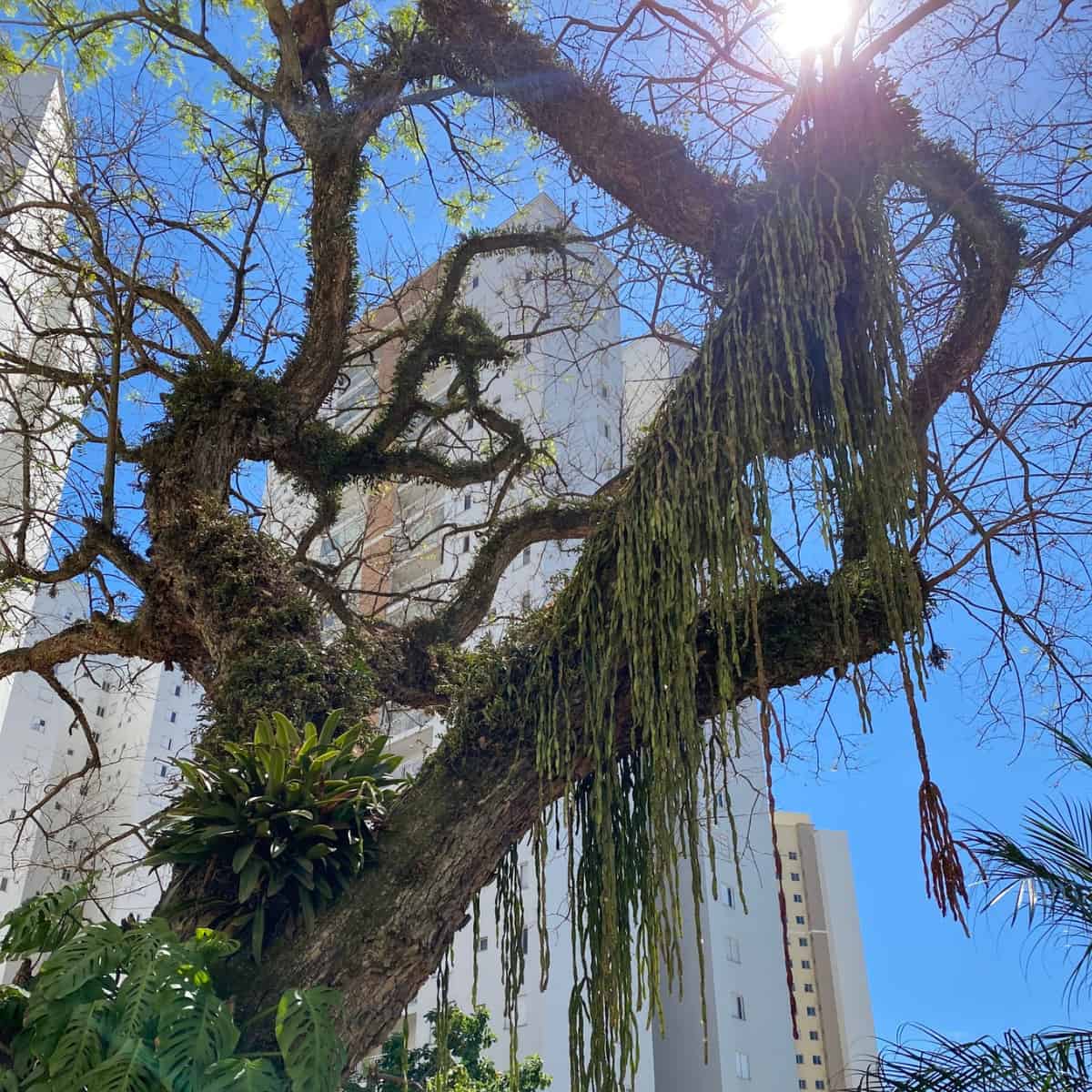
Cover image: Chain Cactus (Rhipsalis paradoxa) in Campinas, Brazil, by Pedro Alvaro Neves / iNaturalist CC-BY-NC