
Some plants hide in plain sight. They are not necessarily small, dull or hard to recognise, but they live in such specific places that few people ever get the chance to see them. Vellozia sessilis is one of those plants.
Vellozia sessilis is a member of the genus Vellozia, a group of plants found only in the American tropics. In Brazil, species of Vellozia are popularly known as canela-de-ema, thanks to their resemblance to the legs of the greater rhea, a big bird locally known as ema. Many grow in rocky, nutrient-poor highland environments such as campo rupestre, where shallow soils, strong sunlight, drought and fire create difficult conditions for plant life. These same environments are also centres of endemism, home to many species that occur nowhere else.
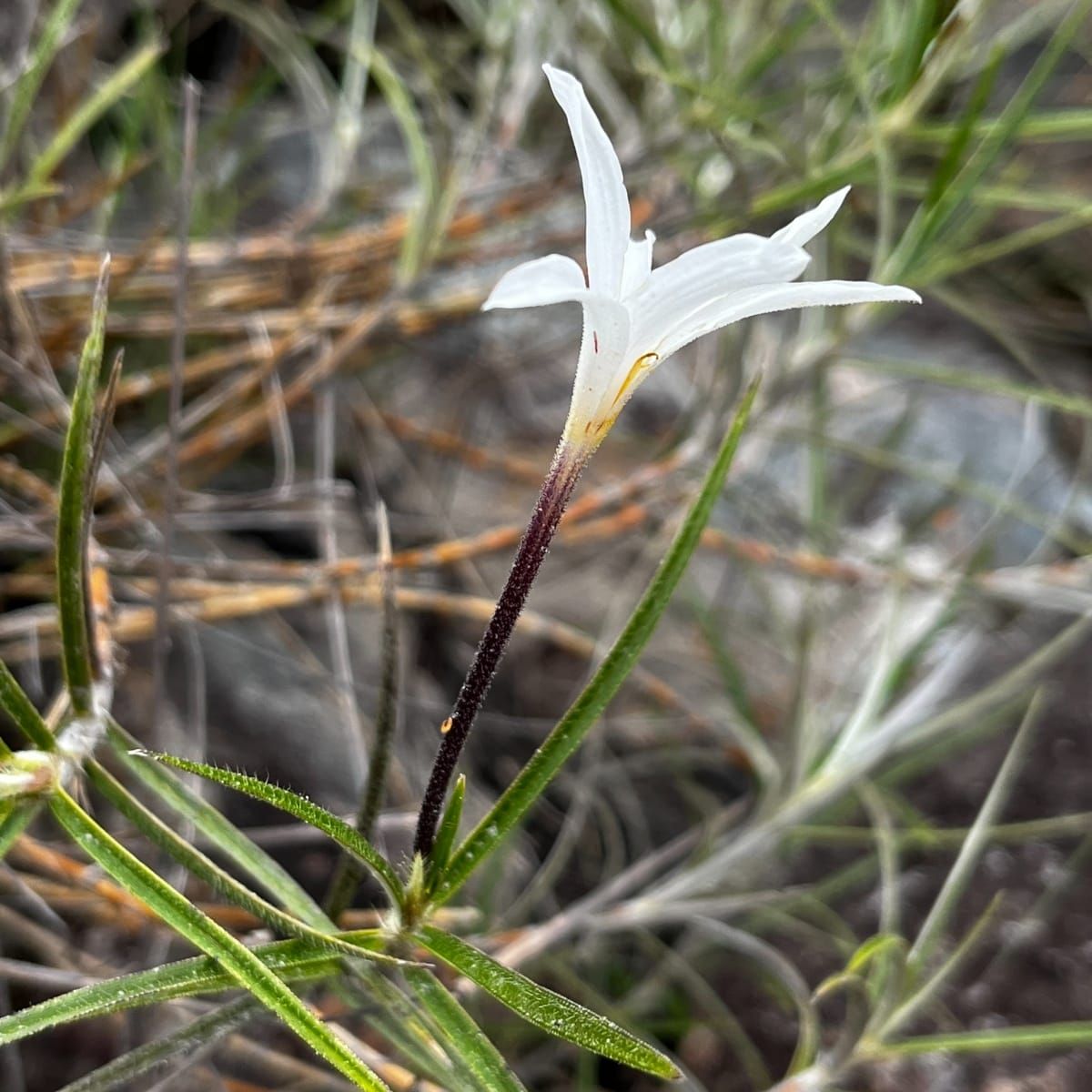
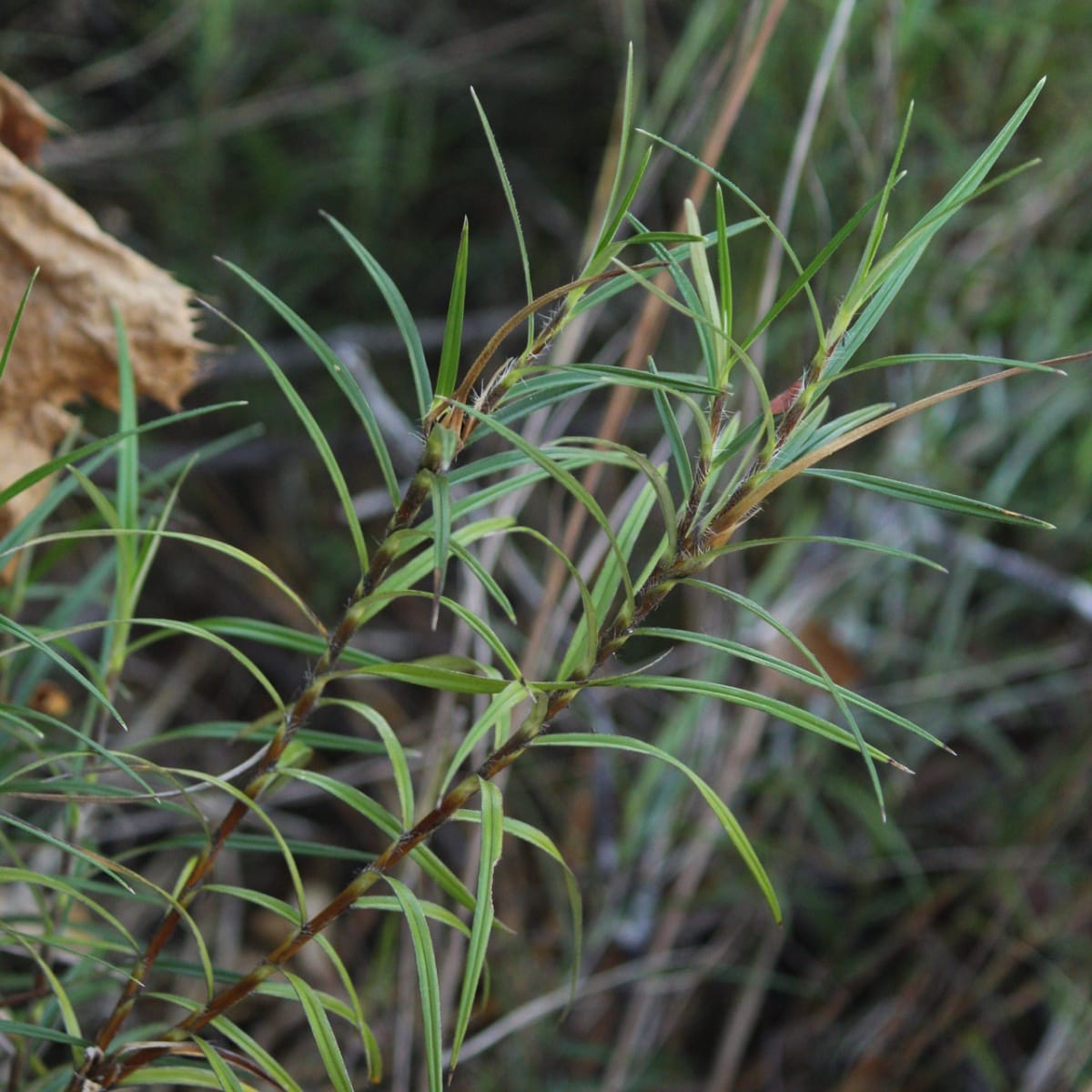
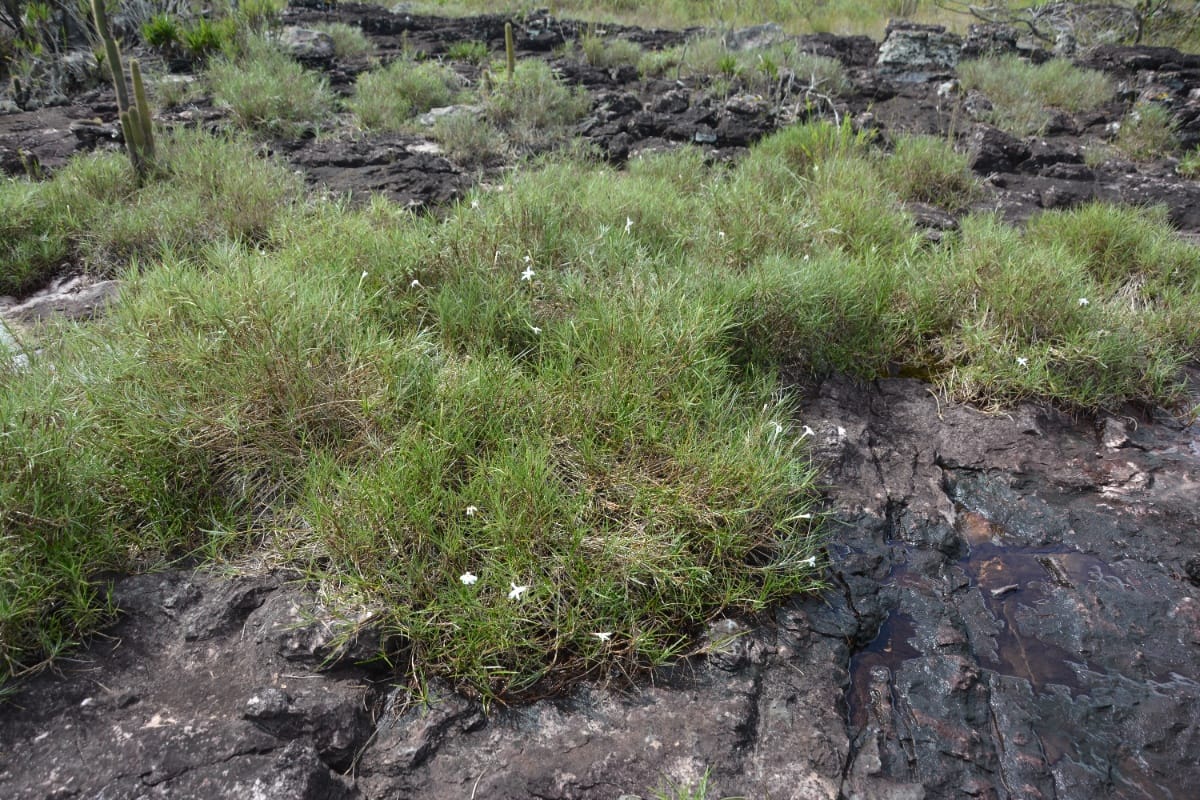
In the field, Vellozia sessilis can look deceptively grass-like. It is a cespitose plant, forming dense clumps on rocky substrates, and its narrow leaves can make it resemble grasses or small bamboos when not in flower.
This species is known only from the Chapada dos Veadeiros region of Goiás, in central Brazil. There, it grows in high-altitude grasslands and rocky savannas, usually above 1,000 metres elevation. These landscapes are part of the Cerrado, one of the world’s great biodiversity hotspots.
For many years, Vellozia sessilis was known from very little material. It was described from specimens collected at Serra da Baliza in 1979 and 1995, near the town of Alto Paraíso de Goiás. A later herbarium record revealed another population at a farm about 8 kilometres south of Serra da Baliza. Beyond that, no additional collections were found in major Brazilian herbaria.
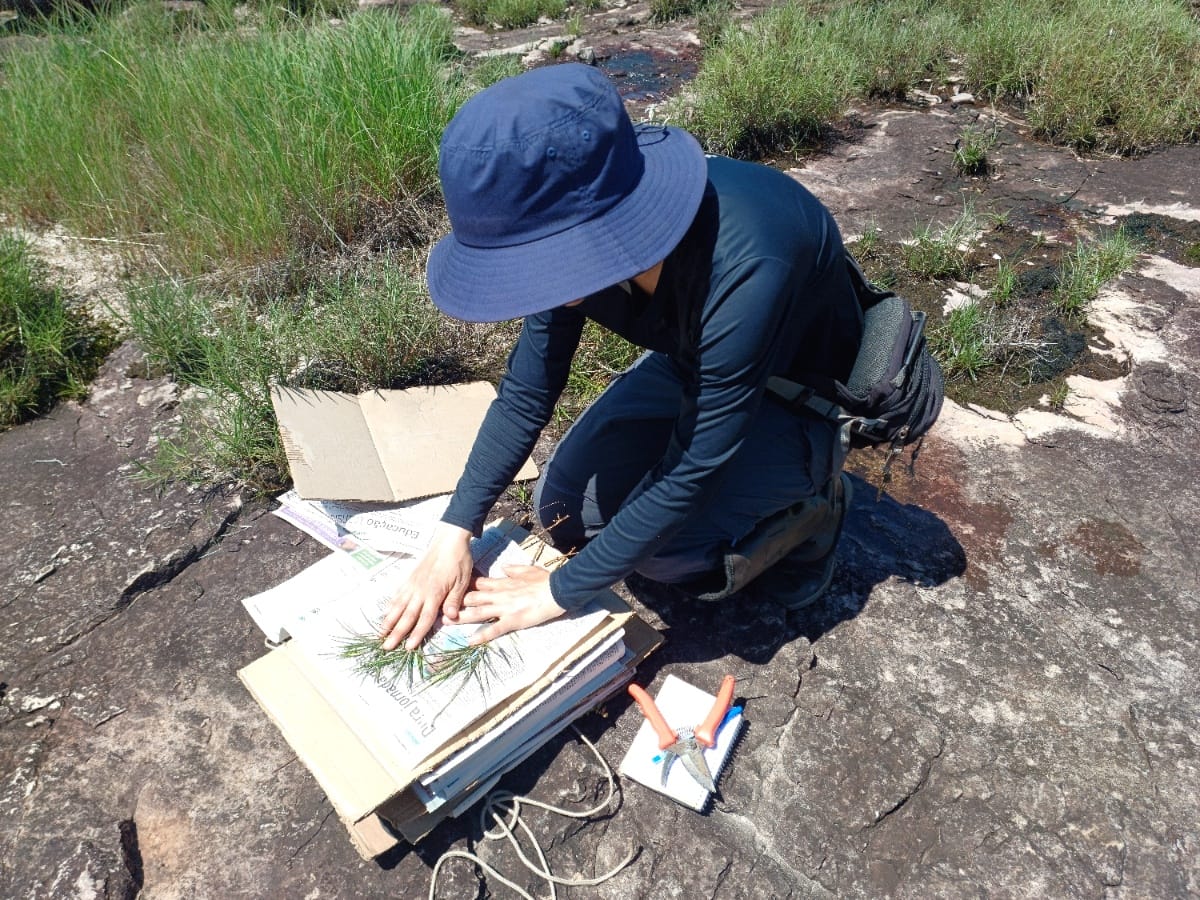
That made the species a conservation concern. With only two known locations and continuing habitat deterioration, Vellozia sessilis had already been classified as Endangered in Brazil. But a recent study, led by PhD student Bianca Schindler, set out to fill some of the gaps. The researchers combined field surveys, herbarium data, citizen science, species distribution modelling, satellite estimates of habitat loss and seed germination experiments to build a clearer picture of the species and its conservation status.
The search revealed more than was previously known. The study recorded six populations of Vellozia sessilis, including two discovered with the help of citizen science. These records show that the species is still highly restricted, but they also show how useful local observations can be when scientists are trying to find rare plants in complex landscapes.
The story of Vellozia sessilis is not only about one threatened plant. It is also about the difficulty of conserving microendemic species: plants with extremely small ranges, often tied to very specific soils, elevations and habitats. These species may be well adapted to harsh rocky environments, but that does not make them safe from habitat loss, land-use change or other pressures.
Chapada dos Veadeiros is famous for its waterfalls, rocky plateaus and open Cerrado landscapes. It is also one of Brazil’s important centres of plant endemism. The rediscovery and improved documentation of Vellozia sessilis show why these highland landscapes deserve close attention. Sometimes, protecting a species begins simply with finding out where it still grows.
Cover image: Vellozia sessilis. Photo by maguelaguia (iNaturalist, CC BY-NC 4.0).