

On three out of four days of the Ecological Society of America’s (ESA) virtual conference earlier in August, there were workshops or symposiums about working with indigenous communities. Traditional Ecological Knowledge (TEK) refers to the body of knowledge, beliefs, traditions, practices, institutions, and worldviews developed and sustained by indigenous communities in interaction with their biophysical environment. Many important conversations had to be had about approaching tribes, working with them and how Western scientists need to reciprocate the knowledge exchange.
The first workshop was titled “Working Together For A Better Future: How to Establish and Maintain Successful and Durable Partnerships between Indigenous Communities and Non-Indigenous Collaborators” which was followed by the “Honoring the Power of Indigenous Science Data to Revitalize Ecosystems, Communities, and Cultures” symposium.
Both events were moderated by Dr Robert Newman and the panel members included Julie Thorstenson, Clint Carroll, Serra Hoagland, Kim Greenwood and James Rattling Leaf. The speakers talked about their projects and experiences about establishing partnerships between tribes, scientists and federal agencies.
Indigenous people have long observed and studied changes in ecosystems in response to climate change, land use and other human-driven changes. Ecologists are trying to catch up with these observations and there are many opportunities for scientists to learn from and support indigenous communities.
Julie Thorstenson from the Native American Fish and Wildlife Society emphasised that before exploring projects with tribes, scientists need to understand the indigenous perspective and priorities. Tribes can be great partners but should not be viewed as research subjects.
Kim Greenwood from the National Park Service highlighted that there are 574 federally recognized tribes living within the US and each tribe’s uniqueness needs to be understood and respected. Scientists might have the tendency to think that the degrees they hold or agencies they work for will be automatically supported but each project comes down to individual relationships. Students who would like to become involved with TEK, she suggests signing up for ethnobotany, anthropology and social science classes which could teach them different perspectives and methods to use compared to natural science tools.
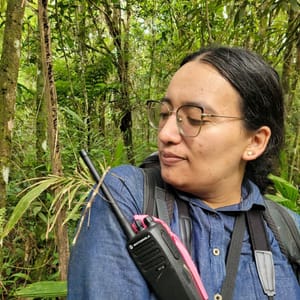
Serra Hoagland from Northern Arizona University suggested that junior ecologists should be upfront about their own time limitations on projects but should think of establishing relationships long-term. She mentions that at the beginning, scientists could reach out to liaisons in communities (e.g. via the National Forest Service) and emphasises the importance of reciprocity from researchers to the communities (e.g. tribal youth programs).
Meet Biological Scientist Serra Hoagland / Forest Service / YouTube
Clint Carroll from the University of Colorado talked about how the Cherokee people in Oklahoma have been impacted by the removal of 98% of their tribal territory. He stressed that scientists need to take time to understand how indigenous people relate to the land. In his book, “Roots of Our Renewal: Ethnobotany and Cherokee Environmental Governance”, he describes how tribal communities have to navigate social and environmental issues in a historical context.
James Rattling Leaf, who was also a panel member on the “Committing to Diversity: Perspectives of Inclusivity” session, mentioned the “4R-s” for working with indigenous (or any) collaborators: Respect, Reciprocity, Relevance & Responsibility. Working with indigenous communities is a very rewarding experience and allows researchers to put their research to service but “progress moves at the speed of trust”.
During the symposium “Indigenous Phenology: New Mindsets for Working Among Worldviews”, the panelists also highlighted that tribal nations are sovereign and their data has to be treated as such and scientists need to carefully check what data they can release (e.g. location of sacred sites). In the “The Role of Bio-Cultural Indicator Frameworks in Understanding Ecosystem Complexity” symposium, Māori researchers from New Zealand discussed the mauri model to incorporate worldview biases of stakeholders and indigenous communities after environmental disasters. Panel members of the “Farmer Engagement in Agroecology Research: Harnessing Data in Practice” workshop talked about working with farmers in the US, Malawi and Madagascar and stressed the importance of being transparent about pros and cons of different treatments and allowing farmers to experiment themselves.
The Traditional Ecological Knowledge at the ESA 2020 conference was a unique opportunity to talk about inclusivity with fantastic panel members.