
Remember that awkward moment when you sit down next to a stranger or wait in the coffee line and try to start a conversation? The Ecological Society of America has recreated the same awkward moments by many randomised breakout sessions during the virtual 105th Annual General Meeting (AGM) on August 3-6.
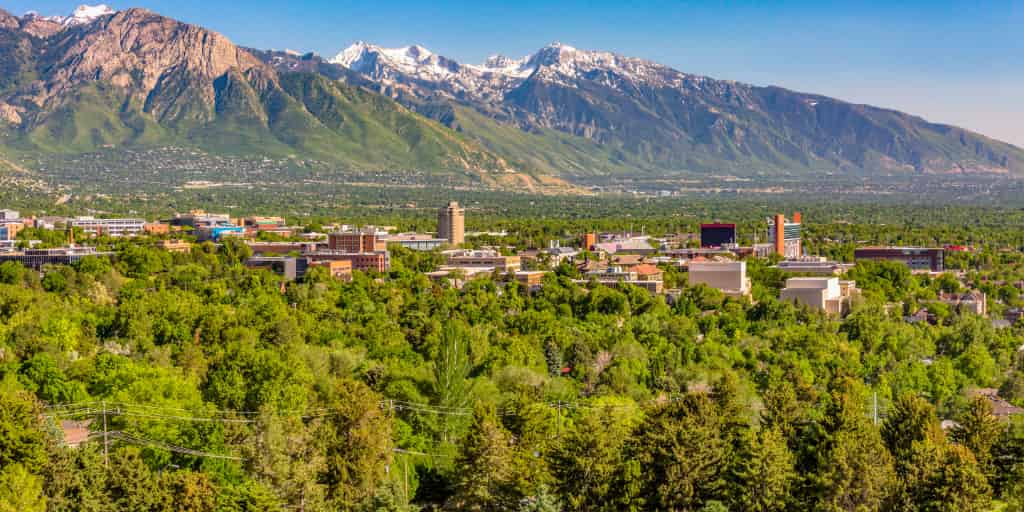
The conference, titled “Harnessing the Ecological Data Revolution”, drew more than 3,600 virtual attendees to present and listen to 1,700 talks and over 100 live events. Over 20% of the participants were non-US based and all conference materials will be available for three months. The AGM was supposed to be in Salt Lake City, Utah on 2-7 August and next year’s AGM is expected to be in Long Beach, California on August 1-6, 2021.

There were two large plant-related conferences the week before the ESA meeting, Plant Biology 2020 and Botany 2020 (read about it here). The ESA registration fees ($60-260) were generally $10 more than the Botany 2020 fees but $100 less compared to Plant Biology 2020. As a comparison, I attended the Global Landscapes Forum (GLF) Bonn Digital Conference 2020 in July which had 5,000 participants and all sessions were streamed on Youtube for free. The cost of full access to the online program (including cooking shows!), app and online chats was $10. Over 3 days #GLFBonn2020 reached 50 million users while #ESA2020 reached 13.5 million over 2 days. Both online events show the potential of reaching people around the globe virtually.
Whilst all the plenary talks and presentations were pre-recorded, there were live events throughout the whole day, which made the conference very engaging. In my time zone (BST), the conference began at 4 pm (11 am EDT) which allowed me to watch presentations and decide which live Q&A sessions over Zoom I should attend.
The conference was opened by Lucas Joppa, Chief Environmental Officer at Microsoft, who gave a thrilling presentation about “Scaling Ecological insight”, introducing the AI for Earth project, which was followed by a live Q&A session. It was an inspirational kick off but “where’s technology, there are glitches”. Unfortunately, the conference website was overwhelmed during the first day and the links and presentations took 5-20 minutes to load. Whilst the tweets were flooding in about the glitches, I felt for the organisers and website managers. Luckily, the following day, the website seemed to have been fixed. Captions were available for pre-recorded presentations and all sessions over Zoom. The daily emails were very helpful, helping attendees navigate through all the links and tips for any other technological glitches.
There were Q&A sessions, (30 mins), discussion panels (60 mins) throughout the day and a networking hour in the evening. There were workshops, inspire sessions, specials sessions (e.g. open discussions) and posters and other sessions types. All live events were recorded and will be available for three months after the conference. I really enjoyed the great variety of topics; you could learn about from mammals, insects, plants, microbes to genes, chemistry. As data was at the center of the conference, many sessions and talks focused around utilising the NEON, LTER, GEO BON, National Phenology Network and GFBI databases. Whilst there were ‘sciency’ sessions, there was a lot of focus on collaborating with indegenous communities, inclusivity, education (e.g. 4DEE Framework), public engagement, and students.
As a PhD student, I really appreciated the daily career exploration sessions in the afternoons which were followed by an hour-long networking session with the speakers. These events attracted 150-220 participants. There were speakers with backgrounds in ecological consulting, public policy, working at NGOs, local government, industry or in science journalism. All the speakers were transparent about their jobs and as they were overwhelmed with questions, they were answering questions live and through the chat box simultaneously.
Students eagerly switched on their cameras, asked useful - and sometimes tough - questions and talked about their own experiences. I cannot imagine getting so many questions answered and resources shared in an hour long session at an in-person conference. Speakers were also kind enough to stay longer than the scheduled sessions and just chat with students. Perhaps the informal setting - sitting in sweatpants at home - gives a lot more confidence for students and ECRs to engage with professors and directors.
Networking hours and mixers were definitely the highlights of the conference. The format of these events greatly varied. One time there were 80 people in groups of fours, discussing why they like microbes and what they are working with on GoogleDocs. There were two times when I talked to random scientists one-on-one in breakout rooms over Zoom and sometimes everyone just switched on their cameras and just had an open discussion. During the lockdown, I began to appreciate more and more hearing children in the background, seeing the bookshelf or garden of another person and feeling relatable.
Perhaps one of the main weak points of the ESA conference - or any virtual conference - is the lack of feedback on posters and contributed talks. ESA encouraged giving a shoutout to presentations by students or early career researchers (ECRs) by using #ESAWatchParty2020. The number of comments and feedback started to grow over the conference but there are still many posters and videos which did not get any reactions. A simple feature such as showing the number of page views or adding a “Like” button could have reassured presenters that their work has not disappeared in the void during the meeting.
The “Farmer Engagement in Agroecology Research” workshop included two award winning presentations where the lead scientists either interviewed farmers in Malawi for the conference or cut together videos of field work and an engaging presentation. I recorded a few talks relying on scripts and voice editing but I found that the most enjoyable presentations were when speakers just spoke naturally and they switched on their cameras either at the beginning or throughout the whole talk.
I asked a few presenters to share their thoughts on ESA 2020.

Dr Natalie Henkhaus, Executive Coordinator for the Plant Science Research Network and the American Society of Plant Biologists co-organised the “The Plant Science Decadal Vision for 2020-2030: Reimagining the Potential of Plants for a Healthy Future” inspire session.
“We presented our work to create the Plant Science Decadal Vision. For our inspire session, we invited plant ecologists to highlight their research as it fits into the 8 goals of the 10-year strategic vision. We are grateful for ESA's support in this project through their participation in the US NSF-funded project, the Plant Science Research Network”, Dr Henkhaus said.
“I have enjoyed getting a chance to connect with new plant scientists at the ESA meeting, it's my first ecology conference. I've really enjoyed the talks that integrate research at multiple scales. My professional training is in molecular biology and I've enjoyed seeing how genetic understanding is linked to ecosystem level observations, often through complex computational modeling and analysis. “
“ESA has organized many sessions, including Wednesday's Plenary, that promote "Justice, Equity, Diversity and Inclusion" as key to advancing our research over the next few years. I am so pleased to see the society making a commitment to these values in 2020.”

Dr Julie Thorstenson, Executive Director of the Native American Fish and Wildlife Society, gave a presentation as part of the “Working Together For A Better Future: How to Establish and Maintain Successful and Durable Partnerships between Indigenous Communities and Non-Indigenous Collaborators” workshop.
“I was extremely excited to have the opportunity to discuss Traditional Ecological Knowledge with the ESA community. It was an honor to share the panel with Serra Hoagland and Kim Greenwood,” Dr Thorstenson said.
“I appreciated the inclusion of Native American perspectives and the well thought out and sincerity of the questions. I hope this will continue in future ESA conferences. I would like to thank Dr. Robert Newman for inviting me and all of his hard work making this happen.”

Sam Sharpe, PhD candidate at Kansas State University studying drought response variation across species, populations, and life stages of prairie grass, presented during the “Natural History: The Passionate Heart of Ecology” inspire session.
“Last year was my first time at ESA. I drove for over 10 hours to Louisville, KT with 4 of my classmates. Some of the best parts of that conference were the LGBTQ meetups and attending the Plant Love Stories inspire session”, Sharpe said.
“Virtual ESA this year was very different; I never left my apartment and was trying to fit in work Zoom meetings and telehealth appointments around conference events. I tried to attend as many synchronous events as possible, which was great, but the trade-off was that I didn’t watch as many talks.”
“I did really appreciate the ways that a virtual conference can be more affordable and more accessible to scientists who are outside of the US, parents and caretakers, or living with disabilities. Reduced travel also saves time, money, and emissions, which is in keeping with the values of conservation. At the same time, I missed the feeling of community that I had experienced at other conferences from occupying the same space as so many other scientists, researchers, and educators, as well as the opportunity to spontaneously connect with others one on one.
“While I don’t love Twitter generally, it has proven to be a great way to network and find out about events while at conferences, and that was even more true for this virtual meeting. I got some great recommendations for sessions to attend from searching the ESA2020 hashtag and was able to share my recorded inspire talk much more widely than would have been possible with a normal conference talk.”
Personally, I think it is important not to expect virtual conferences to fully replace the random networking moments, waiting in a coffee line, strolling along posters and exhibitors. Those expectations are likely to leave you disappointed. Try to keep in mind that there is a global pandemic and everyone is going through tough times but we are together, virtually, saving so much money and allowing people from around the country to join in.
Whilst I missed a proper “goodbye event” at the end of ESA 2020, the conference left me knowing that there are thousands of scientists with all sorts of backgrounds who are trying to understand and help the world’s ecosystems.