It's a sombre start to the email this week. Two of the most shared stories were about the loss of botanists over the Easter holiday, Lea Richardson in the US and Philippa Borrill in the UK. It's hard to know what to write in these situations. I think Jeremy Yoder's piece for Lea Richardson hits hard, simply by laying out the facts.
I have some writing to do this week. We'll be looking to slowly add a glossary to the site. It's exactly the sort of thing that should make no sense in the age of AI. Google is digesting millions of websites and synthesising the results, so that you don't need to visit the original sources. So, if all works well, our efforts will be swallowed, reformed and regurgitated without us ever knowing. However, another story shared this week indicates all isn't well. Google are doing well at keeping people away from the source of information, but not doing so well at supplying it themselves. I don't expect to unveil the glossary next week, but I'd like to put the foundations in.
There'll be another issue of The Week in Botany, with what you're sharing on Mastodon and Bluesky each week at the usual time. Until then, take care.
Alun (webmaster@botany.one)
On Botany One
Smells Like Green City?
Scientists reveal that the mix of plant scents and pollution in city parks shifts with location and weather, quietly shaping the benefits of a simple walk outdoors.
Adriana Romero-Olivares: "Fungi Are Both Charismatic and Mysterious"
Botany One interviews Dr Adriana Romero-Olivares, who is intrigued by fungi and the key role they have for ecosystem functioning.
What It Takes to Get Europe Watching Flowers
A Europe-wide search for Primula veris showed that successful citizen science depends not just on technology, but on culture, language and local knowledge.
Conifer leaves anticipate their shaded future
Densely packed needles along the shoots of evergreen conifers exhibit shade-acclimated photosynthetic characteristics even under full sunlight
This week the Sudoku Garden commemorates the 100th anniversary of the death of Luther Burbank. The Plant Hunt takes a trip through the flora of Crete. This week's Plant of the Week is Bombax ceiba, the Red Silk-Cotton Tree of Southeast Asia..
There was also last week's Week in Botany, with the strange love lives of flowers, how healing may cause harm, connecting plants and humans, and more.
News & Views
For more than a year, now, there’s been a hole in the Yoder Lab. Last March, postdoctoral scholar Lea Richardson was admitted to the hospital with neurological symptoms that were soon diagnosed as the results of metastatic melanoma.
 The Yoder Lab @ CSUN
We are devastated to announce that our colleague and friend Professor Philippa Borrill died over the Easter weekend following a rare immune system disorder (HLH). She was a fantastic scientist, collaborator and mentor, and a close friend to many.
 John Innes Centre
Universities in Britain rely on overseas applicants paying full fees, which has given rise to some unscrupulous recruiters and left many hopefuls and their families deep in debt.
 The Guardian
Plants growing on the forest floor make up a large part of forest biodiversity, but we still know surprisingly little about why some forests support more understory plant species than others.
 Functional Ecology: Plain Language Summaries
Regina Baucom talks with Judith Mank, who is currently the head editor at Evolution Letters about the growing role of AI and large language models in scientific publishing.
 evolutionsociety.org
Montezuma Orchard Restoration Project plays a key role in a decade-long search for the Walbridge apple.
 The Journal
A new analysis commissioned by The New York Times suggests that Google’s AI Overviews are wrong an astonishing percentage of the time.
 Futurism
Citizen science platforms including iNaturalist are leading to major new discoveries and are becoming crucial to the work of scientists.
 The Global Plant Council
ASPB members are essential voices in advancing plant science and informing federal policy. We urge you to contact your Members of Congress and ask them to support and co-sponsor the NSF BIO Plant Biology Act.
 Plant Science Today
You moved to a different country to do your PhD. You are navigating a new language, a complex academic system, and a life far from family and friends. After six months of failed attempts, your 12-hour experiment finally works, but there is no one around to share your happiness with.
 Plantae
The owner of a farm in South Australia’s south-east is convicted and fined for clearing 112 hectares of bushland, but the penalty is much less than the $2.2 million he would have had to pay for a permit for the work.
 The ABC
This Week in Botany
5 Years Ago: How will plants cope with fewer pollinators?
10 Years Ago: The interconnectedness of plant studies
15 Years Ago: Reproductive isolation and mycorrhizae in Orchis
Scientific Papers
Xiaopeng Li, Yi-Chang Sung, Gitta Coaker, Jie Zhu
“Plants lack specialized immune cells and instead rely on coordinated cellular responses to restrict pathogen invasion while preserving tissue integrity. How plant immunity spatially organizes these responses remains unclear. Using live-cell reporters in Arabidopsis infected with Pseudomonas syringae, we show that effector-triggered immunity, superimposed on pattern-triggered immunity, establishes a sustained yet spatially confined immune architecture at the infection front.”
 (April 2026)
“This review explores the potential of an integrated omics‐driven approach to understanding how plants adapt and tolerate extreme temperatures. By leveraging cutting‐edge omics methods, including genomics, transcriptomics, proteomics, metabolomics, miRNAomics, epigenomics, phenomics, and ionomics, alongside the power of machine learning and speed breeding data, we can revolutionize plant breeding practices.”
 Physiologia Plantarum (January 2024)
“Using nearly 40 years of data from naturally‐assembled plant communities at three Long‐Term Ecological Research sites, we found that while species richness is important for resistance to extreme dry events, dominance is important for resistance to extreme wet events and evenness is important for resilience under ambient (unfertilized) conditions. Furthermore, nutrient addition alters resistance and resilience indirectly by reducing species richness and increasing dominance.”
Ecology Letters (April 2026)
“Plants secrete a variety of proteases as a defense response during infection by microbial pathogens. However, the relationship between their catalytic activities and antimicrobial functions remains largely unknown. Particularly, few biologically relevant substrates of these proteases have been identified. Huanglongbing (HLB) has been a major threat to the citrus industry worldwide. The HLB-associated bacterium, “ Candidatus Liberibacter asiaticus” (Las), was previously shown to deploy an inhibitor of papain-like cysteine proteases (PLCPs) to promote disease in citrus. In this study, we identified an outer membrane protein (OMP) of Las, LasOMP1, as a substrate of the citrus PLCP Cs RD21a.”
 Proceedings of the National Academy of Sciences (April 2026)
Toshio Murashige, Folke Skoog
“via @somssich.bsky.social "#PlantScienceClassics #21: MS Medium. In 1962 Toshio Murashige & Folke Skoog published their revised plant tissue culture medium @pplplantarum.bsky.social, arguably the most high-cited #PlantScience paper of all time."”
Physiologia Plantarum (July 1962)
“Ectomycorrhizal fungi (EMF) produce mycelia with variable extension and complexity, which can be classified according to soil ‘exploration types’ (ETs). ETs have received attention as one of the few mycorrhizal trait frameworks, but without an empirical classification of ET functional diversity and environmental preferences, understanding and interpreting EMF biogeographic patterns has been difficult. We conducted a synthesis combining: comparative EMF genomics to describe functional divergence in decomposition and nutrient cycling genes across ETs; and EMF trait distribution modeling across continental Europe, pairing soil and root EMF surveys to establish biogeographic ET niche profiles.”
 New Phytologist (April 2026)
“Orchids have many pollination strategies, from highly species‐specific mutualisms with insects to deceit pollination, including sexual deception. The family also has the most leafless, parasitic species (mycoheterotrophs) of any plant family. The occurrence of two types of deception simultaneously in individuals of a single species previously has been suggested to be highly improbable. We studied Corallorhiza striata in the field, documenting the behavior of pollinators on the plants.”
American Journal of Botany (April 2026)
Maarten Besten, Tanguy Heesemans, Rik Froeling, Marie Zilliox, Youri Peeters, Robin Romein et al.
“Here, we introduce LipoTag, a minimal chemical motif that, upon chemical conjugation, transforms hydrophobic fluorophores into water-soluble, membrane-targeted probes that can permeate plant cell walls to reach their intended location.”
(April 2026)
“Vascular plants and metazoans use selective proteolysis to control responses to hypoxia, although through distinct biochemical mechanisms. The reason for this divergence is puzzling, since the molecular components necessary for both strategies are conserved. To explore the alternative scenario where plants and animals respond to hypoxia through the same mechanisms, we engineer a three-components system aimed to target proteins for degradation in an oxygen dependent manner in Arabidopsis thaliana.”
 Nature Communications (April 2026)
“Atmospheric mineral dust is a critical nutrient supplier to marine ecosystems, but its role in terrestrial plant nutrition remains underexplored due to the assumption that nutrients are acquired solely from soils via roots. Here, we demonstrate that plants directly acquire nutrients from dust through leaves, revealing an unrecognized terrestrial uptake pathway. In a Mediterranean field study simulating dust events, dust application markedly increased plant macro and micronutrient concentrations, facilitated by the mildly acidic, organic‐acid‐rich leaf microenvironment that enhances dust dissolution and nutrient release.”
New Phytologist (April 2026)
“Eukaryotic genomes harbor many forms of variation, including nucleotide diversity and structural polymorphisms, which experience natural selection and contribute to genome evolution and biodiversity. Harnessing this variation for agriculture hinges on our ability to detect, quantify, catalog, and deploy genetic diversity. Here, we explore seven complete genomes of the emerging biofuel crop pennycress (Thlaspi arvense) drawn from across the species' current genetic diversity to catalog variation in genome structure and content.”
New Phytologist (April 2026)
In AoBC Publications
Careers
We are currently recruiting the following postdoctoral researcher (PDRA) positions to conduct innovative research
in areas relevant to the Centre's strategic goals: Biodiversity and land-use modelling, Global biodiversity change in the Anthropocene, Creative future visioning, Cultures of ecotechnology, Cultural understandings of biodiversity, Biodiversity finance, Holistic measures of biodiversity, Interweaving Indigenous and local knowledge with ecological monitoring, Biodiversity education through games, Consequences of food system dynamics on biodiversity.

Leverhulme Centre for Anthropocene Biodiversity
In the project to which this role will contribute, we will characterise plant genetic mechanisms that coordinate the interaction of mycorrhizal fungi with plant P and water status, the development of the root system, and the broader community of soil microbes. With partners at Cambridge University, and in Germany and the US, we will work from the scale of the single gene to field evaluation to define a framework for rational optimisation of plant-mycorrhizal symbioses for more efficient P use in agriculture. The modelling component will involve combining existing models of root system growth, rhizosphere processes and P uptake developed by the project partners and developing new models of the effects and costs of mycorrhizal symbioses.
Cranfield University
Applications are invited for a Postdoctoral Research Scientist to join the Laboratory of Dr Sarah Guiziou, and more generally the engineering biology consortium of the Earlham Institute, based in Norwich, UK. This position is funded by Dr Sarah Guiziou’s UKRI Future Leader Fellowship.
Earlham Institute
BGCI is seeking an experienced, committed and strategic Director of Conservation to provide leadership across the organisation’s policy, conservation prioritisation and conservation action portfolio. The postholder will translate BGCI’s 2026–2030 Strategic Framework into coherent programmes, partnerships, monitoring systems and resource mobilisation, ensuring that BGCI’s work delivers measurable outcomes for plant conservation, ecological restoration and community resilience.
Botanic Gardens Conservation International
Applications are invited for a Research Fellow to join the University of Nottingham at the Sutton Bonington Campus working as part of a team to deliver a project awarded by Leverhulme Trust to understand plant performance and climate feedback mechanisms in the Middle Jurassic. The project will use an experimental framework, to link plant morphology and chemistry to measurements of ecophysiological performance. These combined datasets will be used to understand how plants performed and were adapted to the Middle Jurassic, a greenhouse episode in Earth history where global mean temperatures were approximately 5-10°C warmer than the 1970-2010 average.
University of Nottingham
You will be part of the Global Rust Reference Center (GRRC), which has a focus on plant pathogen biology, epidemiology and disease prevention under variable environmental conditions and climate change. The research interests of the group have until now been focused on cereal rust fungi, but new research directions may include other biotrophic or hemi-biotrophic and necrotrophic aboveground pathogens.

Aarhus Universitet
La personne recrutée sera en charge de l'étude de la modularité génétique des stratégies de dispersion des graines chez l'espèce modèle Arabidopsis thaliana. La personne prendra en charge l'analyse d'un jeu de données déjà existant dans le laboratoire d'accueil.

CNRS
You will conduct research on the effect of beta-diversity on forest resilience to disturbance. Specifically, you will investigate if and how increasing beta-diversity in forest landscapes can increase resilience to current and future forest disturbances and assess the implications for forest ecosystem service supply. The main methodological approach applied will be forest landscape simulation modelling using the model iLand.

Technical University of Munich
Do you have a strong interest in forest ecosystems, climate extremes, and carbon cycling? Are you excited about linking physiological mechanisms to landscape-scale patterns to address pressing challenges related to forest dieback and climate mitigation? Are you motivated to work in an interdisciplinary and international research environment? If so, we invite applications for a PhD position in the Plant Ecophysiology Lab as part of a multidisciplinary, international research training group with partners at the Karlsruhe Institute of Technology (KIT), Germany, the University of Melbourne (UoM), Australia and the University of Hohenheim, Germany.
Karlsruhe Institute of Technology
Do you have knowledge of land ecosystems, climate change and land use change? Do you have good quantitative and coding skills? Are you keen to apply these to address societal and ecological research challenges? If so, we can offer you to earn your PhD degree within a multidisciplinary, international research training group, with partners at the Karlsruhe Institute of Technology, Germany, the University of Melbourne, Australia and the University of Hohenheim, Germany.
Karlsruhe Institute of Technology
Do you want to pursue a PhD in Computer Science focused on the development of deep learning methods and apply these methods to a critical climate risk factor societies will face in the 21st century? If so, we encourage you to apply for our PhD position within the multidisciplinary, international research training group C4LaNd! You will focus on advancing probabilistic deep learning models for spatiotemporal forecasting, with the primary goal of modelling multiple dimensions of wildfire risks, using data from both computer simulations and Earth observations (e.g., satellite data).
Karlsruhe Institute of Technology
As part of our growth strategy and our plans to establish breeding teams for our Vegetable Business Unit, we are looking for a Tomato Breeder based at KWS Vegetables Breeding Station in Antalya, Türkiye. You will contribute to the driving of our breeding team in Antalya and will report to the Head of Breeding within the Vegetables business unit of KWS Group.

KWS
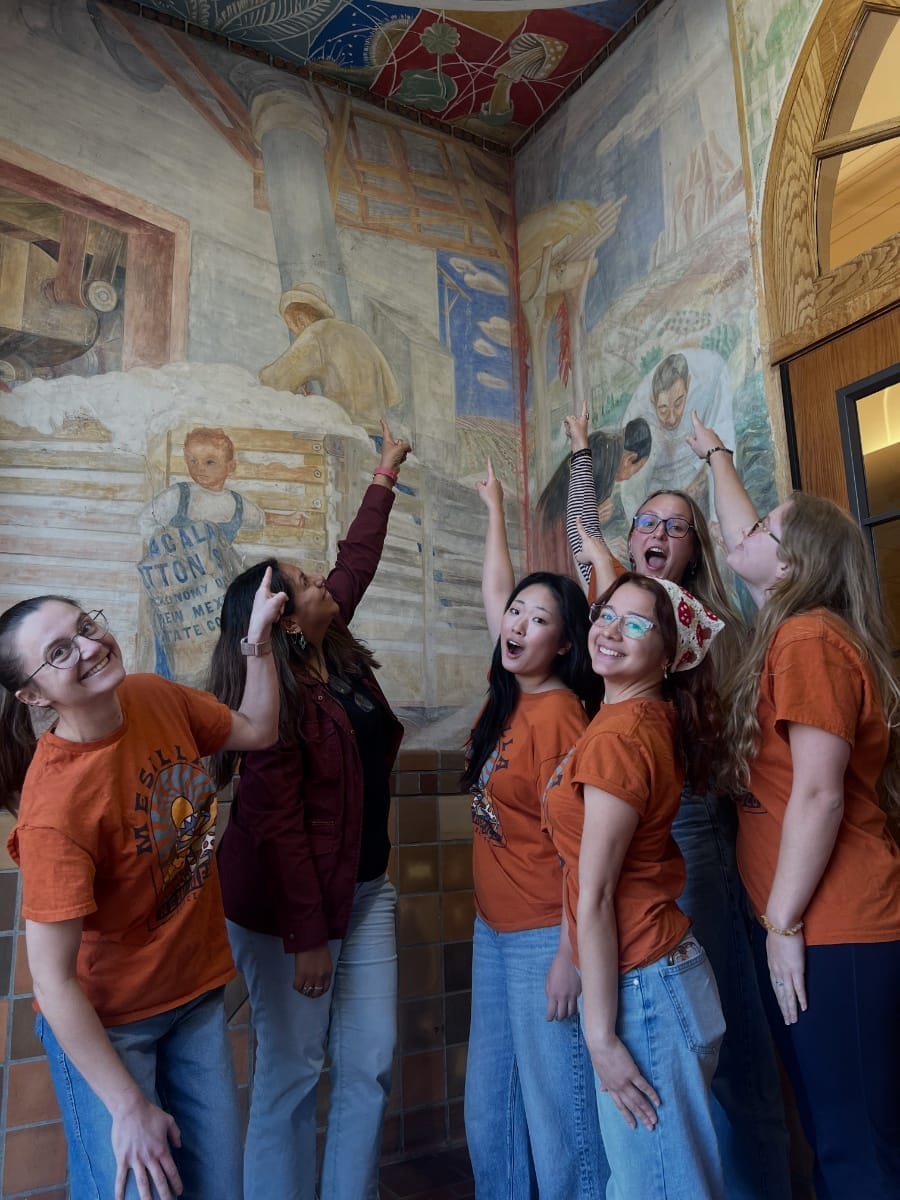
Cover image: Romero-Olivares and her group, looking at local art that shows fungi. Photo by Adriana Romero-Olivares