

Invasive plants pose serious environmental, economic, and social threats to ecosystems worldwide. Introduced outside their natural range, these species compete with native vegetation for resources such as water, light, and nutrients, leading to ecosystem instability and habitat degradation. Although invasive species’ physical and ecological characteristics are widely studied, a less explored aspect is their effect on fundamental ecological interactions, such as pollination, and how pollinators perceive a landscape composed of native and invasive species through the visual signalling of flower colours.
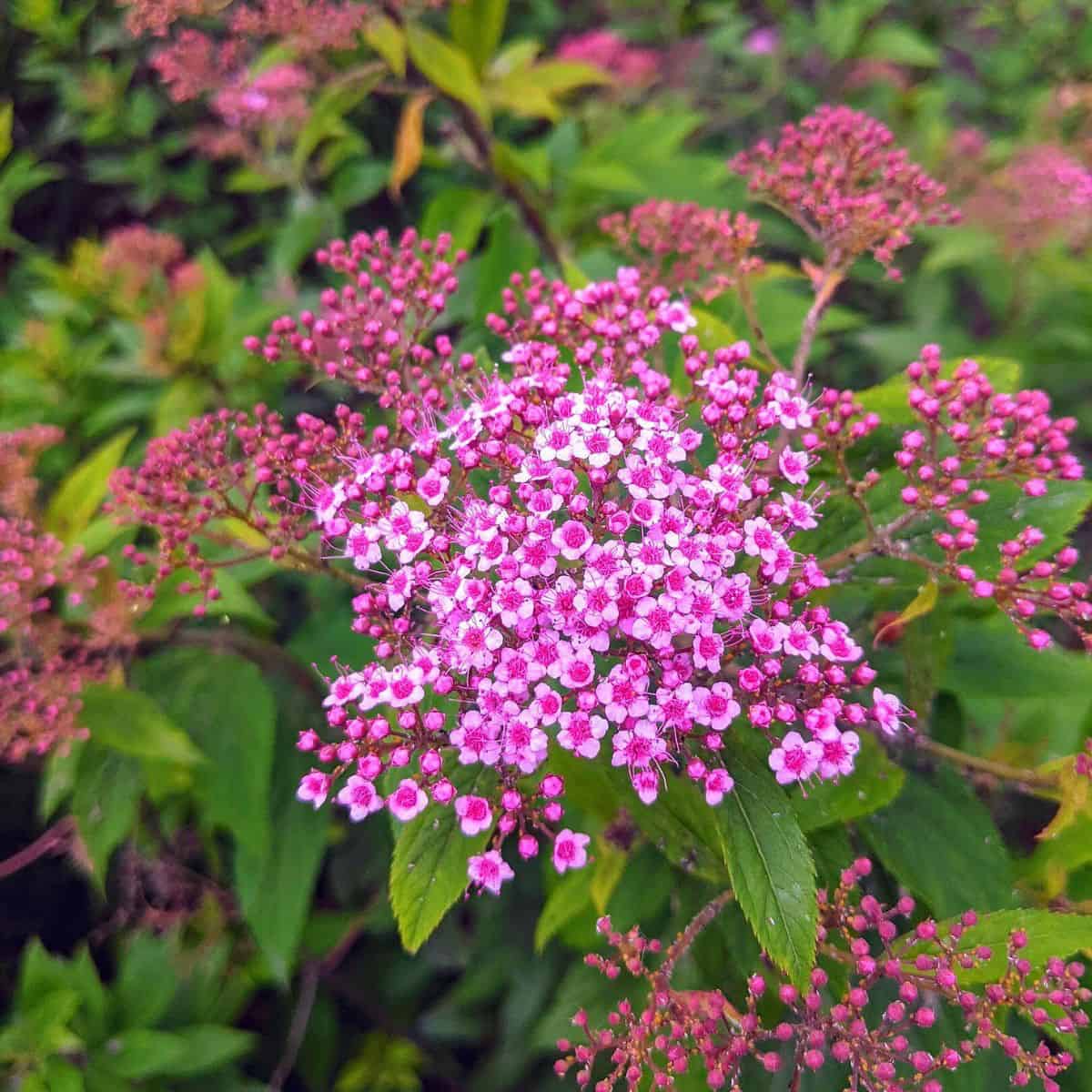
To address this gap, a team of French and Brazilian researchers analysed four widely distributed and successful invasive plant species in the French Pyrenees: Buddleja davidii, Reynoutria japonica, Spiraea japonica, and Impatiens glandulifera. Using a model based on bee’s vision –which is sensitive to ultraviolet, blue, and green wavelengths– they compared how bees perceived these invasive plants and the surrounding native species. Considering that visual signals are important for flower detection and recognition by pollinators, the goal was to understand how these colours help invasive plants attract pollinators and secure their success in competing with native plants.
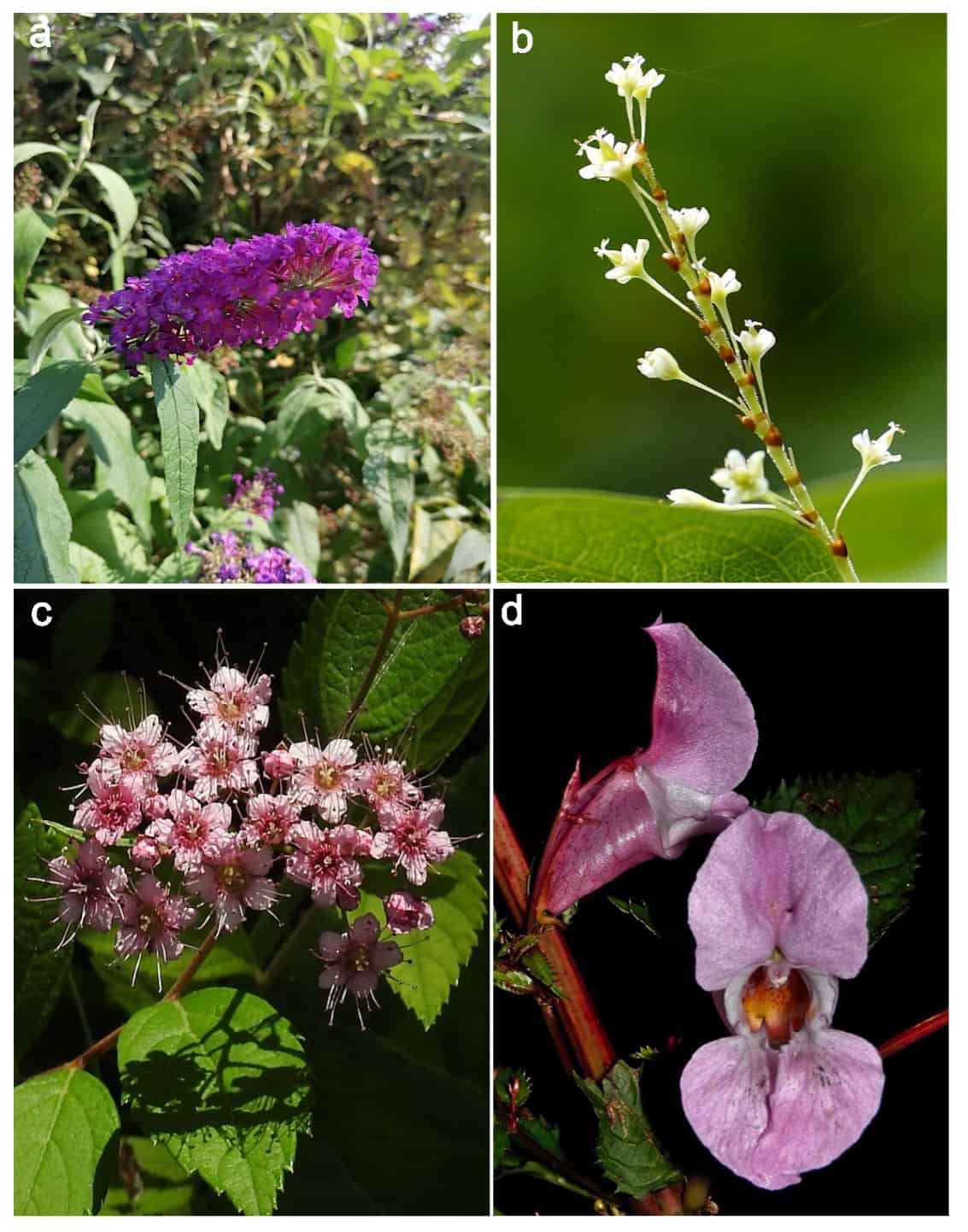
The study showed that invasive plants use different visual strategies to attract bees. Invasive species like Buddleja davidii, Reynoutria japonica, and Spiraea japonica exhibit colours that are visually similar to native plants. This strategy allows these invasive species to benefit from colour generalisation and attract pollinators from a distance. When bees visit a native flower, they can easily go to an invasive one without noticing the difference. This “camouflage” strategy can be advantageous, as invasive species can attract pollinators already familiar with local plants.
Contrastingly, the pink and violet flowers of Impatiens glandulifera use a different strategy: they stand out with highly perceptible colours that are easily noticed by bees. This makes the bees detect these flowers from afar and quickly learn to associate them with nectar. As a result, these plants attract more bees than the surrounding native flowers, favouring their pollination.
With these findings, the authors provide relevant insights into the reasons behind the success of invasive plants. One of the main points raised is that plant invasions are not just about competing for space and resources with native species; these plants also compete for local pollinators, which is crucial to ensure their reproduction. While the success of these plants is not typically investigated from this point of view, it is essential to look at their characteristics through the eyes of pollinators, who perceive and respond to flower signals. Studying invasive plants from such a perspective can help uncover new information about how these species spread and even help create conservation strategies that protect native plants.
READ THE ARTICLE:
Dessart, M., Aguiar, J.M.R.B.V., Tabacchi, E., Guillerme, S. and Giurfa, M., 2024. Color-advertising strategies of invasive plants through the bee eye. Frontiers in Plant Science, 15, p.1393204. https://doi.org/10.3389/fpls.2024.1393204

Ana Carolina S. Oliveira is a pollination biologist fascinated by understanding the choice of pollinators through the visual signs of flowers, especially how bees interpret the universe of floral colours. Currently, in her PhD, she is trying to understand how floral colour modulates the reproduction and structuring of oil flower communities and the preference of bees in this context.
Portuguese translation by Ana Carolina S. Oliveira. Featured image by Shizhao (Wikicommons).