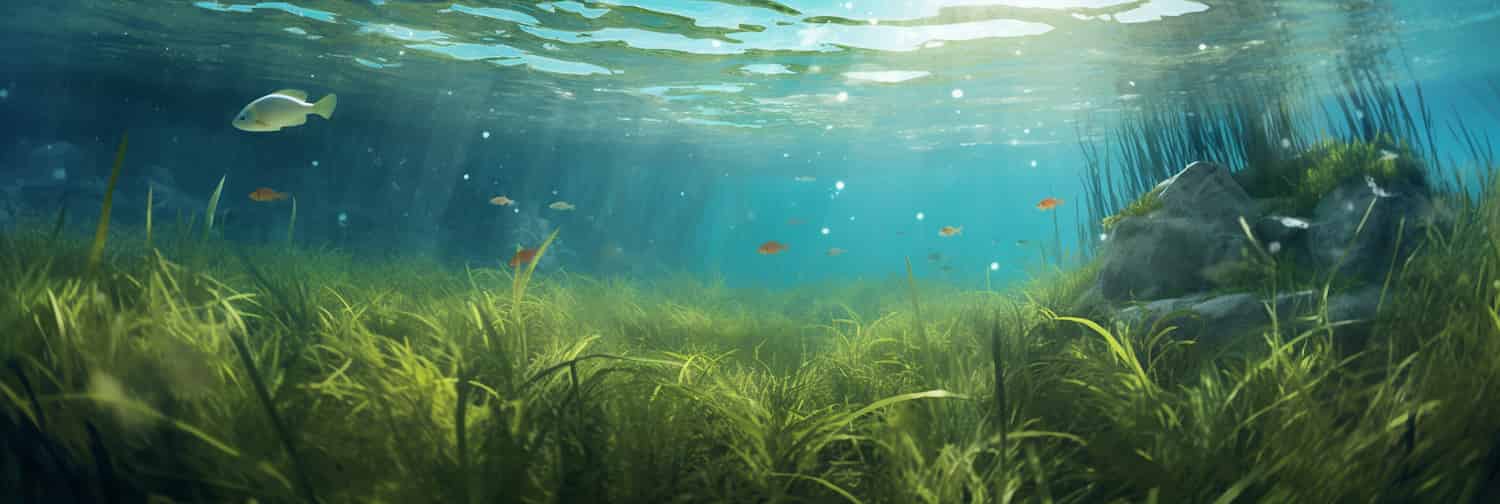



Climate change has long been recognised as a significant threat to biodiversity on land, but its profound impact on marine life is now under increased scrutiny. Researchers Barnabas Daru & Brianna Rock, in their recent study published in Nature Plants, turned their attention to the world under the waves, specifically to the globally distributed seagrass meadows. These underwater ecosystems, often overlooked but vital for marine food chains and habitats, face serious reshuffling due to climate change. The surprising twist? Researchers predict an increase in certain types of ‘endemism’ (species unique to a specific location) as seagrass range sizes diminish, dramatically changing diversity across different regions.
Moving beyond the all-too-familiar headlines of shrinking habitats and species loss, Daru and Rock’s research paints a more nuanced picture of what climate change means for the verdant underwater meadows of seagrass.
Their models forecast a general contraction in the geographic ranges of seagrass species due to climate change. Strikingly, over 31% of the seagrass species they studied are predicted to decline by over 10% in their range sizes by mid-century, and these numbers will worsen by the end of the century. Amidst this grim reality, an unexpected phenomenon emerges: as seagrass ranges contract, the unique biodiversity within these areas – known as ‘endemism’ – is projected to increase.
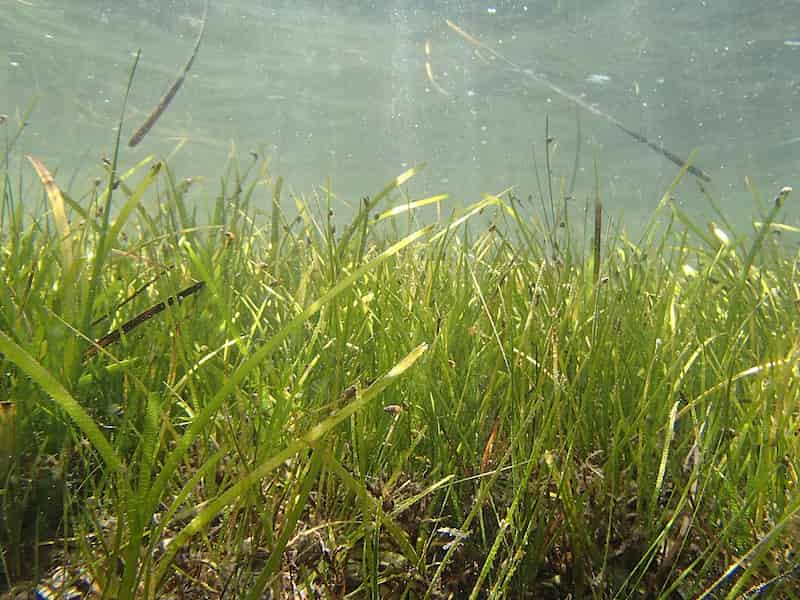
Greater endemism might sound like good news, signifying an increase in species found nowhere else in the world. But it also suggests that the environmental conditions are becoming more hostile for seagrass, endangering these unique communities. Moreover, these changes in endemism are anticipated to manifest differently across various regions, leading to a fascinating, albeit worrying, mix of differentiation and homogenisation in seagrass diversity.
The research also uncovered worrying findings about the future effectiveness of our current conservation efforts. The study revealed that Marine Protected Areas – those parts of the ocean set aside for conservation – are not aligned with the anticipated hotspots of seagrass diversity. As a result, many of the regions forecasted to house diverse and unique seagrass communities may need more protection under current conservation measures.
Seagrasses play a vital role in marine ecosystems, similar to coral reefs and mangroves. They provide food for many marine animals, including endangered species like green sea turtles, manatees, and dugongs both directly and indirectly.
“For example, sharks feed on marine animals that, in turn, may feed directly or indirectly on plants,” said Daru in a press release. “If anything affects these foundational species at the beginning of the food chain, it will have cascading effects on other organisms that depend on them high up in the food chain, including humans.”
Seagrasses are an ancient group of plants that originated in the ocean, moved to land, and then returned to the sea roughly 140 million years ago. They offer habitats for many marine creatures and provide valuable ecosystem services, such as sediment stabilisation, carbon sequestration, and water purification. However, these critical habitats are being lost at a startling rate due to human activities like pollution and coastal development, and the impacts of climate change are expected to exacerbate these losses.
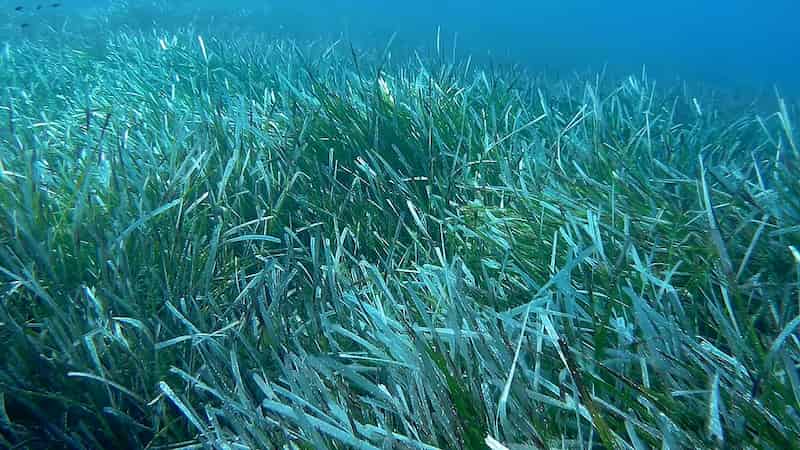
Thalassia testudinum or Turtle grass found nearby Archer Key, FL. Video: Fjgorora / Wikimedia Commons.
While there have been regional predictions of how seagrasses might shift due to climate change, there hasn't been a global assessment of this phenomenon, despite seagrasses' vital role in marine food chains. Several challenges hinder such research, including a lack of georeferenced data, coverage gaps, sampling biases, and analytical tools.
Seagrasses fan out across roughly 116,000 square miles of coastline bordering 191 countries on all continents except Antarctica. Modelling how climate change might affect seagrasses worldwide is no small feat.
Daru and Rock began by mapping the location and abundance of each seagrass species using roughly 100 years of seagrass samples collected from coastal ecosystems. They combined these data with records they gathered in the field and information gleaned from public databases of seagrass occurrence, like the Global Biodiversity Information Facility and Seagrass-Watch. They overcame uneven sampling by using data from well-sampled areas, like North America and Europe, to model predicted seagrass habitats for under-sampled regions like Southeast Asia and the Indo-Pacific.
Next, they created global "snapshots" representing the ocean's climate today and how it might be in the time periods of 2040-2050 and 2090-2100 using geophysical and environmental data from the Bio-ORACLE website.
For the present and two future time periods, Daru modelled four different scenarios:
- A "best-case" climate with low greenhouse gas concentrations.
- Two stabilised scenarios where greenhouse gas levels plateaued.
- A "worst-case" scenario with high greenhouse gas concentrations.
These modelled scenarios included data on sea temperature, salinity, and sea current speed – all variables known to influence seagrass growth, distribution, and photosynthesis significantly.
Finally, Daru applied a computer model of the observed species occurrences to predict how seagrass populations and distributions might change between the present day and two future time points to each climate scenario.
The research paints a critical picture of the future for seagrasses under climate change scenarios. It forecasts widespread shrinkage of seagrass habitats alongside increased areas of concentrated and phylogenetically unique species - a phenomenon which could boost diversity in some regions. However, this won't be a universal victory, as other areas could suffer losses that lead to a uniform, less diverse seagrass landscape. Notably, the researchers found that seagrasses declined in abundance and composition under every scenario they tested, even the "best case" scenario. So what does this mean?
"It probably means that 'the best' is still not enough," Daru said. "We have to be more intentional in how conservation efforts are prioritized and this sort of analysis points to the places where these efforts should be done."
Alarmingly, these significant changes are expected to occur largely outside the current marine protected areas, hinting at a stark inadequacy of our present-day conservation measures in safeguarding seagrasses against the impending climate crisis.
The implications of these findings underscore the need for urgent action. Given the vital role that seagrasses play in supporting diverse marine life, sequestering carbon, and stabilising sediment, their potential decline poses far-reaching ecological and environmental consequences. To prevent this future scenario, it's clear that a reevaluation and expansion of our marine conservation strategies are needed, with a particular focus on the identified priority areas for seagrass preservation.
“We highlighted hotspots of change in species diversity and phylogenetic diversity that represent priority regions to target for conservation efforts,” Daru said. “Our goal, our hope is that by pointing policymakers and conservationists to focus on these hotspots, marine protection will be increased in these areas and the future of seagrasses will – to some extent – be safeguarded.”
READ THE ARTICLE
Daru, B.H. and Rock, B.M. (2023) “Reorganization of seagrass communities in a changing climate,” Nature Plants, pp. 1–10. Available at: https://doi.org/10.1038/s41477-023-01445-6.


.jpg?ref=botany.one)
