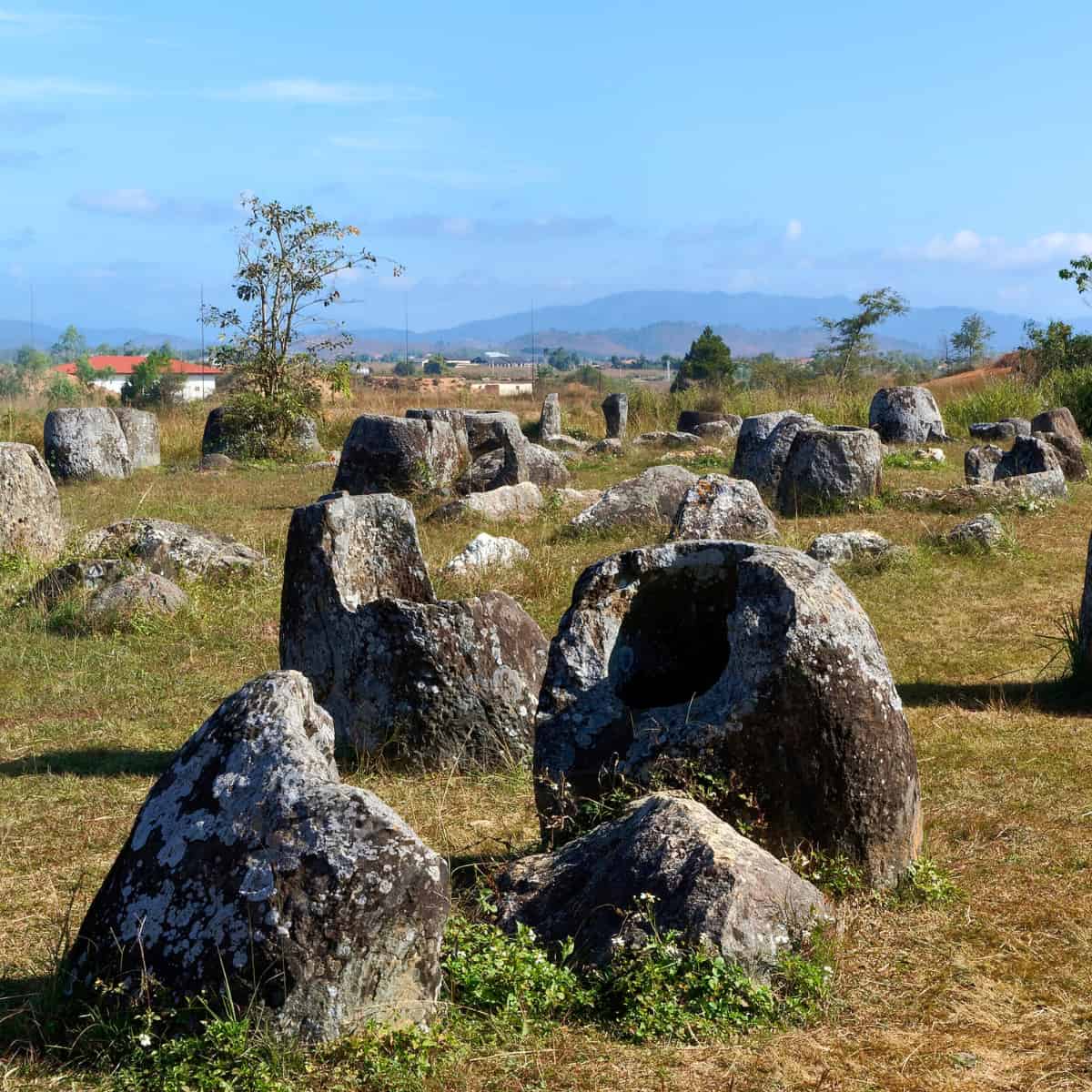



In the land of Laos you can find one of the world’s most enigmatic archaeological sites, the Plain of Jars. This is a region where cut stone jars between one and three metres tall sit on the ground. They appear to be set for funerary purposes, but over 2000 years later an article by Laura Käse and colleagues in the journal Ecography argue they’ve become the world’s oldest (unintentional) biological experiment.
The reason the plains are so interesting is partly because of how the jars were left: largely upright, but at different angles and collecting rainwater. Another reason is where they were left: across 15,000 square kilometres, with varying geology and different locations from hills to rice paddies to forests. The result is hundreds of comparable ecosystems in the jars, with variations in set up, allowing the testing of a number of ecological questions.
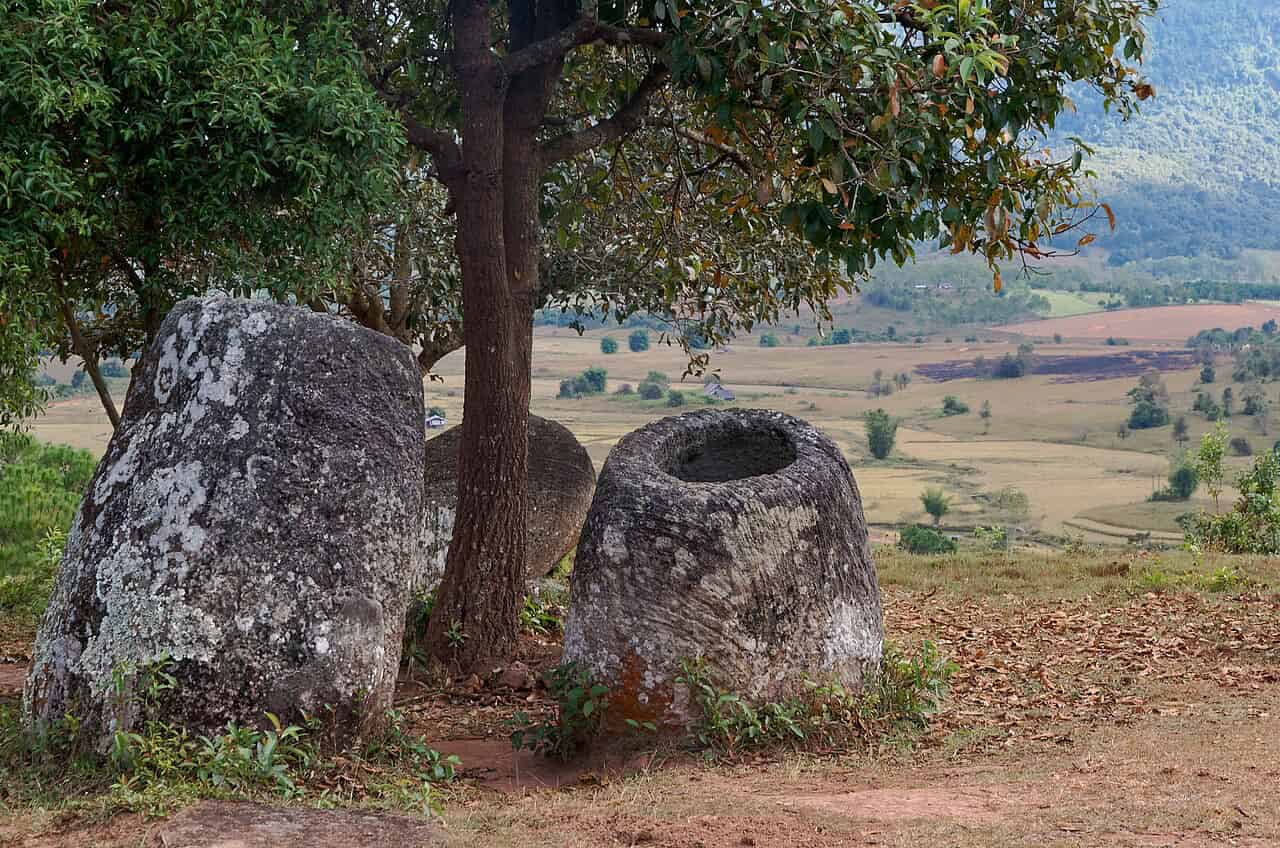
Käse and colleagues decided to see how useful the jars could be by asking a fairly simple question: what effect does tree cover have on the jars’ ecosystems. They sampled water from 39 jars across five sites in dry season (November 2022) and wet season (September 2023), measuring volume, dissolved oxygen, phosphorus and alkalinity.
Sure enough tree cover matters. They write: “...sites with substantial tree cover had significantly lower O2 concentrations, indicating lowered autotrophic production and/or higher respiration.” They also found that decomposing leaf litter increased phosphorus concentrations. It’s similar to what you’d see in ponds, but in this case the ponds have been around for about 2000 years. Normally ponds turn to bog over a hundred years.
This continuity poses a challenge. The jars are home to duckweeds, charophytes and various aquatic animals. With these artifical ponds surviving for so long, have they led to species adapting to their very specific local conditions? Or do they repeatedly dry out and get recolonised afresh each time?
This is very much the start of a study, and while it might not take a couple of thousand years, it won’t be quick. Access to much of the Plain of Jars is restricted. The area is one of the most heavily bombed places on earth and littered with unexploded ordnance.
Käse and colleagues frame this as the oldest man-made ecosystem ever analysed. It’s not an intentional experiment in the way the Park Grass experiment is, but it’s a collection of ecosystems two millennia in the making. Certainly, if you want to re-run it you’ll need a lot of patience.
READ THE PAPER
Käse, L., Somvongsa, C., Inkhavilay, K., Christensen, C., Iversen, L., Pedersen, O., and Baastrup‐Spohr, L. (2025) The world's oldest man‐made biological experiment. Ecography, 2026(1). Available at: https://doi.org/10.1002/ecog.0799
Cover image: Plain of Jars - archaeological site number 1 by Jakub Hałun, CC BY-SA 4.0, via Wikimedia Commons