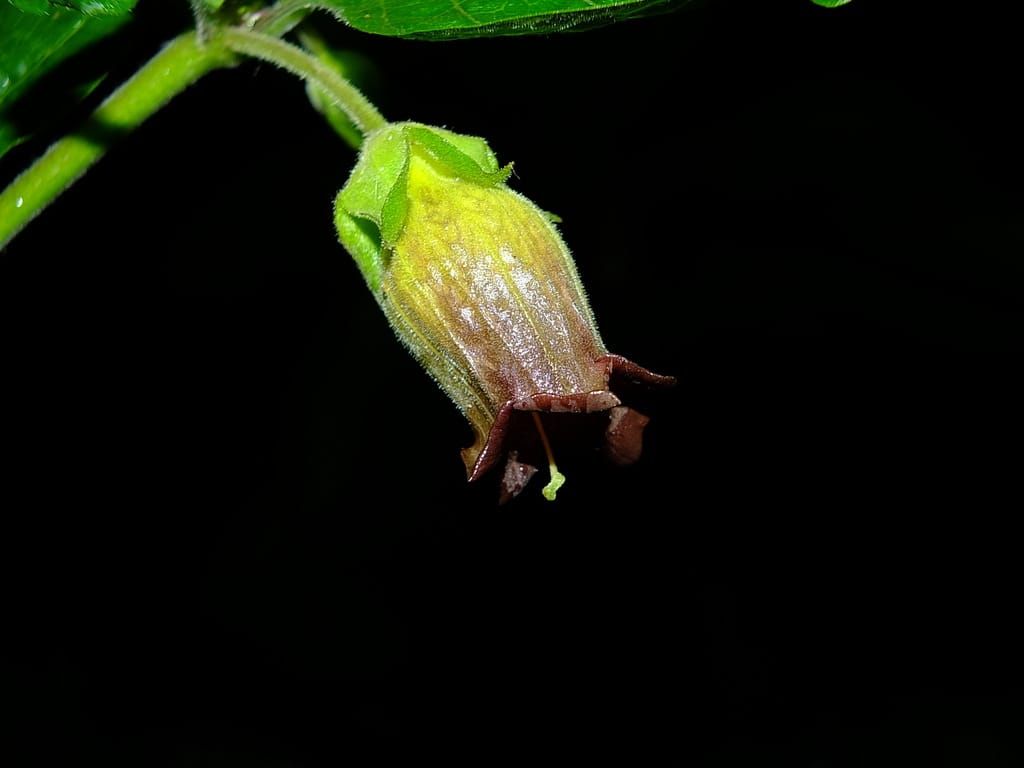

The nightshade family (Solanaceae) is a diverse group of approximately 2,700 living species that originated in South America and now grow on every continent except Antarctica. The family includes fruit crops, such as tomato, eggplant (aubergine) and pepper (capsicum), as well as tobaccos and petunias. But when did all these different species evolve?
“The timing of the radiation of nightshades (Solanaceae) has been contentious in the literature,” write González-Ramírez and colleagues in their new paper, published as part of a special issue on the "Role of Fossils in Reconstructing Plant Evolution" in Annals of Botany.
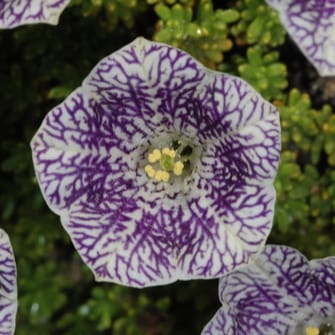
And so, González-Ramírez and colleagues set out to resolve this controversy using fossils and new evidence. Their surprising result: Solanaceae diversity dates to ~98 million years ago – three times older than previously thought.
“Here we estimated that many diverse groups of Solanaceae once thought to be recent radiations are instead much older, some with roots in the Cretaceous,” write González-Ramírez and colleagues.
To reach this conclusion, the researchers used data from 134 living and 14 fossil Solanaceae species. They surveyed 17 discrete and eight continuous morphological characters across those species, as well as DNA information, to produce a phylogenetic tree that could date the appearance of Solanaceae subfamilies and genera.
“Our model-based and total-evidence results provide strong support for the early diversification of the family, beginning in the mid- to Late Cretaceous and giving rise to all of the major lineages, from petunias, to tobaccos, to peppers and tomatillos,” they write.
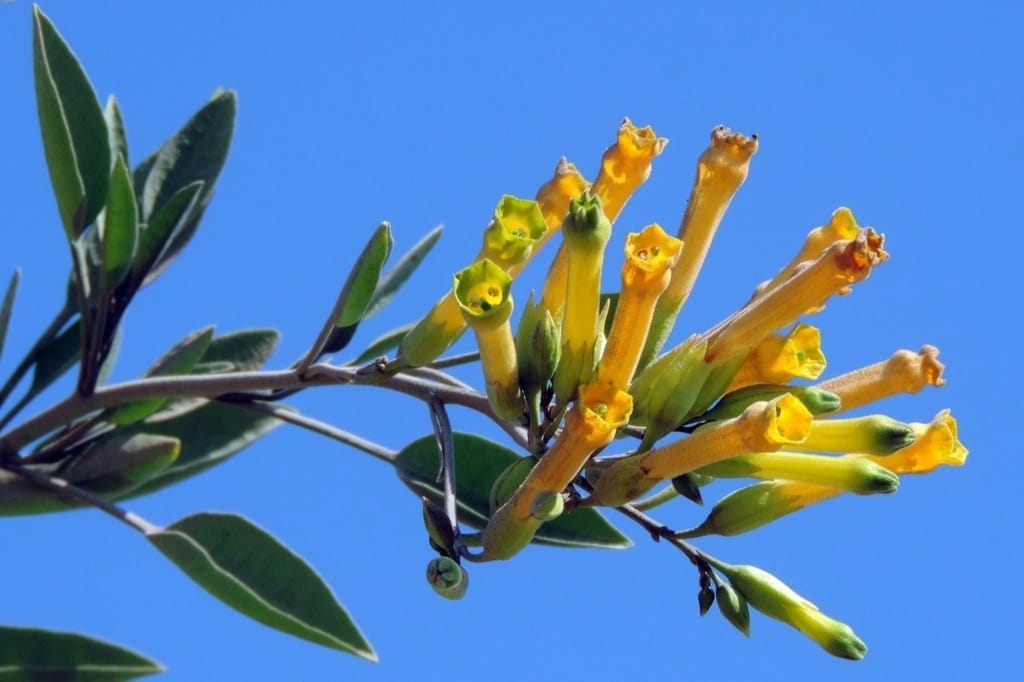
To ensure a sufficient scaffold on which to hang estimated dates for Solanaceae speciation, their study covered 97 of the 101 genera in the family. Of the fossils included, 11 distinct species were represented: four fruit macrofossils from the berry clade and 10 seed fossils. Morphological characters that were scored included calyx, vein, seed, fruit and embryo traits. These characters were complemented with nuclear and plastid DNA marker information. Phylogenetic and clock modelling was then applied to the dataset to generate likely trees and timeframes for Solanaceae diversification.
“These characters were selected due to their variation across the fossils, their ability to discriminate among extant taxa and their utility in previous family-level classifications,” write González-Ramírez and colleagues.
The researchers found that the Solanaceae family split into a number of subfamilies in the Late Cretaceous ~70 million years ago, including the Goetzeoideae, Cestroideae, Nicotianoideae and Solanoideae. Then, about 50 million years ago in the Eocene, the Nicotianoideae subfamily diversified, and, soon after, the Solanum genus emerged.
But interestingly, “the tomatillo and chili pepper lineages began to diversify before Solanum” about 67 and 57 million years ago, respectively, consistent with fossil evidence from the early Eocene. Additionally, they were able to place the common ancestor for chilipeppers and tomatoes at ~72 million years ago. The common ancestor for the berry clade (Solanoideae) and tobacco species (Nicotianoideae) was pushed back to 80 million years ago from 25 million years ago.
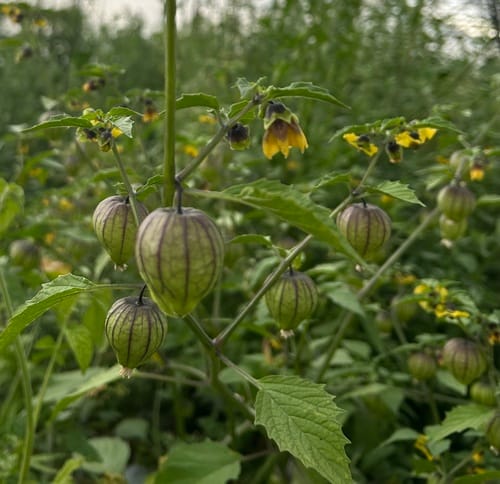
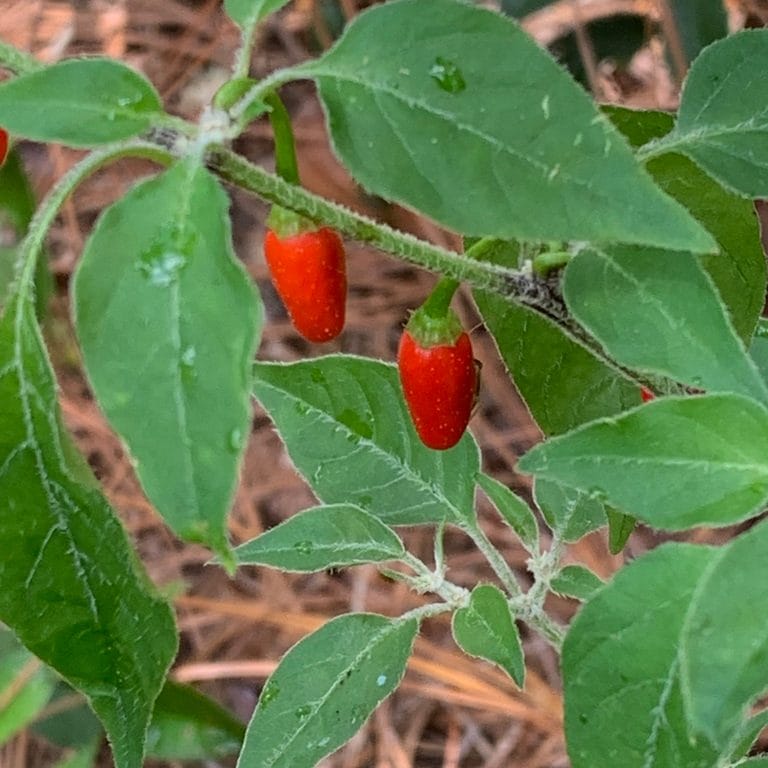
Tomatillo and chilipepper began to diversify before the Solanum genus, about 67 and 57 million years ago, respectively. Left: Large-flowered Tomatillos (Physalis philadelphica) by raul_larsen growing in Sarmiento, Chubut, Argentina. CC BY-NC 4.0. Right: Bird Pepper (Capsicum annuum var. glabriusculum) by soflo growing in Florida, USA. CC BY-NC 4.0
The researchers credit the wealth of fossil data that was incorporated into the study, along with a fully Bayesian approach to modelling, for the new diversification estimates. Recent studies of angiosperm evolution were also helpful in setting constraints for the models.
Now that these older dates have been established, there are important implications for the biogeography of the Solanaceae family.
“Deeper estimates for the age of Solanaceae carry significant implications for the diversification of the family across time and space," they write.
This is because these older dates change how we understand the biogeographical history of the Solanaceae family. Moving back in time places Solanaceae diversification to a time when the Southern Andes were just beginning to lift, the northwestern edge of South America was mostly underwater and South America was not only close to Africa but connected to Australia via Antarctica.
This ancient geography along with rapid diversification may “explain the wide geographical range among major Solanaceae lineages, with many lineages split between South America and Australasia” according to González-Ramírez and colleagues. Consequently, they suggest geography may have played a larger role in the history of Solanaceae diversity than previously thought.
And so Solanaceae diversity is much older than we thought, dating to a time when the continents were connected and the dinosaurs roamed. The weight of history is in every tomato, pepper and eggplant you eat.
READ THE ARTICLE:
González-Ramírez, I., Deanna, R., and Smith, S.(2026) Late Cretaceous origins for major nightshade lineages from total-evidence timetree analysis. Annals of Botany, 137(6), pp. 2025-2040. Available at: https://doi.org/10.1093/aob/mcag011.
READ MORE:
Baldaszti, L., Gagnon, E., Moonlight, P., Lehmann, C., and Särkinen, T.(2026) No evidence for the niche breadth–range size hypothesis in big plant genera. Annals of Botany. Available at: https://doi.org/10.1093/aob/mcag006.
Cover Image: Deadly Nightshade (Atropa bella-donna) by Sébastien SANT CC BY-NC 4.0