

Plants are incredibly diverse, and so are botanists! In its mission to spread fascinating stories about the plant world, Botany One also also introduces you to the scientists behind these great stories.
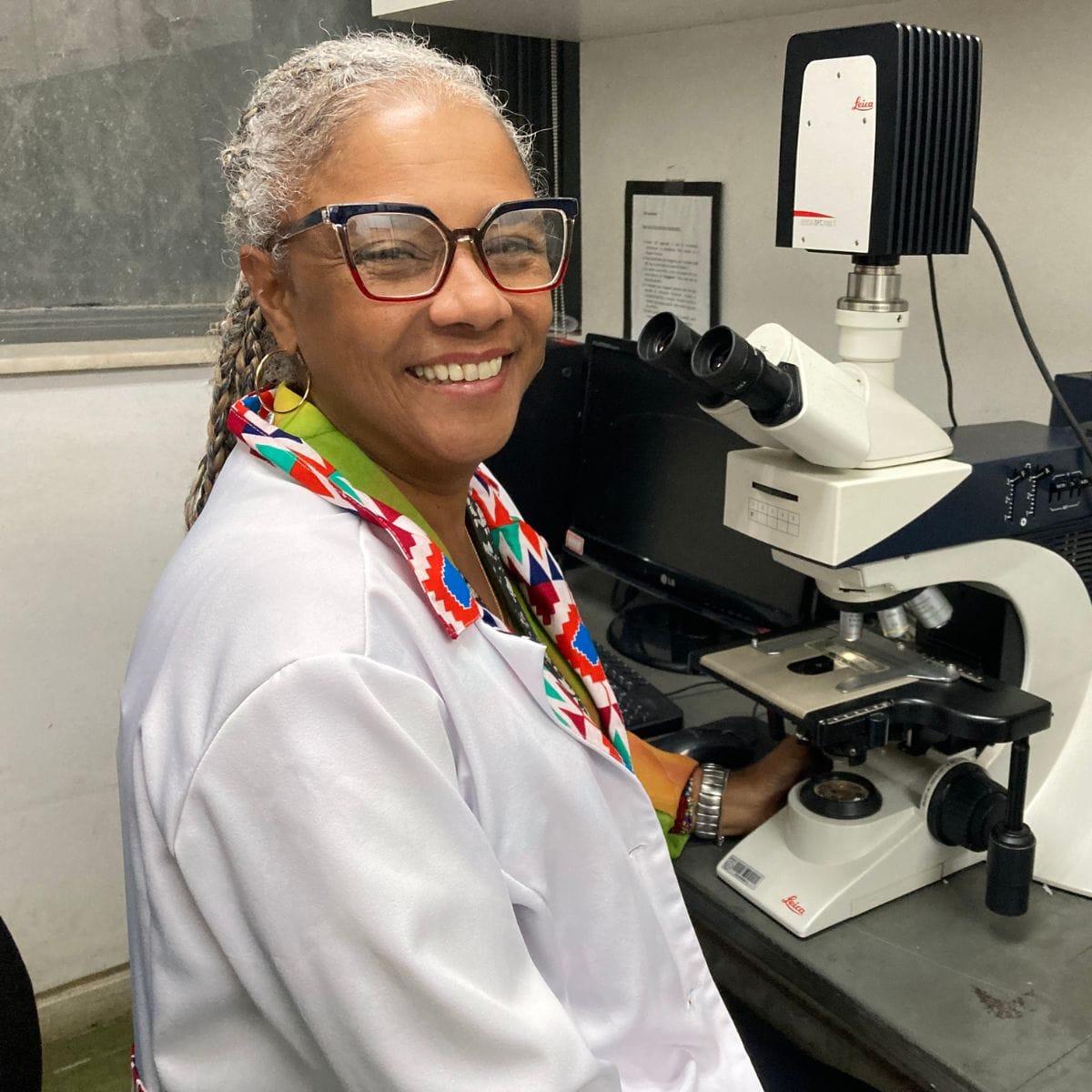
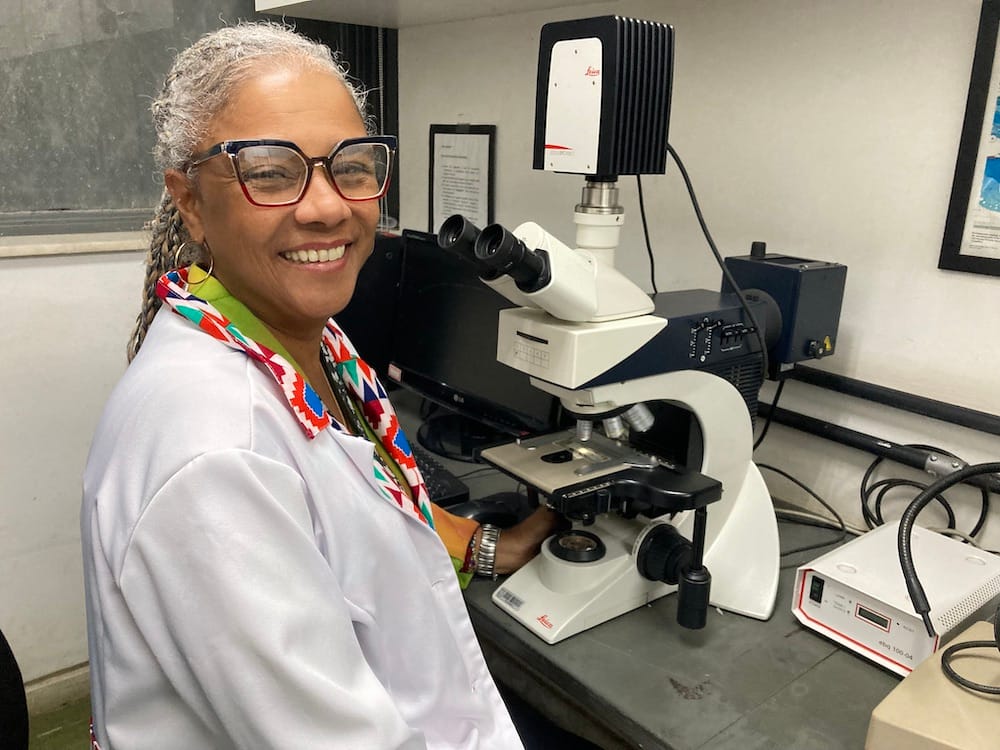
Today, we have Dr Rosy M. S. Isaias, a professor in the Plant Anatomy Laboratory of the Department of Plant Biology at the Universidade Federal de Minas Gerais (Belo Horizonte, Brazil). Her research focuses on the anatomy of plant galls –the outgrowths that occur on different plant organs due to the action of various insects or microorganisms. Notably, Isaias is the first black woman to reach the highest productivity category of the CNPq -the Brazilian government agency in charge of promoting the country’s scientific and technological development.
What made you become interested in plants?
Intuitively, during my undergraduate course on Biological Sciences, even before deciding to be a plant biologist, I always looked at plants as a model study for the projects the class was required to do. For the mathematics and statistics exercises, for example, I usually tried to find questions regarding plants. By the middle of the course, what caught my attention most were the microscopic aspects of plants. So, I entered the world of plant anatomy, first as a monitor, later as a graduating student, and finally as a professor.
What motivated you to pursue your current area of research?
I was lucky to find Prof. Lea Neves and Prof. Jane Kraus, my supervisors for master’s and PhD degrees, respectively. Prof. Lea was the one who proposed I work with insect galls on Ficus species when I got to Museu Nacional of the Universidade Federal do Rio de Janeiro. I agreed without knowing exactly the challenges I would face. For my pleasure, I was introduced to plant-insect interactions from the perspective of plant anatomy and histochemistry, the same research line as Prof. Jane at Universidade de São Paulo. Up to now, plant anatomy and histochemistry have been the basis of my academic career construction, for they interconnect most aspects of the biology of galls.
What is your favourite part of your work related to plants?
I work with the biology of plants and their potential to respond to the biotic stress imposed by gall-inducing organisms, which is fascinating. I love analysing the slides under the diverse types of microscopes to find the answers to the new and old questions on how galling organisms can alter plant morphogenesis. I learned to find the responses by interpreting gall anatomical and histochemical profiles, taking the non-galled conditions as controls. Plants support our lives in many aspects, and understanding how they respond and adapt to environmental stresses is a way to deal with them in changing environmental scenarios.
Are any specific plants or species that have intrigued or inspired your research? If so, what are they and why?
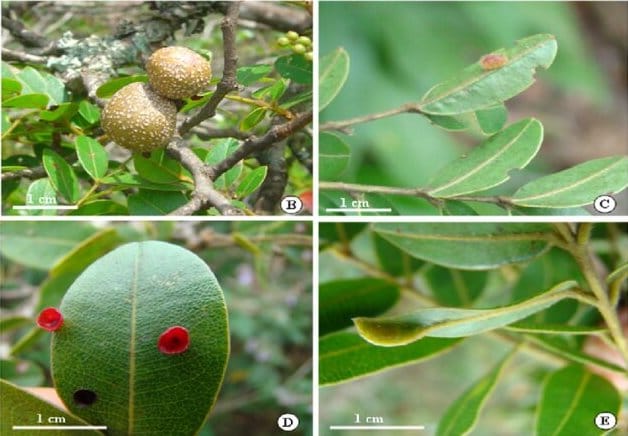
One plant species that intrigues me is Copaifera langsdorffii, and many other superhosts of galling herbivores. These plants have the potential to host many galling insects, each inducing a specific gall morphotype, so we can infer the number of species each superhost supports based on the shapes of the galls. Also, the different responses they develop under the stimuli of the different species intrigue as they develop under the same morphogenetical potential of the host plant. Sometimes, the set of responses is convergent; sometimes, it is divergent, and the puzzle of how galls develop gets more and more complete.
Could you share an experience or anecdote from your work that has marked your career and reaffirmed your fascination with plants?
I have many interesting stories constructing the puzzle of stimuli, responses, and cascade of events involved in gall development. The first triggering of the reactive oxygen species, for example, and the following sequence of responses orchestrated by the synthesis of phenolics in the gall developmental site was a theoretical model with good acceptance by cecidologists. Nevertheless, I have had two marvellous experiences, which I guess are quite interesting: the two species of insects nominated in my honour. They represent the importance of my name and the contribution of my research group to Cecidology, –the study of galls. They are the Eriogalococcus isaias, named by Prof. Christopher Hodgson from the National Museum of Wales, and Palaeomystella rosaemariae, named by Prof. Gilson Moreira from Universidade Federal do Rio Grande do Sul.
What advice would you give young scientists considering a career in plant biology?
Read and study a lot. Be conscious of your weak points and work on them. Do not give up. Follow your dreams. Plant biology is fascinating, and mysteries and challenges are yet to be discovered. You may find many obstacles in your career, but if you work hard, you can construct your own way and be happy with your decision to be a scientist.
What do people usually get wrong about plants?
I suppose many people see plants as banal and uninteresting and botany as a series of names to be memorized, but once we start observing, paying attention to plant cycles and beauties, studying and learning how they survive multiple attacks, we can be convinced that they are not on the planet merely for our pleasure. Maybe we can start respecting these beings. We do need them for our comfort and survivorship, and we must be conscious of that soon, as the planet urges for equilibrium.
Carlos A. Ordóñez-Parra
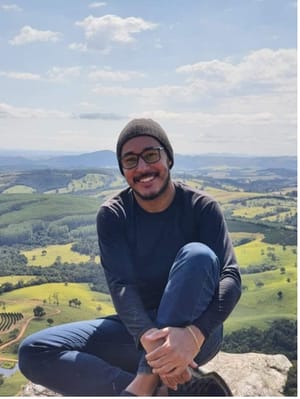
Carlos (he/him) is a Colombian seed ecologist currently doing his PhD at Universidade Federal de Minas Gerais (Belo Horizonte, Brazil) and working as a Science Editor at Botany One and a Social Media Editor at Seed Science Research. You can follow him on X and BlueSky at @caordonezparra.