



Caligula, the notoriously erratic Roman emperor known for his bloodthirsty cruelty, probably also possessed a nerd’s knowledge of medicinal plants, according to a new study. The study, by Trevor Luke and Andrew Koh, illuminates a brief anecdote about Caligula originally reported by the historian Suetonius in “The Twelve Caesars,” a second-century collection of biographies of Roman rulers from Julius Caesar to Domitian.
In the story, an unnamed Roman senator of praetorian rank who is suffering from an unspecified ailment takes a leave of absence to the Greek spa town of Antikyra in hopes that his health will benefit from treatments made from hellebore — a flowering plant purported to have medicinal properties. The senator, perhaps pressing his luck, asks Caligula to extend his leave. In response, the emperor has the hapless senator executed, quipping that “a bloodletting was necessary for one whom hellebore had not benefited in all that time.”
The researchers, combining ethnobotanical field data and a close reading of ancient texts, offer new understanding of the passage, providing context about Antikyra’s place in the Roman Empire and Caligula’s familiarity with pharmacology.
“Our work suggests that Antikyra functioned as a kind of Mayo Clinic of the Roman world — a place where affluent and influential Romans visited for medical treatments not widely available elsewhere,” said co-author Andrew Koh, who is principal investigator at the Yale Ancient Pharmacology Program. “It also provides evidence that Caligula, while a tyrant, was more knowledgeable about medicine than has been previously understood.”
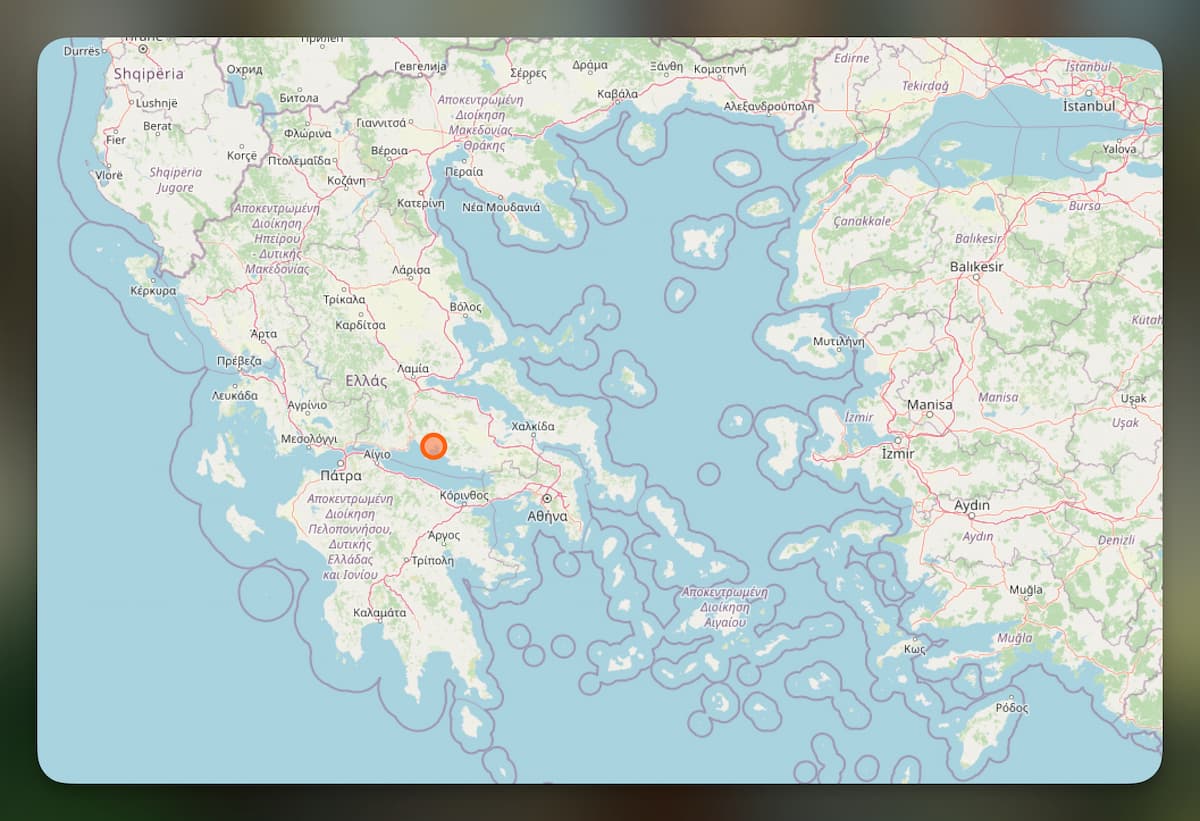
Located on the Gulf of Corinth in the Phocis region of central Greece, Roman Antikyra was a modest port town famed for its association with unique hellebore treatments. In ancient times, hellebore was valued as a purgative, a treatment for epilepsy, and a cure for mental illness, the researchers said. Ancient texts describe two varieties of the plant: white hellebore used to treat afflictions of the head and black hellebore used to clear the bowels.
Recent scientific work has found that hellebore could help zebrafish with epilepsy. This research may in turn be used to develop a drug that benefits humans. In their paper Luke & Koh also note that hellebore at Antikyra was used for treating “melancholy, insanity, epilepsy (comitialis morbus), and gout.”
Though slightly at odds with the historical texts, Brillatz and colleagues used black hellebore for epilepsy in their zebrafish study, rather than white hellebore. This problem confirming which plant is relevant is discussed by Luke & Koh. The pair say that examining historical uses of hellebore is difficult in part because ancient peoples, unbound by modern taxonomic classifications, used the term “hellebore” to reference various plants. They also note that ancient identifications of plant life evolved over time and geography, leading to discrepancies in plant names.
Further complicating matters, local naturalists in modern Greece use identifications that clearly reference plants that are different than those described in ancient sources. For example, the researchers said, an herbalist in modern-day Antikyra, which today is a small fishing village, identified “elleboro” as dwarf elderberry, which is an altogether different plant than hellebore as described in ancient texts.
It’s a problem that highlights the value of the Linnean binomial system for naming plants for modern botany. If the ancient authors had a similar system of classification of plants like Helleborus cyclophyllus then we’d have more certainty which hellebore they were talking about.
The researchers will now analyse the phytochemicals in specimens they recently collected from the Greek landscape to test their efficacy and biochemical interactions in relation to their ancient reputations, Koh said. The analytic approach, he said, combines textual evidence with scientific evidence to better understand history and glean lessons from the ancient past that are applicable for today.
One important lesson is not to muck about with hellebore. It will harm you.
READ THE ARTICLE
Luke, T.S. and Koh, A.J. (2025) “Antikyran hellebore in the time of Caligula,” Proceedings of the European Academy of Sciences & Arts, 4. Available at: https://doi.org/10.4081/peasa.56.
Cover: Marcus Lindstrom / Getty Images / Canva.