
Climate change predictions indicate a progressive increase in average temperatures and an increase in the frequency of heatwaves, which will have a negative impact on crop productivity. Over the last decade, a number of studies have addressed the question of how model plants or specific crops modify their metabolism when exposed to heat stress.

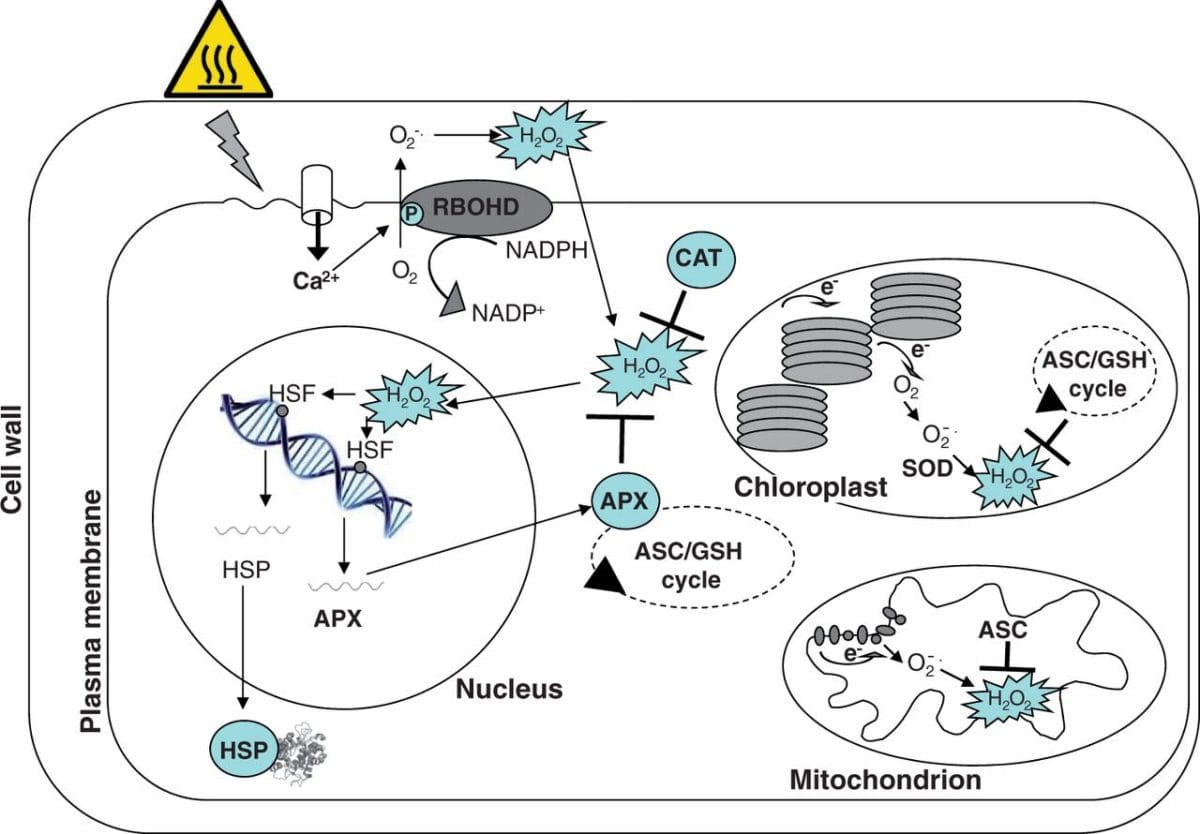
de Pinto et al. provide an overview of the redox pathways that contribute to how plants cope with heat stress, focussing on the roles of reactive oxygen species (ROS), redox metabolites and enzymes in the signalling pathways leading to the activation of defence responses. They conclude that although there is clear evidence that several strategies are specifically activated according to the intensity and the duration of heat stress, as well as the capacity of the different species or genotypes to overcome stress, an alteration in redox homeostasis seems to be a common event. Knowledge of thermo-tolerance within agronomic biodiversity is of key importance to enable researchers to identify new strategies for overcoming the impacts of climate change.
This article appears in the special issue ROS and NO Reactions in Plants.