


Why is it that gardeners garden? Is it to commune with nature, to impose an aesthetic sense on their outdoor space like they do with their indoor space? Or is there something more? Researchers from the SWPS University, Warsaw University of Technology and the Warsaw University of Life Sciences took a look at what drives the gardeners of Poland’s capital. One key factor that emerged was community.
The researchers analysed whether the Warsaw community had the potential to develop urban gardens to foster adaptation to climate change. In addition to conducting the scientific literature review, they characterized local gardeners and their initiatives, and asked them about the function of gardens not only in the context of environmental protection, but also community building. A total of over 250 interviews were conducted for the purposes of the study.
This research adds a crucial social science perspective to urban climate adaptation, revealing how community dynamics determine whether green infrastructure succeeds or fails. While we often focus on the technical aspects of urban gardening, this study shows that social capital – the networks, relationships and shared values within communities – may be the hidden key to scaling up nature-based climate solutions.
It turns out that urban gardening is widespread in Warsaw. This social movement includes individual groups of residents, more or less formal teams, associations and foundations, as well as public institutions such as schools and cultural institutions.
By engaging in urban gardening, residents want to create a friendly life space around them that will ensure their well-being, contact with nature, a sense of responsibility for the environment, help to build social bonds and exchange knowledge.
On average, Warsaw gardens associate 10-15 people who are the core of the group. There are also people who work in the gardens occasionally, as well as visitors who simply spend their free time there. Members of all social groups can be found in the gardens, although – as the researchers admit – senior citizens (usually women with higher education) and families (middle class with higher education) are the most active.
The leaders of such gardening groups are usually institutional employees (employed in institutions where gardens are created), social activists (both amateur and professional ones, e.g. affiliated with NGOs), as well as “hero” activists who are tirelessly committed urban gardens.
According to the leaders, the main purpose of urban gardening is not food production, but pro-ecology activities (in the broadest sense of protection of biodiversity and management of biowaste), education, and building an active, cooperative society. This would tally well with recent research in Germany and in the UKthat supports the ecological claims. The community element is also supported by recent research.
This community element is brought to the fore in the paper’s conclusion:
Such an extensive scale of activities requires a systemised approach to urban community gardening as a permanent functional and ecosystem element of the city. It turns out that urban gardening is one of the basic needs of citizens to create a friendly living space that provides well-being, providing contact with nature, social connections, environmental responsibility, knowledge exchange and education.
The combination ecosystem services and community support, could make urban gardens a powerful tool in urban planning for the coming century.
READ THE ARTICLE
Lasocki, M., Majewski, P., Zinowiec-Cieplik, K., Szczeblewska, A., Melon, M., Dzieduszyński, T., Grochulska-Salak, M., Kaczorowska, M., Derewońko, D. and Gawryszewska, B. (2025) “Urban garden communities’ social capital as a support for climate change adaptations – a case study of Warsaw,” Miscellanea Geographica, 29(2), pp. 81–92. Available at: https://doi.org/10.2478/mgrsd-2025-0005.
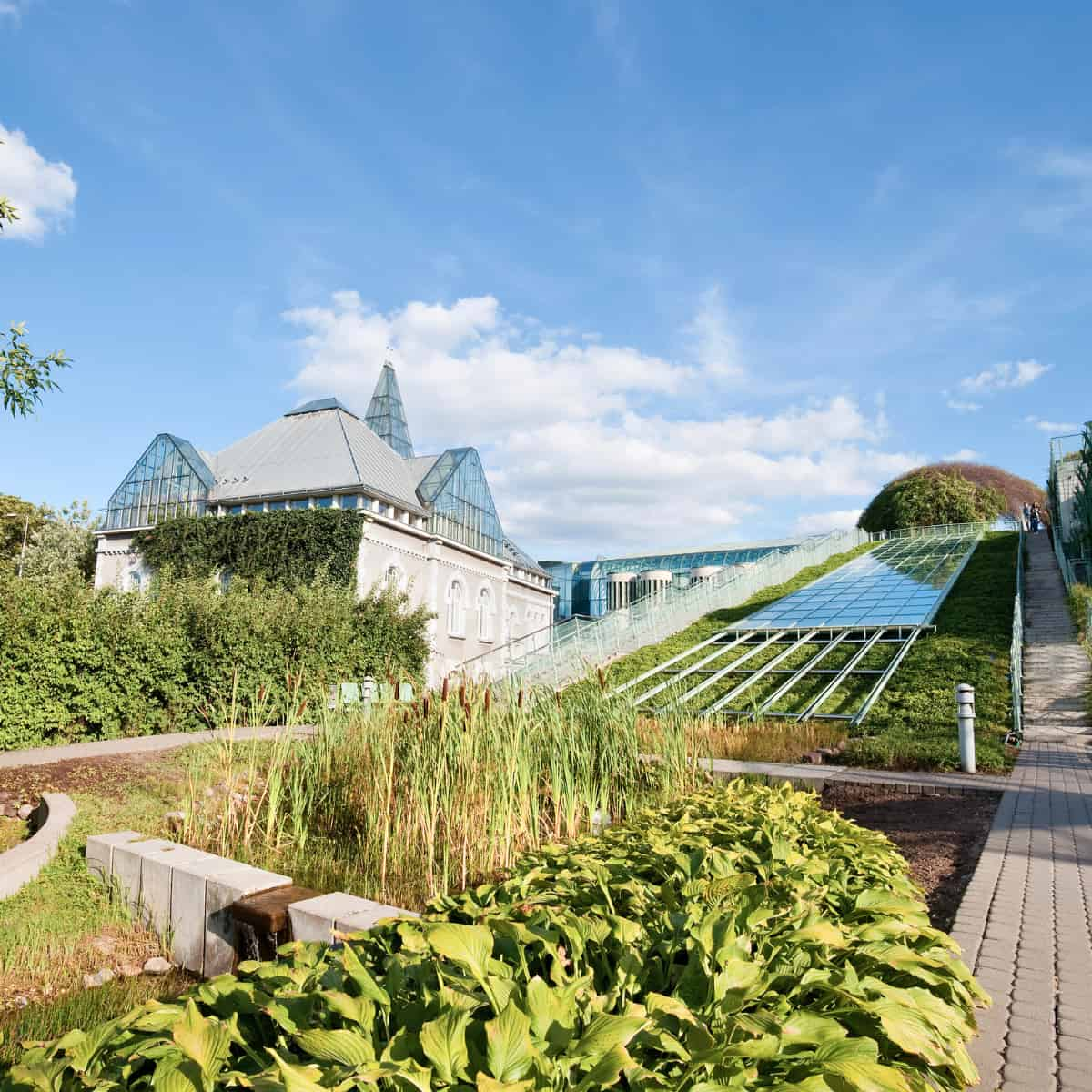
Cover: Warsaw University Library Garden. Rognar / Canva.