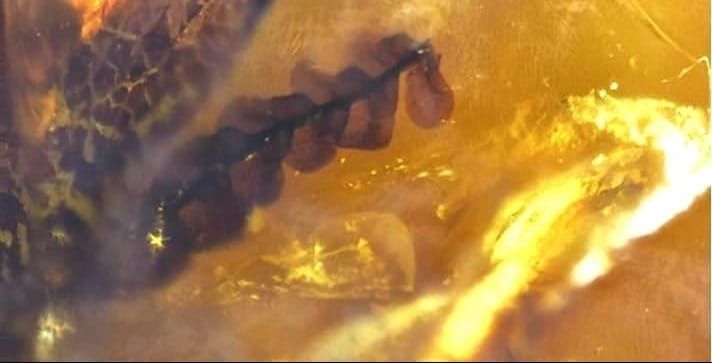

Until recently, scientists have thought that bryophytes are evolutionary ancestral to vascular plants and that each of the bryophyte groups (hornworts, liverworts and mosses) evolved as separate lineages. But this thinking is evolving. Mosses and liverworts are now thought to belong to a single "setaphyte" clade, and bryophytes might be a sister clade to vascular plants rather than a predecessor.
But Blanco-Moreno and colleagues raise an important problem with these hypotheses in their new paper – extinct species of bryophytes have been excluded from analysis.
"Thus, currently the relationships between setaphytes, hornworts and vascular plants are not unequivocally resolved," they write. And it is now time to evaluate whether biases in the bryophyte fossil record are affecting the results.
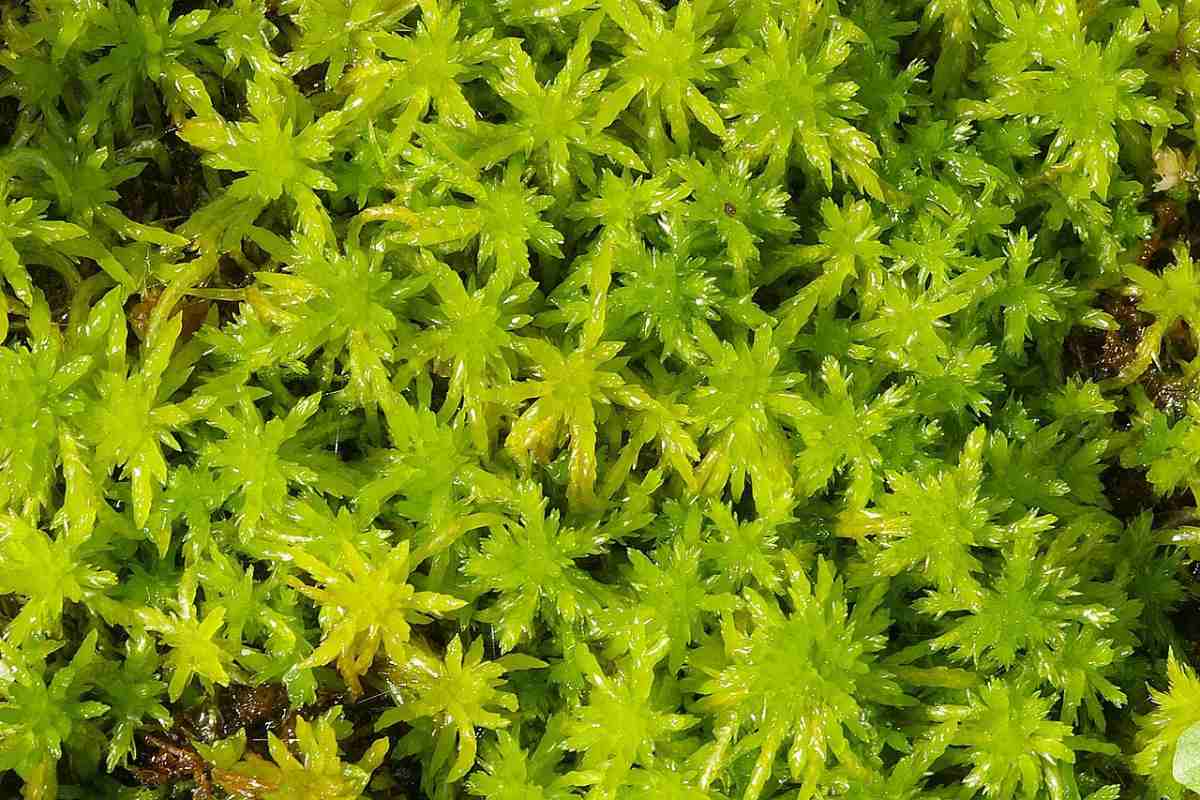
Consequently, the researchers set out to analyze the current pre-Miocene (>25 million-years old) bryophyte fossil record with data on stratigraphic and geographic distribution. The biases assessed included: "the host rock preservation bias (the availability of exposed host rocks from a given time interval for fossil collection and study), kyreonomy or the fossil discovery bias (the factors that affect the likelihood of fossil discovery in a certain location), and concipionomy or the fossil study and dissemination bias (human factors that determine the likelihood of fossils being studied appropriately and of the knowledge about fossils being disseminated)."
They found that knowledge of the fossil record is being affected by "bias resulting from patterns in fossil discovery and study". Most fossil bryophytes were found in the Northern Hemisphere in areas with temperate or continental climates. Additionally, most researchers were studying bryophytes from younger geological periods, creating biases in the temporal coverage of the fossil record.
"More fossil bryophytes have been documented from the Northern Hemisphere, from developed countries, from countries where English is the official language and from countries where more specialists are exploring the fossil record," they write.
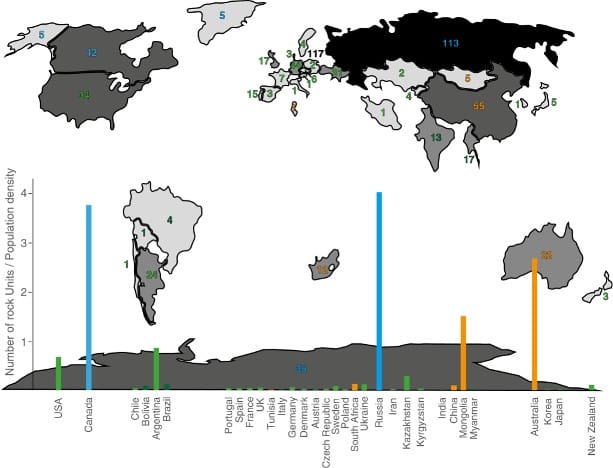
To reach their conclusions, Blanco-Moreno and colleagues updated and expanded a database of pre-Miocene byrophyte fossils that had been completed in 2018 to 654 records, using newly available occurrences in the literature. Then they assessed the number of taxa per time interval against the megabiases of "host rock preservation, kyreonomy (fossil discovery) and concipionomy (fossil study)", considering factors that affect the likelihood of fossil discovery such as fossil diversity, population density (i.e. how many people are nearby to potentially discover a fossil), climate (i.e. accessibility of the site to fossil hunting) and mineral extraction activity, which can increase the chance of fossil discovery by intensifying the exploration of geologic layers.
The social demographics of the researchers was also taken into account. Blanco-Moreno and colleagues analyzed the nationalities of the scientists in relation to the field site to identify whether local or foreign scientists were conducting the research. They determined which countries are more likely to grant funding for bryophyte fossil research, and thereby affect discovery. And they looked at whether the publishing scientists came from a country where English is an official or co-official language.
They found the size of the research community in any given country is a key factor affecting discovery, with "a positive correlation between the number of researchers studying bryophyte fossils and the number of bryophyte occurrences reported from a country".
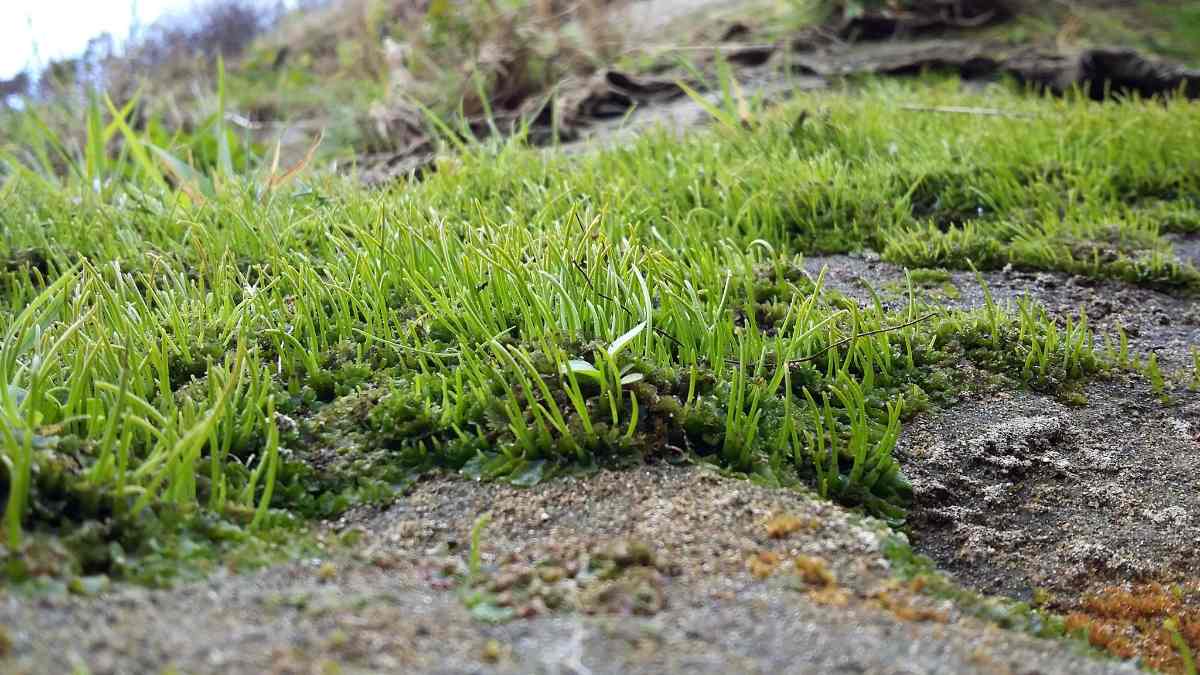
As a result, they conclude that "the trends observed in the stratigraphic and geographical distribution of fossil bryophytes, based on current knowledge of the fossil record, may be affected by bias due to variables related to fossil discovery and study". They also point out that bryophyte study remains niche, even for extant taxa, and this affects both the number of researchers finding specimens as well as the availability of grant funds. This in turn affects fossil discovery, creating a bias of discovery in favour of developed economies and English speaking countries.
And so, biases in funding, research, geography and access all have an impact on fossil discovery and consequently on our understanding of ancient plant life.
READ THE ARTICLE:
Blanco-Moreno, C., Bippus, A., and Tomescu, A.(2025) How do the principal megabiases in the fossil record affect the discovery of past bryophyte diversity?. Annals of Botany, 137(6), pp. 1576-1591. Available at: https://doi.org/10.1093/aob/mcaf070.
READ MORE:
Patel, N., Budke, J., and Bainard, J. (2025) Distinct patterns of genome size evolution in each bryophyte lineage are not correlated with whole genome duplication. Annals of Botany, 135(6), pp. 1181-1198. Available at: https://doi.org/10.1093/aob/mcaf012.
Cover Image: An cropped and colour adjusted image of Radula panduriformis in Eocene Anglesea amber (NMV P258572). Originally published in Paulsen et al 2025, CC BY 4.0.