


At the weekend I saw BotanyGeek, James Wong, had a video out about plant theft. Given the title of this post, I should make clear he’s against it. It’s a tie-in with the insurer Allianz UK and an interesting video. I’m usually wary of “sponsored content”, but here they have the right topic and the right person.
https://www.instagram.com/p/DLm83LxszRR/
This is useful advice from Allianz and James Wong. But it seems Allianz have been busy, also getting a story in The Times (Apple News link) as a news item, and getting the Guardian interested. On Tuesday there was a post in the Conversation, though I think that’s probably more a reaction to recent stories than clever PR. However, what is a commercially-driven news story does point to a long-term understudied problem that’s in need of more attention.
Plant theft is a growing problem
In itself, the fact that so much of the data on plant theft in the UK is being sourced from an insurance company is interesting. A search through Google Scholar shows that it’s difficult to find independent research into the topic. This is noteworthy as an Interpol report, cited by Jenni Cauvain in her Conversation piece, states that Environmental Crime is now the third largest criminal sector. Plant theft seems to be an understudied facet of environmental crime. While scholars might not have much data on the topic, insurance companies do. They’re obviously worried enough about increasing theft to put money into a campaign to reduce it. But why is it growing? There seems to be a mix of global factors, along with one specifically British problem.
Plant theft isn’t new. I remember my grandparents planting a rose in their front garden when I was a child. A couple of weeks later it was gone. The Times article cites “a study” that says 67% of gardeners have experience plant theft. They also say that nearly half of people believe it’s becoming more common their area. I’m really sceptical of that, because people believe a lot of things that aren’t true. But I can believe that insurance companies want to spend their money effectively, so if they believe it’s a problem there’s reason to take it seriously.
How much it’s rising is unclear. One story I read states that the insurer Sunlife recorded a 23% increase in thefts from outside a dwelling, suggesting a move from opportunistic theft to organised criminal activity. The problem with that is that story dates from 2019. There is a lack of independent and academic research into plant theft and two big events have hit the UK since 2019.
What’s driving the increased prices for plants?
Brexit was sold under the slogan of “taking back control” and, for plant imports to the mainland, it has been delivered. That means the UK manages its own phytosanitary checks, and that comes with a cost. Since 2021 prices for plants have risen by around 50%, though some of that is also due to Britain’s brief experiment with lettucocracy.
Another shock has been COVID-19. Furloughs and limits on public gatherings made gardens important outdoor spaces. It also boosted the gardening industry, with sales of bedding plants up 29% and seeds 59% in 2020. The Horticultural Trades Association estimated that COVID added three million new gardeners to the hobby.
The trends in gardening for the past few years therefore have been a squeeze on supply and an increase in demand. This creates opportunity, but if you’re planning to do this legally it still takes time, planning and investment. People leaving portable, hard-to-trace, and desirable items in their front garden is an opportunity for criminal enterprises. They’re easy to lift and pass on, and rising prices will only make this form of theft more attractive.
The increase in demand isn’t limited to outdoor plants, nor is the crime
The rise in value isn’t just affecting outdoor plants. Houseplant prices are rising too. Some collectors are paying thousands for plants. While these prices are outliers, the indoor plant market is booming. The market for houseplants is estimated at $21 billion in 2025, but predictions are that it will increase by around 50% over the next decade.
The demographic driving demand is younger people, who are less likely to have access to gardens. The number of Millennials (people born 1981-1996) buying houseplants rose 65%. Generation Z (born 1997 to 2012) follows with a 33% uplift, possibly reflecting their more precarious purchase power.
This increase in demand leads to more plants needing to be sourced. The plants most adapted to living in a house tend to come from hot climates, so it’s no surprise that tropical plants and succulents were popular purchases. Unfortunately, these plants often grow in remote locations where anti-poaching enforcement is limited.
Poaching is a plant problem
The difficulty in policing the great outdoors is another opportunity for crime. The demands for succulents led to a Korean plant poacher being caught with 3000 Dudleya plants from California. The initial aim was to smuggle them to Korea, but research by Jared Margulies suggests that this is part of a wider network of trade in illegal plants, for places beyond Korea.
This isn’t a problem limited to just one country. Plant poaching is a problem in Chile, Australia and South Africa. The big profits to be made in plant poaching are attracting the attention of people who’re used to making big profits in other illegal activities. Criminal gangs with expertise in moving drugs can adapt to moving plants with little trouble.
People who like the idea of crime, but not the risk, have other options. Why poach yourself, when there’s someone desperate enough to take the risk? Now people are turning to social media to look for people in poorer countries willing to take the risk of poaching. It’s a way of getting a plant that will, for a few years, be rare in the local horticultural market.
Even this is too much effort for some people. Wouldn’t it be easier if someone gathered the plants locally for you to pick up when security is looking the other way? This logic has led criminals to target the very institutions trying to protect plants.
Conservation hubs are now targets for professional and amateur thieves
Botanic gardens and arboreta are great to visit but they also serve a scientific and conservation purpose. They provide a refuge for plants that are endangered in the wild. This means they’re concentrated collections of rare and attractive plants that draw in amateur thieves by day and professionals by night, and the professionals can work at a huge scale.
Recently the Arboretum gardens in Nottingham were plundered with thieves taking 120 plants in one night. Volunteers replanted the garden, and the arboretum was plundered again, this time losing 60 plants.
This isn’t a problem confined to the UK, it’s a worldwide problem, from Auckland to San Diego. There are more news stories about thefts from botanic gardens than would make sense to list here.
One of the more pointed responses to thefts is at the Huntington Botanical Garden. Here, signs mark the spots where thieves have stolen plants. This isn’t a matter of someone thoughtlessly taking something pretty they see on the day. There’s a quote from James Wong in the Times article that emphasises this is intentional: “People have realised plants aren’t just a green backdrop. They’re valuable. It’s like stealing art. You need to know what’s a Picasso and what’s an Ikea print. You need a certain amount of knowledge to know which ones are of high value.”
The thefts strike at the heart of a botanic garden’s mission. They’re custodians of rare plants and it’s not enough to have one. When a population is small, genetic diversity matters. The loss of just one plant is a blow against safeguarding a species as a whole. This is even more painful when the plant no longer survives in the wild.
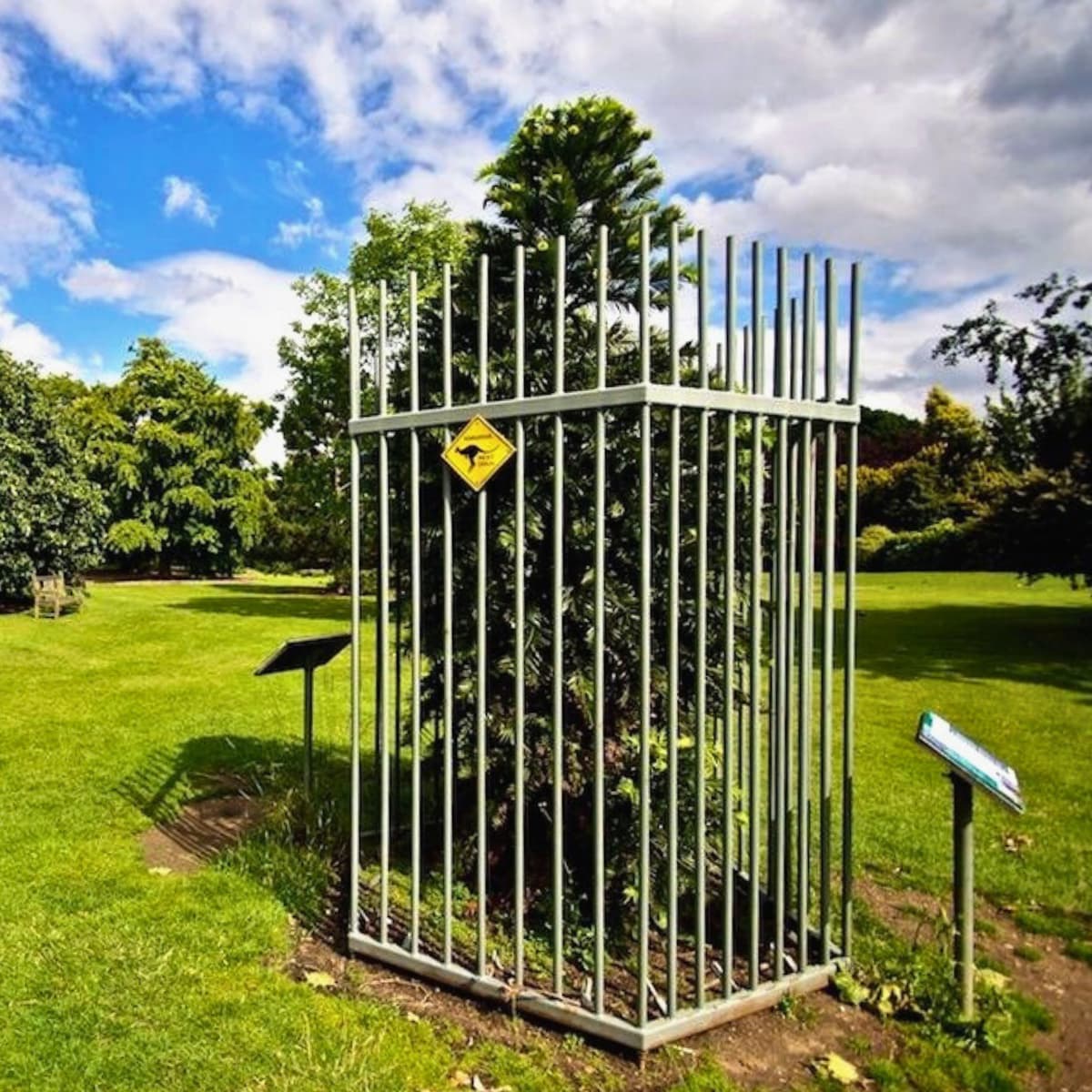
It’s also frustrating because when botanists can share plants, they want to. If you’re interested you can get a plant where fewer than 100 individuals survive in the wild. Sales of the Wollemi Pine around the world have been a huge success. A native of Australia the tree is found in one national park where it lives with the threat of fire. Researchers in Australia have managed to propagate cuttings and since then released cuttings to the public, who have been able to grow and sell on their own plants. What’s more, the gardeners who have adopted their own trees are now contributing to a greater understanding of what it needs to grow, helping improve its chances of survival.
How can you fight back?
If you’re interested in what you can do to help fight crime, there are a few things.
First, it helps to reduce demand for stolen material. Make sure that the must-have plant you’re buying is ethically sourced. This can be difficult if you’re browsing a garden centre, but if you’re buying something special, then make a point of learning more about the nursery you’re buying the plants from.
If it’s a specialist plant, then there’s likely to be a club or association dedicated to it. These can be great sources for information about where to buy and also what to avoid when seeking your special plant.
The New York Botanic Garden also names an obvious source in a blog post. Ask for a cutting or seeds from a friend, if they have the plant you’re looking for. Again, local gardening clubs can be a great place to swap material with someone you know.
When you have your plant, if you can, plant it somewhere secure, like a back garden with a tall fence. When you do plant, try to remove evidence that the plant has been freshly planted and so easier to remove. The Crime Prevention Website has the fairly obvious reminder to remove labels from the plants. It also has some less obvious ideas about chicken wire that will make removing a plant more difficult.
The damage from plant theft isn’t just financial. There’s the emotional impact. The plants in your garden aren’t simply there. They’re the solidification of the effort and care you’ve put into nurturing them. Losing that is heartbreaking, no matter who you are.