


https://youtu.be/eW0j6TkQqT0?t=175
Talk by Paul Wilkin
https://twitter.com/JessBTurner/status/1169550800403783680
https://twitter.com/fiona_jordan/status/1169550695571304448
First up in the Plant natural assets session we had Paul Wilkin on the phylogenomics of Dioscorea. There are about 625 species of yams. They originate in the Late Cretaceous or Early Eocene in the Laurasian Palaearctic, followed by possible dispersal to South America via the Eocene North Atlantic Land Bridge, but are now pantropical.
https://twitter.com/dawngarden/status/1169550892317757442
https://twitter.com/dawngarden/status/1169551705794592768
https://twitter.com/RJABuggs/status/1169551939731955718
They’re a food crop in west Africa, but they’re also a source of high value compounds in the foliage, with steroids among them. We get a small selection of yams in Europe. There are plenty of other yams, som partially domesticated that are still being scientifically described. For example there were recent descriptions of yams from Madagascar and South Africa. Descrptions are critically important as medicinally important yams are endangered due to harvesting.
They have amazing tubers. Some can survive over 350 years.
https://twitter.com/zoemig/status/1169552169290387456
Wilkin has been looking at Crop Wild Relatives, and there was a handy image, which I didn’t grab that explained what a crop wild relative was. I shall see if I can find a tweet of it in the edit. The connections run on a spectrum, so you can cross yams as crops, and less well with close crop wild relatives, with a third tier at the extremes. But Wilkin said, we just don’t have the information to classify these relatives.
We’ll need the information, due to abiotic stresses from climate change, and the biotic stresses that also come with that. The Yamnomics project is going to try to sample wild yams to examine crop wild relatives.
The team has developed A Target Capture-Based Method to Estimate Ploidy From Herbarium Specimens. The information can be used to make A customized nuclear target enrichment approach for developing a phylogenomic baseline for Dioscorea yams.
https://twitter.com/JessBTurner/status/1169554272448651271
https://twitter.com/dawngarden/status/1169554630948335616
Cereals have had a massive amount of attention. Wilkin said we’re still understanding basic yam biology, so we’re 150 years behind in crop improvement.
https://youtu.be/eW0j6TkQqT0?t=1424
Talk by Julie Hawkins
https://twitter.com/dawngarden/status/1169555897200390144
Following that came Julie Hawkins on people and medicinal plants. We don’t have a good idea of how many medicinal plants there are. We don’t have the ethnographic data. Despite this there’s a huge amount of data on what is used, how and why.
She wanted to talk about who knows what. The indigenous peoples and ethnopharmacologists. The World Health Organisation says that a quarter of drugs are plant-based.
She started by talking about Cross-cultural comparison of three medicinal floras and implications for bioprospecting strategies she concluded: “Although profound differences are found in the three ethnomedicinal floras, common patterns in ethnomedicinal usage are observed in widely disparate areas of the world with substantially different cultural traditions. As these similarities are likely to stem from independent discoveries, they strongly suggest that underlying bioactivity might be the reason for this convergent usage.” The key conclusion here being independent discovery.
Next she looked to Nepal, a culturally diverse and linguistically diverse country. She looked at the phyologeny of plants, and the phyolgeny of cultures. So were plants related to who you are? Did you use the same plants as people who speak the same language as you, or who you’re near? She found: “The correlation between medicinal flora and floristic environment was positive and strongly significant, in contrast to the effects of shared ancestry and geographical proximity. These findings demonstrate the importance of adaptation to local environments, even at small spatial scale, in shaping traditional knowledge during human cultural evolution.” They quickly adapt to the plants in their local environment when they move. She was surprised this wasn’t constrained by ancestry as inherited wisdom.
https://twitter.com/dawngarden/status/1169557810042028033
https://twitter.com/JessBTurner/status/1169557601610293250
She then moved on to a paper in press, on the medicinal plants of Polynesia. She used similar methods to how she investigated Nepal. Again it’s the floristic environment that mattered. That looks like a paper to keep an eye out for. Is there any ancestral component? She did find some signal of ancestral knowledge.
The mark of a good speaker is if they can talk when things go wrong. I could have listened to a lot more of that.
https://youtu.be/eW0j6TkQqT0?t=2642
Talk by Colin Khoury
https://twitter.com/plantspplplanet/status/1169559467786194944
Colin Khoury has been looking at developing meaningful indicators of the conservation status of socioeconomically valuable plants. It’s about developing metrics for loss of plants.
https://twitter.com/dawngarden/status/1169559763136520194
Khoury described the spectrum of indicators. So you can have indicators across broad areas that have simple metrics. Or you can deep-dive into a few species. He’s tried to find middle ground with a conservation gap analysis methodology.
https://twitter.com/plantspplplanet/status/1169560492651814913
This “provides a pragmatic estimate of the comprehensiveness of conservation of the genetic diversity within useful wild plants, both ex situ and in situ. The methodology compares the geographic and ecological variation evident from analyses of the ‘site of collection’ of samples of plant taxa that are safeguarded in genebanks and other living plant repositories, as well as the variation evident in the proportion of species’ ranges inhabiting protected areas, against the full range of geographic and ecological variation in their native distributions.”
You can find the data for the above here.
https://twitter.com/MichDSan14/status/1169568305788661763
Sadly Khoury said that we’re not doing a very good job of conserving diversity. Only 3% of plants are well-conserved. You can see a public-facing website sharing this information at https://ciat.cgiar.org/usefulplants-indicator/.
Khoury closed with a mind-blowing of the importance of different plants to different countries. Ireland needs coconut, maybe because of confectionery? Check out http://bit.ly/CropIndicator_average.
https://youtu.be/eW0j6TkQqT0?t=3820https://twitter.com/zoemig/status/1169564395577466881
I’ve spoken to Olwen Grace about succulents already, and you should read her paper here.
She defined a succulent plant as a plant that has water storage capability that can make the plant independent of its external water supply. She added a few more provisos, like the plant tissue needing to be living. This definition does exclude some plants with fleshy leaves. It means that succulents aren’t one group of plants. It’s an ability that has evolved over and over.
https://twitter.com/fiona_jordan/status/1169565814934126595
https://twitter.com/unisepala/status/1169566113929342976
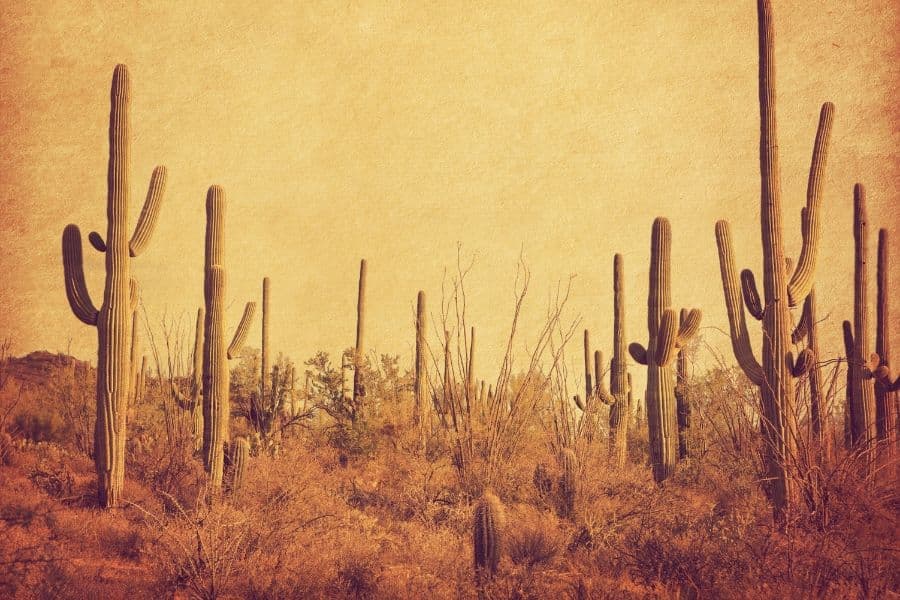
Grace pointed out you find succulents in all sorts of biomes. They’re usually associated in dry desert conditions, but some occur in the tropics where it’s wet. You can also find them in alpine conditions. They tend not to occur in dry sandy desert but in semi-arid desert.
https://twitter.com/JessBTurner/status/1169566256283996161
https://twitter.com/plantspplplanet/status/1169567350863081472
https://twitter.com/trnsitionalform/status/1169573364672933888
She looked closer at the hydrenchyma, which she considered for water-storage, but they can be also photosynthetic. These cells can fold and unfold repeatedly. The organs in Aloe have interesting chemistry with the chemistry constricted by phylogeny. She has also looked at Crassula, a morphologically diverse genus.
What is surprising is that there is little use of succulent plant products. Are there uses to discover. We want to find out find, as the places where we see most biodversity are also the regions where climate change is expected to hit hard.
The other side of this is that some succulents can be invasive. There can be a clash of needs in some places, with some countries both encouraging people to grow some plants, and also funding efforts to eradicate, where the same plant is invasive. “Garden escapes are a problem.”
https://youtu.be/eW0j6TkQqT0?t=5010https://twitter.com/dawngarden/status/1169569846121644032
Katie Marfleet closed out the session on The International Plant Sentinel Network: “Within their vast collections of living plants, gardens play host to expatriate plant species from across the world. These plants offer unique opportunities to study damaging pest and pathogen threats before their introduction into a region where they would be considered invasive aliens. Through these studies, scientists can determine vital information related to these organisms, which can in turn be used to strengthen understanding, contribute to pest risk analysis activities and put in place appropriate quarantine measures or other management programmes. The International Plant Sentinel Network (IPSN) has been working for the last 3 years to provide the support and resources needed for gardens to contribute to such research.”
Trade and climate change is increasing invasive alien pests for anyone wanting to keep their plants healthy. Which pests are likely to be problems in the future? To found out Marfleet said you can use sentinel plants. Sentinel plants are plants grown outside their natural range. They’ll be exposed to alien (to them pests). Botanic gardens are stuffed full of plants outside their natural ranges, so what problems are they facing with pests.
BGCI are coordinating information to improve knowledge around plant health and help create action plans. One example is the effect of Xylella, a problem in Europe on New Zealand species.
DEFRA is funding research on plant pathogens that are listed as risks on their register. The topics were based on gaps in evidence and suitability for study in botanic gardens. Marfleet highlghted three oak borer beetles. They’re a problem in the US, but their impact on European species in unknown. They’re working with US botanic gardens to see what is happening to the European oaks they have in their gardens. They found that some borers will indeed be a problem.
https://twitter.com/aFhloraidh/status/1169587788838293507
She also looked at ash dieback and emerald ash border on non-Ash trees. If the two ash threats hit at the same time n Europe, the effect would be catastrophic. Are there non-Fraxinus hosts that could help the pests invade and attack Ash? The team used BGCI’s plant and garden searches to identify survey sites.
Botanic Gardens are showing they can provide advance information on the dangers of some pests and pathogens. It looks like a great example of how collaboration around the world can give so much scientific (and economic) value. It might make a few risks less of a nasty shock when they hit your shore.