

When we study plants, we use information collected over hundreds of years, and combine that with results from methods that were barely known only a decade ago. We need to study records to see how plants are changing in their species and distribution and behaviour. We need records to be able to name a plant. And we need molecular and genetic studies to see how they are changing and adapting genetically, to find the origins of hybrids, and fine-tune knowledge of relationships or evolution.
There are about 4,000 different flowering plants in the British Isles, and a segment of a new episode of the BBC television programme Countryfile starts by looking at which ones are flowering in midwinter. Louise Marsh from the Botanical Society of Britain and Ireland, BSBI, has written about the first results from this year’s survey. The Countryfile team, led by director Caroline Coombs, researched by Rita Madeira and presented by Anita Rani, visited a rural and an urban site in Leicestershire and recorded the plants that were in flower with the help of the terrific volunteer recorders of the BSBI.
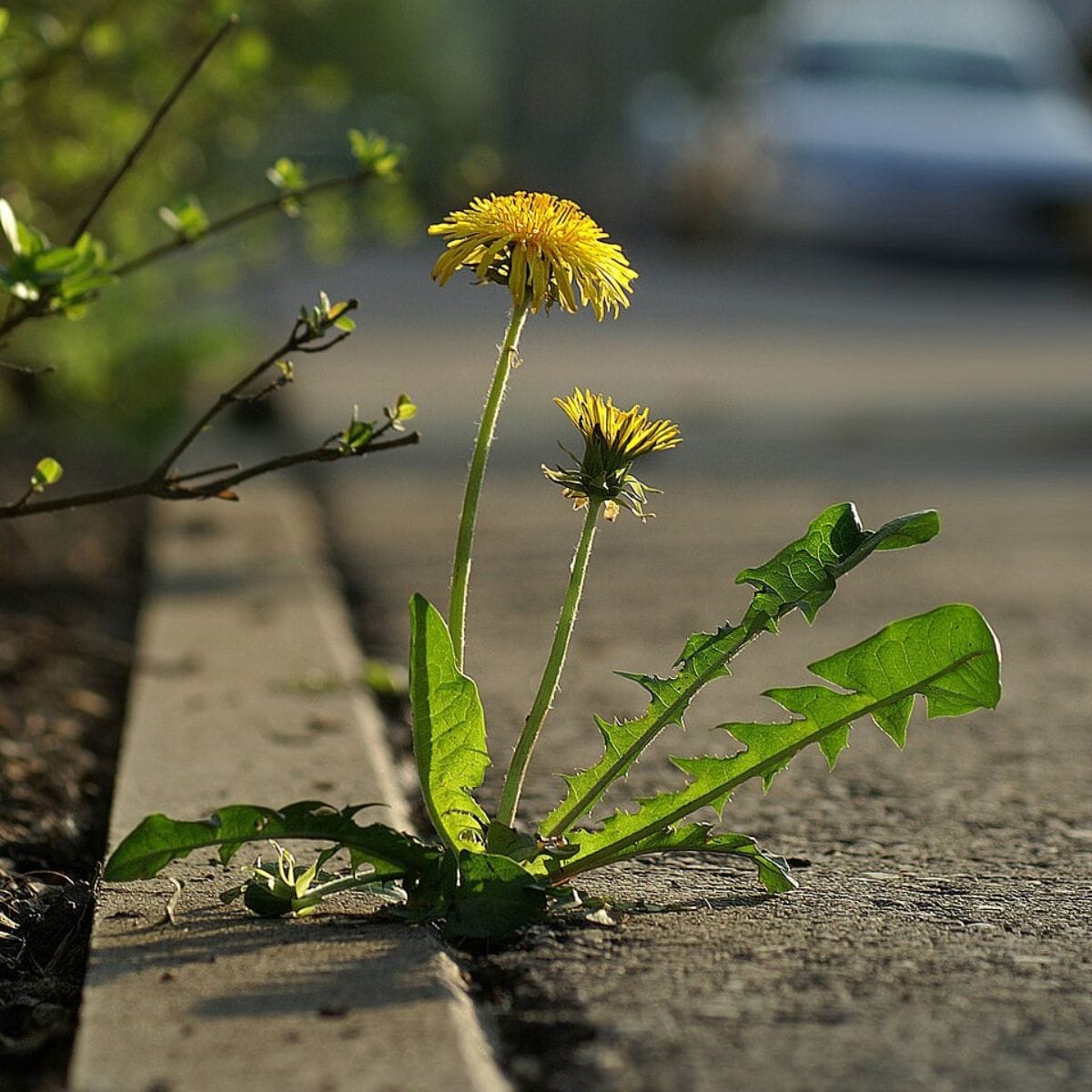
Amazingly we can find, across the two countries, that about one in eight of all the British and Irish species are flowering in early January. At a very good site, in either ain rural or urban area, you might befind more than 50 different flowers in a three hour search on foot, but more typical would be between 10 and 30, with six to 10 quite conspicuous. Most people will recognise common weeds like lawn daisy, dandelion, groundsel, chickweed and shepherd’s purse. There are also some shrubs, trees and grasses that not everyone would notice as ‘flowering’. In 2017, Plants recorded during the New Year Plant Hunt fell into each of four groups: around 60% were late-flowering individuals (dead-nettle, campion, brambles); around 10% would be expected to flower in the middle of the winter (shepherd’s-purse, groundsel, dandelions, meadow grass and gorse); late-flowering individuals (dead nettle, campion, roses or brambles); around 15% were early flowering examples (snowdrops, cowslip/primrose and violets); and the remaining 15% were assessed as flowering either early or late.
But recording is one thing: what can we do with the data? We get information both about the weather and climate – short term and long term trends. The numbers flowering in one year gives a good ‘picture’ of the previous season’s weather. At the start of 2018, we do not see many snowdrops or primroses yet, but rather a lot of species flowering late. A fuller analysis of the 532 species recorded during the BSBI’s New Year Plant Hunt will be published on the BSBI website tomorrow (22nd January).
In the longer term, today we tend to see many more plants flowering than were found decades to centuries ago, and many are flowering latere. We also learn about changing distributions of plants from the long term data – which species appear or disappear. Unfortunately, we do find a few species are lost, and in our county of Leicestershire, the long term records curated by the BSBI suggest about one species a year is lost. But some new species are found. Generally, we find that species respond to changing conditions not by adapting genetically, but by moving their range, and it is only long-term survey data that can give us detailed information about the changes. In the UK, schoolteachers and vicars active in collecting were recording what they saw and when, and many of these records going back for 300 years still exist and are important to show us changes in plant distributions (what used to occur in parishes) and climate (when they flowered or fruited) over the century timescale. The BSBI’s New Year’s Plant Hunt follows on with this long tradition now called citizen science.
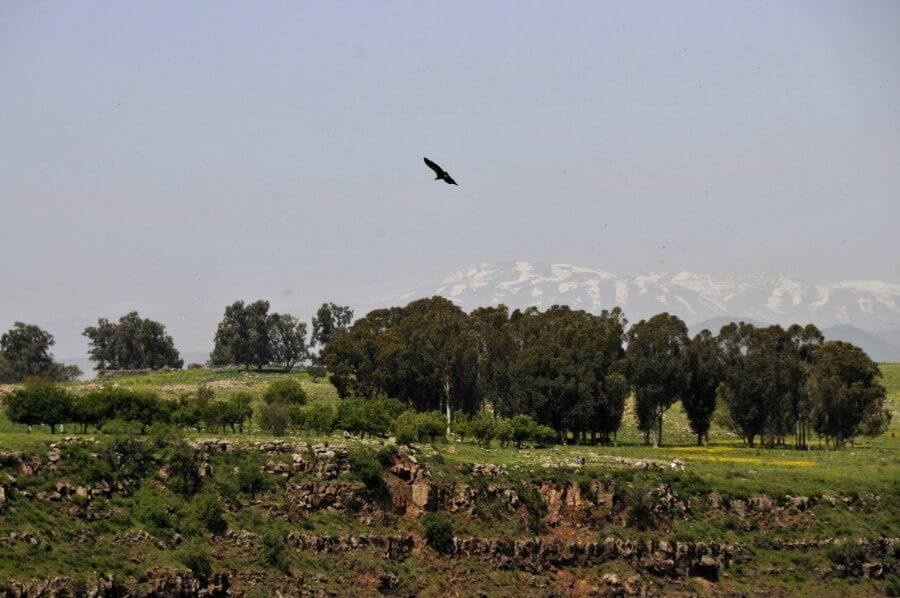
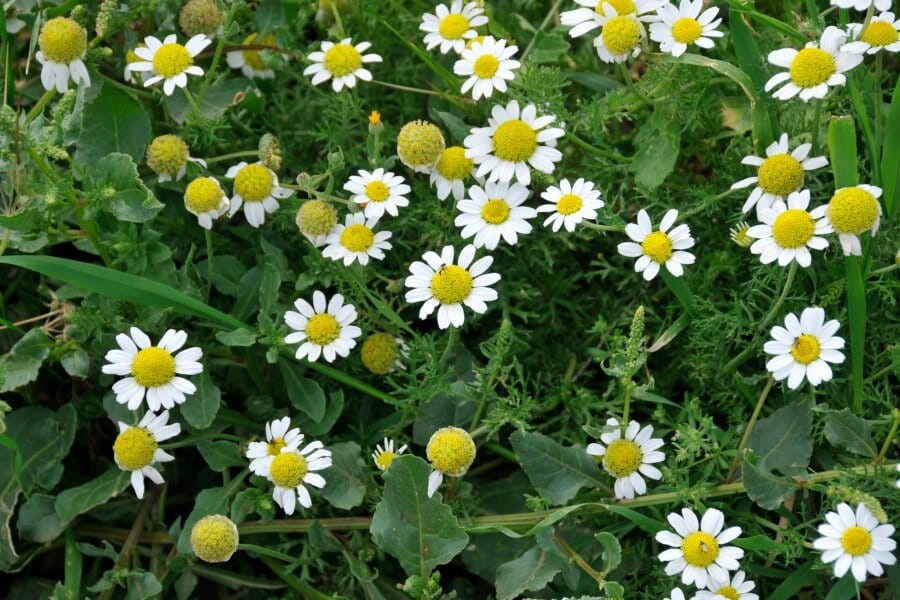
So what did the BSBI volunteers and Countryfile collection team find? As well as plants in flower that are well-known in Leicestershire, they found Austrian Chamomile or Camomile, Anthemis austriaca. The genus Anthemis has almost 200 species, distinct but relatively similar taxa, mostly occurring around the Mediterranean. The illustration shows one of these, Anthemis palaestina, overlooking the Sea of Galilee. In the UK, camomile flowers are easily available in a herbal tea, and creeping species are sometimes used for ground cover in gardens instead of grass, or for making scented benches. People are also interested in using camomile as a plant in green roofs – something to improve the urban environment as discussed in scientific papers. Of the 4000 British plants, nearly half are new arrivals brought in by people over the last 500 years. Austrian camomile is one of these, but is a new type of introduction in the UK. It has been used as part of wildflower seed mixtures to sow in the creation of wildflower meadows and municipal planting schemes to encourage birds and insects. It was first recorded in Leicestershire only in 2009, and is becoming much more common across much of Britain.
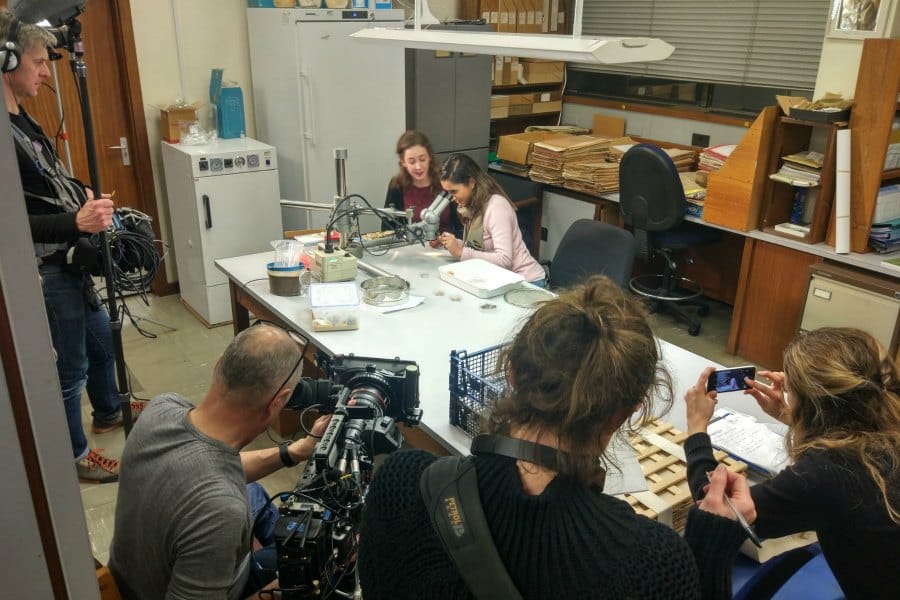
The second part of Countryfile moved into the University of Leicester herbarium, where the diversity of plants is stored and recorded. Unfortunately, at the time of filming, the Director of the Herbarium, Dr Richard Gornall, was away looking at plants, so I filled in. Richard and I have various joint projects and often work together, with his focus on the taxonomy, morphology and relationships in wild species complimenting my work on genetic diversity, hybridization and crops.

People have always been interested in the diversity and naming of plants, because they needed to know what to eat and use for medicines. Right back to the beginning of the written record, there are ‘herbals’ showing what named plants looked like, and what they ‘cured’, and these books exist for most cultures. The notable book by the Greek Dioscorides from AD 50 is one of the earliest. These books are illustrated, but did not go back to dried specimens, and often mixed in some folklore with the rigorous taxonomy/naming. More formal collection, pressing and drying of specimens and preservation in a herbarium goes back to the 1500s in Italy and 1700s in northern Europe: many of these specimens can still be checked today. This was the start of the herbariums, which now underpin, formally, all the nomenclature of species, and every single species can be referred back to an exact specimen in a herbarium. Examples are descriptions of newly characterized species with collection references for a distinctive hybrid species described in Leicester or a species found to be distinct from relatives that is named after Leicester Botanist Clive Stace.
When people study a group of plants to see the boundaries of species and the diversity, they will often get together all the specimens from all over the world – the herbarium loan system, where Leicester takes a very active part and sends out many species and receives them on loan for particular pieces of work.
The Leicester Herbarium is an international herbarium (with the abbreviation LTR) and is one of about 20 major herbaria in the UK. We have about 140,000 specimens, growing still by nearly 1000 per year. Much larger collections are in the Royal Botanic Gardens, Kew; the Natural History Museum; and Royal Botanic Garden, Edinburgh. The Leicester herbarium was founded in 1945, but incorporates collections dating back to the 18th century. The label data, with collection locality, date and collector are very important but unfortunately missing from these early collections which we look at in Countryfile. The Leicester herbarium focuses on the British Isles, Europe and the Mediterranean Basin. collection is particularly strong in the flora of the British Isles (The authors of several versions of the standard "Flora of the British Isles" were in the Department in Leicester) and the account of the flora of mainland Europe (“Flora Europaea”) by numerous authors from across Europe was coordinated from Leicester). Many important specimens for defining the plants in Britain and Europe are housed in the LTR herbarium.
With Anita Rani, we show how to dry the specimen of Austrian Camomile that was collected in the urban Leicester site. As a new introduction to the UK, this was not a species in the herbarium previously. It will now be part of the permanent record of species found in the wild in the UK.
[caption id="attachment_24740" align="alignleft" width="300"] A sample herbarium specimen. Photo: Pat Heslop-Harrison.[/caption]
The second part of the herbarium work focusses on Anna Farrell and the regional germplasm collection – Genebank55aiming to conserve the genetic variation in all the plants in Leicestershire and Rutland counties. The project requires careful control of the seeds before they are put into long term storage so future generations can see what was growing in our countryside.
A big area of plant and environmental research in 2017 was re-greening, green infrastructure and ecosystem services – how can we find plants that complement each other and provide the beauty and services we need in our environment? An academic discussion of this is given by Cameron and Blanuša. Certainly, looking for flowers out-of-season is a great way to enjoy nature and the outdoors, and to appreciate the diversity of plants, as well as being exciting and potentially high-impact arena for plant science.
Of course, when we enjoy the countryside, we need to protect it was well and should not destroy what we see by collection and trampling.
The Wildflower society has these recommendations on their website
Where and how much to pick
- Be careful not to trespass when picking plants and never take material from a nature reserve or protected site without permission. Untended road verges and public rights of way are often good sources of wild flowers, but look out for traffic!
- Take flowers and foliage only from large patches of the plant.
- Always pick in moderation so that plenty is left for others to enjoy.
- Do not pick flowers such as poppies as they will wilt before you get them home.
- Be careful not to damage other vegetation when picking flowers.
- If permission has been obtained from the landowner or occupier, gathering of mosses, liverworts, lichens or algae for model making should be restricted to the minimum needed for personal use.
A more detailed Code of Conduct comes from the BSBI, including the list of plants that are legally protected from collection (many rare orchids among them). You can download the PDF directly at https://bsbi.org/download/8415/