


Alice Bell has written a couple of provocative posts on science communication at the Guardian and on her own blog recently.
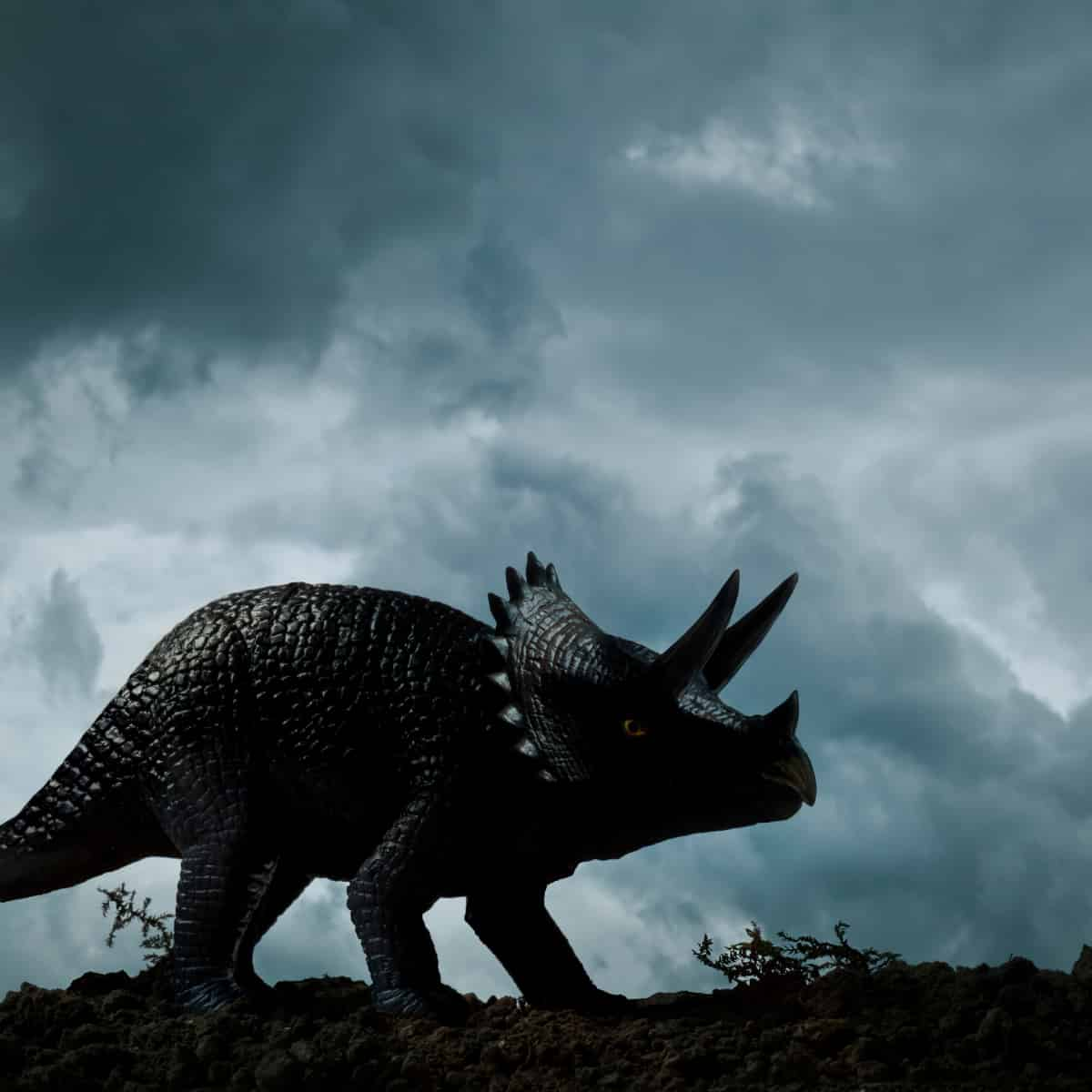
The spark is what the current science minister sees as the salvation of the sciences. Space and dinosaurs. A lot of people have agreed with him. Space and dinosaurs certainly work for me, but Alice Bell has been trying to point out that they clearly haven’t been working for everyone. Not everyone wants to listen though because the self-selecting sample of people who are already scientists have personal experience that current strategies worked for them. If there is an intention to expand the number of children moving into science then at some point you will have to tackle the children who don’t see the attraction of science. If you want to examine why people with no interest in science aren’t following science careers, then at some point scientists have to accept that personal experience is not enough.
The debate reminds me Van Houtan and Pimm’s work on engaging evangelical Christians with ecology: The Various Christian Ethics of Species Conservation. Usually, the topic of science and religion produces at least as much heat as light. Van Houtan and Pimm talk about the problem of seeing the other as a black box and ignoring important social and cultural variations in your target audience. If you want to communicate you have to make sense to the audiences in those groups. Talking to a perceived audience that your listeners don’t recognise won’t have any resonance.
This is why even though you have personal experience of being a child, even this is not enough. You were a child of a past generation. Things have changed and children’s culture has changed with it. It’s not just a matter of sitting in a class to see what’s happening with the kids. This is partly because adults set the agenda in the classroom and media. It’s also a fact that observing as an adult is going to change the result.
If you’re not allowed to watch or ask then how do you find out what it is that matters to children? Bell points to I’m a Scientist; Get me out of here! Here scientists of various types are quizzed by children. The questions there cover what’s on their mind. It’s not that there are no dinosaurs or astronomical questions, it’s that the questions are far wider in interest than Willetts allows for. It’s possible that children are simply more interested in a wider range of sciences than some of the people charged with the task of enthusing them. It’s also likely that you have to engage multiple audiences. There is a Space and Dino audience. There are also human biology audiences and ecological audiences. Telling children in these audiences that science is cool because it has dinosaurs is a subtle way of saying: “If you’re interested in cute furry animals then science isn’t really for you. We don’t think kittens, human cells or stuff like that are that interesting.”
What I see here is a place where Botany can make a difference. Alice Bell is clear, a recurring theme is that the Life Sciences are supplanting the Physical Sciences as sources of inspiration. It no news to botanists that Botany is relevant to all sort of fields like ecology, climate change and genetic engineering. To an audience that only sees plants, briefly, as something a Diplodocus eats, it is news and it’s exciting. In a classroom dominated by health and science, it’s also potentially a science where kids can do their own hands-on experiments.
Reading the posts I’m also reminded of a (probably apocryphal) news story. A prison had received a damning evaluation. It was emphatically unfit for purpose. The governor hauled on to television, agreed with every single point made. “I absolutely agree that the prison is a disgrace. It is clear that our performance is unacceptable. That’s why I commissioned a complete analysis of our procedures and I’m pleased to announce the result. It seems the problem is we have the wrong sort of prisoners.” I recommend reading her posts, but also the comments too. Despite the falling numbers of students taking sciences some people are convinced that because dinosaurs and space worked for them there’s nothing wrong with current strategies.
Is it helpful to conclude that the reason science recruitment is falling is because we have the wrong type of student?
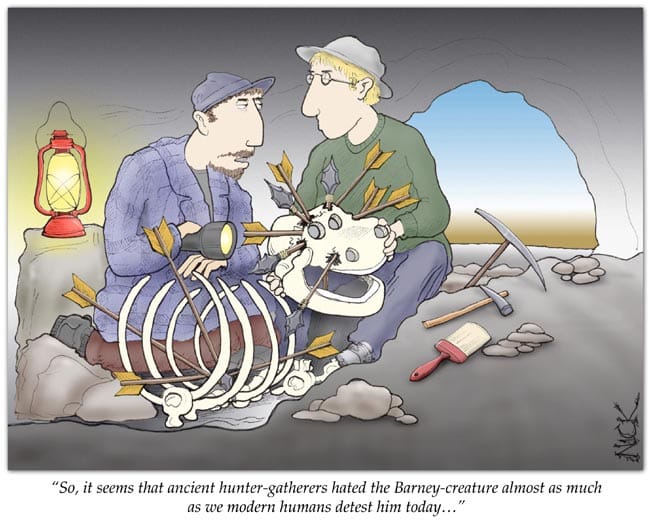
Image credit: Nick D. Kim at Science and Ink.