


Plants are incredibly diverse, and so are botanists! In its mission to spread fascinating stories about the plant world, Botany One also introduces you to the scientists behind these great stories.
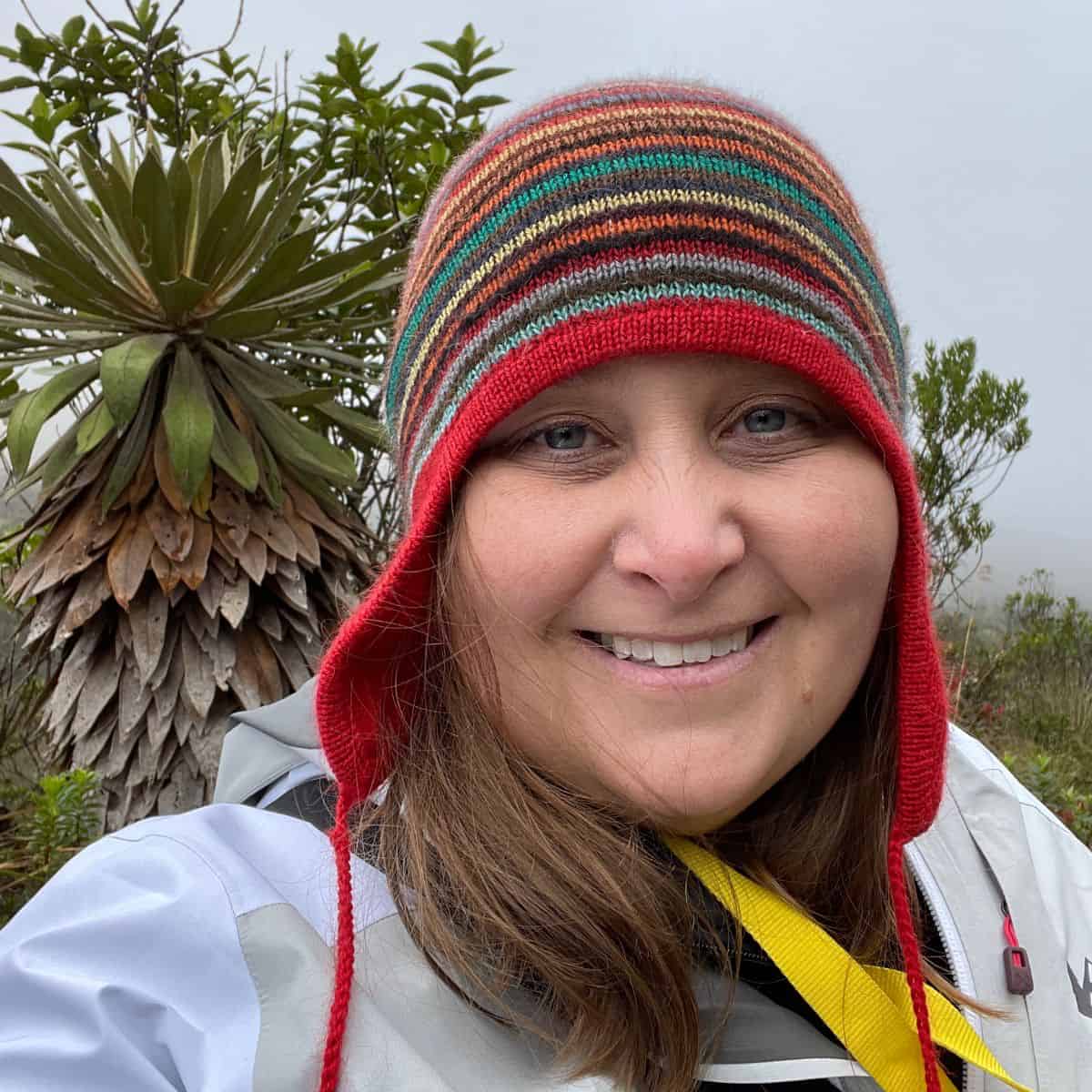
Today, we have Dr. Laura Lagomarsino an Associate Professor in the Department of Biological Sciences at Louisiana State University, where she is also the Director of the Shirley C. Tucker Herbarium. Her research program comprises a diverse range of projects under the broad banner of plant systematics, from alpha taxonomy to phylogenomics to diversification studies. She focuses exclusively on the tropical American plant diversity, and is especially keen on Neotropical Campanulaceae, Rubiaceae, and the Andean floral broadly. Lagomarsino is also an advocate for increased diversity in botany and has dedicated to training herself and others in inclusive mentorship practices as an important mechanism to achieve this goal. You can read more about her research at her lab’s website and follow her on Bluesky.
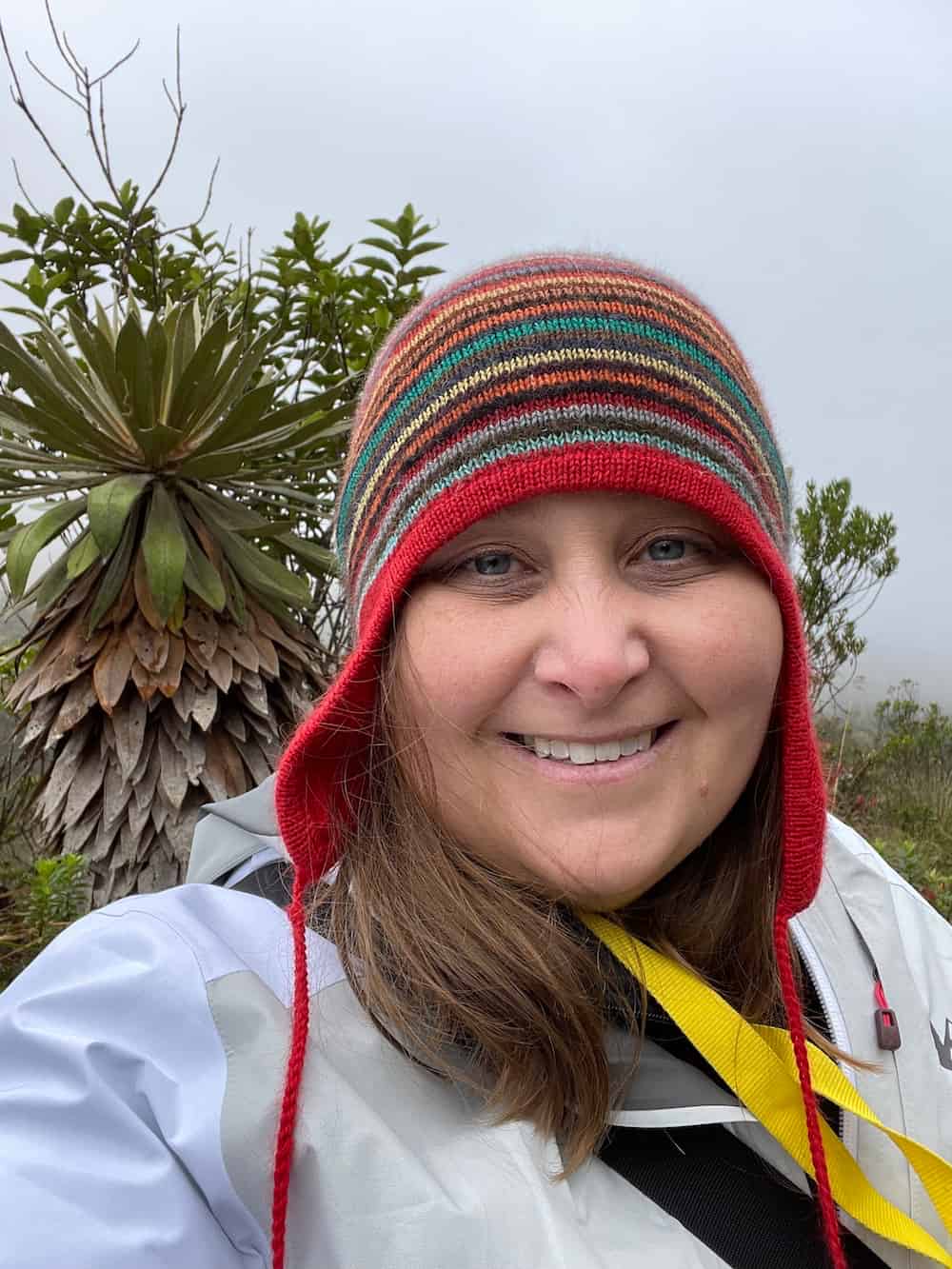
What made you become interested in plants?
I’m lucky to have a lifelong interest in plants. I spent my childhood summers camping among the duff of the redwood forests of the northern Californian coast. I became attuned to plants during those trips, learning to seek out sorrel (Oxalis oregana) for their delightfully sour leaves, enjoying the tactile sensation of removing the sori off the bottom sword fern (Polystichum munitum) leaves, and, of course, standing in awe at the feet of the giants themselves (Sequoia sempervirens). Outside of these trips, I was keyed into plants— I even wrote my college entrance essay about Japanese honeysuckle, a favorite garden plant of mine that I have since learned is a terrible invasive. I was lucky to find my way into Dr. Chelsea Specht’s lab as an undergraduate at University of California, Berkeley. I began my research on tropical plants through a research project on Heliconia phylogenetics in her lab, and haven’t looked back since.
What motivated you to pursue your current area of research?
Many parallel factors acted together to motivate me to study Latin American plant systematics. I first became enamoured with flashy hummingbird pollinated plants as an undergraduate studying phylogenetics of Heliconia. Subsequently, extensive travel throughout Latin America gave me a broader context to these charismatic plant-pollinator interactions. Since first travelling the winding roads of the Colombia in 2007, I have been amazed how dramatically species composition can change over short distances in Andean forests— and at the same time, overwhelmed by the sheer species richness. I wanted to understand what evolutionary forces generated these patterns, even when I could only identify a handful of the plants I encountered! I’ve become more familiar with the Neotropical flora over the years, but I owe a large debt of gratitude to my husband, a Costa Rican botanist with a much keener eye than mine, for turning me into a taxonomist. He has trained me to look for minute morphological details— stipules and glands, leaf dentation and latex— to be able to place plants in their family and sometimes new species. Together, these experiences have shaped me into a scientist whose methods span the very traditional to cutting-edge methods, and whose hypotheses are rooted in a first-hand understanding of the plants and ecosystems I study.
What is your favourite part of your work related to plants?
I love plants, but I might like the community of scientists working on them even more. In my experience, botany is an amazingly friendly and supportive community, and compared to other subfields of organismal biology, much more diverse and inclusive. I especially enjoy training students, whether in my lab at LSU or in the field in Latin America. I adore being the first person to show a beginning botanist the polka dot pattern of a citrus leaf backlit by the sun, or walking a more experienced student through the assumptions of the statistical models they are applying to understand plant evolution. The students in my lab group all have their own interests and motivations in their work related to plants, and their perspectives on research questions enriched my own. From appreciating the role that biochemistry plays in fruit colour and floral odour to a deeper understanding of specific geographic barriers relevant to Andean plant speciation, knowledge I’ve gained from collaborating with other botanists makes plants all the more interesting—and the work all the more rewarding!
Are any specific plants or species that have intrigued or inspired your research? If so, what are they and why?
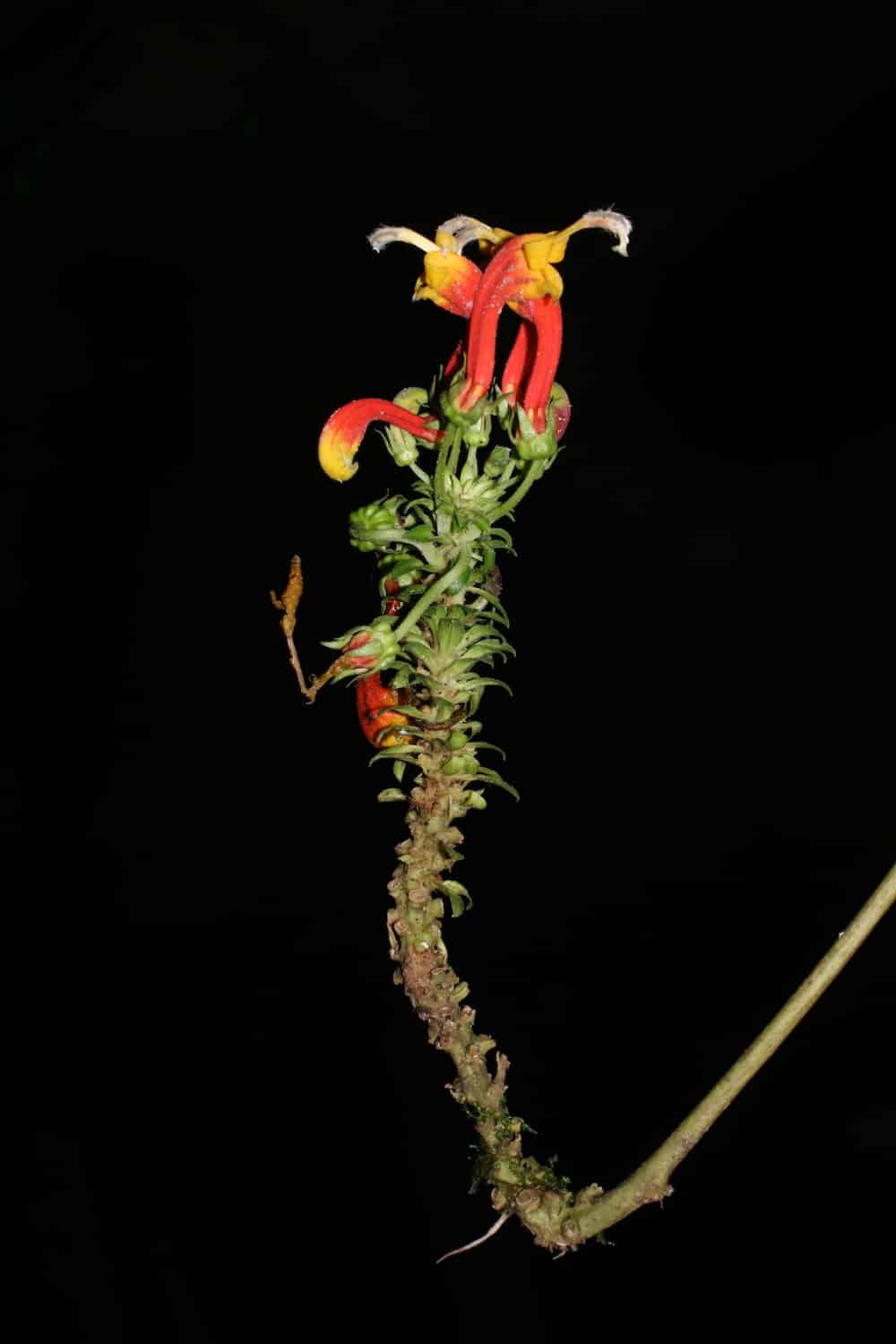
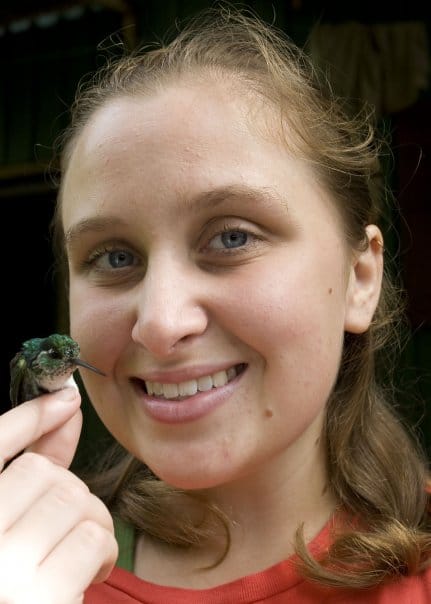
I remember first seeing Centropogon granulosus in the cloud forests of Monteverde while studying abroad in Costa Rica. Early that morning, our class mist netted birds, and I was enamoured with the two hummingbirds we caught. The larger of the two had a long, sharply bent, entirely inconvenient bill, which we learned evolved to allow the white-tipped sicklebill to visit flowers other hummingbirds couldn’t— something I already knew because sicklebills specialize on the Heliconia I studied as an undergraduate. During a rare free afternoon that day, I took a solo hike around the field station. I was excited to find the bright red and orange flowers of Centropogon granulosus early in this hike— its curve perfectly matching the hummingbird I’d held in my hands hours before (I’d later learn that Centropogon is the only other food source for sicklebills outside of Heliconia). I decided to sit by the plant to see if I could observe the sicklebill in action, and my patience paid off after almost an hour. Observing the perfect fit between these two coevolved species during this single pollination visit was magical. I’ve gone onto to study Centropogon and the evolutionary impacts of hummingbird pollination as a PhD student, postdoc, and now faculty member. My first graduate student even studied sicklebill-pollinated Centropogon for her PhD!
Could you share an experience or anecdote from your work that has marked your career and reaffirmed your fascination with plants?
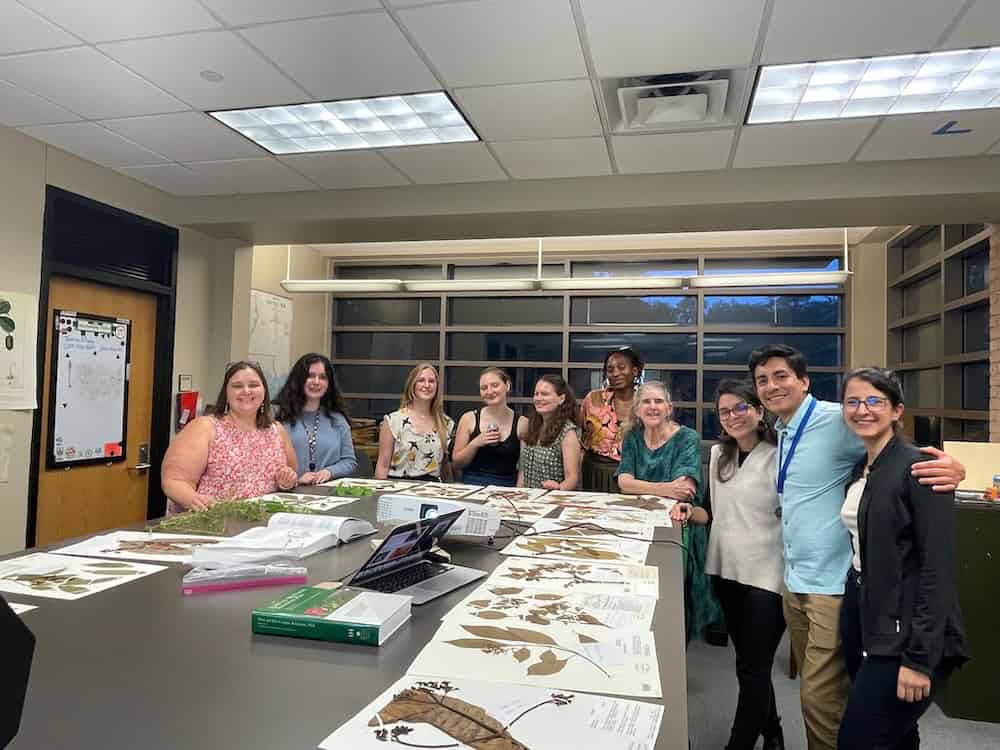
A major recent thrust of my research has been to disentangle the macroevolution of Neotropical Rubiaceae in collaboration with Dr. Charlotte Taylor, a Senior Curator at the Missouri Botanical Garden who has spent her career working on its taxonomy. When Charlotte visited LSU in April 2024, it was incredibly special to show her the research progress my lab had made using herbarium specimens that she has collected, annotated, and studied over the last three decades. Lab members demonstrated alkaloid screening, presented updated phylogenomic results, and walked her through a biogeographic reconstruction— there were even two Rubiaceae talks in an undergraduate research symposium that coincided with Charlotte’s visit! Watching Charlotte fully absorb that there is a next generation of botanists who will carry the legacy of her research forward, integrating her taxonomic framework into ecology and evolutionary biology, was one of the biggest honours of my career. Charlotte and I were both overwhelmed with gratitude. Charlotte’s visit to LSU was a powerful combination of plant love, community, and mutual respect that I would be lucky to experience even once more in my career.
What advice would you give young scientists considering a career in plant biology?
Plants are fantastic study systems for so many reasons! The short generation times of model plants makes those species great for experimental biology, while the stunning global diversity of plant species, form, and function lends infinite research questions in all subfields of biology, from physiology to biochemistry to ecology and evolution. As general career advice, I always recommend students gain skills that will make them stand out from other applicants for future positions they may be interested in. Sadly, this advice is especially true in the current job market, as professional positions in botany can be hard to come by. Fortunately, many marketable skills can be acquired in pursuit of a plant biology career. For example, the molecular laboratory techniques, fieldwork prowess, statistical thinking, and computational skills needed to succeed in plant evolutionary biology research are relevant to many positions in jobs in basic science research, agriculture, biotechnology, and government organizations.
What do people usually get wrong about plants?
So many biologists think plants are boring! I can’t even begin to relate to the sentiment. Sure, plants are (usually) stationary— but that’s why they have evolved carnivory, flowers that mimic male flies down to the specific pheromone, air-borne spores that have been documented in the stratosphere, and potent chemicals including caffeine, cocaine, and nicotine! Read that sentence again and tell me plants are boring.
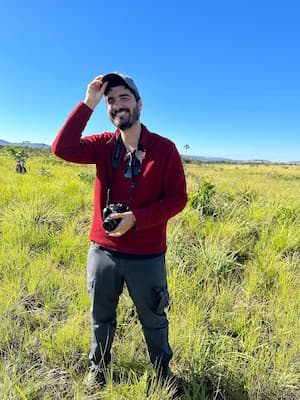
Carlos A. Ordóñez-Parra
Carlos (he/him) is a Colombian seed ecologist currently doing his PhD at Universidade Federal de Minas Gerais (Belo Horizonte, Brazil) and working as a Science Editor at Botany One and a Communications Officer at the International Society for Seed Science. You can follow him on BlueSky at @caordonezparra.