


Where do spices come from? For me, they come from the supermarket but, if you live in the right part of the world, they could come from your garden. Muhammad Jamil and colleagues from Universitas Samudra, visited gardens in Aceh, on the island of Sumatra, to see what plants families were growing. Among the species the team found ginger, cardamom, tumeric and cinnamon, but these weren’t the varieties you’d find on a supermarket shelf. Plants like Wild Red Ginger (Zingiber officinale var. rubrum) are the wild relatives of commercial varieties. They’re the native, undomesticated and, in some cases, threatened or endangered cousins of the spices you buy in the shops.
Why Indonesian gardens hold the key to wild spices
Jamil and colleagues decided to seek out wild spices to study as they feel they have been overlooked in favour of big commercial crops. In their paper, they write: “Despite their ecological and sociocultural relevance, wild spices have received limited attention in agroforestry research, especially in the context of Southeast Asian homegarden systems. The extent to which these species contribute to ecosystem services and livelihood security remains underexplored, as do the spatial patterns that govern their abundance and utilization.” The agroforest approach, looking at farming that mixes trees, shrubs and crops, meant studying a complex ecosystem that families in Indonesia rely on.
Understanding these ecosystems means looking beyond food yield. Certainly food is part of what an ecosystem provides, along with materials for building and fresh water. But ecosystems also do things, like pest control, climate regulation or water purification, things you cannot harvest or extract. There’s also the matter of what an environment means. This isn’t just ritual or religious experience, but also recreation or social activity. It’s the meaning that we put into a landscape when we inhabit it. This broader approach to ecosystem services matters because Jamil and colleagues suspected that these gardens did more than just provide ingredients. But understanding these complex benefits became urgent when researchers realised this knowledge was disappearing.
The authors report: “Informal interviews with elder farmers indicate that several species once widely used for ceremonial, medicinal, or seasoning purposes are now rare or neglected, particularly in upland and peri-urban areas.” So the problem is a generational gap where grandparents might understand the value of the plants, but their grandchildren won’t. The study was therefore a bit of a race to document traditional ecological knowledge that may otherwise be lost.
Tracking spices from sea-level into the mountains
Jamil and colleagues divided their research area into three along an elevation gradient. Lowland gardens were between sea-level and 300m above sea-level. The upland gardens were 800m above sea-level and higher, with the mid-elevation gardens filling the gap in-between. This difference in height also brought a difference in conditions, so it enabled the researchers to see how environment shapes what people choose to grow.
The team then visited 120 gardens and examined them with a combination of semi-structured interviews, guided field walks, and direct observations. This is effectively a detailed conversation while walking through someone’s backyard, asking “What’s this plant for?” The interviews filled in a key element of missing data. It wasn’t enough to know what was growing, they also wanted to know how families use these plants.
The interviews aimed to assess the value of the plants within the Economics of Ecosystems and Biodiversity (TEEB) framework. This is an internationally recognised method of assessing the economic value of an ecosystem. It tackles the what nature provides, does and means questions that the authors are interested in. It’s valuable in this study, because TEEB puts the study within a shared framework used by people worldwide.
The gardens are all about Geography, but not all about Ecology
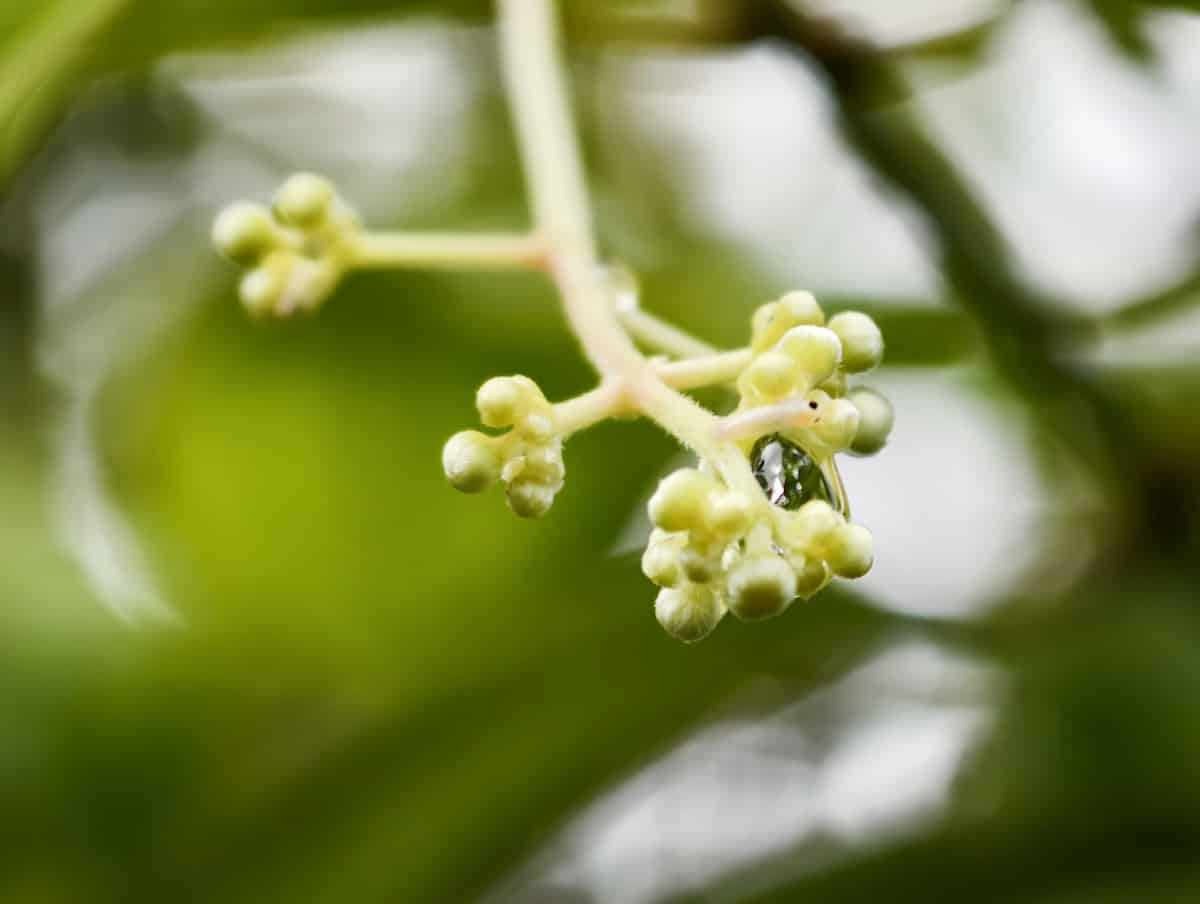
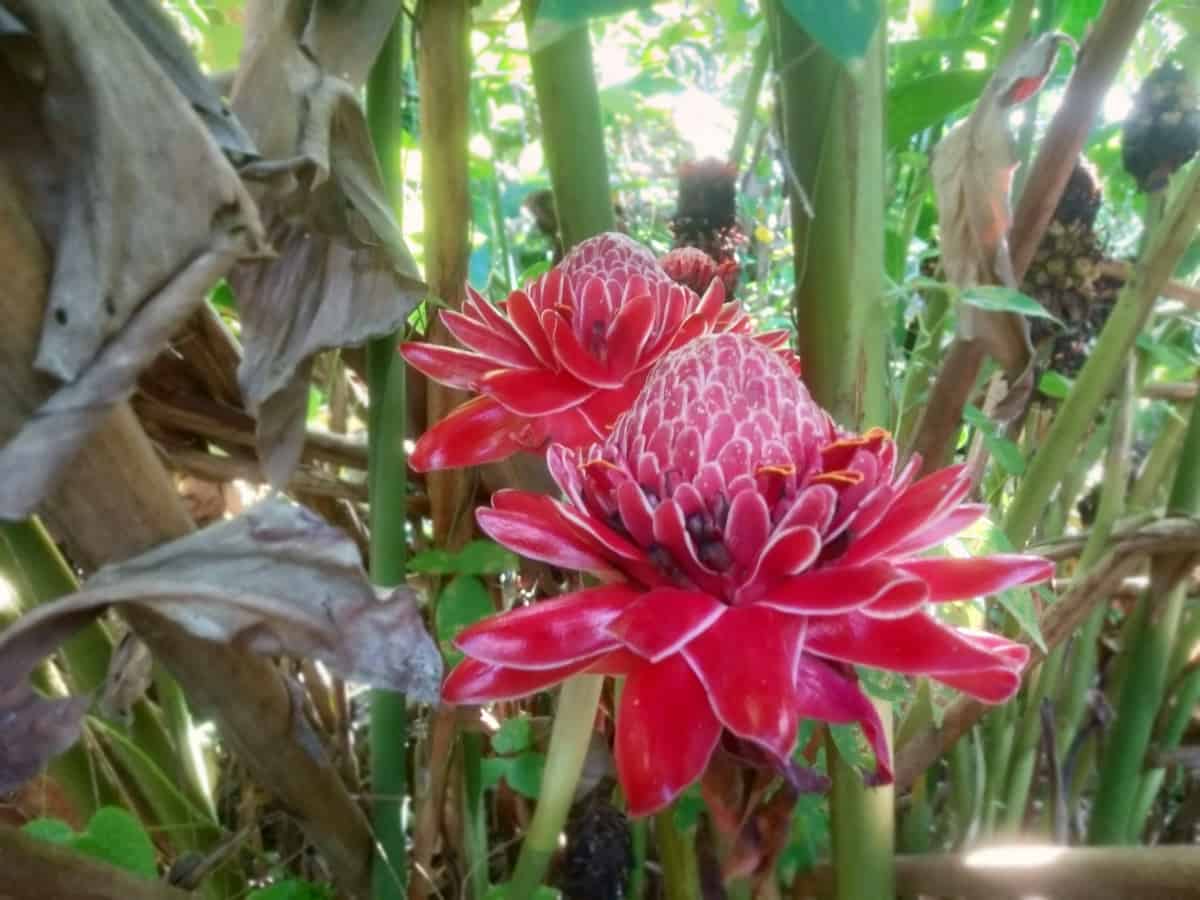
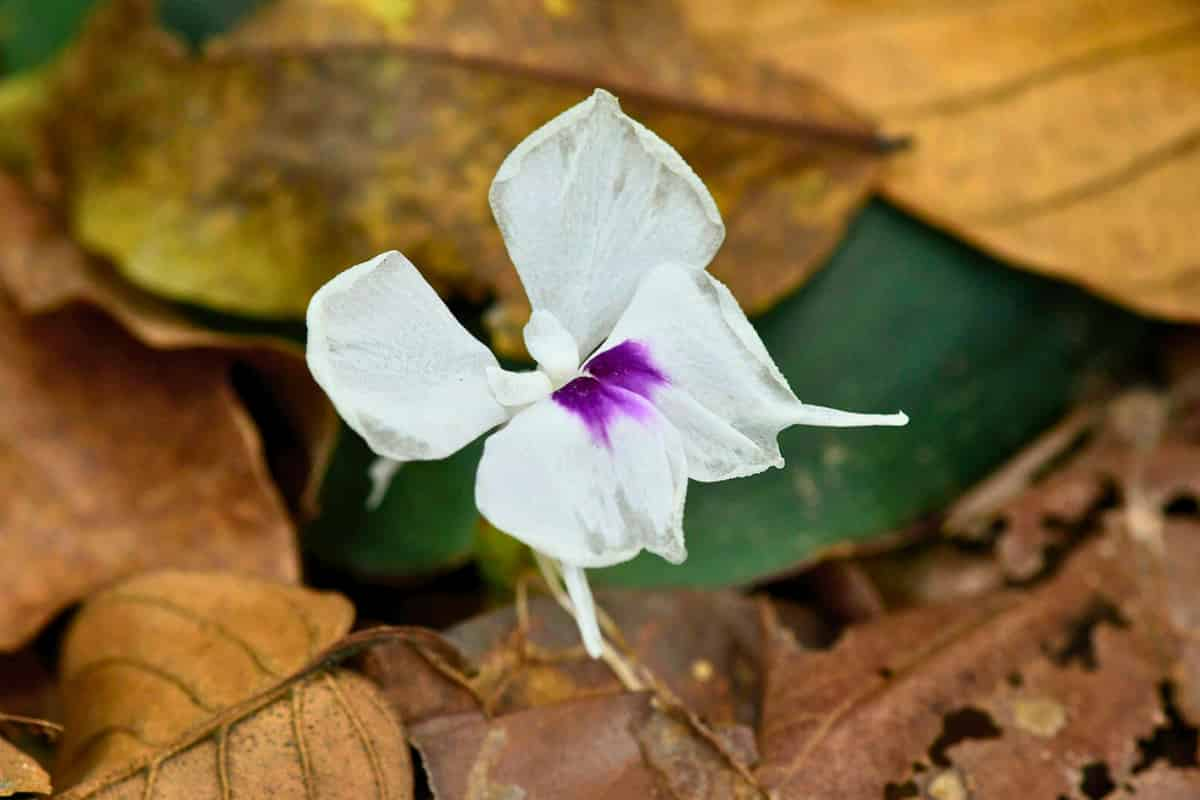
The most striking result was the choice of plants grown in the gardens. Almost half, 41%, were plants in the Zingiberaceae family. This is the Ginger family and some of the species grown were Ginger, like Wild Red Ginger, grown as a medicinal warming herb and Torch Ginger (Etlingera elatior), grown as a spice for food as well as for its fragrance. Wild turmeric (Curcuma mangga, Curcuma zedoaria) were traditional medicines and spices, while Wild cardamom (Wurfbainia compacta) was grown for its seeds.
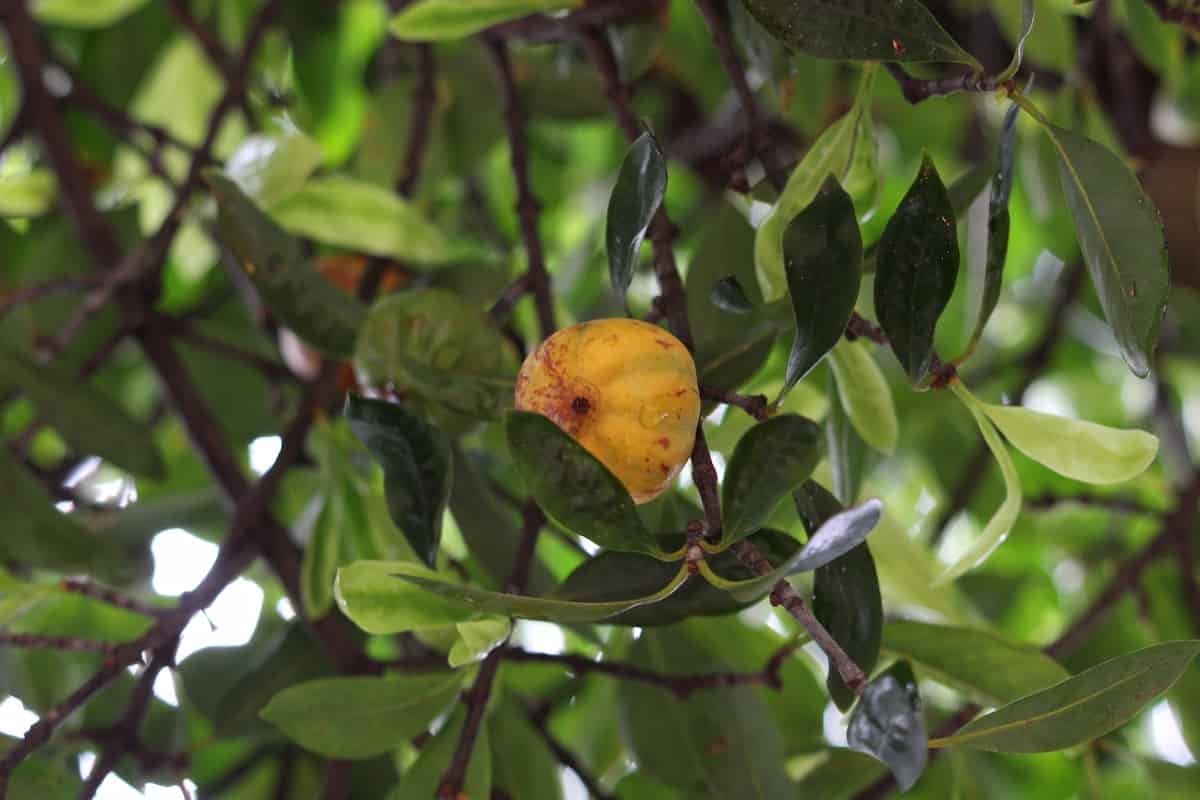
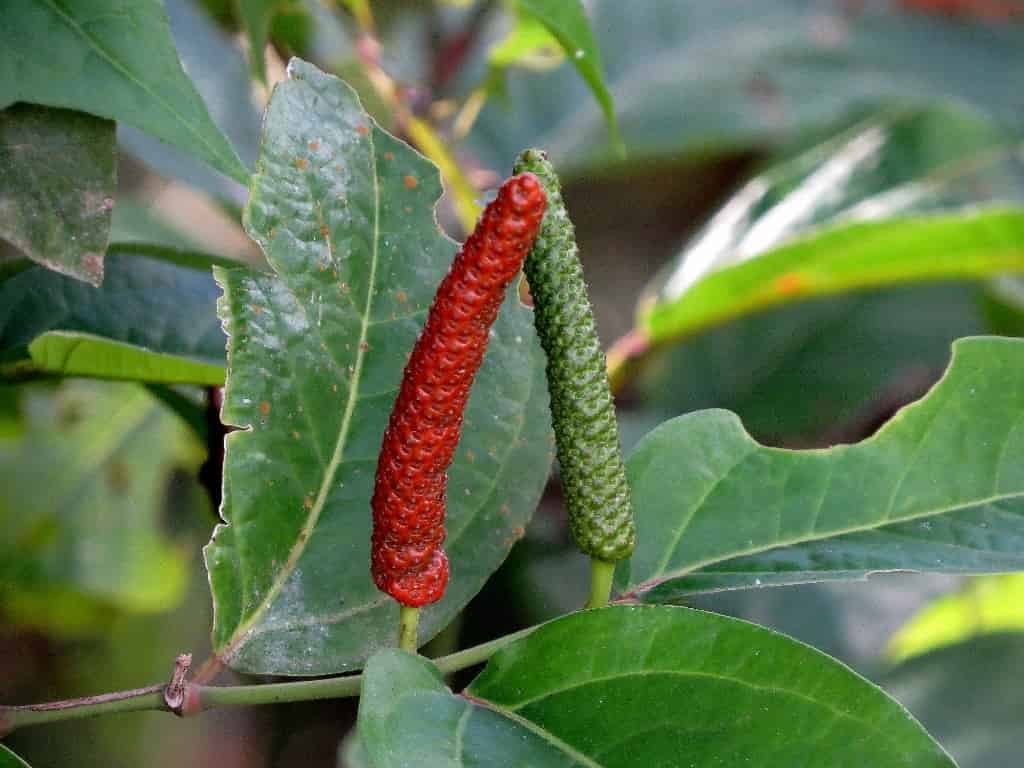
Also on list were two varieties of cinnamon, Cinnamomum burmannii and Cinnamomum iners, Forest Cinnamon, grown as spices. There were also uniquely Indonesian spices. Indonesian Bay Leaves (Syzygium polyanthum) are completely unlike European Bay Leaves. Wild peppers (Piper cubeba, Piper retrofractum) act both as spices for cooking and as medicines, while they also found Wild curry leaves (Bergera koenigii), for flavouring cooking.
Location dramatically affected what families grew. Lowland families grew nearly twice as many spice varieties as mountain families. The families in the lowlands grew an average of over 16 species in their gardens, and this dropped to just 9 in the uplands. While ginger cannot grow at high altitude, that wasn’t the only factor explaining what grows where. The differences in altitude also reflected deeper economic and cultural patterns.
The families in the lowlands had bigger gardens and were better connected to markets, which meant they could sell more spice varieties and earn more income. Jamil and colleagues report a lowland income of $48 per month for lowland families from spices. The upland families had gardens only three-quarters the size of the lowlands, and earned just $22 per month from their spices. This explains another difference, almost two thirds of lowland families relied on spice income, while less than a third of upland families depended on the trade.
This access to markets means the lowland Malay communities focs on culinary and market-oriented uses for their gardens, while upland Gayo farmers tended to use their gardens for medicine and subsistence. And what of the Aneuk Jamee households in the mid-elevations?
These gardens weren’t halfway between the uplands and lowlands. Jamil and colleagues write: “Aneuk Jamee communities demonstrated more diverse use categories, including ritual and traditional medicinal functions.” The Aneuk Jamee were preserving not just more species, but more ways of using those species, meaning they were keeping alive traditional knowledge that was disappearing in both the economically-focused lowlands and the environmentally-constrained uplands. The spread of diversity shows that purely ecological deterministic explanations alone cannot therefore explain the differences in wild spice cultivation in gardens.
As for the TEEB assessment, the results were emphatic. One hundred per cent of the species provided provisioning services like food or medicine you can harvest. Only seventeen per cent of the species provided any regulating services like pest control or pollination. This was surprising as gardens are usually expected to be ecologically diverse.
The most surprising result was that there was a moderate negative correlation between provisioning and regulating services. This means when families focused heavily on harvesting spices for income/food, they actually lost ecological benefits like pest control. The authors comment: “These patterns align with global observations that unbalanced intensification often leads to declines in intangible and ecological service values.”
From curry to climate resilience
It’s now scientifically proven that Indonesian curries are tastier than mine. This probably isn’t a surprise. But flavour is important, and the families in Aceh are preserving flavours that are unfamiliar elsewhere. These are unique tastes that cannot be bought in many shops. These families are keeping these spices alive through in situ conservation. That’s growing them in their natural places. But the implications go far beyond making a nice curry.
These diverse gardens are also natural insurance policies. They’re backup food, pest control and climate adaptation. While the wild varieties of ginger might not currently be commercially grown, they might have traits that prove useful in the future when cross-bred with domesticated ginger. And this is true for the other plants. The gardens are one big store of genetic diversity. It’s clearly valuable, and the research points to ways of helping preserve these gardens.
Jamil and colleagues argue that local farmers should get support. “For example, efforts such as participatory domestication, traditional seed system revitalization, and agroecological education may help sustain species diversity in mid- and upland zones. At the policy level, in situ conservation can be enhanced through multi-actor approaches involving agricultural extension agents, customary leaders, and local cooperatives. Incentive-based mechanisms—such as wild spice diversity payments, inclusion in landscape planning, or access to community seed banks—can strengthen farmer engagement in conservation.”
By giving a value to ecosystem services and the work that the households do, the authors show that this isn’t necessarily a story about loss. It could be a tale of how places like Indonesia preserve the tools they need to build resilience into their farming. By doing so, they would be able to take a leading role in combatting climate change in this century and the next. They would also help preserve their native ecosystems and keep them delicious.
READ THE ARTICLE
Jamil, M., Adnan, A., Irawan, H., Navia, Z.I. and Suwardi, A.B. (2025) “Wild spices and their ecosystem service contributions in smallholder agroforestry systems of Aceh, Indonesia,” Agroforestry Systems, 99(6). Available at: https://doi.org/10.1007/s10457-025-01273-x.
Read free via ReadCube: https://rdcu.be/ez2UW
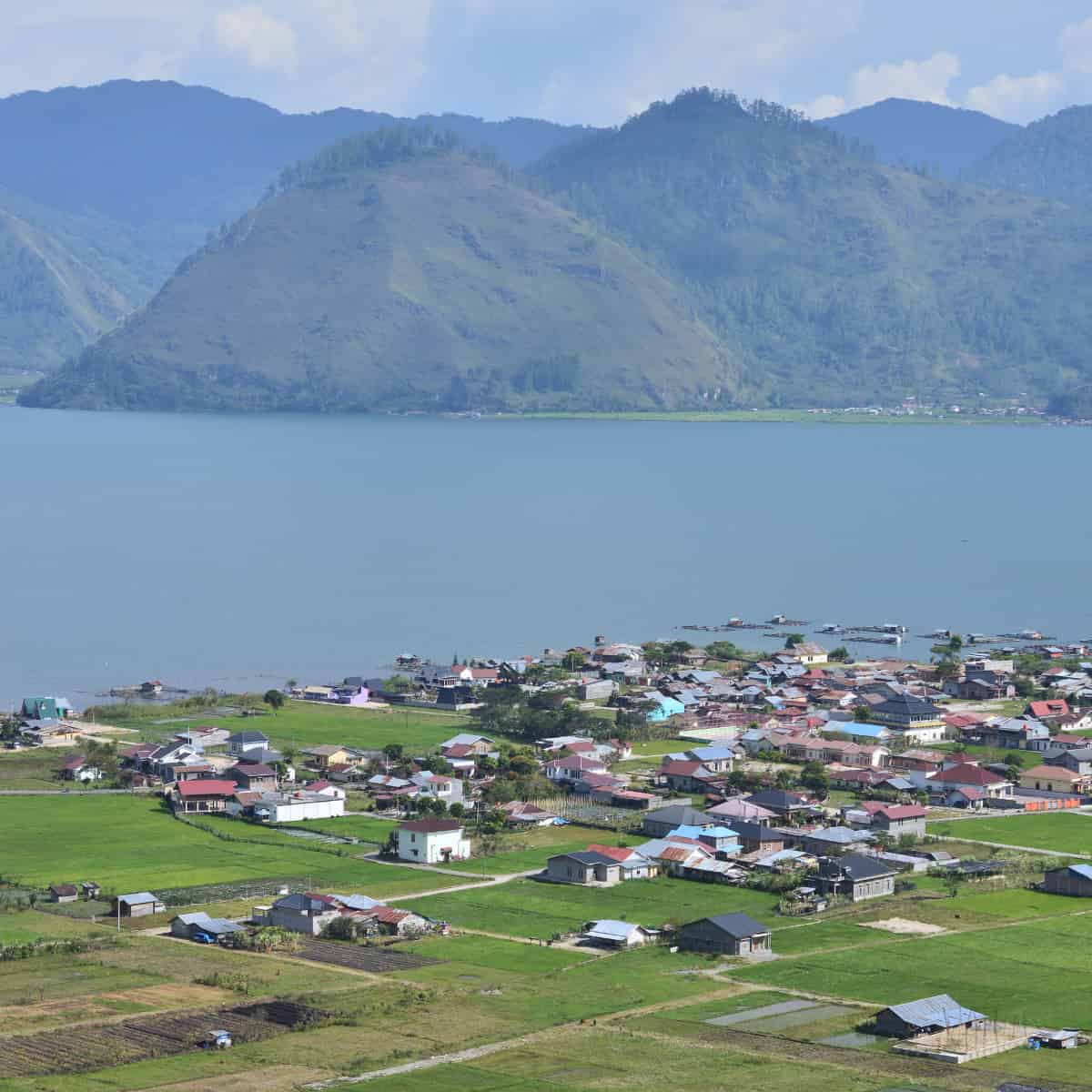
Cover image: Aerial View of Houses on the Shore and Mountains at Takengon, Indonesia by uswatun hasanah / Pexels.