
If you wanted a seed to germinate, you might think all it needs is water, light and the right temperature. While this works for many of the plants we grow and eat, wild plants often follow a very different strategy. Some produce seeds that can remain dormant—a state in which growth is temporarily paused until environmental conditions signal that seedlings are likely to survive.
This is particularly important in strongly seasonal ecosystems such as the Brazilian Cerrado, the largest savanna in South America. In the case of Butia capitata, a palm tree locally known as coco-azedinho, dormancy is especially pronounced. The embryo inside the seed is extremely small and has limited strength to begin with. On top of that, the seed is enclosed within a very hard, woody shell known as the endocarp. This means the embryo must push through several layers of protective tissues before germination can occur. Together, these barriers can delay germination for years.
To understand this, botanists have begun looking at seeds from a biomechanical perspective—focusing on the physical balance of forces inside them. Inside each seed, the embryo must push its way through a small exit point known as the micropylar region, a gateway blocked by protective tissues. Germination only happens when the embryo becomes strong enough to overcome the resistance of these surrounding structures. In other words, it is a biological tug-of-war between the growing embryo and the tissues that hold it back. In many plants, seasonal temperature changes help shift this balance, either by gradually weakening these tissues or by boosting embryo growth. However, most research has focused on temperate species, leaving tropical plants—especially palms—largely unexplored.
A new study led by Túlio G. S. Oliveira, published in Annals of Botany, set out to fill this gap by investigating how temperature alters this internal balance in Butia capitata and how this helps break dormancy.
The team collected seeds in the northern part of the Brazilian state of Minas Gerais and exposed different seed parts to a range of constant temperatures, from cool to very warm, tracking embryo growth and germination. For that purpose, they tested isolated embryos, seeds removed from their woody shell, and intact pyrenes—the hard, stone-like structures that contain the seed. This allowed the team to test whether temperature was acting mainly on the embryo, on the tissues surrounding it, or on both.
They then moved on to a much larger experiment designed to mimic the changing seasons of the Cerrado. Pyrenes were exposed to alternating day and night temperatures, including combinations that resembled cooler dry-season conditions and hotter temperatures typical of the transition into the rains. Some were kept moist, while others were kept dry for part of the experiment. The treatments were applied in two repeated temperature cycles, reflecting the recurring seasonal cues that seeds may experience across more than one year in the wild.
Crucially, they did not just record whether seeds germinated. They also measured the physical forces involved. Using a dynamometer, they tested how much force was needed to push aside the operculum and to break the germination pore plate. They also measured how much the embryo itself could grow, giving them a way to assess the internal balance between strength and resistance. With all this information in hand, the researchers were able to identify which temperature patterns actually shift the balance within the seed and allow germination.
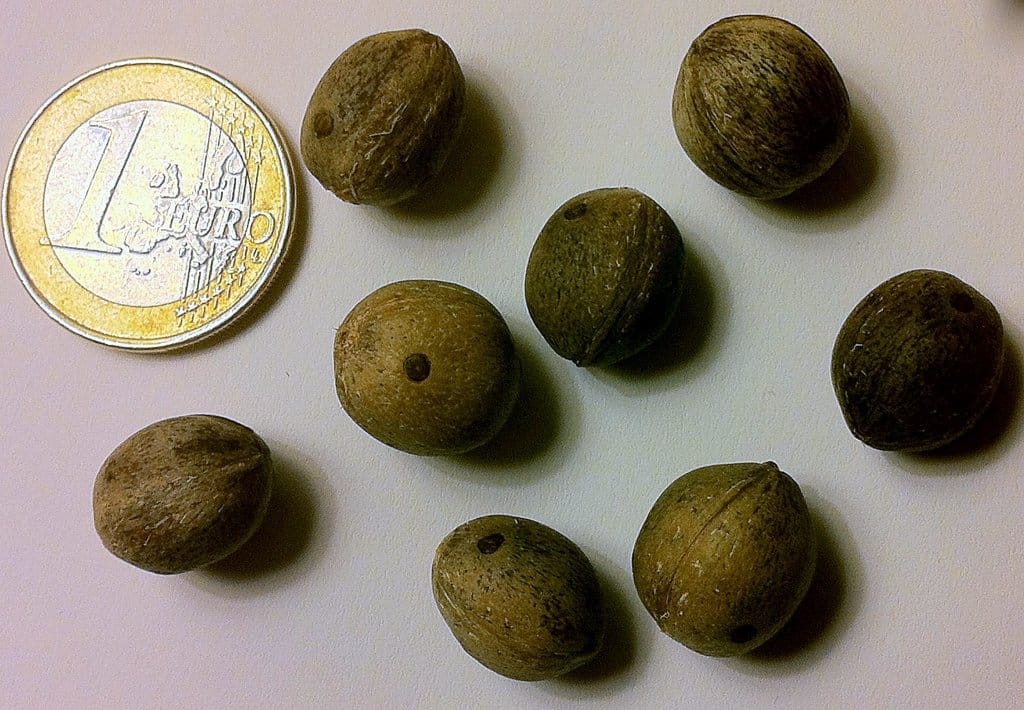
The results revealed that heat does not simply switch germination on or off. When the researchers tested embryos on their own, they found that these tiny plant bodies could grow across a broad range of temperatures. The real problem was not the embryo itself, but the barriers surrounding it. Seeds with the operculum—a cap-like tissue covering the micropylar region—removed germinated readily, while intact pyrenes hardly germinated at all under constant temperatures. This showed just how powerful those outer structures are in keeping dormancy in place.
Things changed when the team exposed pyrenes to alternating temperatures that resembled seasonal conditions in the Cerrado. In the first cycle, germination remained low, suggesting that one round of seasonal cues was not enough for most seeds. But in the second cycle, certain temperature conditions triggered a dramatic response. The standout treatment was 35/20 °C under moist conditions, which produced very high germination, reaching up to 92% in some groups. That is a striking result for a species whose natural germination is usually slow and sparse.
Measurements of the seed structures showed that the woody tissues surrounding the embryo became weaker over time, especially under particular warm regimes. At the same time, the embryo’s own growth strength increased, especially in moist conditions. In other words, dormancy was broken not by a single trigger, but by a combination of weakening barriers and a stronger embryo.
However, the process does not happen all at once. Different seeds respond to temperature at slightly different speeds, meaning that dormancy is broken gradually. This spreads germination over several years rather than triggering it all at once. Such variation may seem inefficient, but it is actually a survival strategy. By staggering germination through time, the species avoids putting all its chances into a single season that might turn out to be unfavourable.
The key signal appears to be the temperature pattern that marks the Cerrado’s transition from the dry season to the rainy season. When seeds experience warm daytime temperatures and cooler nights typical of this period, their dormancy begins to weaken. Once conditions stabilise and soils become warmer and wetter, the embryos finally grow enough to trigger germination.
Together, these results suggest that Butia capitata is finely tuned to the seasonal rhythm of the Cerrado. Its seeds appear to wait for the heat pattern that marks the transition from the dry season to the rains before committing to germination. As temperature cycles gradually weaken the barriers around the embryo and strengthen its ability to grow, seeds begin to germinate in waves across different years. This staggered timing ensures that at least some seedlings emerge during favourable rainy seasons, improving their chances of survival in an unpredictable environment. Understanding this mechanism matters not only for ecology, but also for conservation. Because this palm is threatened in the wild, knowing which temperature conditions trigger germination could help scientists and restoration projects produce seedlings more effectively. More broadly, the study shows how plants can use seasonal heat as a signal for survival, and offers a new way to understand how tropical palms keep pace with a changing world.
READ THE ARTICLE:
Oliveira TGS, Moura ACF, Correia LNdF, Azevedo AM, Lopes PSN, Ribeiro LM. 2026. Temperature-mediated changes in the force balance of the micropylar region adjust overcoming of dormancy to seasonality in diaspores of the Neotropical palm Butia capitata. Annals of Botany. https://doi.org/10.1093/aob/mcag039
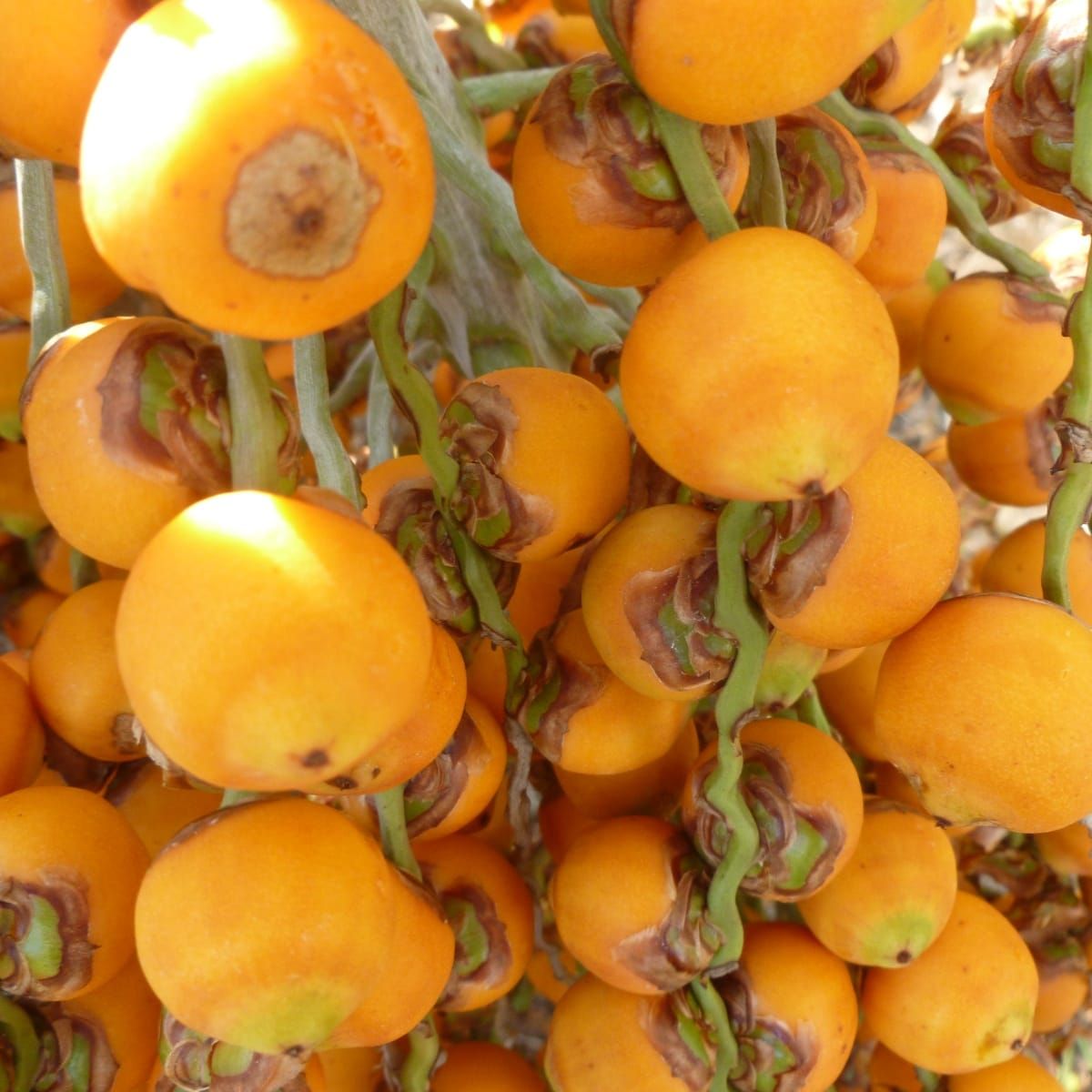
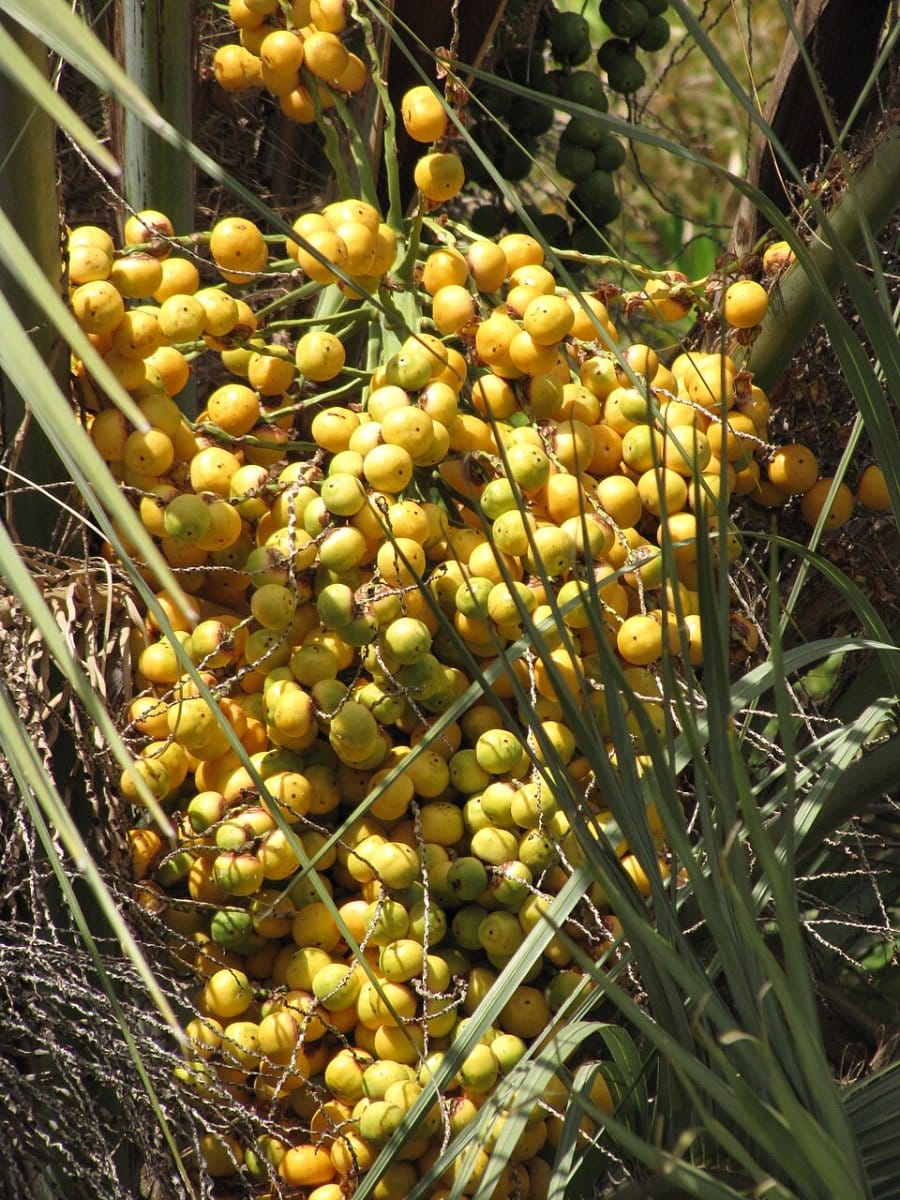
Cover picture: Ripe fruit of the Butia capitata palm. Photo by Moxfyre (Wikimedia Commons).