Host specificity in parasitic plants – perspectives from mistletoes
AoB PLANTS

Host specificity in parasitic plants – perspectives from mistletoes

https://www.botany.one/host-specificity-parasitic-plants-perspectives-mistletoes/

Know someone who'd like this?

Mistletoes are very fascinating parasitic plants.  Unlike most common plants, mistletoes grow on the branches of other plants and rely on these “host” plants for water and nutrients. Scientists have been trying to understand why parasitic plants differ in the number of host species parasitised.
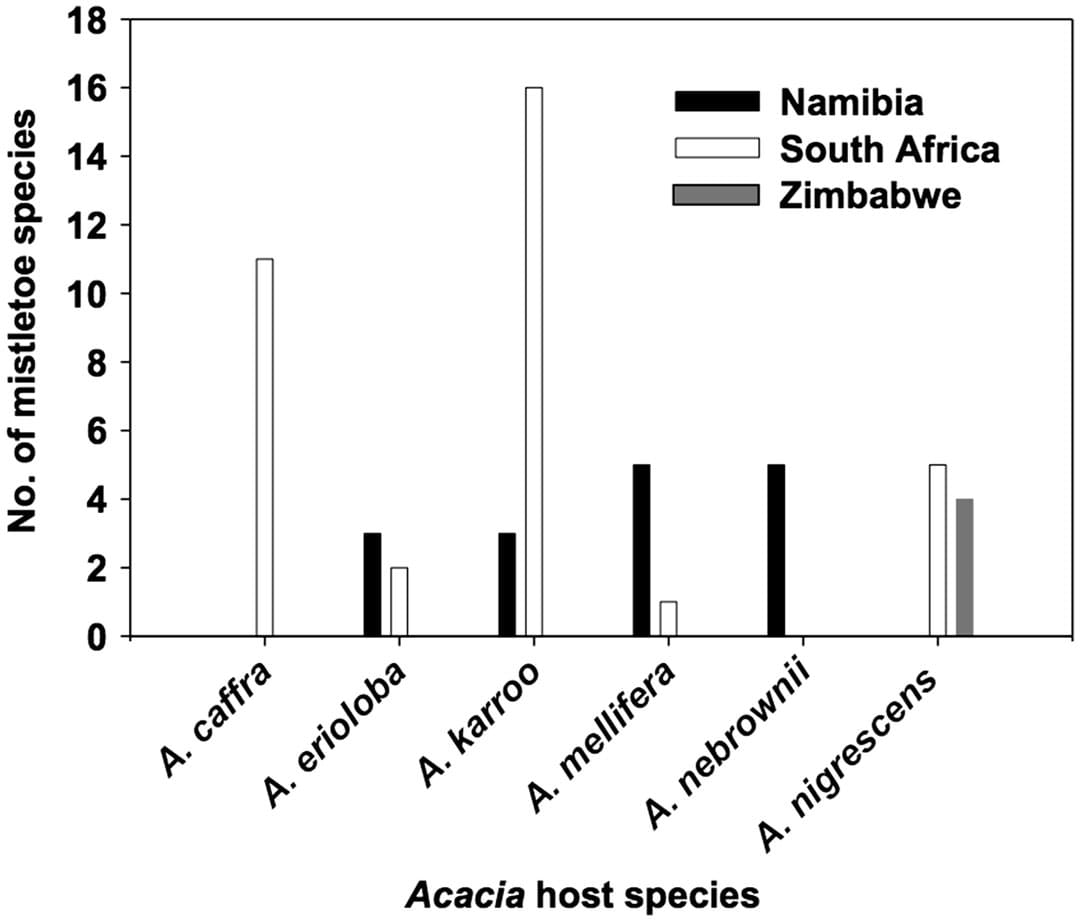
Number of mistletoe species that parasitize the most common Acacia host species in southern Africa.
Number of mistletoe species that parasitize the most common Acacia host species in southern Africa. Acacia karroo is the most abundant host tree in South Africa and many types of mistletoe species utilize this abundant species. However, in Namibia, A. erioloba and A. mellifera are quite common and were the most common hosts for mistletoes. In Zimbabwe, A. nigrescens is common and is also highly utilized by mistletoe species in the area.

Like many parasitic plants, mistletoes can parasitise from one to several plant species. A recent review published in AoB PLANTS by Okubamichael et al. contributes to the current broad understanding of parasite–host interactions using mistletoe as a case study. Future research needs are also highlighted.

Liked this article?

Written by

AoBPLANTS

AoB PLANTS is an open-access, online journal that publishes peer-reviewed articles on all aspects of environmental and evolutionary biology. Published by Oxford University Press, AoB PLANTS provides a

More from this writer

The nonprofit plant magazine

Lab science. Citizen science. Your source for plant science.