
Herbivory-induced defensive responses in plants can be direct (e.g. secondary chemicals to suppress herbivory) or indirect (e.g. extrafloral nectar attracting ants). These different types of anti-herbivore responses may vary temporally (time after damage) and spatially (e.g. roots versus leaves). Since internal plant resources are limited, theory suggests that they face allocation trade-offs in generating induced defensive responses, and that the expression of response traits will depend on allocational, evolutionary and ecological costs. Few studies have investigated to what degree herbivory can induce both highly specific and broad chemical changes in plants across different defense classes.
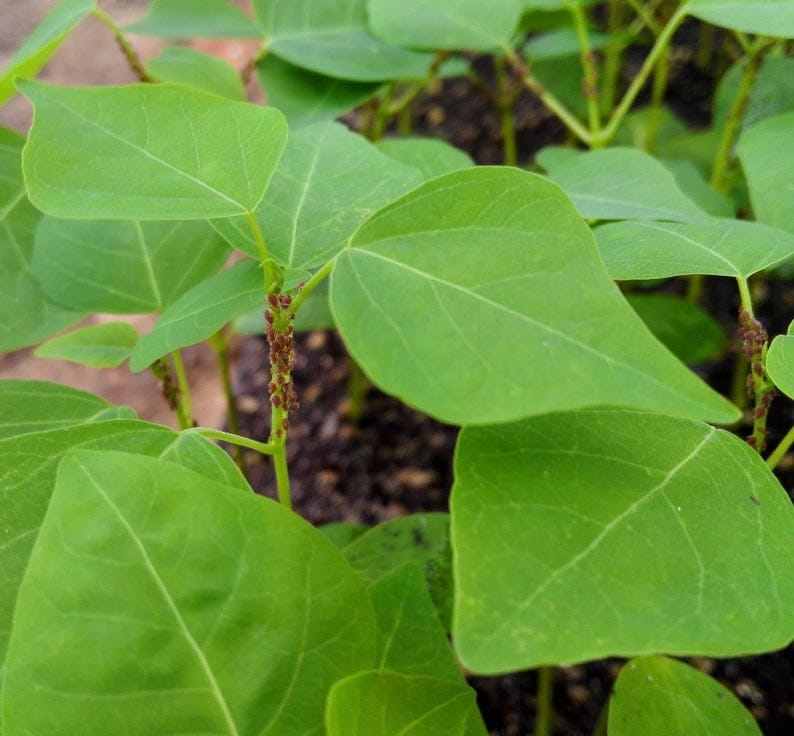
A recent study by Xiao et al. and published as an Editor’s Choice article in AoBP examined the effects of multiple herbivores on direct and indirect defense responses in leaves and roots of Chinese tallow tree (Triadica sebifera). The authors also investigated responses to foliar applications of the plant signalling hormones methyl jasmonate (MeJA) and salicylic acid (SA). The study presents evidence that different herbivores can induce highly specific plant responses. The simultaneous and relative induction of different defense types depends on herbivore host range and specificity, along with feeding mode. From this study it is clear that we can better understand the complexity and specificity of defence responses of plants by including multiple types of insects and that this should be considered in future experimental designs.