


Plants are incredibly diverse, and so are botanists! In its mission to spread fascinating stories about the plant world, Botany One also introduces you to the scientists behind these great stories.
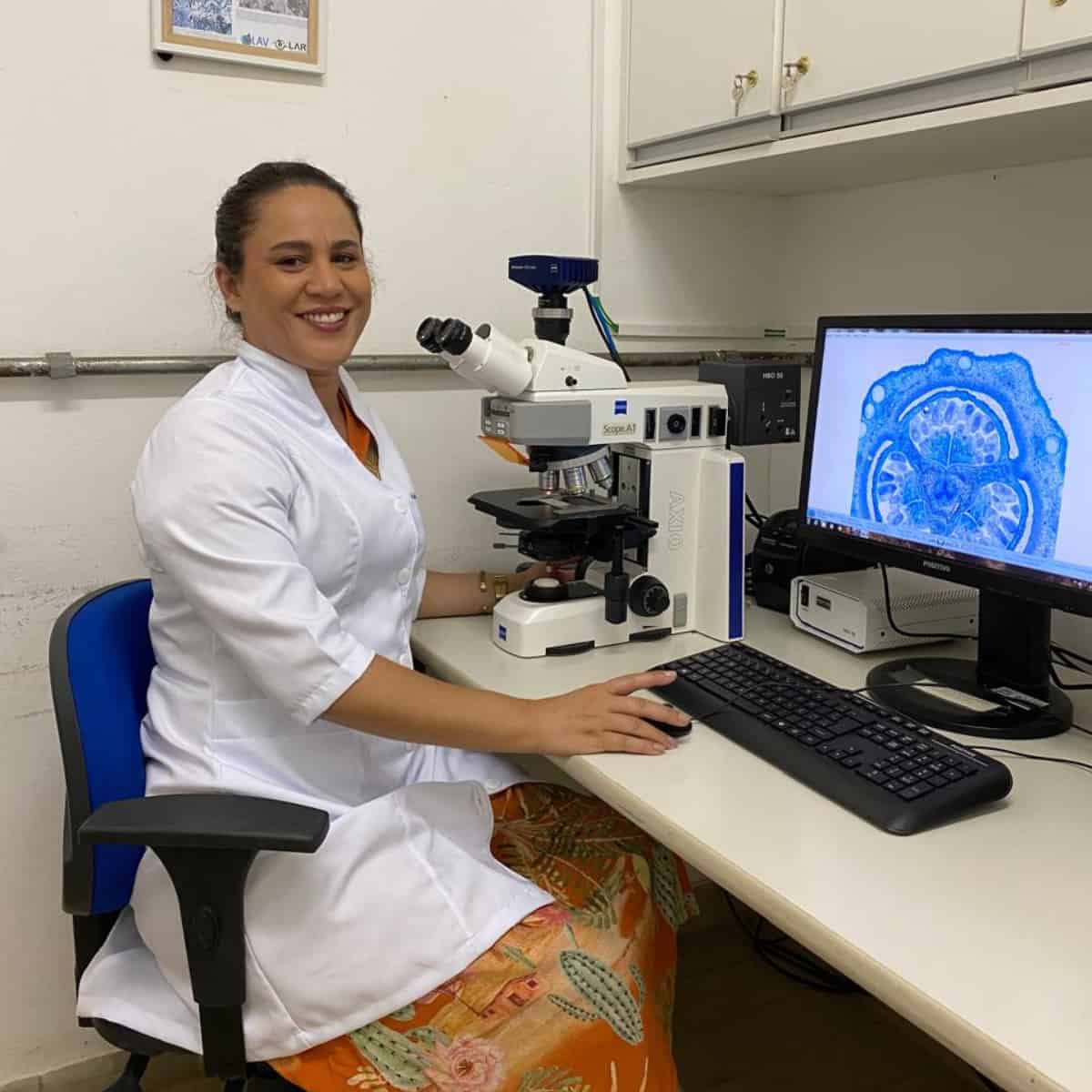
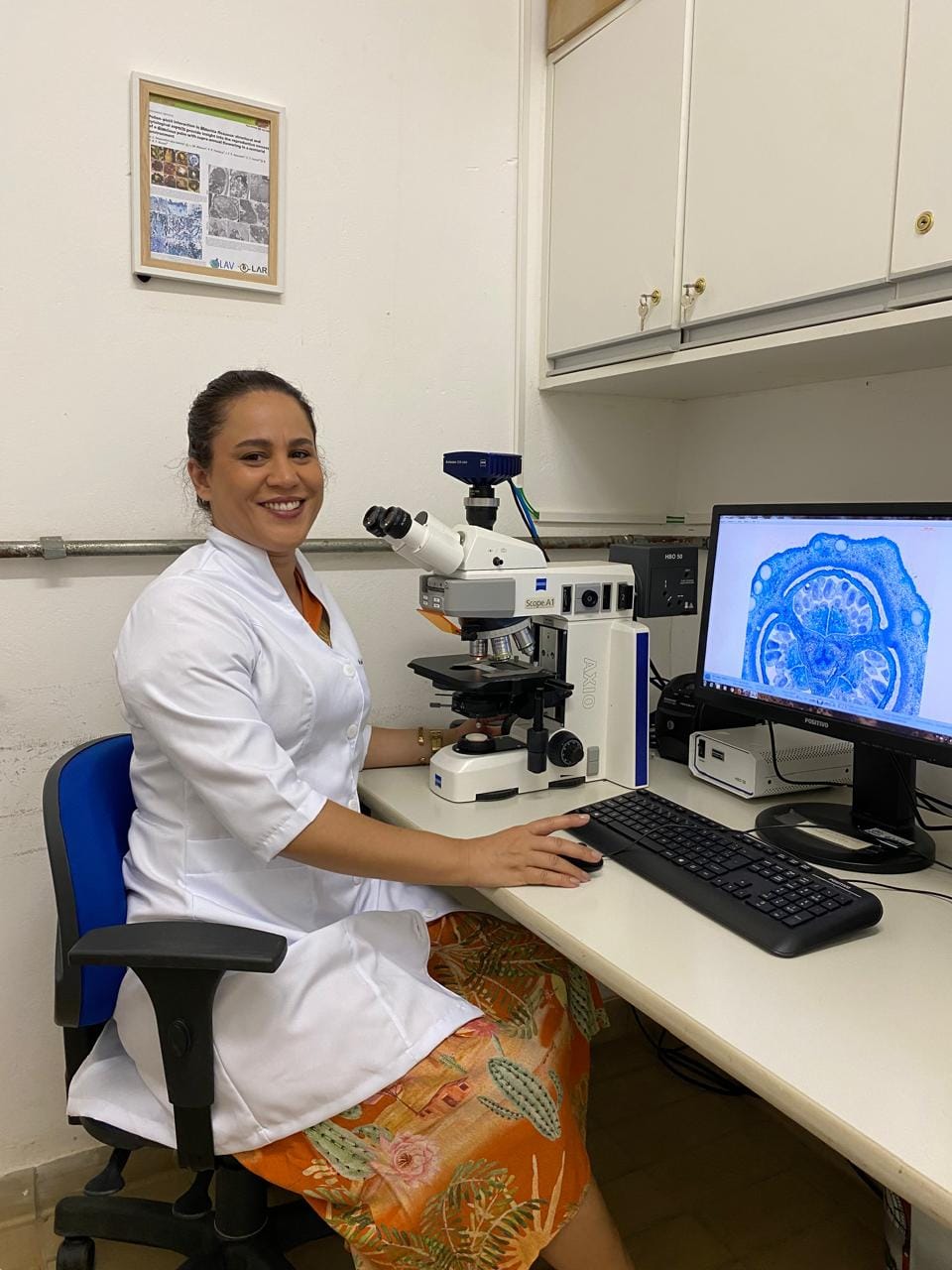
Today, we have Dr Hellen Cássia Mazzottini-dos-Santos, the coordinator of the Plant Anatomy Laboratory of Universidade Estadual de Montes Claros (Brazil). Her research focuses on the morphology and anatomy of plant reproductive organs, particularly those of the Cerrado biome. The work developed by her research group revolves around the association between anatomy and physiology to better understand germination patterns, deposition and mobilization of seed reserves, and seedling establishment in palm species (Arecaceae). Moreover, they also conduct studies on the developmental patterns of flowers, fruits, and seeds. You can follow her research activities and updates on her personal and lab Instagram account.
What made you become interested in plants?
I grew up in an environment surrounded by plants, and their exuberance always caught my attention. As soon as I began my undergraduate studies in Biological Sciences, I started a Scientific Initiation internship in the Plant Micropropagation Laboratory, where I developed an interest in plant reproduction. My motivation grew even stronger when I began studying a palm species I had been familiar with since childhood and discovered its potential for various applications. Palms are beautiful plants and hold great ecological and economic importance. These factors also motivated me to learn more about this particular group of plants. However, it was when I was introduced to the invisible world of microscopy in the Plant Anatomy Laboratory that I became truly fascinated by the organizational patterns of plant tissues, especially through histochemistry, which reveals the different compounds present in plant cells. During this period, I served as a teaching assistant in courses and workshops. Eventually, I became a professor and the coordinator of the very laboratory where I was trained, continuing my research with palm species.
What motivated you to pursue your current area of research?
During my undergraduate studies, I had the privilege of working with Professors Maria Olívia and Leonardo Monteiro, who guided and encouraged me to pursue a career in research. Professor Leonardo introduced me to the idea of applying anatomical knowledge to understand the physiology of germination in palm seeds. Later, during my master’s and doctoral studies, I had the opportunity to continue pursuing this line of research. Graduate school allowed me to be mentored by and collaborate with renowned researchers and professors in the field of Plant Anatomy, who greatly inspired me. Moreover, it enabled me to explore and apply new techniques, such as ultrastructural analysis and immunocytochemistry, essential tools that helped shape my career as a researcher in plant reproduction and also sparked my passion for teaching.
What is your favourite part of your work related to plants?
My favourite part of my work is being able to observe and understand the intricacies that compose the mystery of life, which are only revealed through microscopy. By employing various microtechniques, we are able to identify developmental patterns and distinct structures in flowers, fruits, seeds, and embryos of different plant species. Based on these data, we can relate their characteristics to aspects of reproductive biology adapted to the diverse environments in which these plants occur. Furthermore, we can generate information supporting other initiatives in conservation, ecophysiology, biotechnology, and education, thereby highlighting the value of basic science.
Are any specific plants or species that have intrigued or inspired your research? If so, what are they and why?
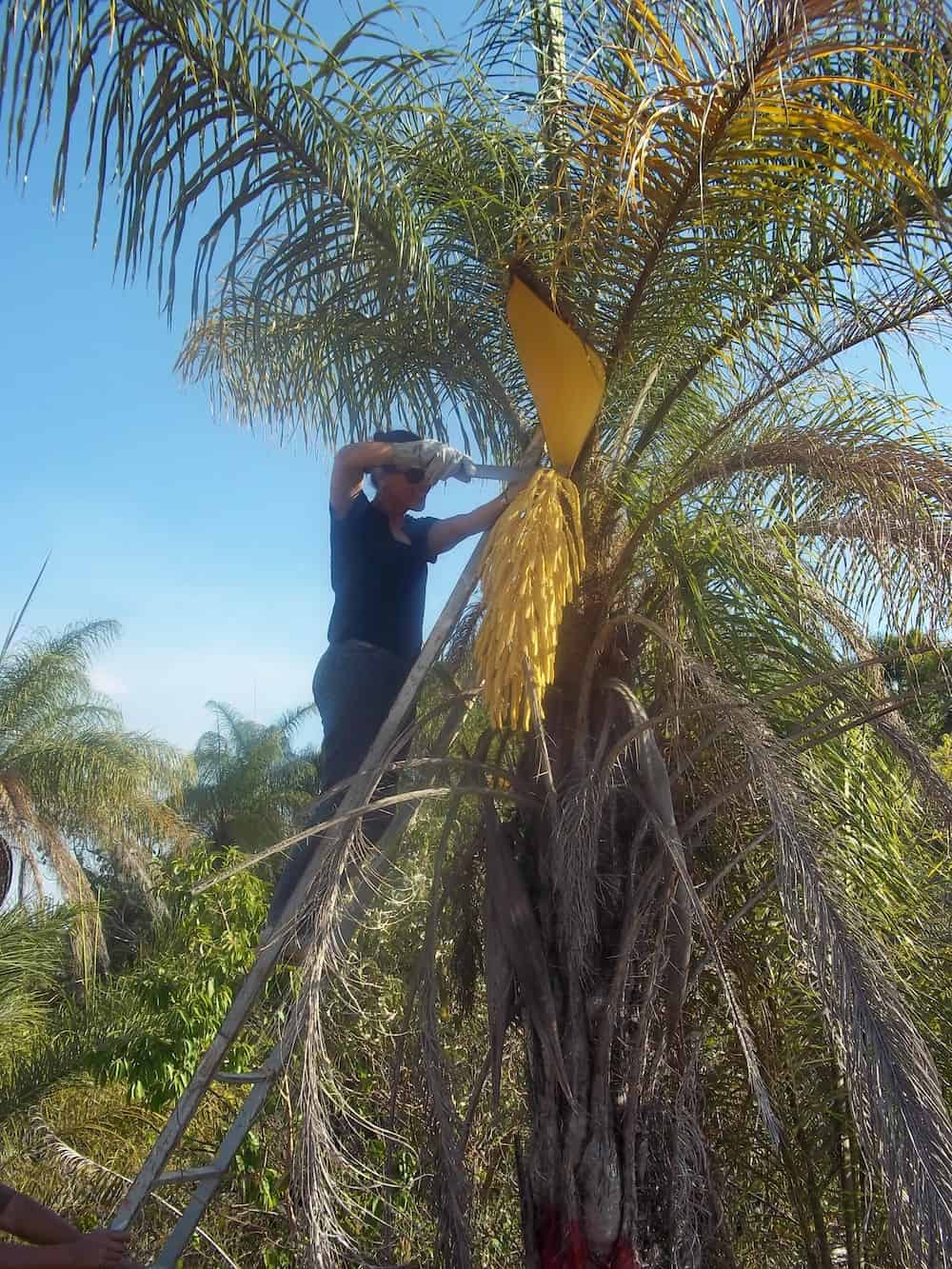
I’m fascinated by palm trees in general; among them, I highlight Acrocomia aculeata, known in Brazil as macaúba. I began my career as a researcher studying this species, and I’ve never strayed from it. Currently, the results of the research developed by the group I’m part of have gained significant attention, attracting interest from the industry in this species for biofuel production. Back then, this was a dream that seemed very distant, but we decided to invest our energy in these studies, especially because of the characteristics of the species (hardiness, drought resistance, and high productivity). One of the features that motivated us to study this species is the presence of seed dormancy, which is associated with the particularities of its anatomy and physiology. Although dormancy is an important adaptive trait, considering the environment where the species occurs, it poses a limiting factor for large-scale seedling production. Thus, the data obtained so far have contributed to advancing this application in biotechnology and supporting conservation and domestication projects.
Could you share an experience or anecdote from your work that has marked your career and reaffirmed your fascination with plants?
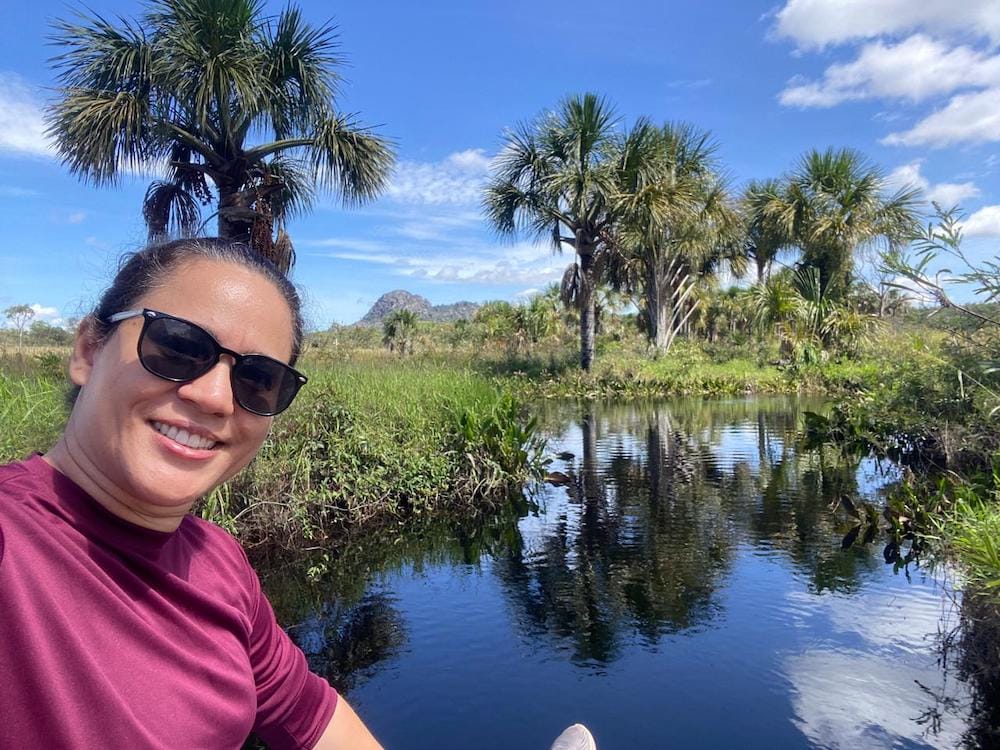
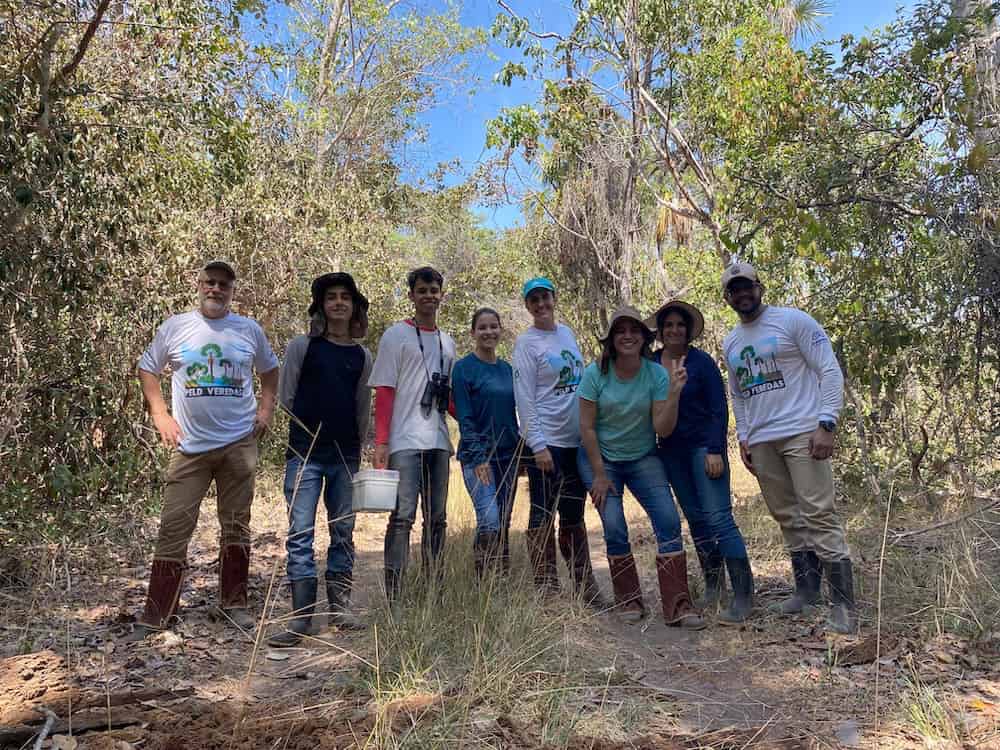
An incredible experience was when I visited a vereda (swamp areas) in northern Minas Gerais, where the majestic palm Mauritia flexuosa (buriti) dominates the tree layer. This species is one of the most beautiful plants I have ever encountered, and I was deeply moved to see that vast ‘buritizal’ in the Cerrado, a biome quite different from its native habitat, the Amazon. Such fascination made me feel as though I were in an enchanted forest, and my first reaction was to embrace the stipe of that magnificent plant. Naturally, this elicited laughter from the students and colleagues who were with me. My eyes light up when I speak about palms and the work we do with these plants; perhaps that is why some colleagues affectionately nicknamed me the ‘Palm Lady’.
What advice would you give young scientists considering a career in plant biology?
My first piece of advice would be to observe the wonders of nature with curiosity, for you will certainly find many plants closely associated with them. Seek something that captivates you, and once you discover that fascination, nurture it continuously. Plants are magnificent organisms and are essential for sustaining life on Earth. What most people lack is the awareness of this. My second piece of advice is to study diligently, strive to learn new techniques, build good relationships, and remain persistent in the field you choose to specialize in. You will undoubtedly face many challenges, but finding solutions will bring great rewards and happiness! And finally, my third piece of advice: share your findings, and bring them to children, youth, and adults. What you do deserves to be valued and understood. Only knowledge can transform education and foster respect for the environment.
What do people usually get wrong about plants?
I have noticed that people know very little about plants and tend to see them merely as decorative elements or raw materials for the production of goods. There is a clear inability to recognize that plants are incredible living organisms, with diverse forms, colors, scents, and adaptations to vastly different environments, that sustain life on Earth. When asked about plants, people often respond with complaints about their difficult names and the lack of interaction with humans, unlike what we experience with animals. This disconnect becomes even more evident when we delve into plant morphology and anatomy, it often feels as though we are speaking a language from another planet. As researchers, our efforts must be even greater in attempting to shift this distorted perception of botany. Generating and sharing knowledge about the importance of plants is urgent in this time of global climate crisis, as plants are essential for maintaining the balance of nature.
Carlos A. Ordóñez-Parra
Carlos (he/him) is a Colombian seed ecologist currently doing his PhD at Universidade Federal de Minas Gerais (Belo Horizonte, Brazil) and working as a Science Editor at Botany One and a Communications Officer at the International Society for Seed Science. You can follow him on BlueSky at @caordonezparra.