
Intraspecific plant functional trait variation provides mechanistic insight into persistence and can infer population adaptive capacity. However, most studies explore intraspecific trait variation in systems where geographic and environmental distances co-vary. Such a design reduces the certainty of trait–environment associations, and it is imperative for studies that make trait–environment associations be conducted in systems where environmental distance varies independently of geographic distance.
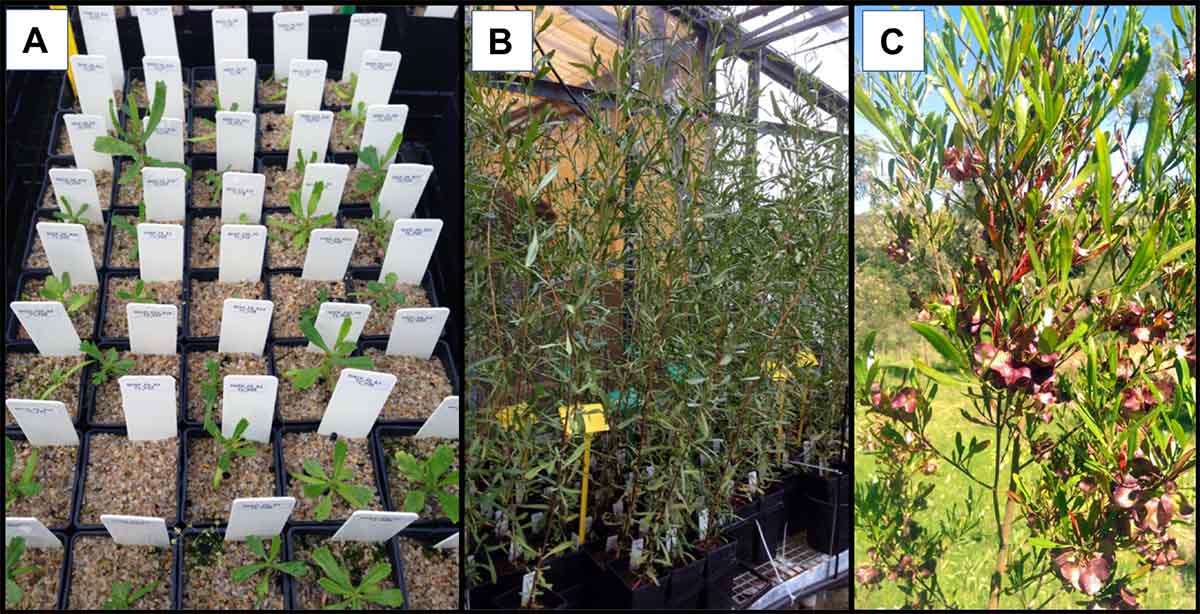
In a recent study published in AoB PLANTS, Baruch et al. studied a native Australian shrub – Dodonaea viscosa, or sticky hop bush – in the wild and in a gardening experiment and found that the species can readily adapt to different environments.The results demonstrate that responses of a range of key functional traits in D. viscosa to the environment were highly plastic (e.g. SLA, leaf nitrogen content, carbon and nitrogen isotope ratios, stomatal size and density). The findings are particularly interesting because the plants used in the study came from sites with quite different environmental conditions (in particular they differed in aridity and altitude), although they were only short distances (< 100 km) apart. Since D. viscosa is commonly used for restoration in southern Australia and local populations do not show strong genetic differentiation in functional traits, the potential risks of transferring seed across the broad environmental conditions are not likely to be a significant issue.