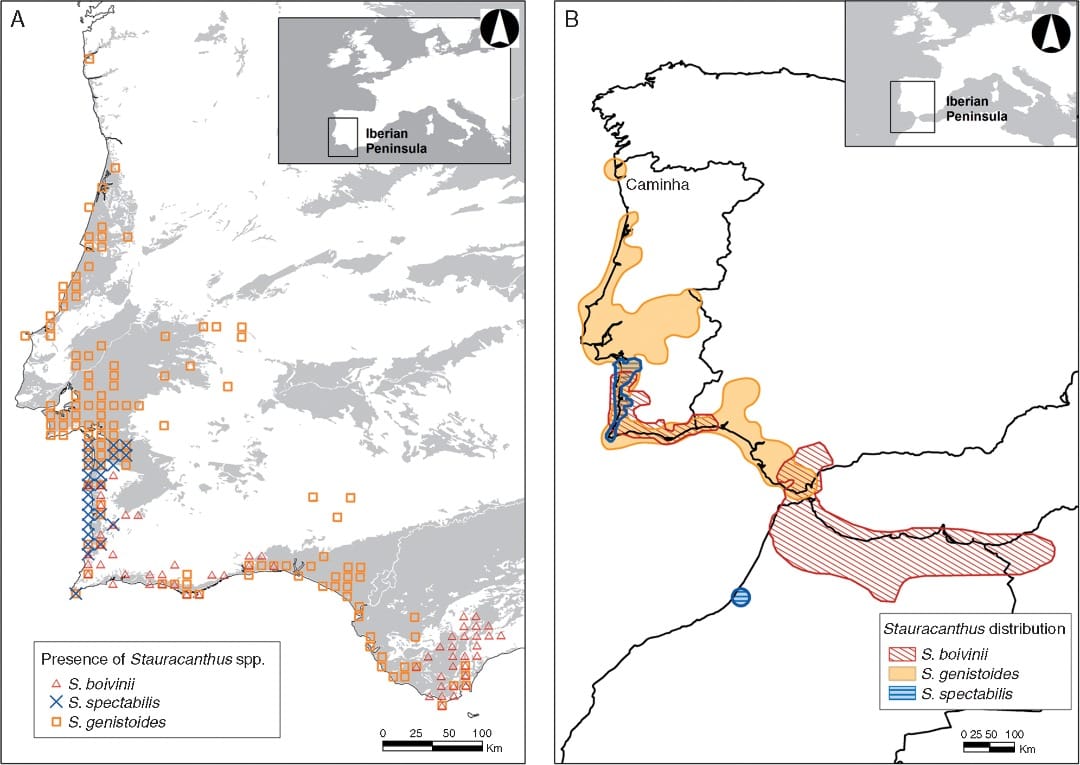


Geographic distributions of species are constrained by their ecological requirements. Chozas et al. study the distribution, environmental responses and evolutionary relationships of the three species of the genus Stauracanthus to assess the processes driving their diversification and current geographic ranges.

These species show similar responses to climate, supporting the hypothesis that all members of this young clade retain common physiological adaptations, but diverse edaphic requirements. The revealed patterns of diversification are consistent with a process of geographic range expansion and fragmentation coupled with niche evolution in a context of spatially complex environmental fluctuations.