
Due to climate warming, the global and regional water cycle is changing, and this will have a great impact on terrestrial ecosystems. Since plants are a critical part of these ecosystems, changed water cycles will inevitably affect their growth and reproduction. In particular, changing precipitation patterns will have impacts on the different life history stages of plants. Overall, a change in the amount and/or pattern of precipitation can affect most life history characteristics of plants, but plant responses may vary with species. Future increased precipitation in cold desert ecosystems may have an impact annual/ephemeral plant species that germinate in both spring and autumn.
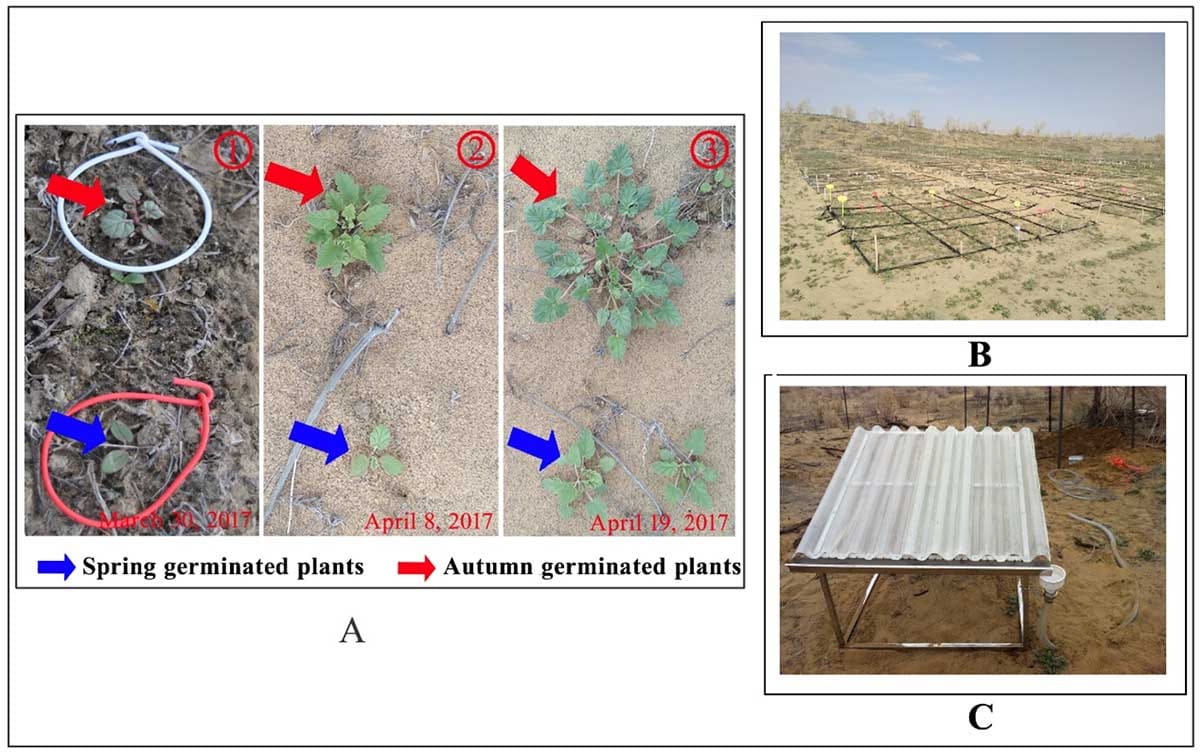
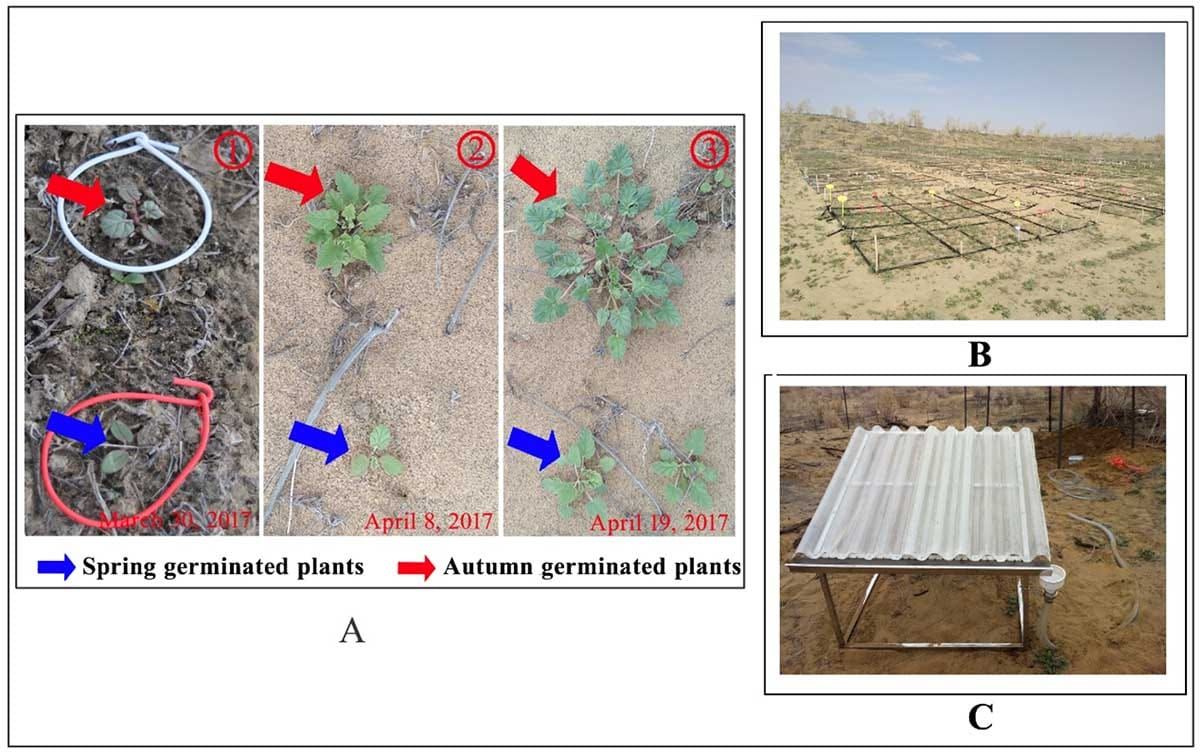
In a recent study published in AoBP, Chen et al. hypothesized that the life history traits of spring germinating plants of E. oxyrhynchum are more sensitive to increased precipitation than those of autumn germinating plants. To test this hypothesis, the authors compared the phenology, survival, morphological traits, reproductive output and biomass accumulation and allocation of plants from spring- and autumn-germinated seeds in the field. They found that increased precipitation prolonged the life cycle of spring and autumn germinated plants, increased dry mass accumulation and seed production, increased the proportion of biomass allocated to stems and leaves and decreased the proportion of reproduction and roots. In the context of climate change, the increase of biomass and seed production in spring and autumn germinated plants enhances the overall competitive advantage of Erodium oxyrhynchum in the plant community, assuming that other species respond less positively than Erodium oxyrhynchum.