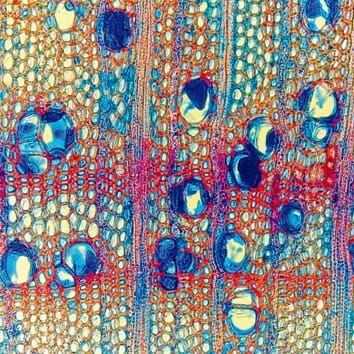


During winter dormancy, temperate trees are capable of only a restricted response to wounding. Depending on the ambient temperature during winter dormancy, wounded trees may start compartmentalization, e.g. by producing inhibitory compounds, but it is thought that processes involving cell proliferation, such as the formation of callus and wound xylem, are delayed until the next growing season. In a recent study published in AoB PLANTS, Copini et al. investigated the effect of wounding on Acer palmatum trees during winter-bud dormancy and found that in the cold (4 °C) treatment, wound reactions were virtually absent. In the warm (15 °C) treatment, however, trees reacted actively to wounding within a three-week period by, e.g., forming callus and local wound xylem. They conclude that temperature is an important factor in wound reactions during winter dormancy and may even induce the formation of callus and wound xylem within a three-week period.