


In the Andes, the rise of agriculture to replace foraging was not the result of hardship and resource scarcity, but instead a time of economic resilience and innovation, according to a study published in the open-access journal PLOS One by Luis Flores-Blanco of the University of California Davis and Arizona State University, U.S., and colleagues.
The transition from foraging to farming was a major shift in human history that laid the foundations for the expansion of modern civilization. The traditional view is that this transition was a time of hardship, with communities forced to rely on crops due to growing human populations and dwindling wild food resources.
Flores-Blanco and colleagues examined what people were eating by by measuring ratios of Carbon and Nitrogen isotopes from the bones of 16 individuals buried at the sites of Kaillachuro and Jiskairumoko in the Lake Titicaca Basin. This isotope analysis technique used here offers a direct window into ancient diets that archaeological plant remains alone cannot provide. While potato and quinoa remains are well-documented from these sites, preservation bias means we often miss the full picture of what people were actually eating. The chemical signatures locked in bone collagen tell a more complete story.
Both sites were inhabited from approximately 5,000 to 3,000 years ago, during the transition from foraging to farming. Isotope signatures indicate a high proportion (84%) of plant material in the diet, supplemented by a smaller proportion of meat from large mammals. What is striking about these results is how they differ to the isotopes of people from the period before the transition to farming. They don’t differ at all. The transition to farming seems to be marked by a sudden and spectacular continuation of things exactly as they were before.
That lack of difference is a big clue. If the shift were due to hardship because there simply wasn’t enough food, then growing new crops would have been found in the bones as some sort of change in the isotopes. Instead, food resources remained consistent for thousands of years. Wild foods were increasingly managed and domesticated, creating mixed foraging-farming economies. The authors propose that this economic resilience was likely aided by certain cultural advances happening at this time, including expanding trade networks and innovations in ceramic and archery technologies.
Luis Flores-Blanco adds: “Our research shows that the origin of agriculture in the Titicaca Basin was a resilient process. Ancient Andean peoples relied on their deep knowledge of harvesting wild plants like potatoes and quinoa, as well as hunting camelids. With this understanding of their environment, they effectively managed their resources, domesticating both plants and animals, and gradually incorporated these domesticated species into their diet. So, the first Altiplano farmers continued to rely on the same foods consumed by Archaic foragers. In this research, we show that this Andean economy path made this transition both beneficial and stable.”
To some extent, we still see evidence of this shift to agriculture in the Americas today. Domestication of Pitaya de Mayo in the Tehuacán Valley of Mexico is happening at the moment. Sometimes. It’s a haphazard process. No central authority has said they there’s a specific goal, so people are picking and choosing traits that appeal to them, making domestication also a driver of genetic diversity. You can still see diversity in the Andes too, where there is massive biodiversity of tubers, roots and grains unseen in the industrial world, where the goal is conformity.
The work by Flores-Blanco and colleagues is a reminder that the idea of a Neolithic transition to agriculture only works from the perspective of a gigantic stretch of time. For the people living this period, generations upon generations upon generations, this wasn’t a transition at all. The authors write: “This subsistence regime was maintained for some four millennia despite human population growth across the Archaic and Formative periods at the Altiplano.” It’s how things were. The idea of them working towards a specific goal makes as much sense as trying to cross the Atlantic using continental drift.
The authors conclude in their paper:
The Andean case thus represents a remarkable case of economic resilience in the face of demographic and economic transformation. Evidence for expanding trade networks and archery technology during the Terminal Archaic Period suggests that social and technological innovations are the likely explanations for subsistence stability across the forager-farmer transition. This feat of resilience not only allowed Andean Altiplano populations to maintain previously successful dietary regimes but also resulted in the domestication of plants and animals that would go on to fuel the later emergence of urban centers, intensive agricultural strategies, and some of the world’s most expansive socioeconomic systems, including the Tiwanaku and Inca phenomena.
READ THE ARTICLE
Flores-Blanco, L., Hall, M., Hinostroza, L., Eerkens, J., Aldenderfer, M. and Haas, R. (2025) “Altiplano agricultural origins was a process of economic resilience, not hardship: Isotope chemistry, zooarchaeology, and archaeobotany in the Titicaca Basin, 5.5-3.0 ka,” PLoS One, 20(6), p. e0325626. Available at: https://doi.org/10.1371/journal.pone.0325626
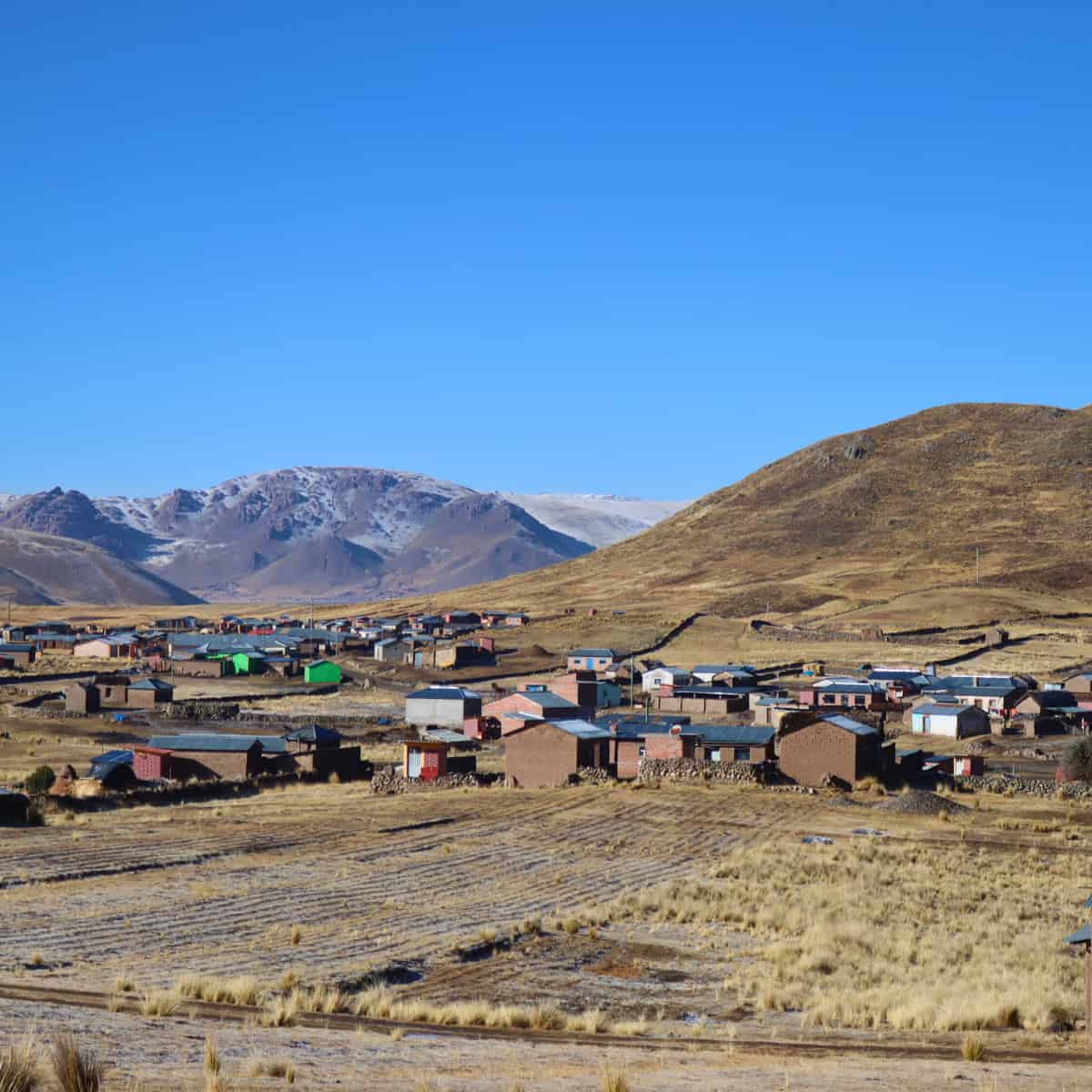
Cover: View of the Aymara community of Jachacachi, home to the archaeological sites of Kaillachuro and Jiskairumoko. Luis Flores-Blanco, CC-BY 4.0.