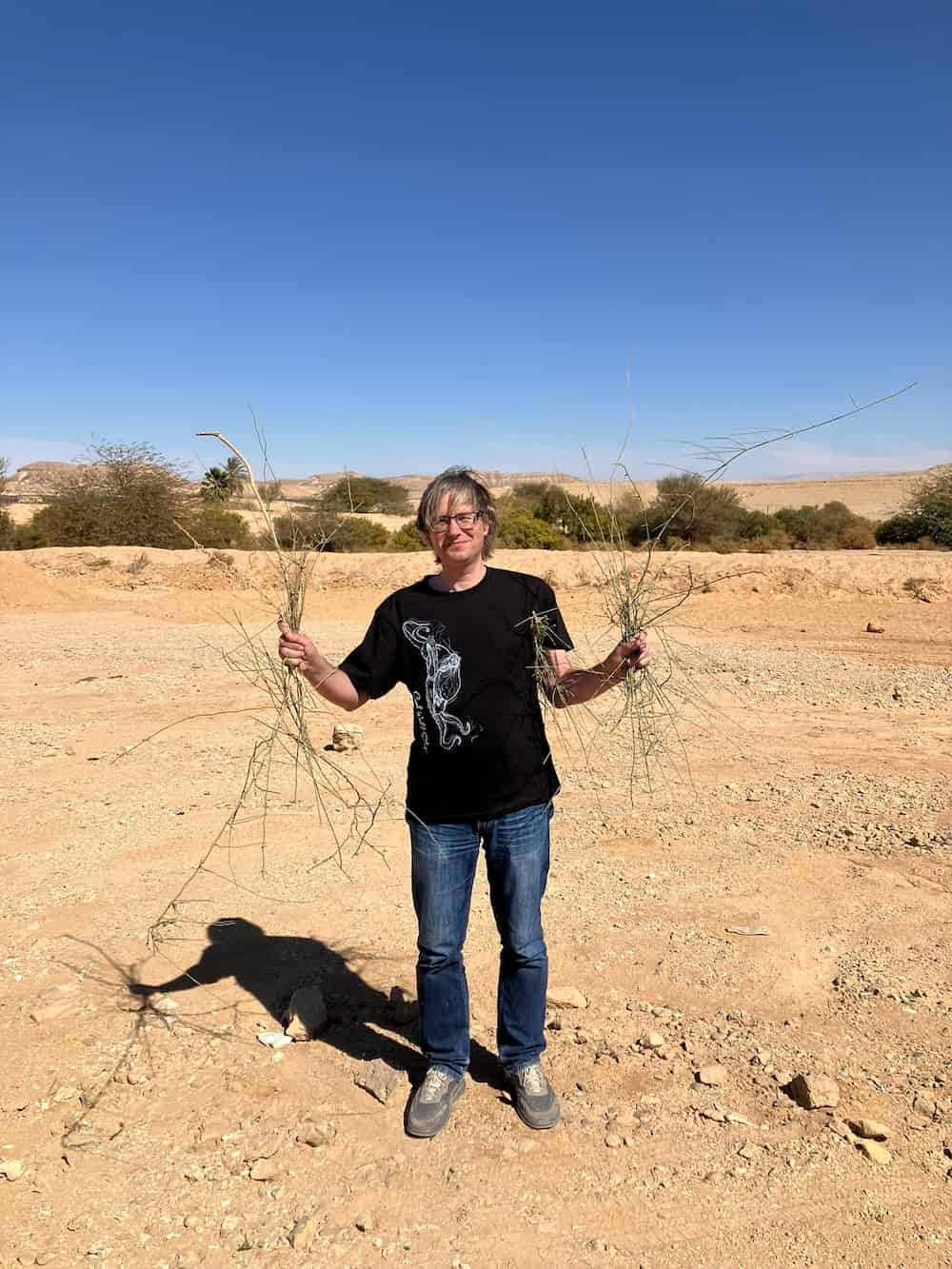

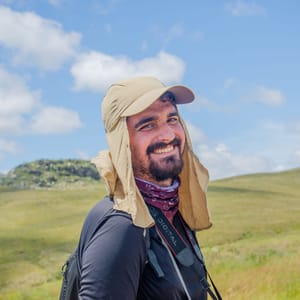
Botany 2025 (July 26–30, 2025) was one of the largest botanical conferences of the year. Botany One spoke with Dr. Dmitry Sokoloff, a speaker at the “Evolutionary History of the Gnetales” symposium sponsored by the Annals of Botany journal, to learn more about his fascinating research on reproductive evolution and the mysteries of plant development.
Sokoloff is a Research Associate at the University of Tel Aviv and holds a great experience in various aspects of plant science, from taxonomy and evolution to development and paleobotany. His research has led him to carry on research on several countries around the world, including Russia, Australia and India.

What made you become interested in plants?
When I was about 14 years old, I was quite serious about becoming an invertebrate zoologist. I used to attend very popular seminars for children at the Department of Invertebrate Zoology at Moscow University. One day, we were invited to join a botany field excursion—ironically, organized by a marine zoo-ecologist! That unexpected event was pivotal in making me a botanist.
At the same time, my grandmother—who was a geologist—bought me a plant identification manual, for reasons still unknown to me. That book captivated me because it made me feel I could start exploring plants right away, whereas invertebrate zoology required a microscope and more tools. Incidentally, the editor of that manual later became my PhD advisor. That combination of direct access to nature and early mentorship drew me deeply into botany.
What motivated you to pursue your current area of research?
I’m pleased to hear that my work is considered part of evo-devo, although my contributions come more from the evolutionary and developmental biology side. My interest in this field grew from interactions with inspiring colleagues like Paula Rudall, Richard Bateman, and Mike Frohlich in the UK, as well as Maria Logacheva and Alexei Penin in Russia.
A particularly meaningful moment came when I met Stefanie and Cecilia at the International Botanical Congress in Madrid. We immediately realized we wanted to collaborate on evo-devo research in Ephedra—a genus I consider one of the most exciting in the world. Studying Ephedra can help us better understand both the similarities and differences in seed development between gymnosperms and angiosperms.
Another key moment was when Alexander Timonin asked me—25 years ago—to develop a course on angiosperm evolution. I reached out to Peter Endress and others to request their papers. Peter generously sent me a large box full of his work, which impressed me deeply and got me interested in flower development and evolution. Later, I had the chance to spend time in Peter’s lab in Zurich, where I also met Paula Rudall. That encounter led to a collaboration that has lasted over two decades.
Are any specific plants or species that have intrigued or inspired your research? If so, what are they and why?
One of the most significant bodies of work I’ve contributed to involves the Hydatellaceae—a family of tiny aquatic plants from Australia, India, and New Zealand that belong to a near-basal lineage of flowering plants. Along with Paula Rudall and other colleagues, we produced 18 joint papers on this fascinating group. We tackled taxonomy, described new species, studied sexual dimorphism, reproductive development, flower homologies, palynology, embryology, and seed germination. We even discovered a new type of seed plant cotyledon. These studies were also linked to phylogenetic research, including collaborations with Sean Graham’s group to examine cryptic species.
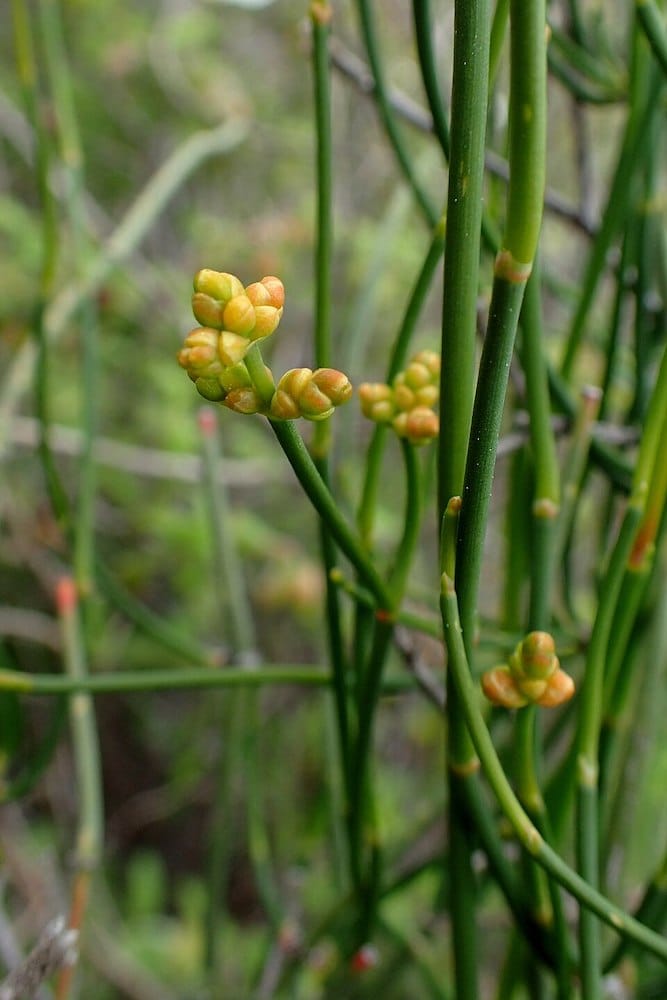
Another focus has been Ephedra foeminea, a species common in Israel that plays a key role in my studies on reproductive evolution in Gnetales. Gnetales and angiosperms are both enigmatic, sharing many structural and developmental traits despite molecular data showing they are not closely related. Understanding why Gnetales have not diversified like angiosperms, and why they retain traits like functional dioecy even when structurally bisexual, poses incredibly intriguing questions about plant evolution.
Could you share an experience or anecdote from your work that has marked your career and reaffirmed your fascination with plants?
Fieldwork in Australia’s Northern Territory stands out as both scientifically rich and personally unforgettable. I was there with Terry Macfarlane, Paula Rudall, Richard Bateman, and Margarita Remizowa. We encountered magnetic termite mounds, crocodiles (fortunately the wetlands where Hydatellaceae grow were too shallow for them), and buzzing clouds of mosquitoes. We also saw Aboriginal art depicting long-extinct thylacines.
What made it especially meaningful was seeing in nature a new species we had previously described only from herbarium collections—and standing under a cliff knowing that another newly described species was growing just above. Unfortunately, we lacked permits and funding to collect certain other species, but I hope they will one day be studied further.
Another memorable experience was a research trip to the Western Ghats in India, led by Professor Shrirang Ramchandra Yadav. The laterite plateau resembled northern tundra from afar, but on closer look revealed a rocky substrate and plants remarkably similar to those from Northern Australia. These experiences continue to deepen my appreciation for plant diversity and the thrill of field discovery.
What advice would you give young scientists considering a career in plant biology?
Be fascinated by plant diversity. Look at plants not only for the sake of science, but also for their beauty. Fieldwork is invaluable—not just for data collection, but for developing an intimate relationship with your subject. It’s often in the field that new questions arise, and where your long-term passion for plants is truly nurtured.
Carlos A. Ordóñez-Parra
Carlos (he/him) is a Colombian seed ecologist currently doing his PhD at Universidade Federal de Minas Gerais (Belo Horizonte, Brazil) and working as a Science Editor at Botany One and a Communications Officer at the International Society for Seed Science. You can follow him on BlueSky at @caordonezparra.