
Plants are incredibly diverse, and so are botanists! In its mission to spread fascinating stories about the plant world, Botany One also introduces you to the scientists behind these great stories.
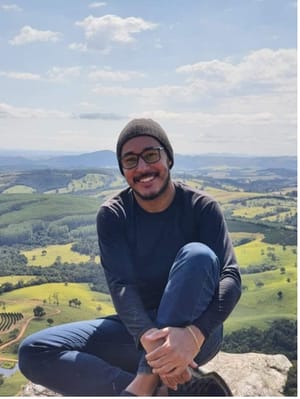
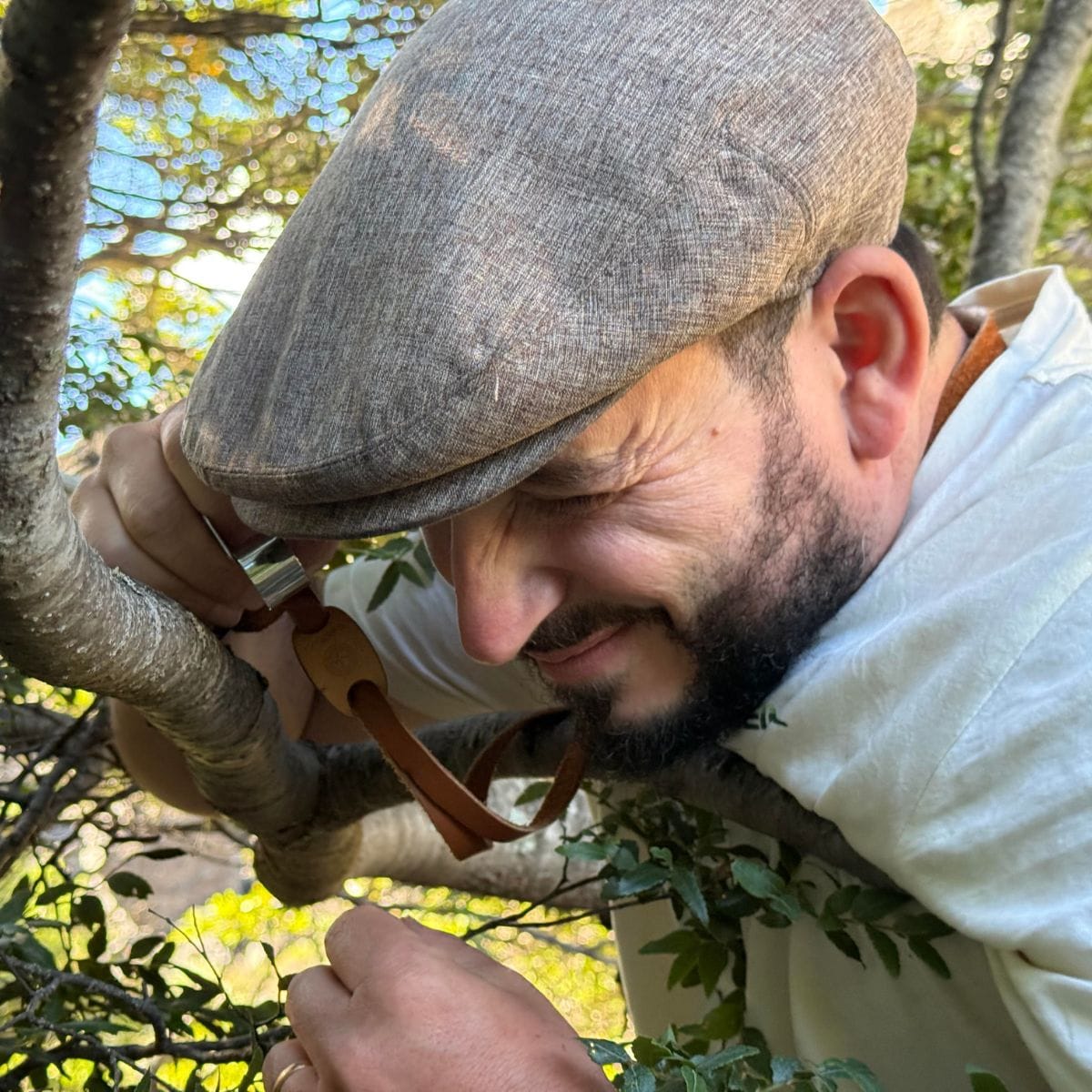
Today, we have Dr David Alors, head of the Lichens Biology Laboratory at the Facultad de Recursos Naturales of the Universidad Catolica de Temuco, Chile. He considers himself a multidisciplinary researcher with a wide background in biology, and molecular phylogenetics is his major expertise. Since he started his PhD at Universidad Complutense de Madrid (Spain), Alors’ work has been focused on lichens, particularly on phylogenetic studies and the impact of reproductive modes on their ecology and evolution. Moreover, he has investigated the biogeography and population ecology of Parmelina lichens and has a deep interest in species delimitation through phylogenetic analysis.
Beyond systematics, Alors has explored lichen symbiosis, including fungal-algal interactions. During his postdoctoral research in Israel (2019–2021), he investigated host-parasite relationships between the alga Haematococcus pluvialis and the chytrid Paraphysoderma sedebokerense. Currently, he is back in southern Chile, working to strengthen lichenological research in the region through collaborations with cryptogamic specialists from Chile and beyond. Alors’ current project focuses on the phylogeography of Menegazzia lichens and their potential as bioindicators of environmental change, as well as bioactive compounds. Recently, he started the biology of lichens lab in association with Dr. Johana Villagra, where they mentor students and outreach activities over Fungi Fests. You can follow their work at their Instagram.
What made you become interested in plants?
I have been interested in biology since I was very young. My curiosity spanned a wide range of topics, from landscapes and ecology to animals and plants. However, I was initially more drawn to animals than to plants. It wasn’t until I studied biology at the University of Alicante that I developed a deeper interest in the plant world. This was partly due to the influence of my botany professors, such as Manuel Benito Crespo and Antonio de la Torre, as well as phytopathology specialists like Luis Vicente López Llorca and Jesús Salinas. Additionally, I became fascinated by plants through the study of interspecific relationships and plant evolution
What motivated you to pursue your current area of research?
My current research in molecular phylogeny and taxonomy of lichens is a natural continuation of my long-standing interest in interspecific relationships and evolution. These topics became central to my work during my PhD, where I focused on the phylogeny of parmelioid lichens, considering both lichen symbionts. After finishing my biology degree and before starting my PhD, I conducted my master’s thesis in molecular biology, working on cloning the telomerase of the European seabass (Dicentrarchus labrax). With this background in molecular biology and my interest in several biology topics like evolution, interaction ecology and reproduction, I obtained a grant to do my PhD in the project of Ana Crespo, who was the head of the Systemol laboratory (UCM) and currently is the National Royal Academy of Natural and Exact Sciences (Spain). This project was focused on the use of DNA barcodes in Parmeliaceae lichens as a model for lichen identification. I continued my PhD in the project PARSYS (systematics of Parmeliacea) with Divakar, who was also my PhD supervisor altogether with Ana Crespo and is the current head of the Systemol group. My current research line a is a continuation of the research line that I started to work on this time at UCM, applying integrative taxonomy, molecular ecology and biogeography to the study of lichens; the big difference is that now I am studying Chilean lichens.
What is your favorite part of your work related to plants?
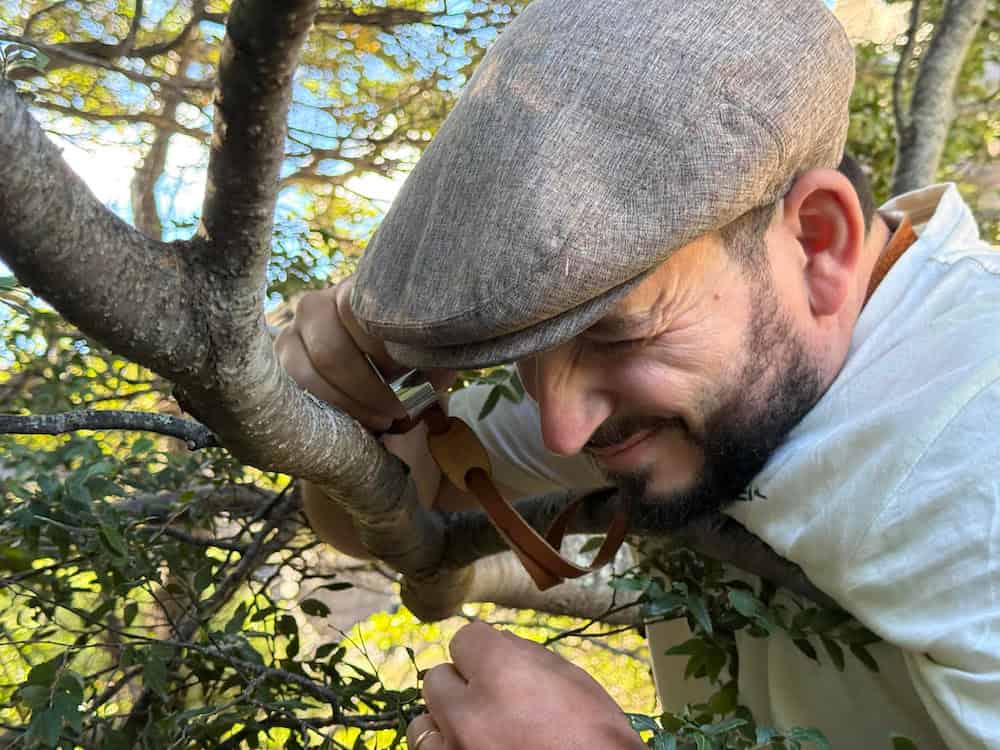
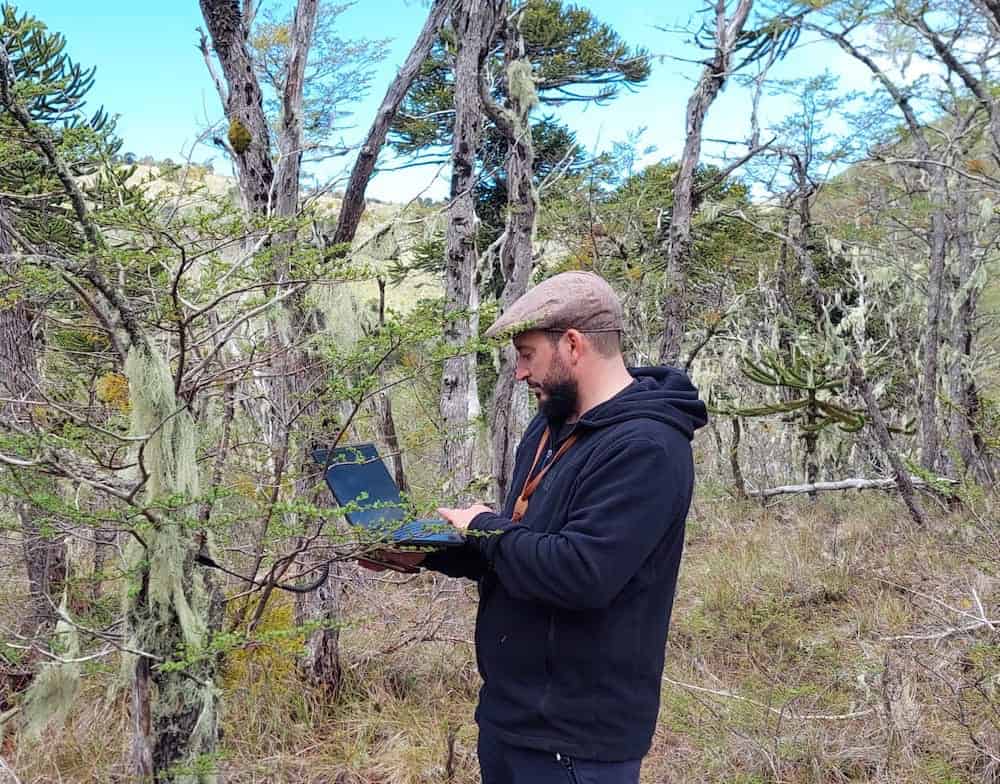
In a theoretical way I really enjoy to unravel the evolution, the reproductive modes and the interaction of lichens within their intrathalline symbionts and between other organisms of the ecosystem. In the practical way I really enjoy the opportunity to travel that lichenology offered me, I did research stays in Chicago and Frankfurt and I did research visits in different cities of Spain and Chile, and I visited travel to collect samples in several locations of Portugal, Spain, Morocco, Chile and Argentina. Traveling to sample lichens, moving by the forest and natural ecosystems is probably my favorite within the different tasks of my work.
Are any specific plants or species that have intrigued or inspired your research? If so, what are they and why?
From a young age, my passion for biology was initially driven by animals, particularly felines and birds of prey. The Iberian lynx (Lynx pardinus) was the species that most inspired me to pursue a career in biology. However, when I began working with lichens, I was like a blank slate—ready to learn, with very few preconceived ideas. Much like someone watching a movie without expectations, I was able to fully appreciate lichens and their symbiotic partners.
In fact, during the first months of my PhD, my research was focused not on the fungal symbiont (formally known as mycobiont) but on the photosynthetic partner (photobiont). I analyzed DNA sequences and read extensive literature on Trebouxia, the main algal symbiont of lichens. Since knowledge is essential to developing appreciation, I gradually grew fond of and inspired by Trebouxia algae.
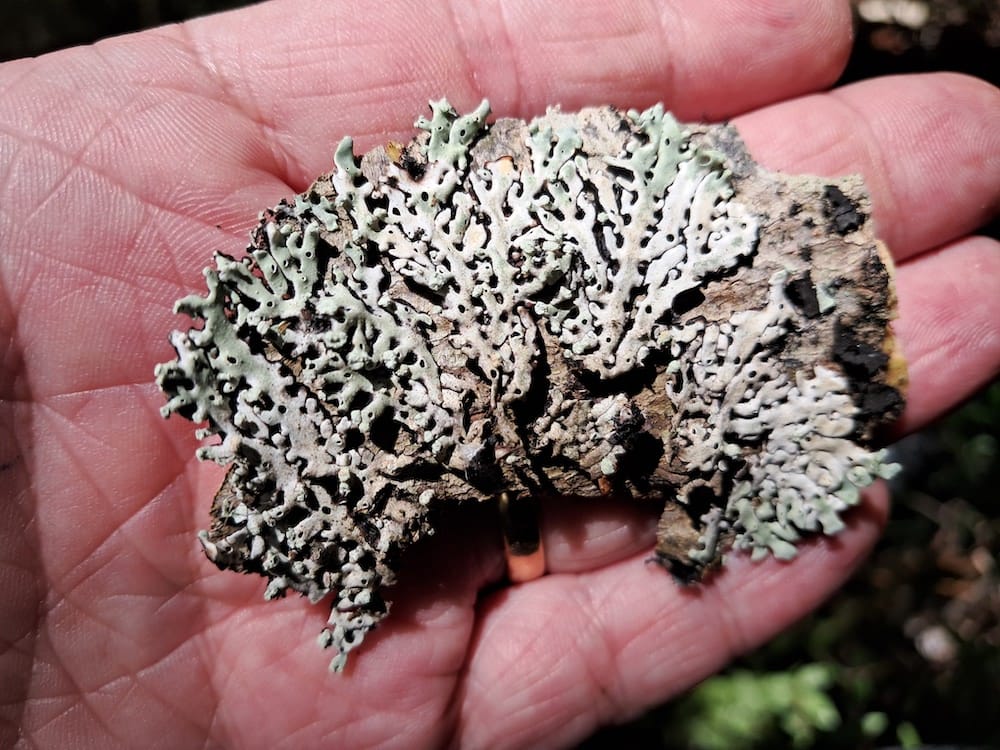
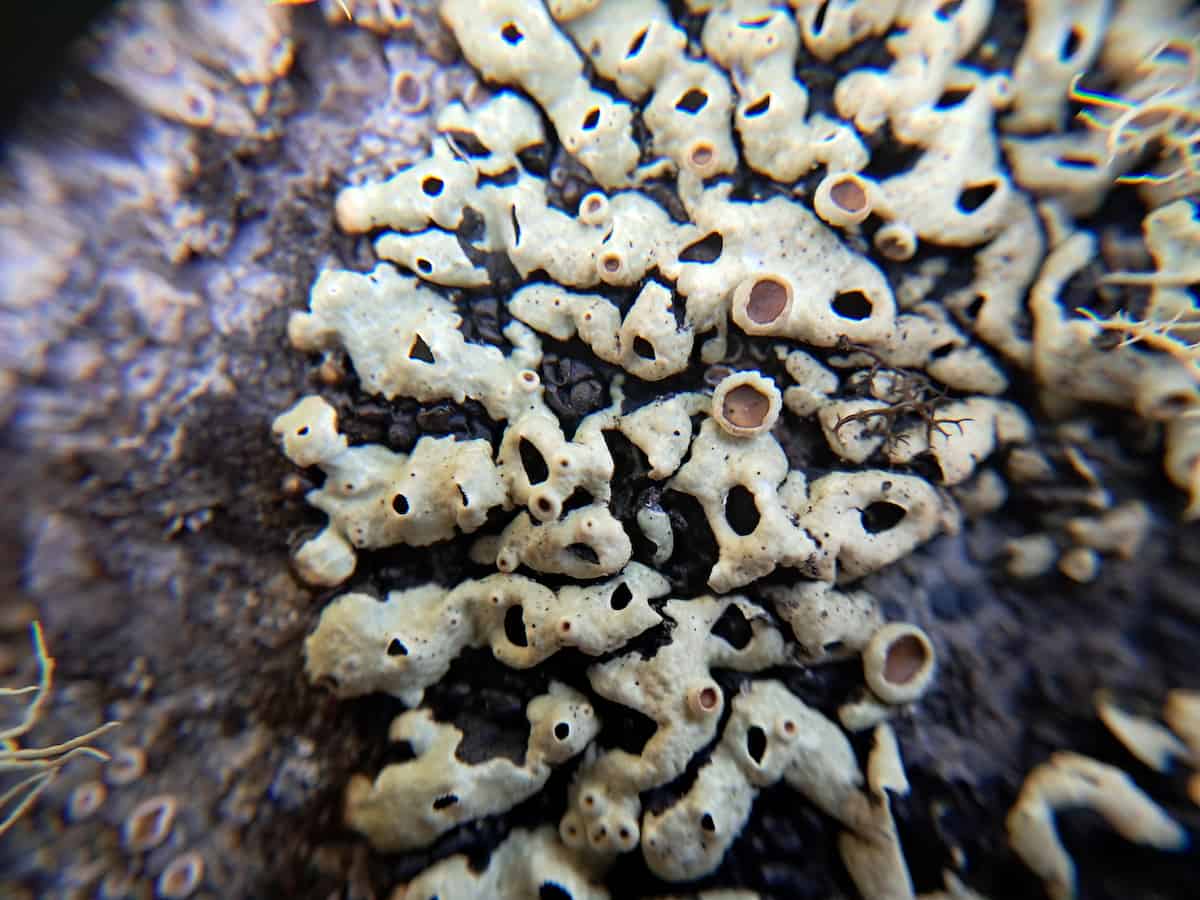
Over time, this pattern repeated with the lichen species and genera I studied. Among them, I have a special connection with Parmelina and Punctelia, particularly Punctelia guanchica, an endemic species of the Canary Islands that we discovered in 2016. However, the genus I am currently studying is the one that inspires me the most—because this time, I deliberately chose to study it. Like my previous subjects, it belongs to the Parmeliaceae family, but it stands out for its hollow lobes, which can retain water, and perforations that allow for gas exchange. This morphological adaptation is closely linked to its habitat in cold and humid environments, making it an excellent bioindicator species
Could you share an experience or anecdote from your work that has marked your career and reaffirmed your fascination with plants?
One of the most memorable experiences in my career occurred when Carlos G. Boluda and I, both young PhD students at the time, traveled across Morocco in search of Bryoria and Parmelina lichens. It was an extraordinary journey through diverse landscapes and a different culture but also a challenging one, as we navigated unfamiliar regions before the era of smartphones, often relying on small villages for lodging and facing language barriers and even bedbugs.
The night before our return flight, our rental car broke down in the foothills of the Atlas Mountains, far from any town. As darkness fell, we prepared to spend the night outdoors. Then, unexpectedly, three local brothers appeared with a flashlight. Despite the language barrier, they welcomed us into their home, shared their food, and provided us with a place to sleep. The next morning, we discovered the issue had been a minor overheating problem, and we were able to continue our journey.
This experience reinforced my passion for fieldwork. Each expedition presents unique challenges, yet the opportunity to explore nature, engage with local communities, and discover new lichens remains deeply rewarding. Field research, alongside laboratory analysis and intellectual inquiry, continues to be a cornerstone of my scientific motivation.
What advice would you give young scientists considering a career in plant biology?
For those considering a career in plant biology, I recommend testing their interest in research as early as possible—whether through an internship or by collaborating with a professor. This initial step helps determine whether there is a genuine motivation for scientific inquiry and, specifically, for lichenology.
If working with advanced frontier methodologies, it is essential to respect and learn from classical methodologies. Just as did, while I was working with DNA-based analyses, I always valorized and I still being trained in traditional morphological taxonomy. Both approaches are complementary and provide a more comprehensive understanding of lichens.
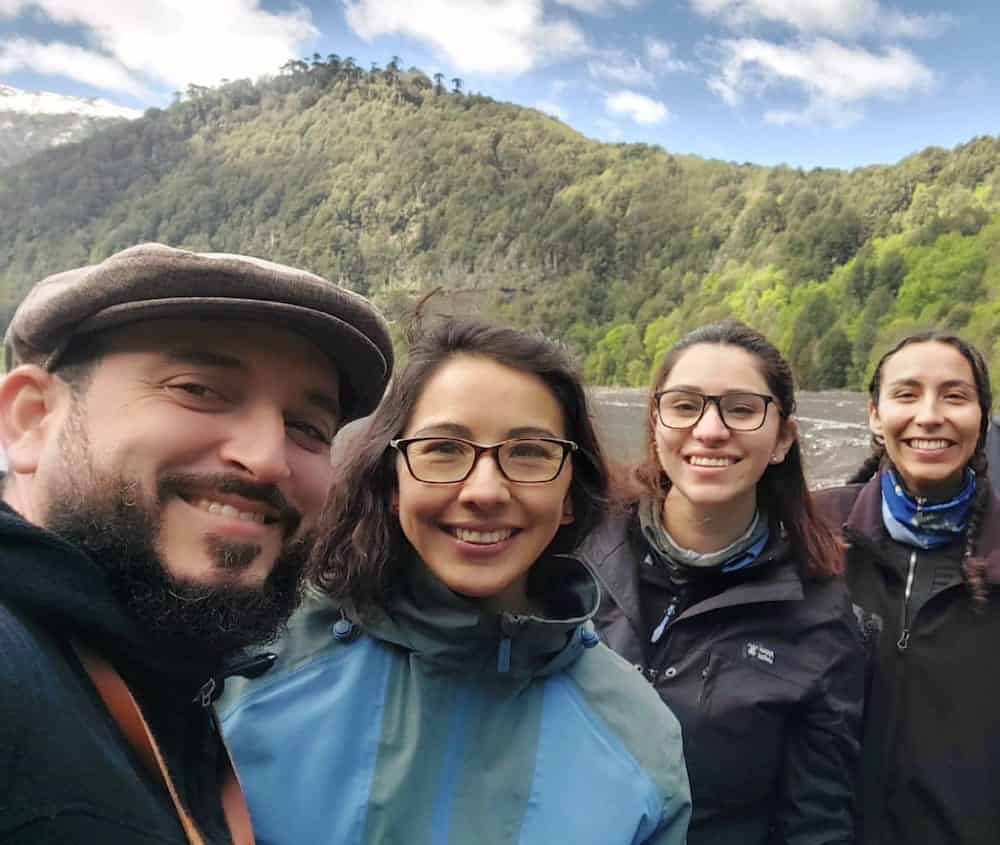
Finally, for those certain about pursuing lichenology, I encourage them to follow their own path while fostering collaboration. Choosing the right people to work with is crucial—surrounding oneself with individuals who combine talent and integrity will provide both professional growth and a supportive environment. In my current project I collaborate with several researchers, like Johana Villagra (UCT), Divakar (UCM), Cecilia Rubio and Natalia Quiñones (UV) and Jarle Bjerke (Artic-Alpine Botanic Garden). As the saying goes, ‘A good tree offers the best shade.
What do people usually get wrong about plants?
Misconceptions about lichens are even more widespread than those about plants. First, it is essential to clarify what a lichen is, as they are often mistaken for mosses or other cryptogamic plants. Many people recognize some lichens, such as Usnea (‘old man’s beard’) hanging from conifers, but they are unaware of the vast diversity of foliose and crustose lichens that thrive in different forests and rocky substrates.
Two common myths deserve to be debunked. The first is the belief that lichens harm trees. Unlike parasites, lichens do not extract nutrients from their host; they merely use the bark as a substrate. The second is the idea that lichens are useless. In reality, they play crucial ecological roles, from carbon and nitrogen fixation to providing food and shelter for various organisms. Additionally, they have numerous traditional and potential applications for humans, from natural dyes to medicinal uses.
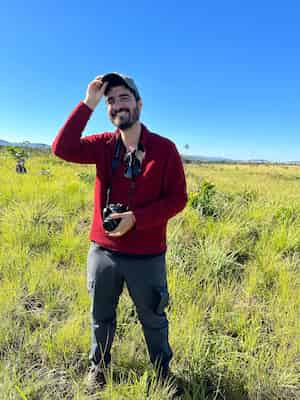
Carlos A. Ordóñez-Parra
Carlos (he/him) is a Colombian seed ecologist currently doing his PhD at Universidade Federal de Minas Gerais (Belo Horizonte, Brazil) and working as a Science Editor at Botany One and a Communications Officer at the International Society for Seed Science. You can follow him on BlueSky at @caordonezparra.