

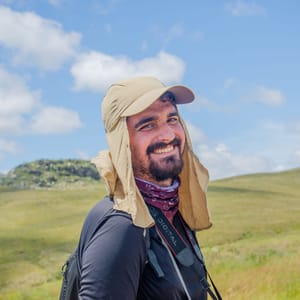
With Fascination of Plants Day approaching, Botany One has prepared a series of interviews with researchers from around the world working in different areas of botany to share the stories and inspiration behind their careers.
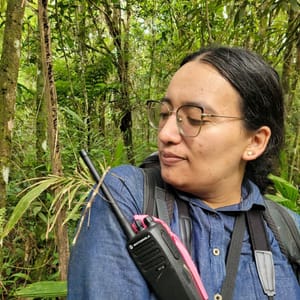
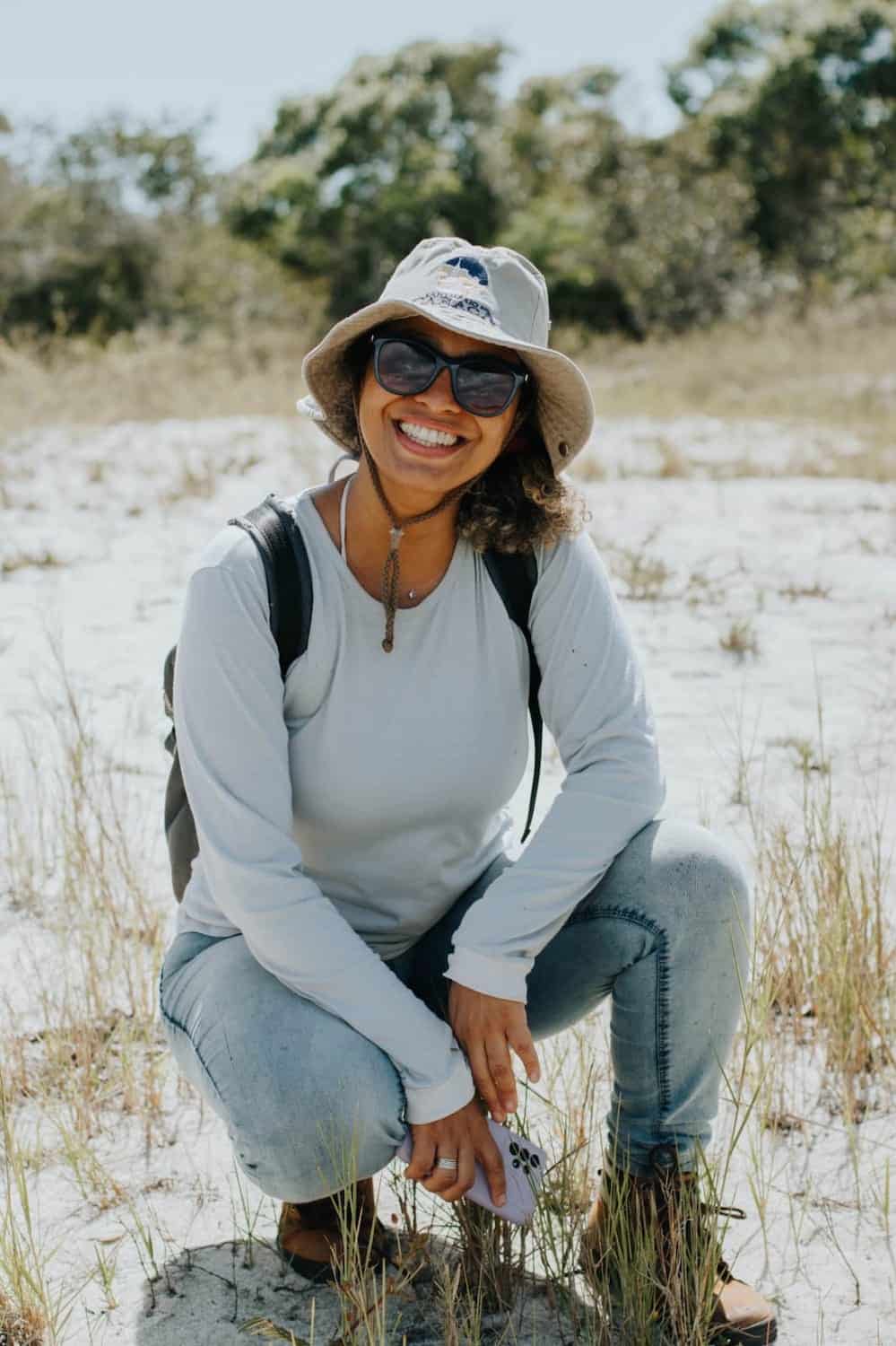
Today, we have Dr Daniela Boanares, a proud black, female scientist that work as a Post-Doc at the Universidade do Estado do Rio de Janeiro, with the support of the Instituto Serrapilheira. Dr Boanares is interested in the physiological and ecological mechanisms behind foliar water uptake –the process where plants absorb water from the atmosphere directly from their leaves. In 2021, her PhD Thesis in this area received the maximum distinction from CAPES, the Brazilian Government Agency responsible for the quality of Postgraduate Programmes.
What made you become interested in plants?
I became interested in plants towards the end of my undergraduate studies when I realized that, despite being sessile organisms, they had fascinating responses to their environments. It was at this moment that I truly understood their crucial role in our survival, and we need to understand them if we want to continue thriving on this planet. My initial interest was ecological restoration, followed by ecology and, eventually, plant physiology. During my Master’s studies, I revisited the water cycle and discovered a smaller cycle involving plants: I learned that plants can absorb water through their leaves, a phenomenon with a tremendous ecological role, especially in environments with little water availability. This revelation deeply fascinated me and led me to explore various possibilities and questions throughout my Master’s, PhD, and post-doctoral research.
What motivated you to pursue your current area of research?
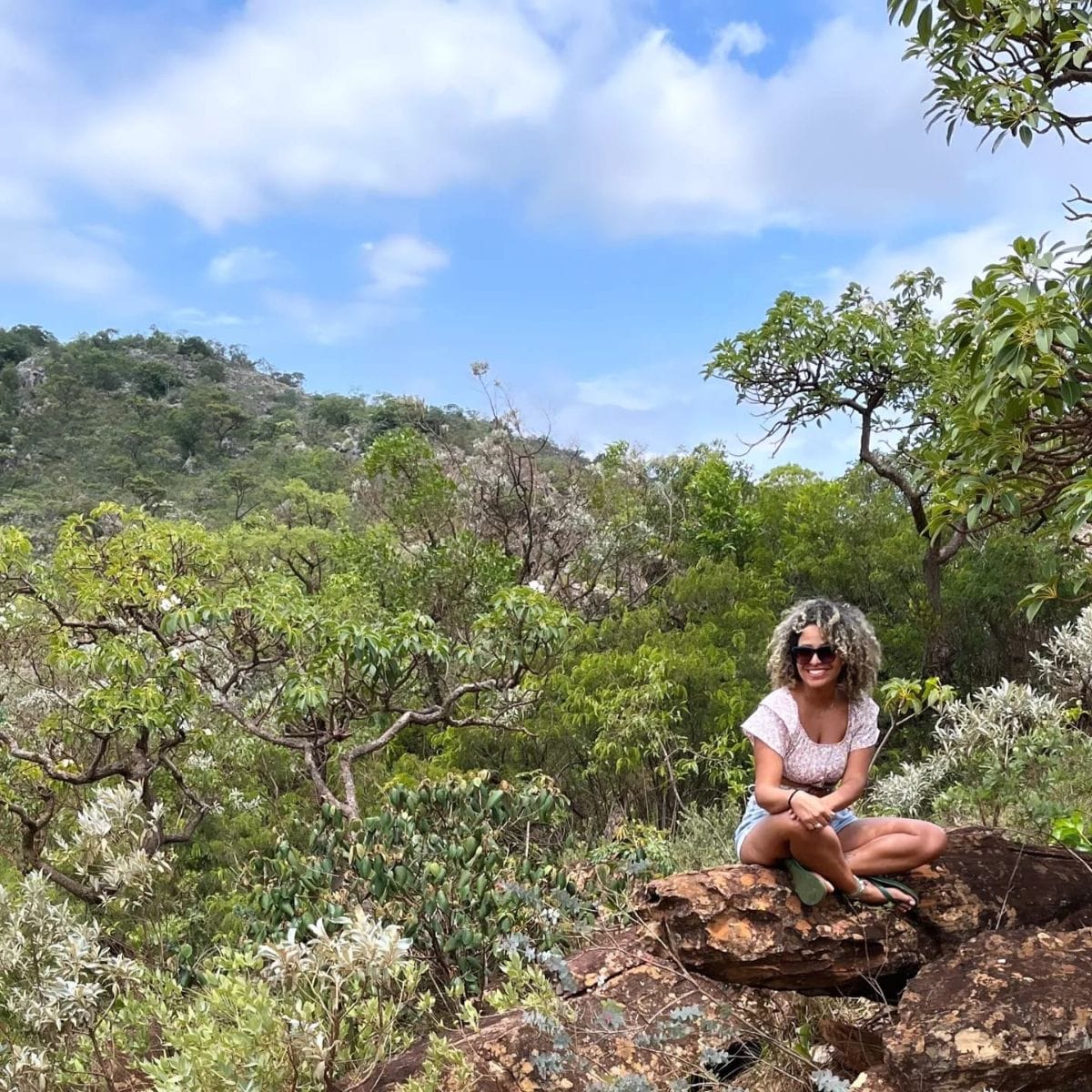
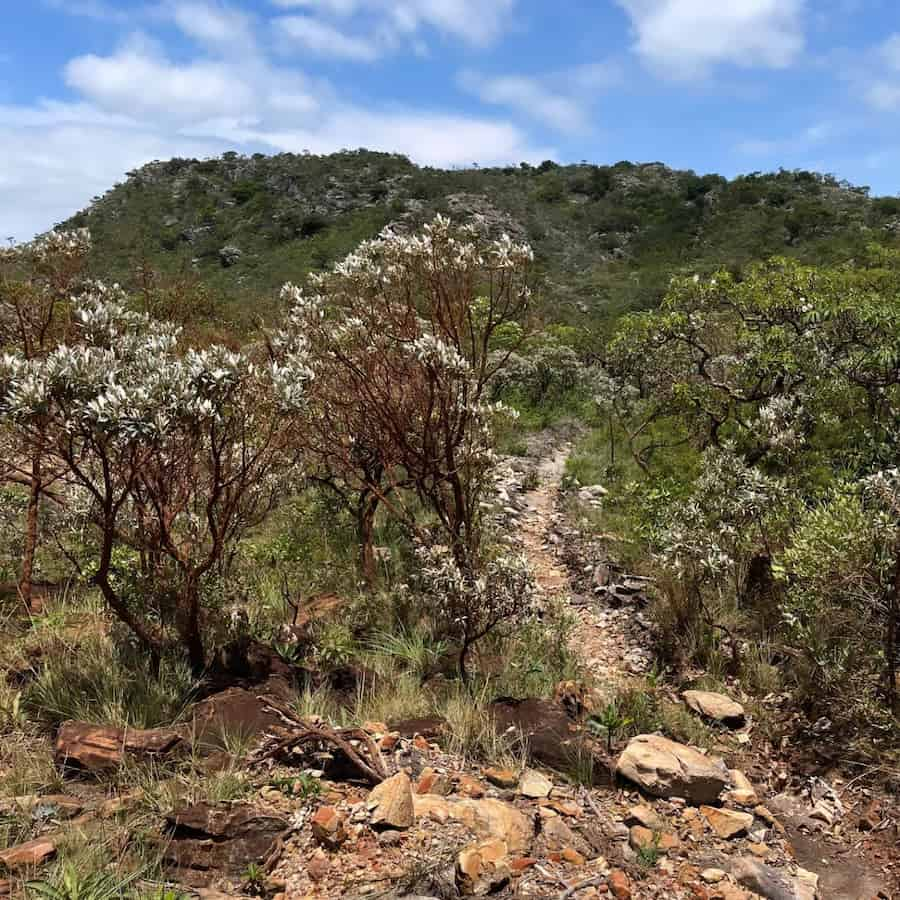
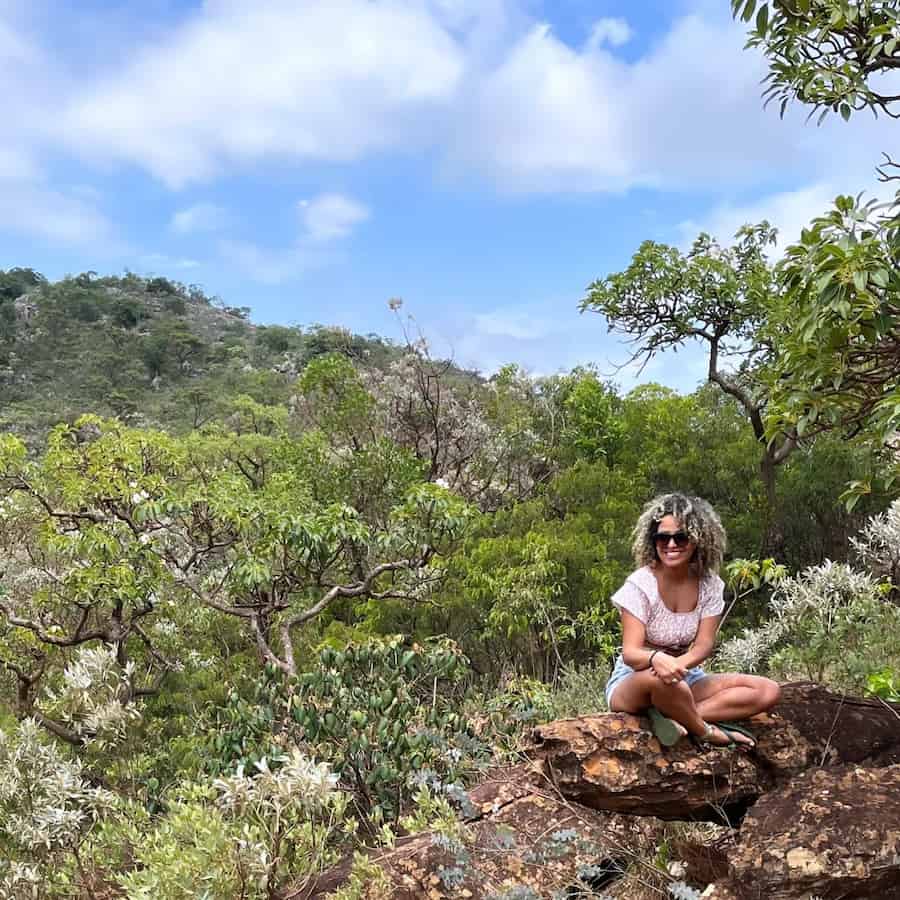
For my Master’s project, I meant to work in the ecological restoration of degraded areas in the campo rupestre –one of the most diverse ecosystems on Earth and definitely the most beautiful I have ever seen. However, for different reasons, we couldn’t start this project in the time we wanted, so I decided to work in a different area. I remembered the first course of my Master’s programme, where Prof. Alessandra Kozovits gave me an article about foliar water uptake to present. Then, I had my eureka moment: I thought of the campo rupestre and its foggy landscapes and told myself: “This is what I want to study. This is what going to allow me to understand campo rupestre in a deeper way!”.
What is your favourite part of your work related to plants?
The coolest part of my work is when I talk to others about my work and teach them about this rather overlooked part of the water cycle. In school, we always learn that water comes back to the soil in the form of rain, but we don’t learn that plants can also catch water directly from the air and take it back to the soil. Their excited and mind-blown expression when they heard about this for the first time is simply priceless, and I think that, as scientists, we are doing something great when we teach new things to the people around us.
Are any specific plants or species that have intrigued or inspired your research? If so, what are they and why?
Rather than a single species, I became fascinated with plant groups. When I teach other people about campo rupestre, I always say that this ecosystem presents a high evaporative demand, meaning that the water they lose because of heat is colossal, especially when soil temperature can get up to 60 °C. Thus, you would expect plants from these sites to exhibit specific characteristics: small leaves, thick cuticles and hidden stomata. Still, when you go to the field, you are shocked to see plants that forgot “to read the manual” and present quite the opposite traits! These questions still bug me: How can a plant with thin leaves and a great amount of stomata survive in such an adverse environment? How can such different groups of plants coexist in such a place?
Could you share an experience or anecdote from your work that has marked your career and reaffirmed your fascination with plants?
The most hilarious moment in my career so far was during my Masters. To evaluate water uptake, we used a fluorescent dye called “Lucifer yellow” that allowed us to visualise where the water entering. Unexpectedly, it worked perfectly on the first try, and we made several beautiful images. My friend and I went out to celebrate this in a bar and made a toast saying “to Lucifer!”. You can only imagine the shocked and concerned expression around us! Fortunately, we went to a bar owned by a friend of mine, so she proceeded to explain to everyone in the bar that it was not that it was not what they were thinking. She explained, “Guys, no, it’s her marker, she’s a biologist!”.
What advice would you give young scientists considering a career in plant biology?
The first thing is, do you like what you do? Is there a question that fascinates you? It’s important to know what fascinates you and what drives you. This makes things less difficult because science isn’t easy. The stages are challenging –an experiment might not work, there are natural difficulties and many other surprises– but over time, we overcome them if we have the drive to find answers. Also, one needs to be open and not take yourself too seriously because science changes a lot. Until recently, we thought plants only absorbed water through their roots. Today, we know that leaves also play an essential role. Not long ago, we believed that a thicker leaf cuticle conferred more resistance to water uptake. Today, we know that’s not necessarily true. So, we need to be open for things to turn out to be different from our expectations.
What do people usually get wrong about plants?
That plants are important just because they are pretty and some sort of isolated element in the landscape that doesn’t interact with anything. Also, some people –especially in Brazil– believe that only the Amazon rainforest is important. While the Amazon rainforest is vital for all its diversity and its role in world climate regulation, many other ecosystems are just as important and end up being overlooked. One clear example is the campo rupestre, which is sometimes even more diverse than the Amazon rainforest and provides many ecosystem services. Still, it remains overlooked and threatened to disappear due to the lack of awareness about its importance.
Carlos A. Ordóñez-Parra
Carlos (he/him) is a Colombian seed ecologist currently doing his PhD at Universidade Federal de Minas Gerais (Belo Horizonte, Brazil) and working as a Science Editor at Botany One and a Social Media Editor at Seed Science Research. You can follow him on X and BlueSky at @caordonezparra.