Correlations of polyploidy, apomixis and alpine environmental gradients
AoB PLANTS

Correlations of polyploidy, apomixis and alpine environmental gradients

https://www.botany.one/correlations-polyploidy-apomixis-elevation-associated-environmental-gradients-alpine-plant/

Know someone who'd like this?

In a recent article published in AoB PLANTS, Schinkel et al. present a study on geographical parthenogenesis, an enigmatic and much disputed phenomenon that involves closely related sexual and apomictic (asexually reproducing) taxa displaying largely divergent distribution patterns. Based on a large sampling of natural populations of Ranunculus kuepferi, their study is the first quantitative, population-based assessment of mode of reproduction throughout the Alps to test for correlations with elevation and geographical distance patterns.
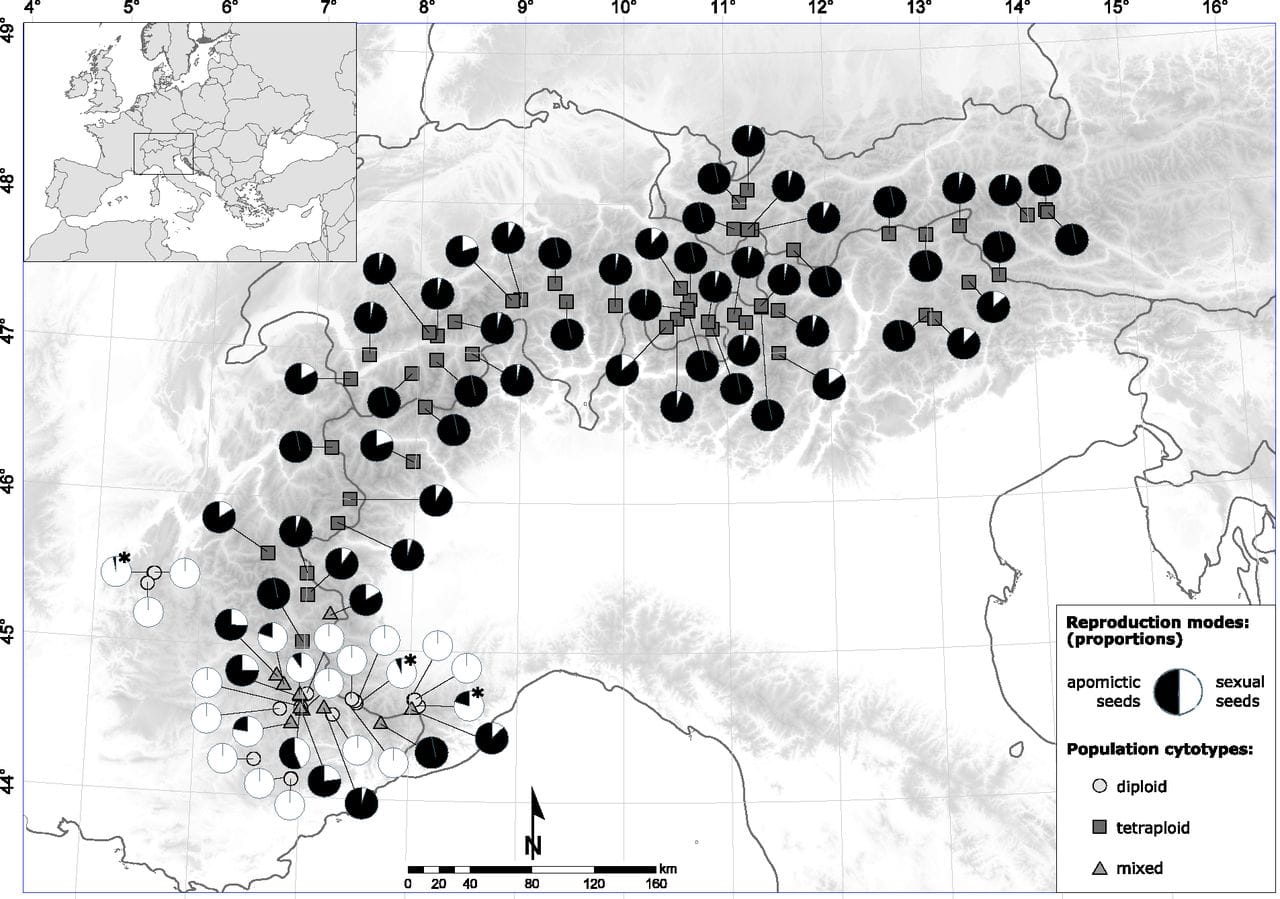
Geographical distribution of Ranunculus kuepferi reproduction modes of analyzed populations on a map of the European Alps with elevation model.
Geographical distribution of Ranunculus kuepferi reproduction modes of analyzed populations on a map of the European Alps with elevation model. Pie diagrams indicate proportions of sexual (white) and apomictic seed (black) formation within the populations, diploids with apomicts are marked by an asterisk. Cytotypes: 2×, diploid populations; 4×, tetraploid populations; mixed, populations consisting of two or more different cytotypes, including triploids.

Surprisingly, the authors found high variance in the modes of reproduction among cytotypes and provide the first evidence of apomixis in diploid natural populations. Furthermore, a significant correlation between ploidy and elevation was found, as well as correlations between mode of reproduction and environmental gradients.

Liked this article?

Written by

AoBPLANTS

AoB PLANTS is an open-access, online journal that publishes peer-reviewed articles on all aspects of environmental and evolutionary biology. Published by Oxford University Press, AoB PLANTS provides a

More from this writer

The nonprofit plant magazine

Lab science. Citizen science. Your source for plant science.