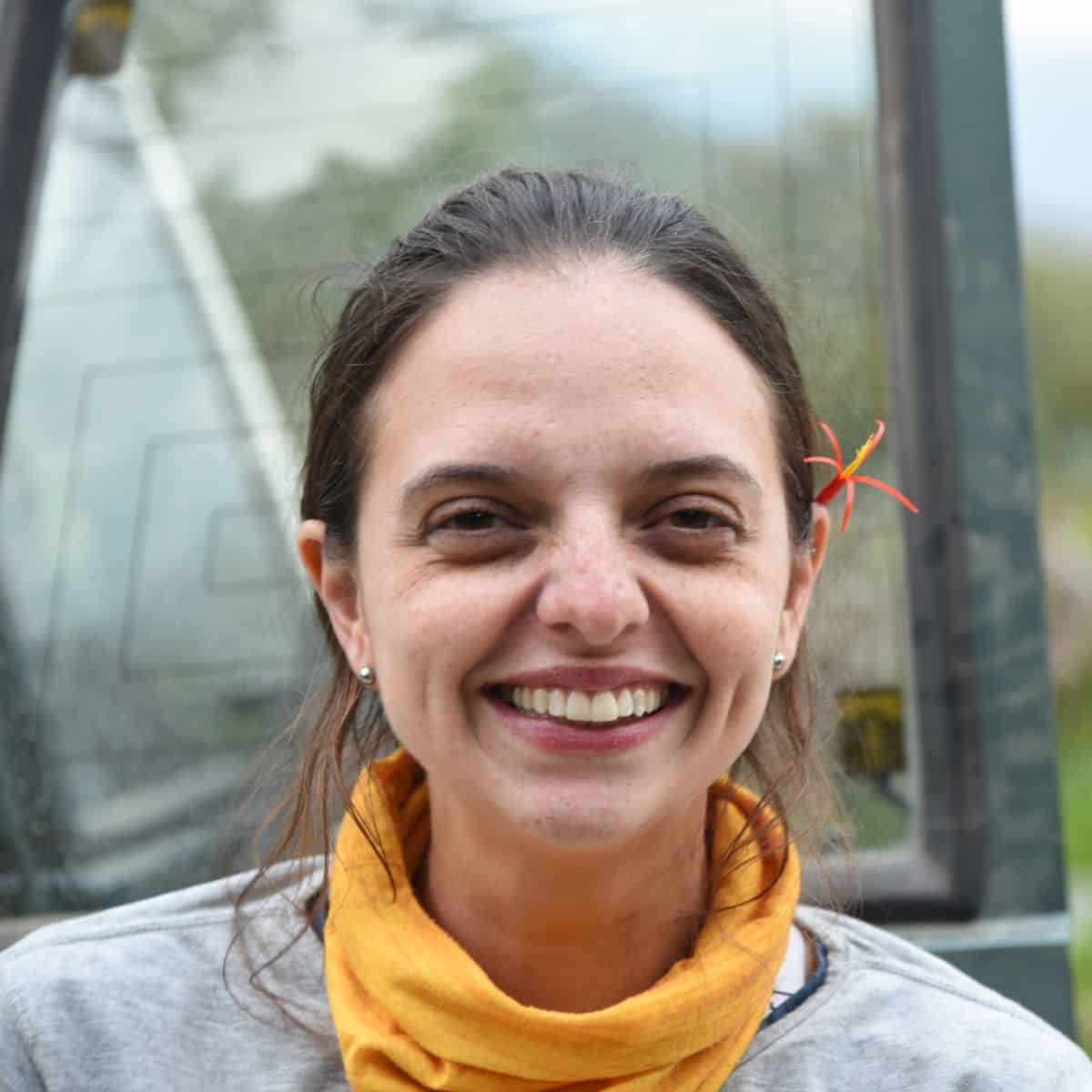



Botany 2025 (July 26–30, 2025) was one of the largest botanical conferences of the year. Botany One spoke with Dr. Zumajo-Cardona, a speaker at the “Evolutionary History of the Gnetales” symposium sponsored by the Annals of Botany journal, to learn more about her fascinating research on the evolution of plant reproductive structures, specially seeds.
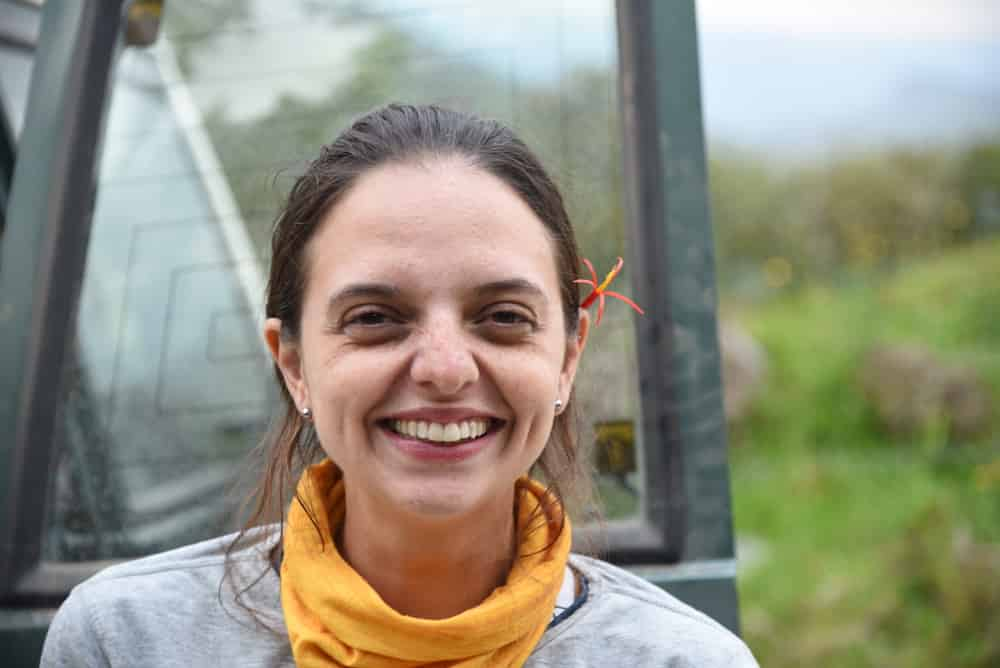
Zumajo-Cardona is a postdoctoral researcher at the University of Milan (Italy), interested in the evolution and development of plants. Her current research focuses on deepening our understanding of seed development in the model species Arabidopsis thaliana. During her PhD, however, she explored the development of seeds in gymnosperms, aiming to shed light on the evolutionary links between seed development in gymnosperms and angiosperms. You can learn more about her research on her personal website.
What made you become interested in plants?
Growing up surrounded by the lush and enormous plant diversity of the tropics certainly helped awaken my curiosity about plants. Biology studies were therefore a natural choice. That curiosity was further nurtured by the guidance of excellent professors, who helped me explore the plant world from different angles—systematics, evolution, morphology, and developmental biology. These fields allowed me to understand the history of different lineages and the evolution of key structures like fruits and seeds, as well as the molecular regulators underlying these remarkable evolutionary stories.
During my undergraduate studies at the Universidad de Antioquia (Colombia), Dr. Natalia Pabón-Mora introduced me to the world of evolutionary developmental biology (evo-devo). That exposure was crucial in shaping my interests and setting me on the path I continue to follow today.
What motivated you to pursue your current area of research?
My early research experiences in Colombia focused on fruit evolution, given the country’s remarkable richness in flowering plants. Later, when I moved to the United States for my PhD, new questions emerged around reproductive structures in land plants: sporangia (ferns), seeds (gymnosperms and angiosperms), and flowers and fruits. It was a turning point in my career, as I became more focused on seed plants. Seeds, as a crucial structure for plant reproduction and survival, sparked a deeper curiosity. Their evolutionary complexity and significance continue to drive my work.
Are there any specific plants or species that have intrigued or inspired your research? If so, what are they and why?
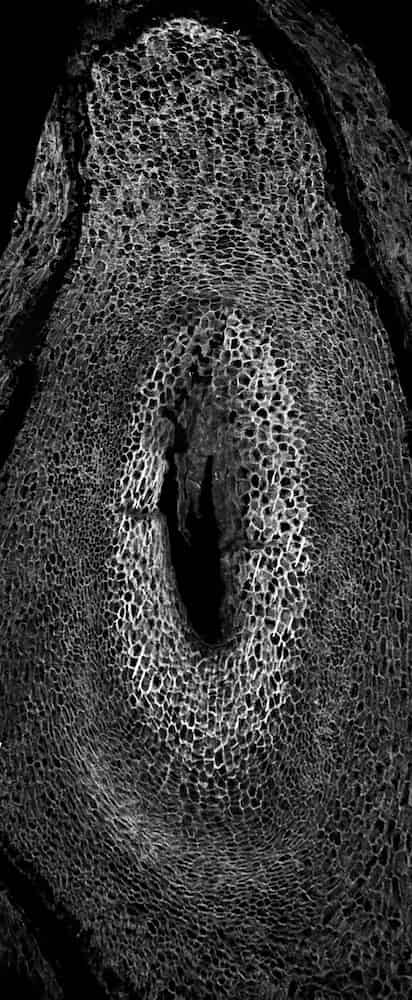
Gymnosperms have certainly been central to my research. When I initially began studying the mechanisms involved in ovule and seed development, my goal was to explore how well the molecular regulators known in Arabidopsis are conserved in gymnosperms. We should keep in mind that most of what is known about the molecular regulation of various developmental processes comes from studies on the model species Arabidopsis thaliana and a few other flowering plants.
However, as my research progressed, I quickly realized the depth of the challenge. The ovules of Arabidopsis and those of gymnosperms like Ginkgo are not only morphologically distinct, but their developmental timing is drastically different. In Arabidopsis, pollination and fertilization occur rapidly, while in gymnosperms the interval can span months. This forced me to approach my research differently—adapting gene expression studies to species-specific morphologies and developmental stages. That process deepened my understanding of reproductive diversity in seed plants and reinforced the importance of working across diverse lineages.
Could you share an experience or anecdote from your work that has marked your career and reaffirmed your fascination with plants?
When I set out to study ovule and seed development in gymnosperms, I had one clear goal: to explore the degree of conservation of known molecular regulators in Arabidopsis. But the more I worked with these distantly related plants, the more I realized that their reproductive processes were fundamentally different—not just in structure, but in timing. In Arabidopsis, the transition from ovule to seed happens quickly after fertilization. In contrast, in gymnosperms, the period between pollination and fertilization can last for months.
This major difference meant that interpreting gene expression patterns couldn’t follow the same logic across species. I had to adapt, considering each species’ unique developmental schedule and morphology. It was a humbling and eye-opening moment—one that reaffirmed my fascination with plant diversity and reminded me that meaningful comparisons require deep understanding of biological context.
What advice would you give young scientists considering a career in plant biology?
I encourage students and early-career researchers to pursue questions that truly captivate them. At the same time, I recommend they deepen their knowledge of a particular technique or plant system that aligns with their interests—something that allows them to “find their niche.” Doing so helps them stand out and carve a unique path.
I also want to emphasize the importance of collaboration. Diversity of perspectives and knowledge stimulates creativity, and collaborative work enables projects that would be impossible to achieve alone. Sharing expertise and resources enriches research outcomes and offers tremendous opportunities for learning and professional growth. In short, teamwork is an asset—it opens new perspectives and builds a stronger scientific community.
Carlos A. Ordóñez-Parra
Carlos (he/him) is a Colombian seed ecologist currently doing his PhD at Universidade Federal de Minas Gerais (Belo Horizonte, Brazil) and working as a Science Editor at Botany One and a Communications Officer at the International Society for Seed Science. You can follow him on BlueSky at @caordonezparra.