

Plants are incredibly diverse, and so are botanists! In its mission to spread fascinating stories about the plant world, Botany One also introduces you to the scientists behind these great stories.
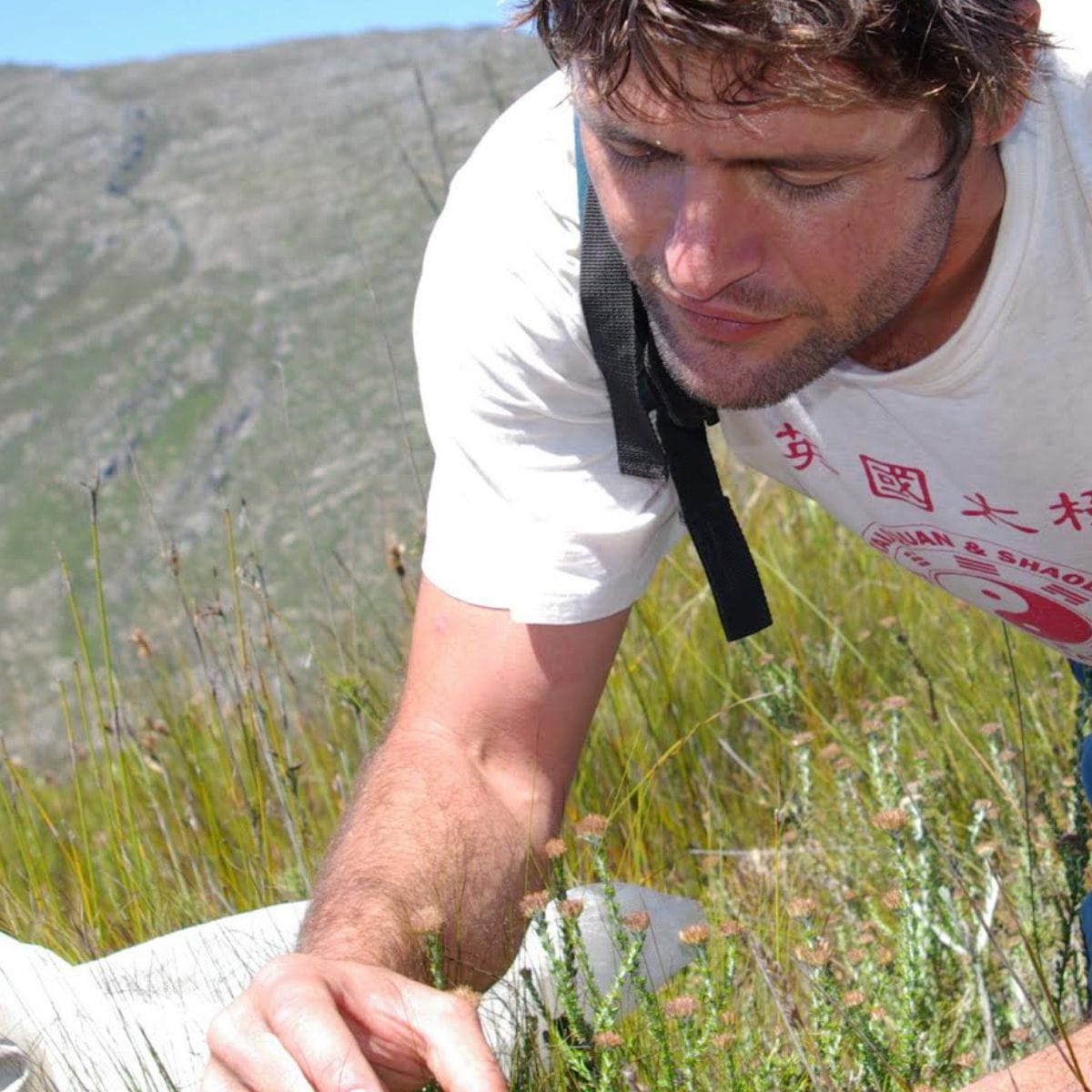
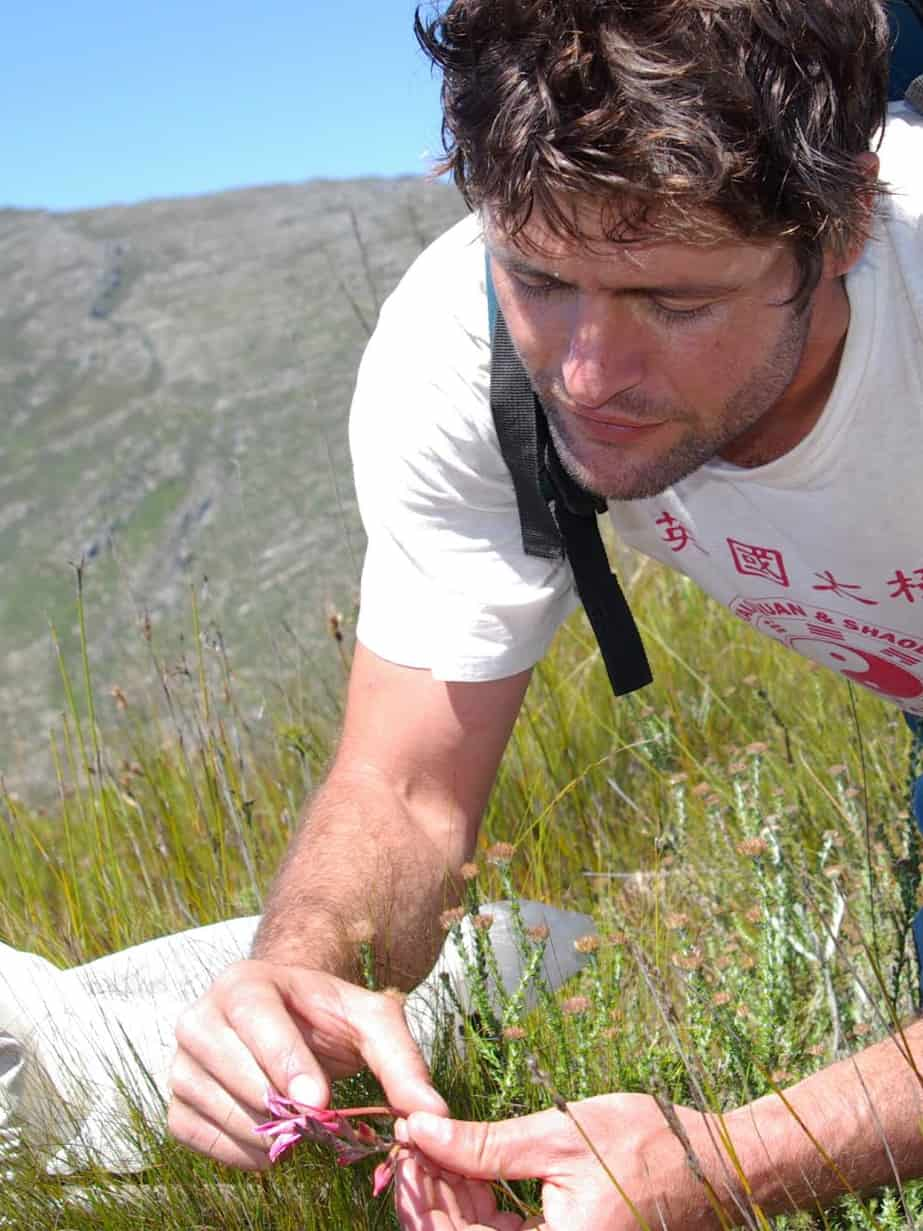
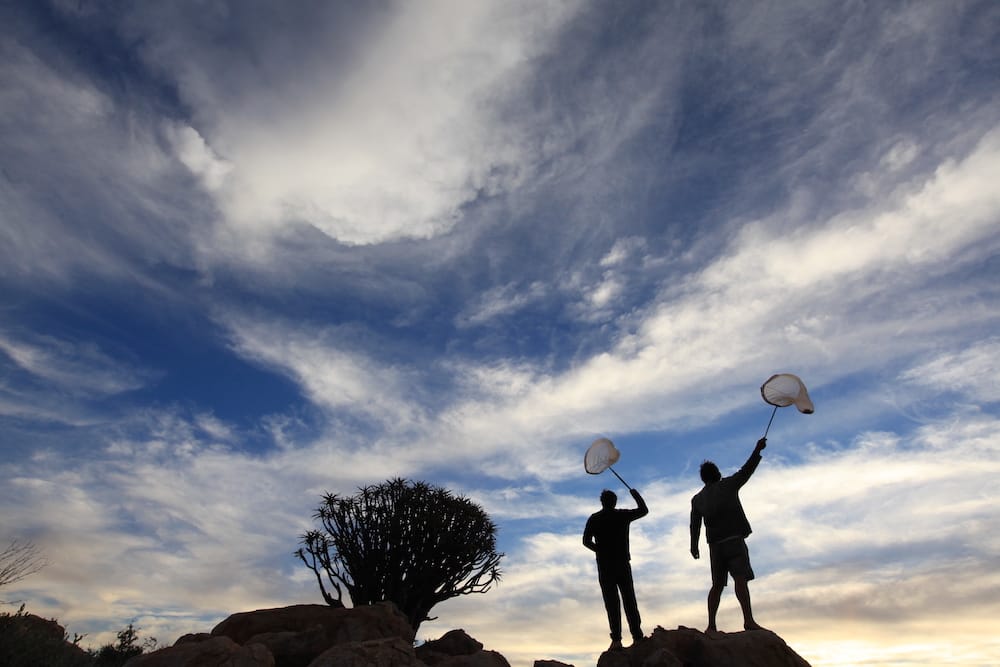
Today, we have Prof. Bruce Anderson from the University of Stellenbosch in South Africa. Since the age of four, he wanted to be an entomologist, but his world was up-ended in university when he realized that plants were really cool too. Dr Anderson’s work is currently focused on the evolutionary ecology of plant-animal interactions, including pollination biology, herbivory and seed dispersal. He is driven by the desire to understand why organisms look the way they do, how they are adapted to their biotic and abiotic environments and the forces that generate their diversification. His approach to this subject uses experimental field work under natural conditions. Presently, he is most excited about using quantum dots (fluorescent nanoparticles) to label pollen grains and document competitive interactions between flowers. You can learn more about his research at his lab’s website.
What made you become interested in plants?
When I arrived at university, I wasn’t really very interested in plants – I loved animals, in particular insects and marine creatures. But we had the most amazing botany lecturers (William Bond, Peter Linder, Jeremy Midgely, Willy Stock), who taught us to think critically and ask excellent questions. I soon became fascinated by the world that they revealed to us. Knowing that plants are the basis for all other life on earth also made me want to find out more about them. Ultimately, I also realized that to be a good scientist, I would have to learn how to collect lots of good quality data: plants are perfectly fitted to this role because they don’t run away, and one is able to perform manipulations on them (like cutting off their reproductive parts) without worrying about how they feel. And so I shifted my academic interests from animals to plants, but I have never quite let go of the animals because by studying plant-animal interactions, I get the best of both worlds.
What motivated you to pursue your current area of research?
Even when I was a toddler, I knew that I would make a career in the natural world. At that age, I wanted to be an entomologist, and I spent most of my time flipping rocks and collecting spiders. Ultimately, I followed what I thought were the most interesting questions. In particular, I became fascinated by the idea of evolution as I relinquished my indoctrinated religious beliefs and wanted to know more about it. I loved the idea of studying adaptation of pollinators and flowers because it was such a visual expression of evolution.
What is your favourite part of your work related to plants?
Easily, spending time outdoors and getting to know new systems. But I also love the process of coming up with new ideas to test. In particular, I find it fun interacting with a few colleagues/friends/students, brainstorming ideas and trying to think of good ways to test them.
Are any specific plants or species that have intrigued or inspired your research? If so, what are they and why?
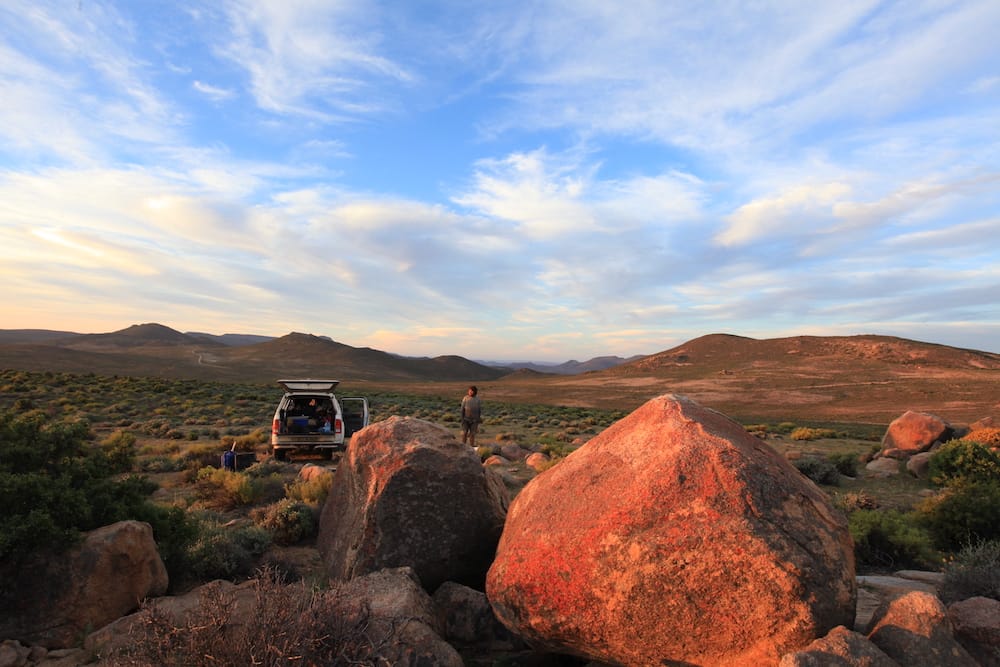
I spent my PhD working on a carnivorous plant called Roridula, which turned out to be an excellent gateway into plant-animal interactions. But the truth is that I am less interested in the taxonomic groups than in the questions I can ask. I pride myself on having a very broad biological knowledge, and I am inspired by everything from plants to insects to fish and mammals.
Could you share an experience or anecdote from your work that has marked your career and reaffirmed your fascination with plants?
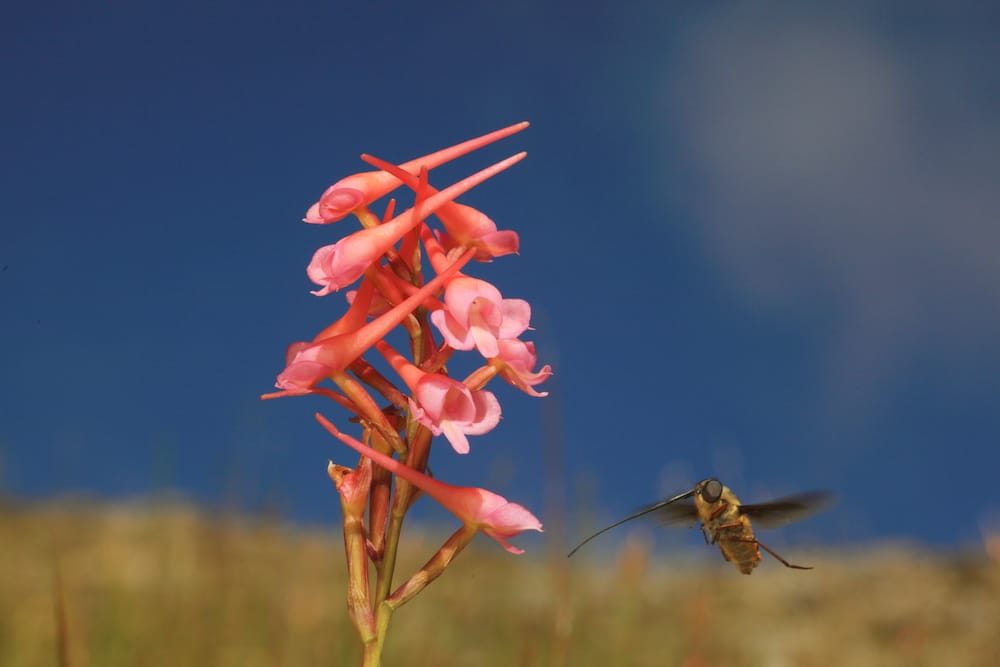
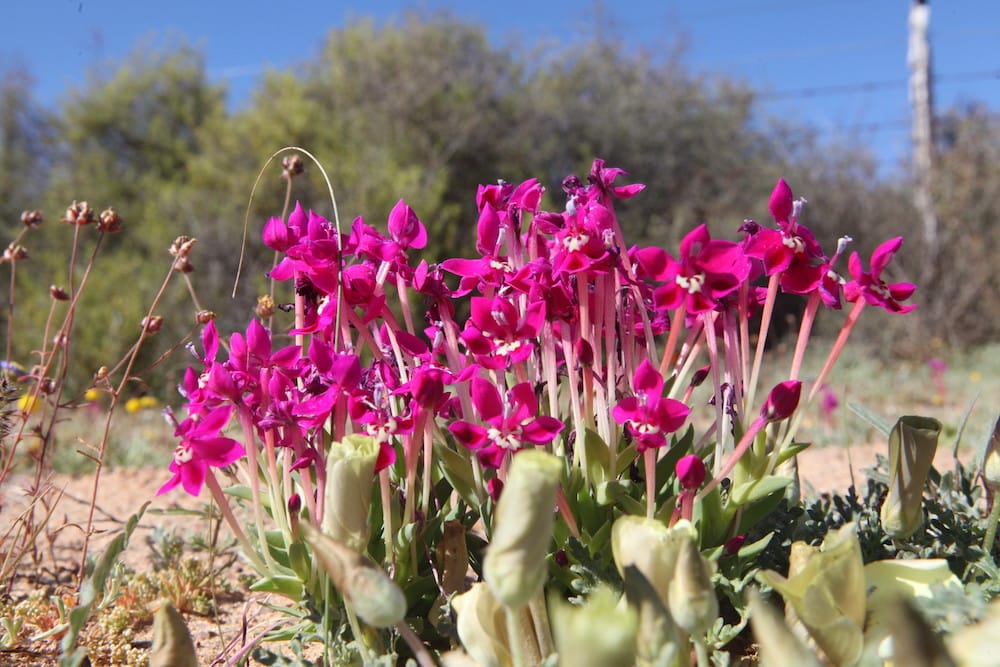
As a student, I will never forget coming back from the field one day with a flower called Babiana tubulosa, pale white, with red nectar guides and an astonishingly long tube of about 10cm, I felt like an 1862 Charles Darwin asking, “Good Heavens, what insect can suck it?” A little bit of digging revealed that the “sucker” was a long proboscid fly with a really long tongue. The first long proboscid fly I ever saw is vividly etched into my brain: I went on a field trip with my supervisor, Jeremy Midgely to Namaqualand. I was standing on a granite rock taking a pee. Right next to my foot was a crack with a tiny bit of soil and from that crack was growing a vein of long-tubed flowers – the most intense pink I had ever seen. Looking into the distance, this surreal microcosm was framed by extreme open space and desert, the sky an oversaturated blue. I was pulled out of my reverie by a low-pitched hum as an enormous fly, with a 5cm flopping tongue proceeded to probe every flower at my feet and then fly away. Slack-jawed, I realized that I had just peed on my leg. Since then, I have always sought out any long-tubed flowers.
What advice would you give young scientists considering a career in plant biology?
We don’t do this job for the money, so make sure you are doing what you really love and what fascinates you most.
What do people usually get wrong about plants?
Plants get a lot less love than animals because they are perceived as boring – they don’t move around and interact with one another in the same way that animals do. But I have realized that this is precisely what makes them interesting. Plants do interact with one another. But because they are rooted to the ground, they have to interact very differently with animals, and often, they have to interact through intermediaries (like fungi or pollinating insects). Their modes of interaction are so different from the way humans or animals interact that, in some ways, it is like a different language that humans find difficult to understand. Cracking these codes and understanding these interactions is the new frontier in plant biology and because they differ so much from animals, it feels to me like plants are way more interesting than we ever gave them credit for. But we need to be open to learning new languages and immersing ourselves into a very different culture.
Carlos A. Ordóñez-Parra
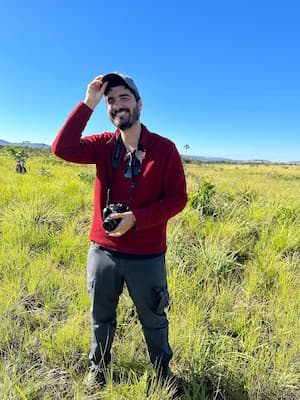
Carlos (he/him) is a Colombian seed ecologist currently doing his PhD at Universidade Federal de Minas Gerais (Belo Horizonte, Brazil) and working as a Science Editor at Botany One and a Communications Officer at the International Society for Seed Science. You can follow him on Bluesky at @caordonezparra.