Biomechanics and functional morphology of a climbing monocot
AoB PLANTS

Biomechanics and functional morphology of a climbing monocot

https://www.botany.one/biomechanics-functional-morphology-climbing-monocot/

Know someone who'd like this?

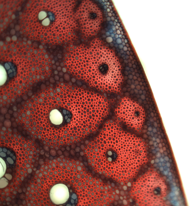
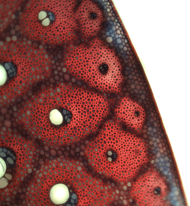
Transverse section of the peripheral region of a young stem segment of Flagellaria indica (stained with safranin/astra blue). Fusion of the bundle sheaths has not yet occurred while lignification and tissue density is being increased. (Photo credit: Hesse et al.)

Climbing monocots can develop into large bodied plants despite being confined by primary growth. In a recent study published in AoB PLANTS, Hesse et al. measured surprisingly high stem biomechanical properties (in bending and torsion) in Flagellaria indica and showed that the lack of secondary growth is overcome by a combination of tissue maturation processes and attachment mode. This leads to higher densities of mechanically relevant tissues in the periphery of the stem and to the transition from self-supporting to climbing growth. The development of specialised attachment structures has probably underpinned the evolution of numerous other large bodied climbing monocot taxa.

Liked this article?

Written by

AoBPLANTS

AoB PLANTS is an open-access, online journal that publishes peer-reviewed articles on all aspects of environmental and evolutionary biology. Published by Oxford University Press, AoB PLANTS provides a

More from this writer

The nonprofit plant magazine

Lab science. Citizen science. Your source for plant science.