

What did the world of the Neanderthals look like? If you visit a nature museum, you might see depictions of cold, treeless landscapes. But these common artistic renderings are known to be incorrect according to extensive fossil research. A team of paleontologists and artists has therefore turned to the power of ‘paleoart’ to depict Neanderthal plant communities as they really were – dynamic and vegetated.
“One of the main goals of our research group is to democratise scientific knowledge and make it accessible beyond the academic world,” writes Prof José Carrión, lead author of a research paper that uses landscape paintings to bring prehistoric botany to life.
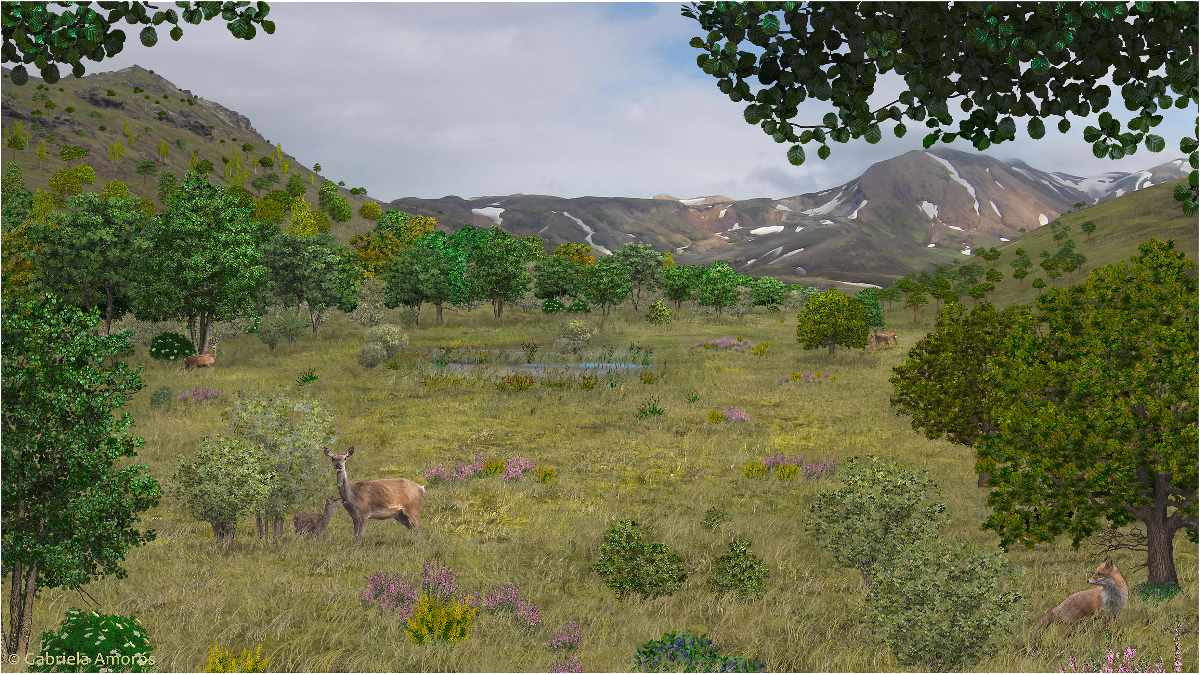
Prof Carrión and colleagues explain that too often, depictions of Neanderthal habitats are zoocentric, focussing on the animals of the time while ignoring the flora. Worse, when flora does get portrayed, it is often historically inaccurate. This leads to a disconnect between public and scientific knowledge.
“With a few historical exceptions, plants are frequently relegated to a secondary role, often depicted without attention to their taxonomic identity or ecological context,” the researchers write.
To address this problem, Prof Carrión, a paleobotanist who studies ancient plant life, and Prof Ana Belén Marín Arroyo, a paleoanthropologist who studies human evolution during the Pleistocene and Holocene, teamed up with Gabriela Amorós and Ariadna Amorós, artists who specialise in reconstructing prehistoric landscapes.
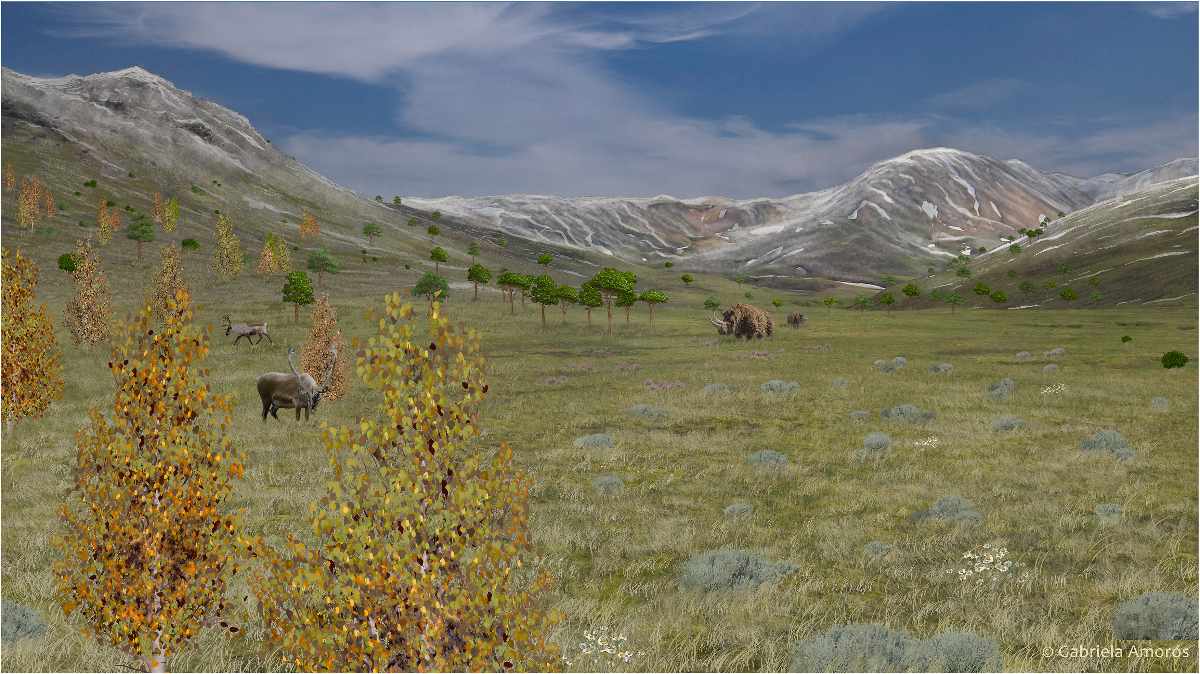
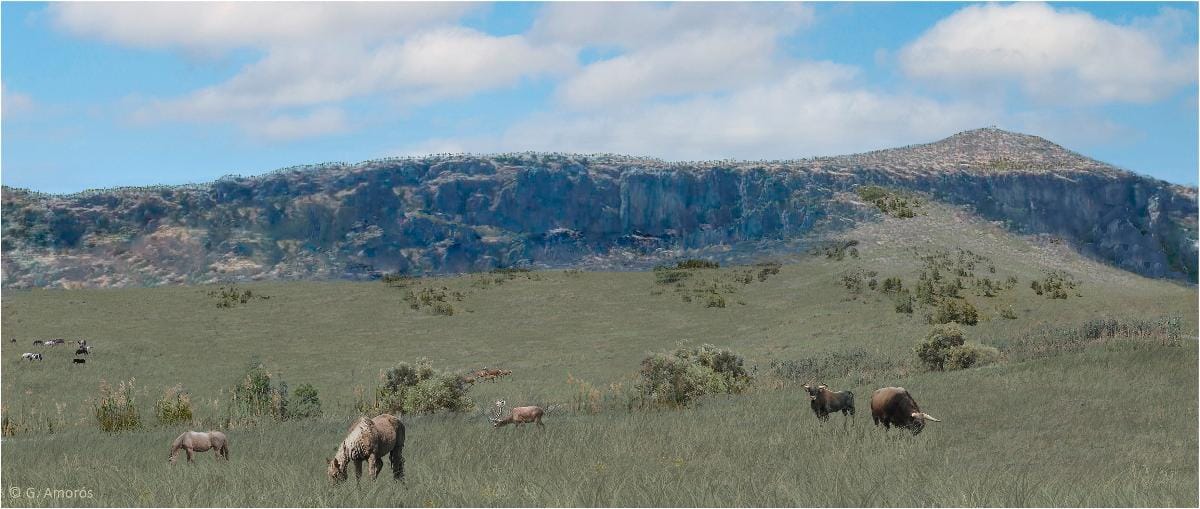
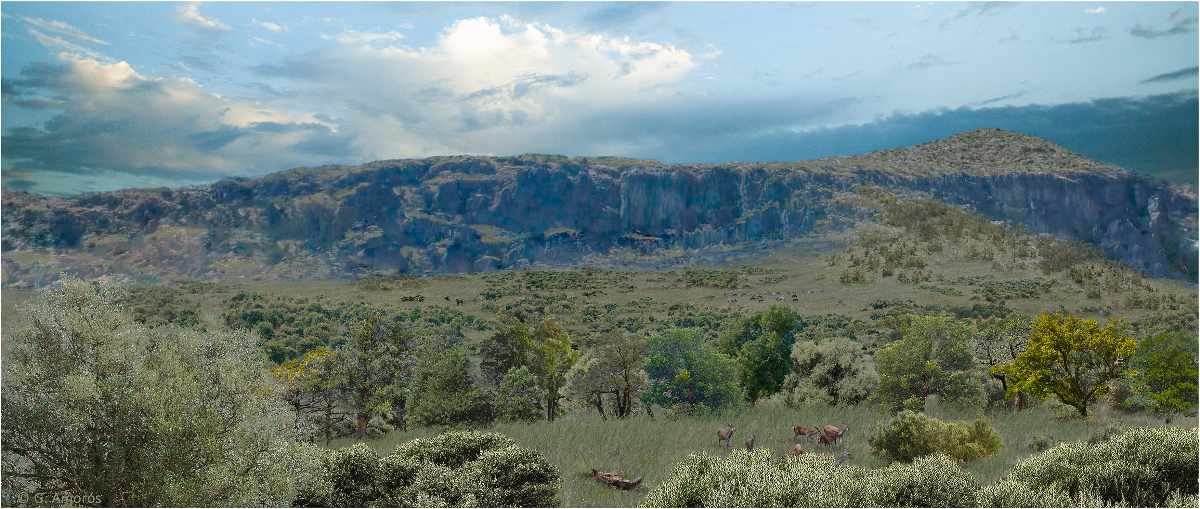
Using current botanical fossil knowledge, the team created eight, plant-centric renderings of ancient landscapes that accurately represent the broad range of Neanderthal habitats from Europe to central Asia – boreal and temperate woodlands, mixed forests, grass steppes, Mediterranean scrub, heathlands, semideserts and alpine and shrub tundra.
“Incorporating detailed vegetation not only enriches the visual language of paleoart, but also enhances our understanding of past ecosystems and hominin–environment interactions,” write Carrión and colleagues in their article.
To begin their reconstructions, the research team used the Iberian Peninsula as a case study and then looked to other locations for their botanical history. In Iberia, during the time of the Neanderthals, glacial and interglacial stages of climate led to large changes in plant communities that have been carefully documented in the fossil records of lakes and bogs as well as archaeological sites. Mixed deciduous forests typically dominated the interglacial periods. Steppe-tundra shrubs took over during full glacial periods, with mosaics present at transitional stages. Other locales also tell tales of repeated Neanderthal occupations and alternating phases of vegetation.
Throughout all these environmental changes, the Neanderthals persisted, either by adaptation or migration. Scientists have carefully documented the manner of their survival using fossil records and, according to Carrión and colleagues, modern paleoart techniques should be used to accurately depict their ecology.
“Neanderthals are still frequently envisioned through the lens of early misconceptions, often portrayed in glacial or steppe environments—at best, within sparse wooded tundra, but more commonly in entirely or nearly treeless landscapes,” write the researchers.
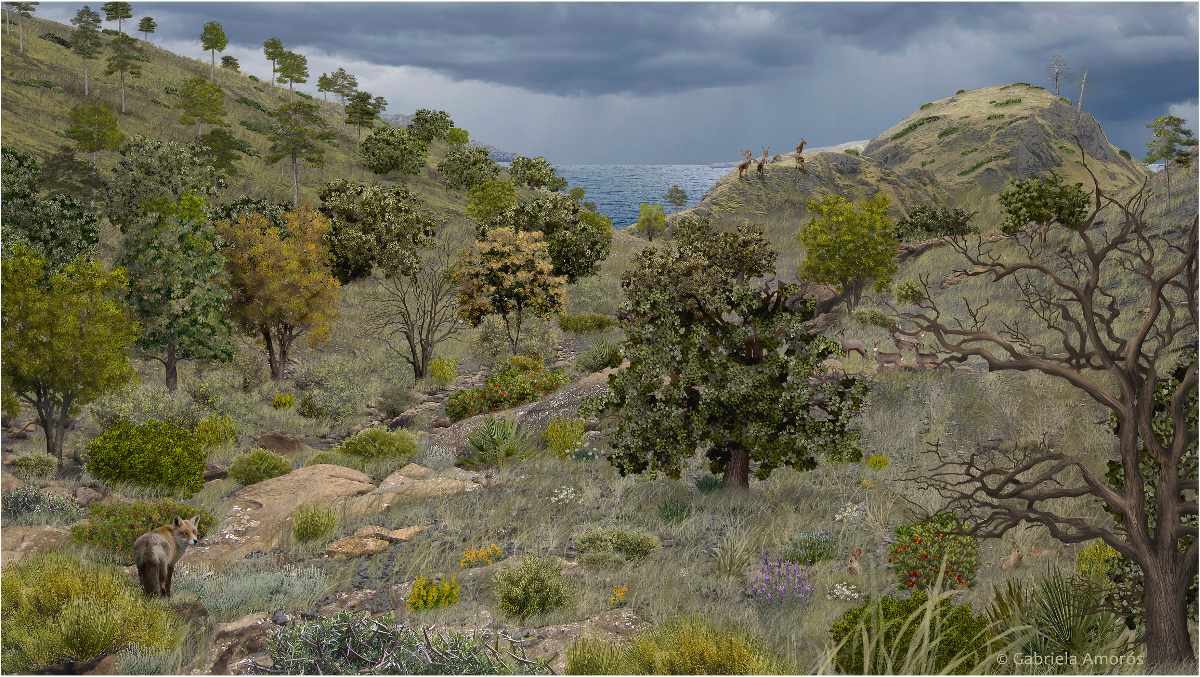
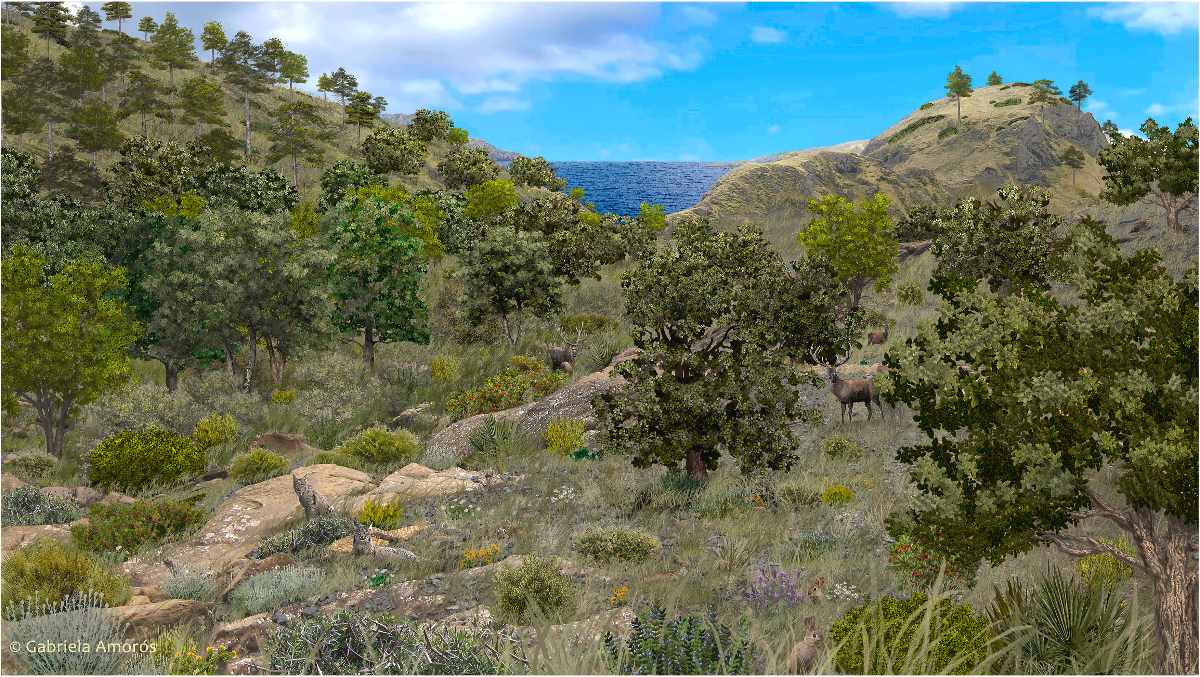
While the barren stereotype has weakened over time, with newer art showing Neanderthals in taiga, temperate forest or Mediterranean woodlands, the older cold-adapted ecological themes persist, according to Carrión and colleagues. Additionally, the collective vegetation present during those times, as seen in fossil records, does not have modern counterparts. This means we should not represent Neanderthal habitats using modern-day vegetation patterns as an artistic template. We should be using the fossil record itself.
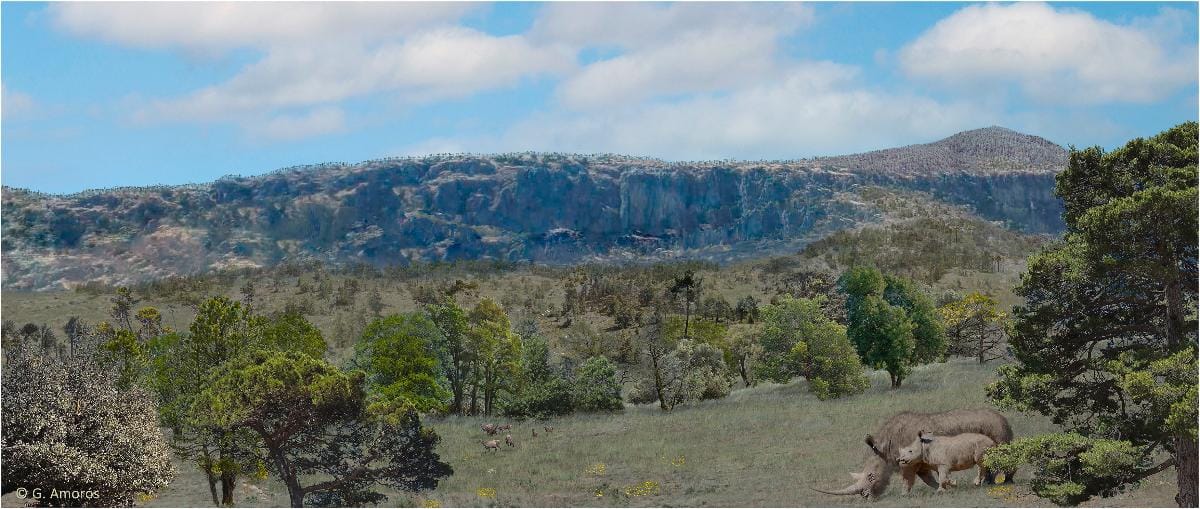
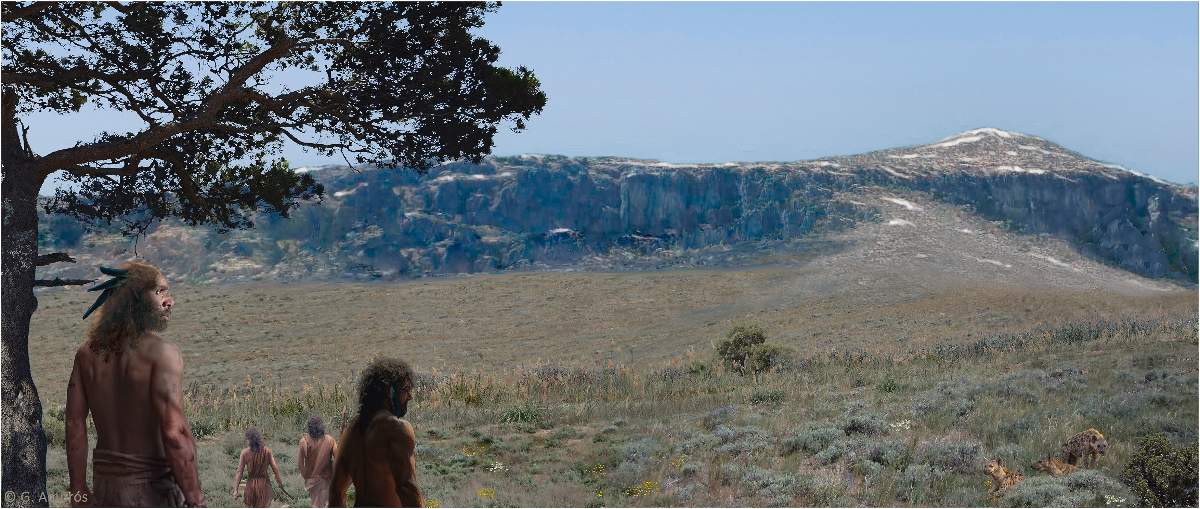
Carrión and colleagues therefore used the Iberian Peninsula to reconstruct accurate landscape artworks from the historical, scientific record. They generated paleoartistic renderings of the Cantabrian region during the Late Pleistocene by reconstructing a pre-coastal valley during both a cold climate period (stadial stage) and warmer climate period (interstadial stage). They also generated landscape imagery of the southeastern Iberian coastal shelves, in Sima de las Palomas, and in southern Spain (northern cliffs of Monte del Castillo, inland Granada).
These beautiful paleo-landscapes bring the ancient world alive in a new, relatable way by showing the ecology as it was likely seen by Neanderthal eyes.
This project was supported by the Spanish State Research Agency (Agencia Estatal de Investigación) and the Fundación Séneca (Region of Murcia). Research was conducted within the framework of the European Research Council project SUBSILIENCE.
READ THE ARTICLE: Carrión, J., Amorós, G., Amorós, A., and Marín-Arroyo, A. (2026) Beyond the cold steppes: Neanderthal landscapes and the neglect of flora. Quaternary Science Reviews, 371, pp. 109673. Available at: https://doi.org/10.1016/j.quascirev.2025.109673.
READ MORE: Carrión, J., Amorós, G., Amorós, A., Gandolfo, M., and Kustatscher, E. (2026) Plants in the shadows: Bridging the gap in paleoecology and paleoart. Earth-Science Reviews, 274, pp. 105371. Available at: https://doi.org/10.1016/j.earscirev.2025.105371.
Cover image: A cold Neanderthal world in northern Iberia. Windswept grasslands stretch across the valley, dotted with hardy shrubs and scattered birch and pine. Woolly rhinoceroses and reindeer graze beneath a wide, open sky — a landscape shaped by ice and resilience.
Artwork: Gabriela Amorós – https://www.gabrielaamoros.com/
Image Captions by José Carrión.