
Plants are incredibly diverse, and so are botanists! In its mission to spread fascinating stories about the plant world, Botany One also introduces you to the scientists behind these great stories.
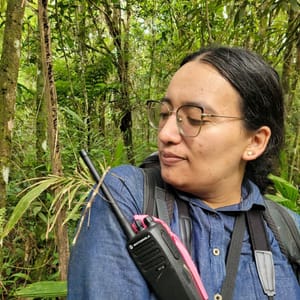
Today, we have Dr. Ana Bedoya, a Colombian botanist and evolutionary biologist who is currently working as an Assistant Curator at the Center for Biodiversity & Evolution at the New York Botanical Garden. Bedoya completed her PhD at the University of Washington and later worked as a postdoctoral researcher at Louisiana State University. Prior to moving to the United States, she earned her Master’s degree from Universidad de los Andes in Colombia. Bedoya specializes in plant systematics, focusing on the relationships among plant groups, including their ecological and evolutionary interactions, with particular emphasis on aquatic plants from the American tropics. You can know more of her at her website and follow her work at Bluesky.
What made you become interested in plants?
I’ve always wanted to study plants, though I didn’t know botany was a profession. From a very young age, I had an interest in them. My friends from primary school recall that I used to make up names for the plants in the garden. I remember learning about plant and animal cells in primary school, and one day I went home and told my parents, “I can’t believe plant cells are so cool! When I grow up, I want to study something related to plant cells!” This was the moment I realized I wanted to study plants, which led me to pursue biology. Since there isn’t a botany degree in Colombia, I chose to study biology instead. That’s when I began learning more about plants and eventually specialized in the areas I was most passionate about. During my undergraduate studies, I developed a strong interest in phylogenetics and started exploring the relationships between plant groups using phylogenetic methods to understand how they are related.
What motivated you to pursue your current area of research?
I believe it’s a combination of passion for plants and the opportunities that arise along the way. We all end up where we are due to a mix of our interests and the random opportunities that come our way. Opportunities are crucial—you can be talented and eager, but if opportunities don’t materialize, nothing happens. During my Master’s, I had the chance to join a team working on cataloguing the aquatic flora of the Colombian Orinoco. My thesis advisor secured a grant that provided enough funding for me to spend two years in the field, working on any project I wanted. Of course, I said yes. For two years, I traveled across the Orinoco, learning about plants, taking photos, and visiting places I would never have had the chance to explore otherwise. I started studying aquatic plants and making field observations, which are essential and have become the foundation of all my projects and research program.
At the same time, I was taking a class called “Paleobiogeography of Northern South America,” where we studied the geological and biological history of the region, which has undergone significant landscape changes. It made me think about how these landscape changes, particularly in aquatic environments, have influenced the evolution of aquatic plants. This is where my interest in the interaction between landscape changes and plant evolutionary history began.
What is your favourite part of your work related to plants?
I have many favourite parts! One of them is the botany community. I absolutely love it. Botanists are fun, great colleagues, and I’ve found a community that I genuinely enjoy. I’m happy to come to work every day to meet with colleagues—people who are passionate about plants and have deep knowledge of them from different perspectives. I work with physiologists, ecologists, conservationists, restorationists, and genomics experts. All of this is incredibly interesting to me.
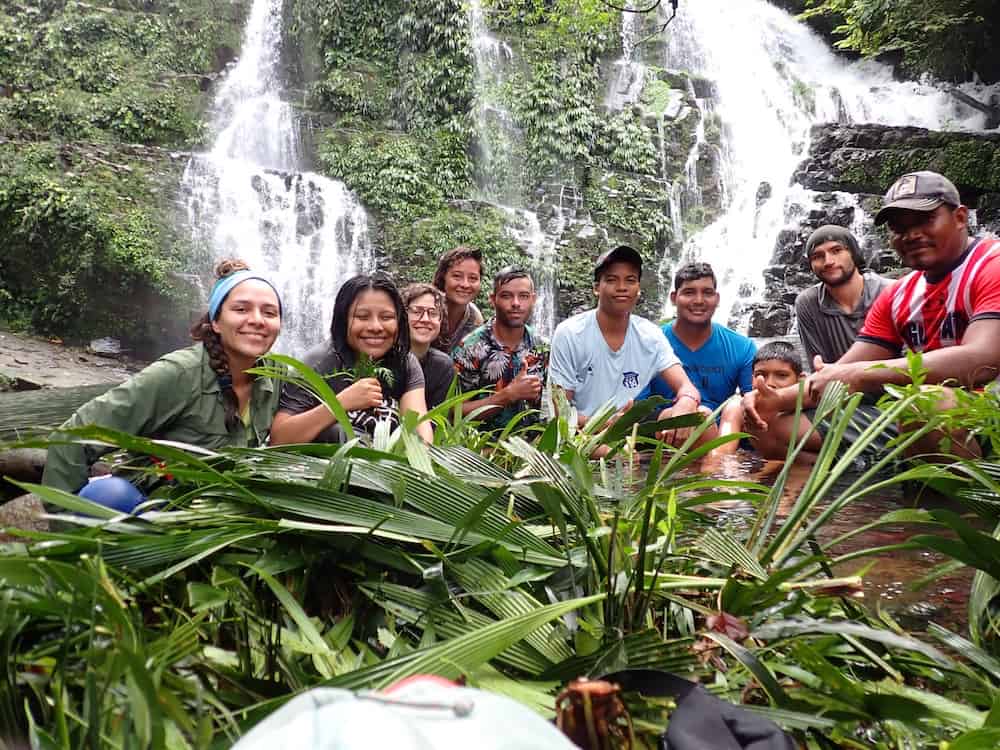
Of course, plants themselves are fascinating. One of the aspects I love most is fieldwork. Because of my passion for plants, I’ve had the chance to visit places I never imagined. Looking back at all the places I’ve been, I feel deeply grateful for the opportunities I’ve had. It’s been an amazing experience, and it’s also allowed me to meet people in places I’m not originally from. For example, while I’m Colombian, I’m not from all parts of Colombia. I’m not from Guaviare, Guainía, or Inírida, but I’ve had the chance to visit those places. I’m currently working in Panama, which has been another fantastic experience. I also enjoy data analysis and statistics. I find it fascinating, especially when working with genomic data. However, lab work is something I don’t particularly enjoy. I do it, but it’s not what excites me.
Are any specific plants or species that have intrigued or inspired your research? If so, what are they and why?
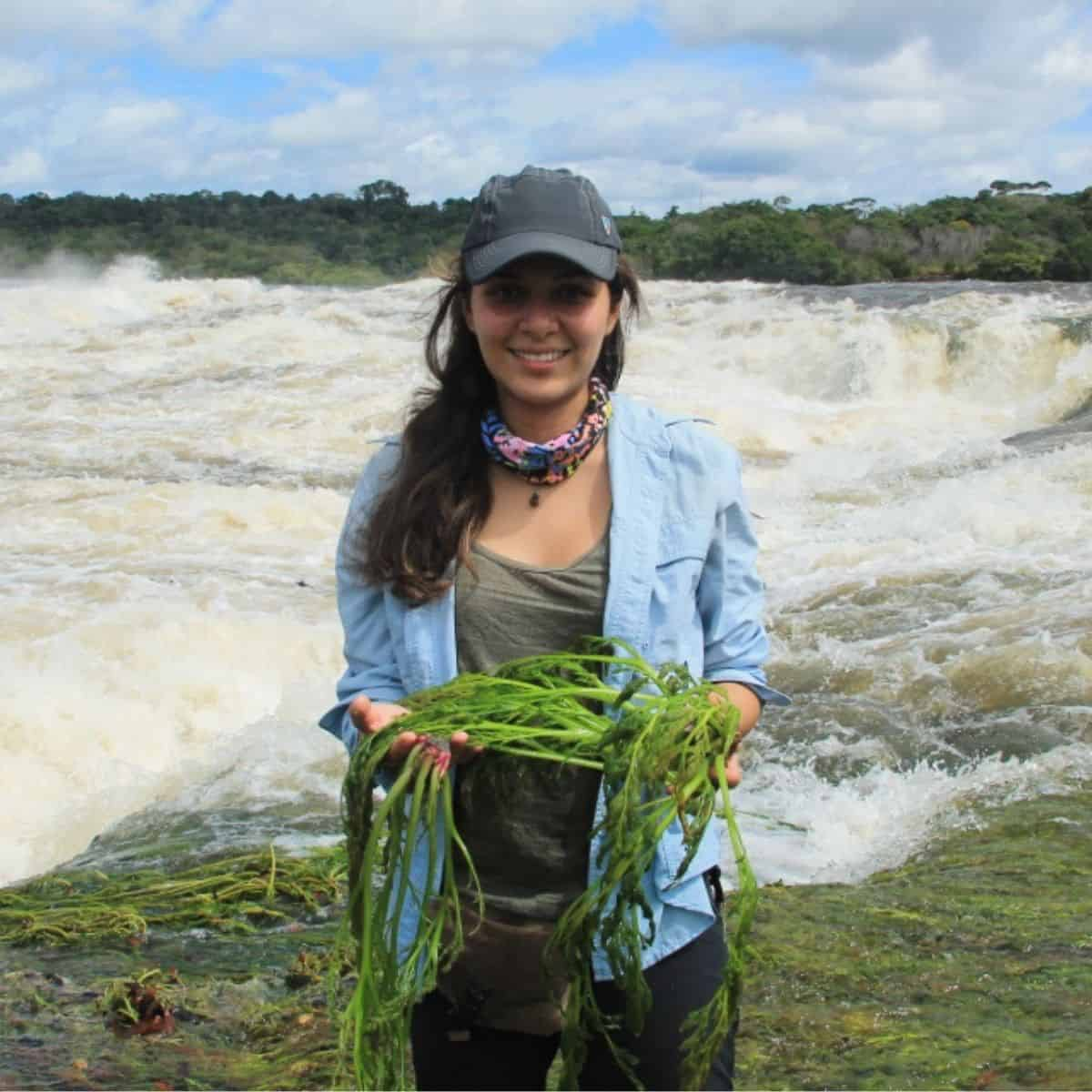
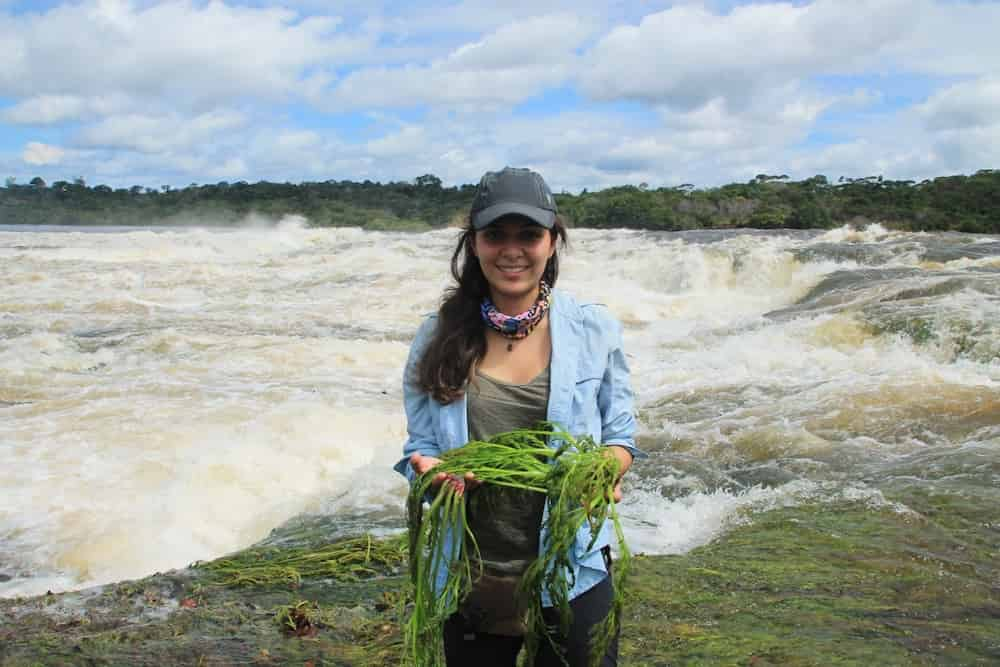
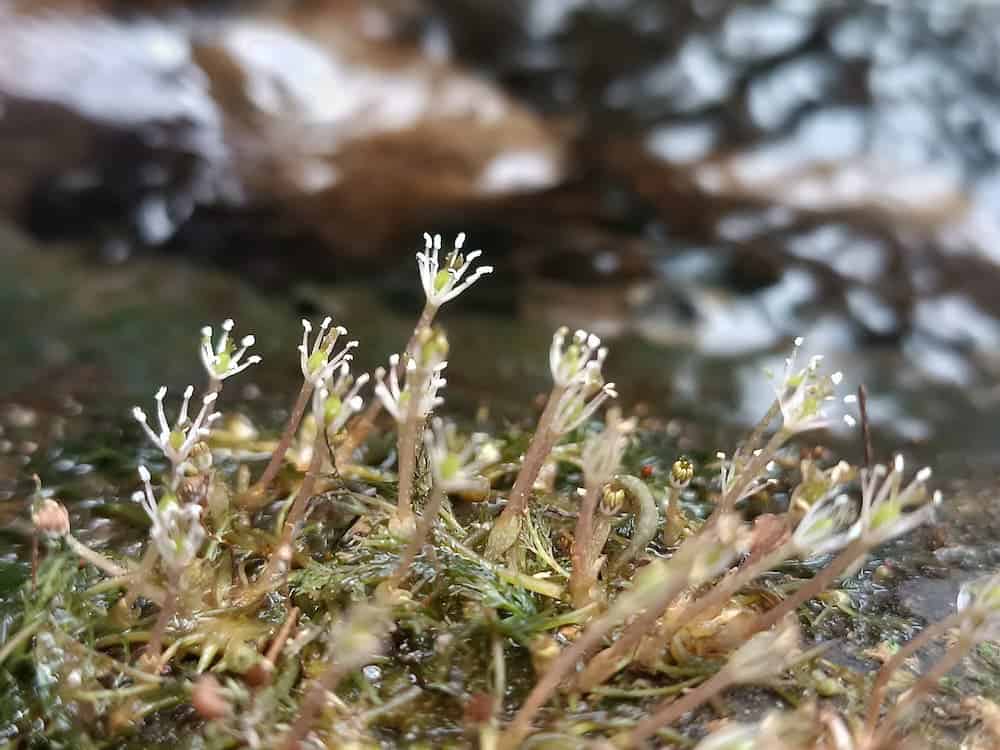
The most important one, at the core of my program, is the Podostemaceae family, known as river weeds. This family is the largest group of strictly aquatic angiosperms, with more species than any other group of aquatic flowering plants. They’re fascinating because they resemble algae, liverworts, or lichens, despite being flowering plants. They live attached to rocks in fast-moving streams, which means they have very specific habitat requirements. They need flowing water, making their collection quite an adventure. Their morphology is also unique, as they must adapt to such extreme environments.
Could you share an experience or anecdote from your work that has marked your career and reaffirmed your fascination with plants?
Yes, there have been unexpected moments. One of the key lessons I’d like to share with students and early-career researchers is that fieldwork often brings unexpected observations. For example, during my Master’s thesis, I was studying Ludwigia and its adaptations to aquatic environments. I made an important discovery when I came across a body of water in a swamp called Morichal. There were many species of Ludwigia living in the water in different forms—submerged, floating, and emergent. These kinds of field observations are what make you stop and think, “Wow, there’s something really interesting here.” It’s essential to read widely and learn extensively to be able to spot things that haven’t been studied before.
Another significant moment was when I visited Cano Cristales and saw Macarenia clavigera again. Many years later, I was sitting in a café, thinking about a modelling study to understand how landscape changes had shaped river evolution, and the image of collecting those plants came back to me.
What advice would you give young scientists considering a career in plant biology?
My advice is simple: don’t give up. It’s tough, even when conditions aren’t the most challenging. Facing the job market and getting published can be hard. For every success we achieve, there are many failures. It’s important to constantly reassess and ask yourself, “Am I doing what makes me happy?” If you’re passionate about plants and it’s a part of your identity, then go for it. But also, never lose sight of yourself. If, at some point, what you’re doing no longer brings you joy, it’s okay to change direction. It’s okay to stop or make a different decision.
What do people usually get wrong about plants?
I think the biggest misconception about plants is that they are just “green” or merely part of the landscape. But if you look at them closely, you’ll see that plants are an entire world to explore, with incredible diversity in shapes and textures. For non-botanists, it’s worth taking the time to appreciate plants beyond just seeing them as background. When people see a butterfly or a cow, they immediately recognize them, but when they see a tree, they often see it as just another plant. Plants are a hidden world of diversity.
Here’s an interesting fact: aquatic plants are actually part of the group we called “Land Plants”, the group that includes all plants groups, such as mosses, ferns, and seed plants. Aquatic plants are those that re-colonized aquatic environments, but they are nested within land plants. This is something that many people don’t know, even scientists who aren’t botanists!
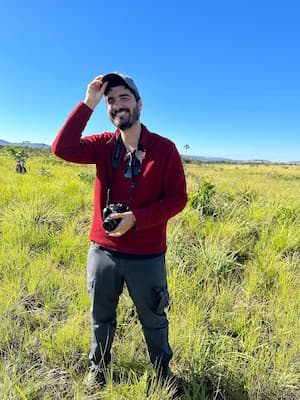
Carlos A. Ordóñez-Parra
Carlos (he/him) is a Colombian seed ecologist currently doing his PhD at Universidade Federal de Minas Gerais (Belo Horizonte, Brazil) and working as a Science Editor at Botany One and a Communications Officer at the International Society for Seed Science. You can follow him on BlueSky at @caordonezparra.