


Plants are incredibly diverse, and so are botanists! In its mission to spread fascinating stories about the plant world, Botany One also introduces you to the scientists behind these great stories.
Today, we have Dr. Agnes Dellinger, an evolutionary ecologist working on pollination and plant diversification. She is an assistant professor at the University of Vienna (Austria), leading a lab on plant-animal interactions. Her research revolves around understanding how flowers adapt to pollinators and how the abiotic environment shapes plant-pollinator interactions. Dellinger studies these questions both at the macroevolutionary (i.e., comparing many related species) and macroecological (i.e., across environmental gradients or continents) scale, but also by looking at how co-flowering species in the same community interact. As a model, she uses the tropical plant family Melastomataceae, which, with 5800 species, ranks among the largest plant families in the world.

What made you become interested in plants?
I never dreamt of being a botanist, but always dreamt of being a biologist. Ever since I can remember, I have wanted to be a field biologist and study animals, particularly birds. I was still pursuing my plan of becoming an ornithologist during my undergraduate studies, but then I joined a two-week botanical excursion through the Alps, which absolutely changed my mind. Although I struggled at the beginning (I didn’t even know scientific names were actually used by researchers!), I quickly memorized the Alpine plants we saw on the excursion and the different microhabitats they grew in, and from there, I delved into the world of systematics and plant ecology. This was also the first time I could apply statistics to data I had collected myself and that was a big game changer –afraid of statistics at first, I got to love them!
What motivated you to pursue your current area of research?
Similarly to how I stumbled into plants, I stumbled into pollination biology and floral evolution on another field trip during my undergrad. On that field trip, I worked with Melastomataceae and buzz-pollination for the first time, but it was not until way into my Master’s that I got very curious about the functional and evolutionary questions that can be addressed around flowers and pollinators. My MSc and PhD advisor, Jürg Schönenberger, was central in helping me during these early steps since he allowed me to develop my ideas very independently and was supportive throughout. Through this great mentorship, I could build on a very fun discovery during my MSc thesis, a new passerine pollination system in Melastomataceae, where flowers have explosive stamens triggered by the foraging birds. This fun discovery stirred a lot of curiosity among the scientific community and also made me wonder what ecological circumstances drove the evolutionary shifts from bee to passerine pollination and beyond in Melastomataceae. This exciting study system, paired with the possibility of real discovery of unknown interactions and mechanisms in remote and pristine natural areas across the world, keeps motivating me until this day.
What is your favourite part of your work related to plants?
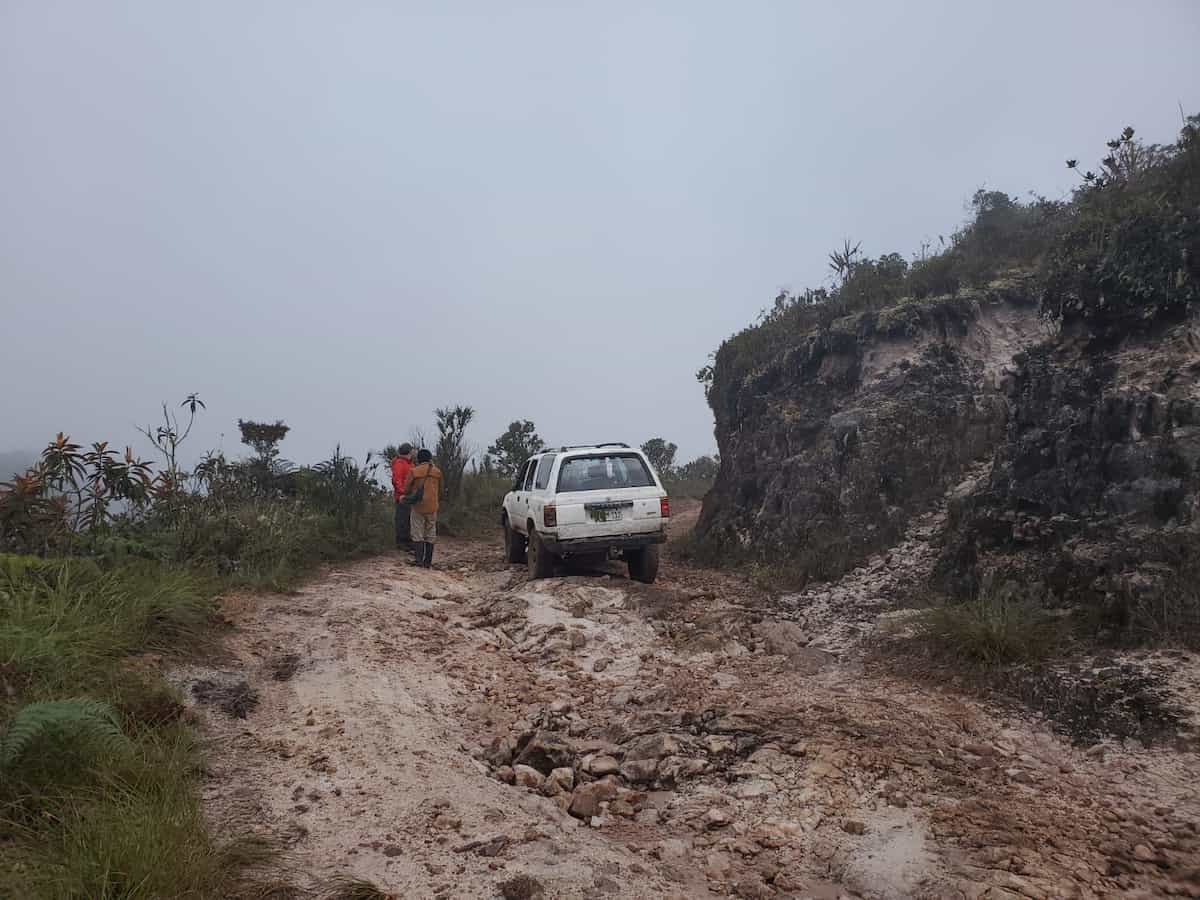
Fieldwork is undoubtedly my favourite part of my work – scouting the rainforest or mountains for my species, locating them, figuring out how to get to the flowers (some of my plants are trees), setting up camera traps, waiting for pollinators, observing… and running experiments such as allowing only one pollinator species to visit a flower once to understand how much pollen they deliver or vibrate flowers like bees do, using speakers and forceps. My second favourite part certainly is to sit down with these data and molecular phylogenies and dig into the evolutionary background of these ecological interactions to understand how, where, when and, maybe, why they changed through time and space.
Are any specific plants or species that have intrigued or inspired your research? If so, what are they and why?
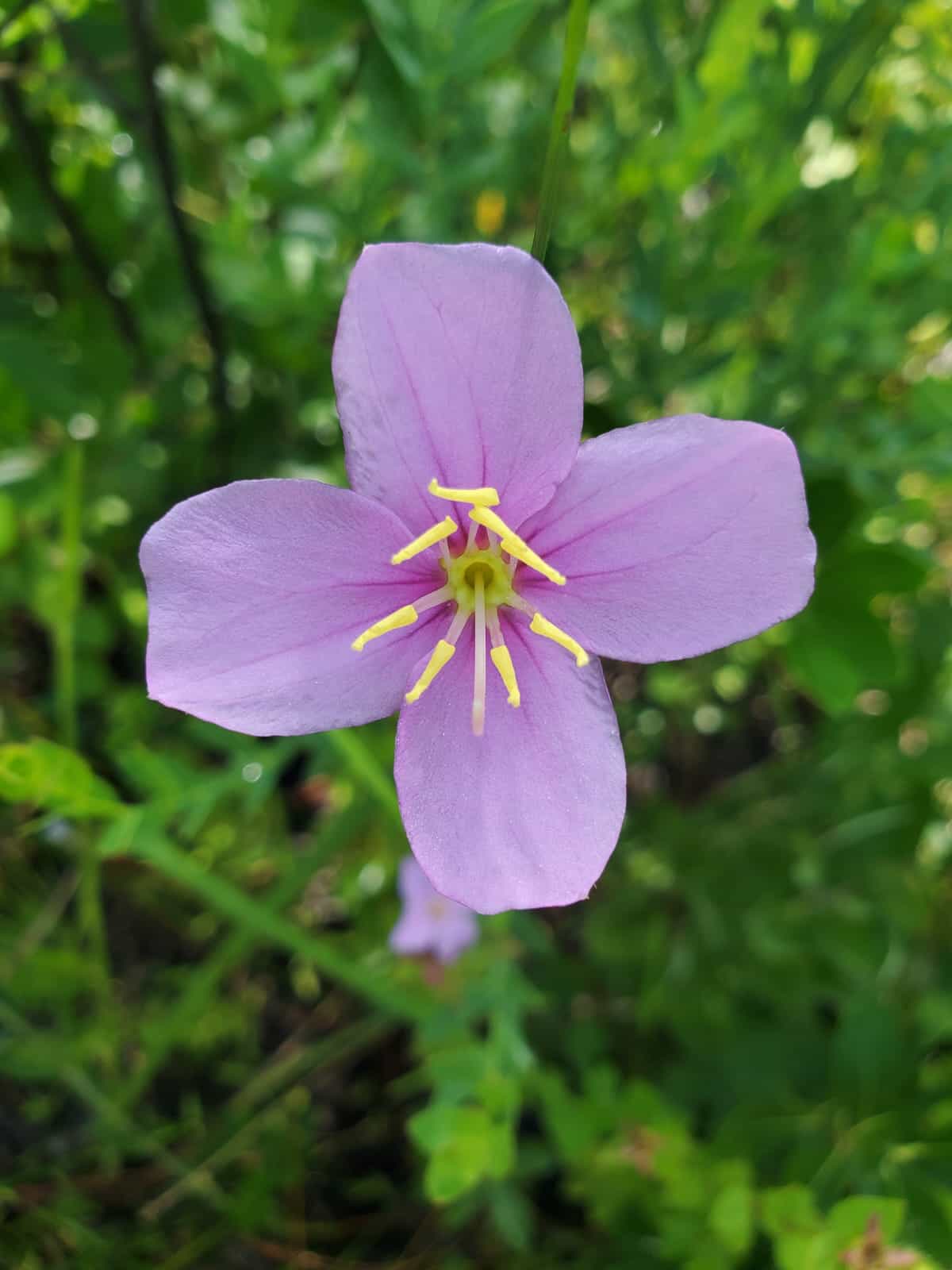
Melastomataceae for sure. They are also called “princess flowers” or “meadow beauties” and have many names in the languages of the countries they occur in. Melastomataceae flowers are so special because, unlike other flowers, they do not offer pollen openly to pollinators. Instead, pollen is concealed inside the male organs, the anthers, also when the flower is open, and can only come out of these anthers through a small pore, usually less than half a millimetre in size. Many bee species, the most common pollinators of Melastomataceae, can vibrate flowers with their wing muscles at specific frequencies, a behaviour called “buzz-pollination”. The bees usually land on the flower and grab the stamens with their legs and also bite into them and then start “buzzing” – the resulting vibrations release pollen from the stamens, which the bees collect to feed to their larvae, and pollen on the bee’s back might reach the stigma and fertilize ovules. Melastomataceae flowers usually don’t offer nectar to bees and all bees get is the pollen – but the flowers need this pollen for reproduction. So one idea is that buzz-pollination has evolved as a strategy to make sure the bees have to work hard to get the pollen and won’t eat all.
Could you share an experience or anecdote from your work that has marked your career and reaffirmed your fascination with plants?
The most career marking so far came very early on in my career and changed everything for me. While I was doing fieldwork in Ecuador for my MSc thesis, I discovered a completely new passerine bird pollination system in Melastomataceae, where tanagers rip stamens out of flowers to eat them, and these stamens explode like little bellows and blow pollen onto the birds as the bird’s bill touches them. This unexpected discovery convinced me that I wanted to keep working with this beautiful plant family that still holds so many secrets!
What advice would you give young scientists considering a career in plant biology?
For a career in academia – only do it if you are really, really passionate about science and like the whole workflow (data collection, problemsolving, analyses, writing, presenting, re-iterating everything because some anonymous reviewers didn’t like what you did, etc.). Science is wonderful, but the modern academic world is also harsh, shitty pay, bad administrative support at universities, and with prolonged times of uncertainty (i.e., when and where, and for how long you will have a job), which is particularly hard to navigate if you have family responsibilities, friends you don’t want to leave etc.
And for a general career in plant biology – go for it! The same might apply as to a career in academia, but I do believe that it is really important to work on all fronts of plant biology given how climate change and human-induced land-use change are threatening ecosystems globally!
What do people usually get wrong about plants?
I don’t know about plants in general, but about flowers – people often don’t know that fruits develop from flowers! And more specifically, people often confuse pollination (the transfer of pollen from one flower to another) with fruit dispersal (the transfer of a fruit from its mother plant to some other place in the world). Also, plants are not boring!
Carlos A. Ordóñez-Parra
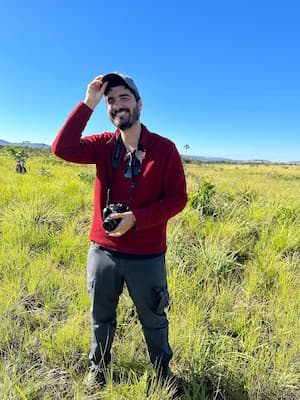
Carlos (he/him) is a Colombian seed ecologist currently doing his PhD at Universidade Federal de Minas Gerais (Belo Horizonte, Brazil) and working as a Science Editor at Botany One and a Social Media Editor at Seed Science Research. You can follow him on X and BlueSky at @caordonezparra.
Cover picture by Francisco Sornoza.