


“More carbon dioxide is good for plants” is a common statement used to justify rising carbon dioxide levels as a Good Thing. But plants are not simple growing machines, and balance complex chemistry in the form of secondary metabolites. These are the chemicals plants create to fight off infections, attract pollinators, or signal to mycorrhizal fungi. New research by Tao Li and colleagues shows that, due to these secondary metabolites, increasing carbon dioxide concentration has a bit more of a complex relationship with plants than some people think.
The study covers the chemicals plants make that aren’t just new bits of plant. These chemicals regulate how a plant interacts with other organisms in its environment. Scents for flowers are a secondary metabolite. Losing the ability to make them isn’t going to immediately kill a plant. However, even if more carbon dioxide makes a plant bigger, this is doesn’t help in the long-term if its ability to attract pollinators is compromised.
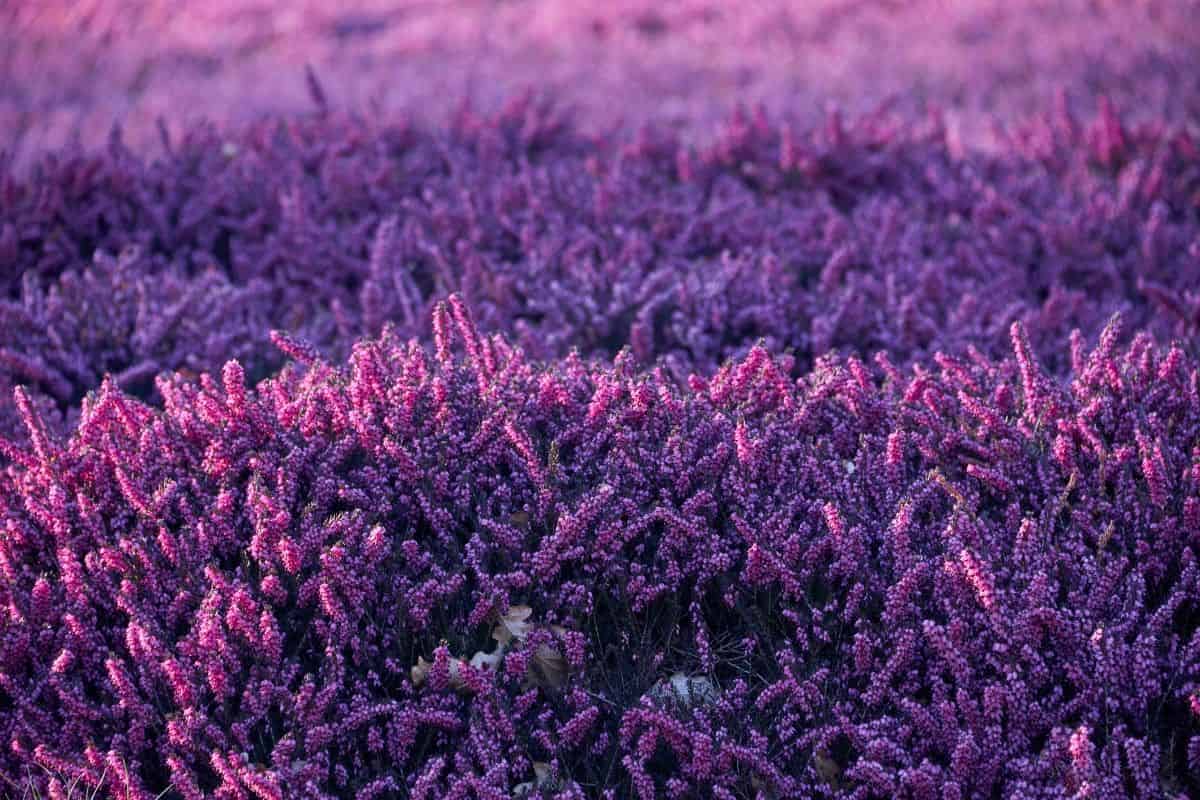
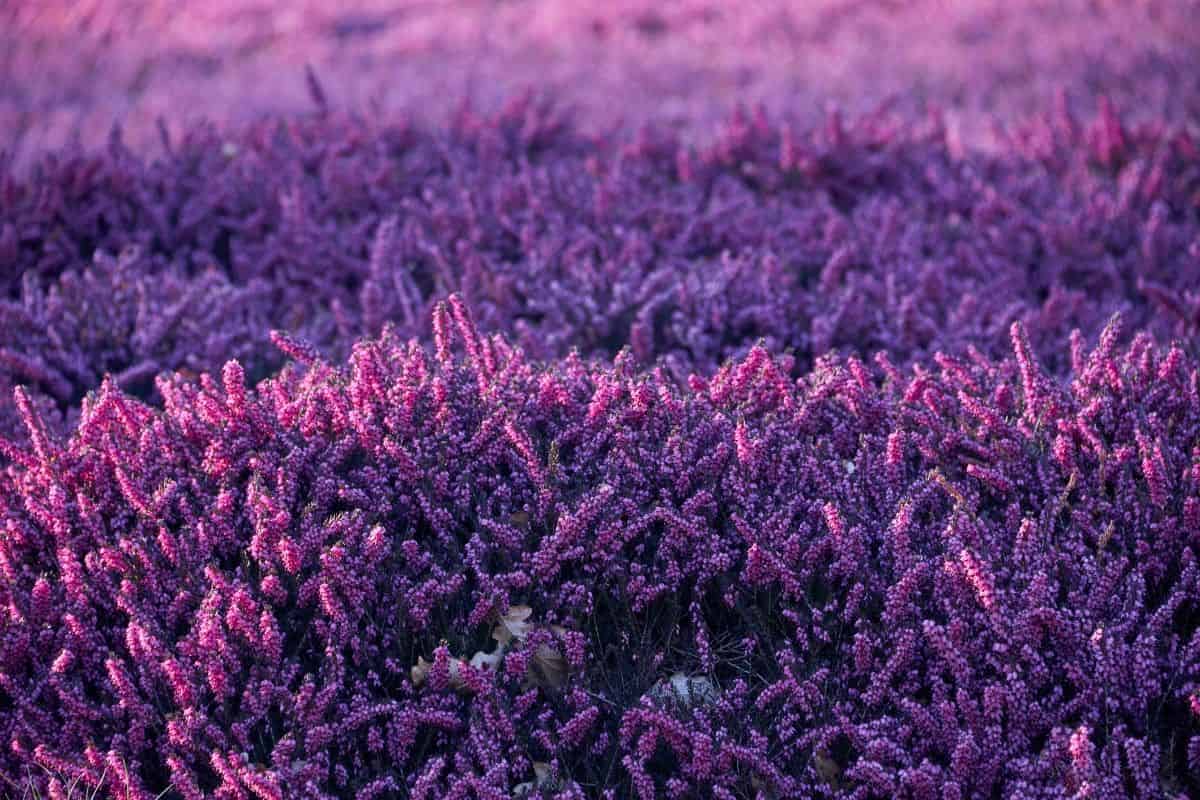
Li and colleagues looked at Calluna vulgaris, common heather. “We measured VOC [volatile organic compound] emissions of C. vulgaris branches in a temperate heathland and quantified the accumulation of phenolics and condensed tannins in different plant organs (leaves, stems and flowers) over two growing seasons after 6 years of exposure to realistic climatic manipulations,” write the authors.
“We hypothesized that when acting independently, both elevated CO2 and temperature will enhance phenolic production and VOC emissions, probably by stimulating carbon assimilation and growth, and boosting activities of enzymes associated with compound synthesis. We expected drought stress to reduce phenolic production and VOC emission, via suppression of plant photosynthesis. When acting in concert, elevated CO2 and temperature are expected to show synergistic responses except with drought. While CO2 would be likely to, at least partially, mitigate drought effects, warming could aggravate these due to enhanced soil evaporation and plant transpiration.”
The experiment was conducted at the CLIMAITE project in Denmark. Here, the heather grew in octogon-shaped plots, with some plots exposed to more carbon dioxide, some had nighttime warming and some had a month-long drought. “The treatments were designed to represent the likely climate scenario for Denmark in 2075 with 510 ppm CO2, elevated diurnal minimum temperature and extended summer drought (but only minor changes in annual rainfall),” say Li and colleagues.
The team found they had a mix of results. Some were predictable. Phenolics concentrated in the flowers and leaves of the plants, but not the stems. These chemicals help protect the plant from attack, and so you’d expect to find them in the organs that matter most to reproduction. But not everything was as expected.
“Contrary to our hypothesis, we found little to no effects of elevated CO2 on levels of phenolic compounds including condensed tannins. This starkly contrasts with many empirical studies and meta-analyses reporting that elevated CO2 in general increases HPLC-phenolic and condensed tannin concentrations, but agrees with other studies observing nominal CO2 effects on tissue phenolic accumulation (Holton et al., 2003; Muntifering et al., 2006).
Putting the various effects of a warming climate together made the results more complicated, say the authors. “Although both elevated CO2 and nighttime warming alone had a minor impact on phytochemical responses of C. vulgaris, significant effects were manifested in their interaction with drought, as indicated by the almost equal number of compounds significantly affected by two- or three-way interactions compared to single-factor treatments. In most cases elevated CO2 tended to dampen the negative drought effects, as did the nighttime warming, whilst elevated CO2negated the positive warming effects.”
“Moreover, elevated CO2, nighttime warming and drought had both direct and interactive effects on the leaf chemical profiles, as revealed by the NIR-based non-targeted analysis.”
“The magnitude of these interactions, however, varied considerably with climatic factors, plant tissues and chemical compounds, and over time, suggesting that the phytochemical responses of C. vulgaris to the combination of elevated CO2, warming and drought are complex.”
The big unanswered question is how these changes will interact with the rest of the ecosystem. Li and colleagues caution that some changes could have dramatic effects. An example they give is the reduction of phenolics in heather leaves during drought. With less chemical defence, the plant may well become tastier to herbivores during droughts, adding more stress at a time when things are already difficult. On the other hand a reduction in VOCs might make the plants less obvious to herbivores, and it’s not clear if there will be a next benefit or hazard to the heather.
Even if the heather does benefit from raised carbon dioxide, it doesn’t mean that plants competing with it will also do well, and that will have knock-on effects for the species that eat and nest in those other plants. It seems unlikely that all plants will benefit from more carbon dioxide.