
This column is always fascinated by the way new insights arise when different disciplines are brought together to tackle an ostensibly botanical problem. So, too, is the UK’s Royal Society, hence its august organ entitled Journal of the Royal Society Interface, a ‘cross-disciplinary publication promoting research at the interface between the physical and life sciences’ . Combining mechanics, dentistry and biology, Peter Lucas and colleagues have examined the evolutionary optimization of material properties of a thick-shelled tropical seed and nicely demonstrated that its mechanical properties are adapted to permit them to germinate while preventing their predation.
In their own words, ‘The seed has evolved a complex heterogeneous microstructure resulting in hardness, stiffness and fracture toughness values’, but which still permits ‘cracking the shell via internal turgor pressure (i.e. germination)’. The thick-shelled tropical seed-bearing plant studied was a member of the Annonaceae (the custard apple family ), Mezzettia parviflora Becc. (which information is rather bizarrely not mentioned in the article’s title, abstract, or key words).
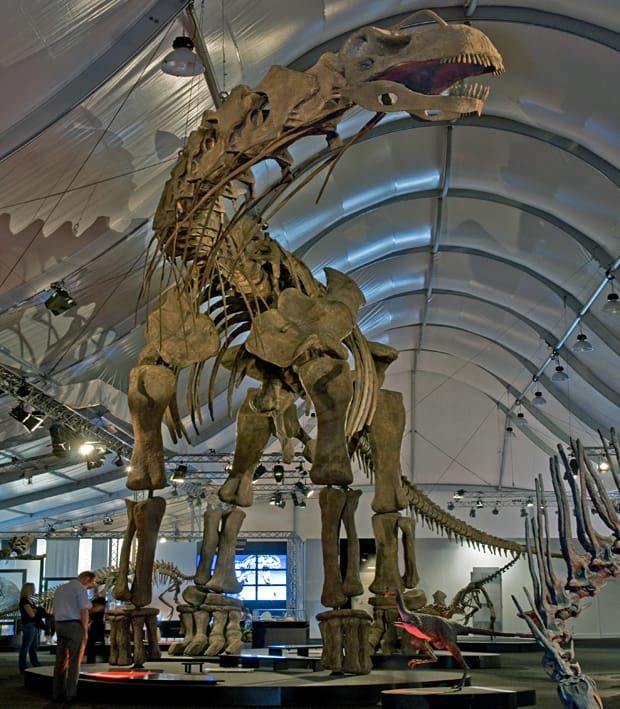
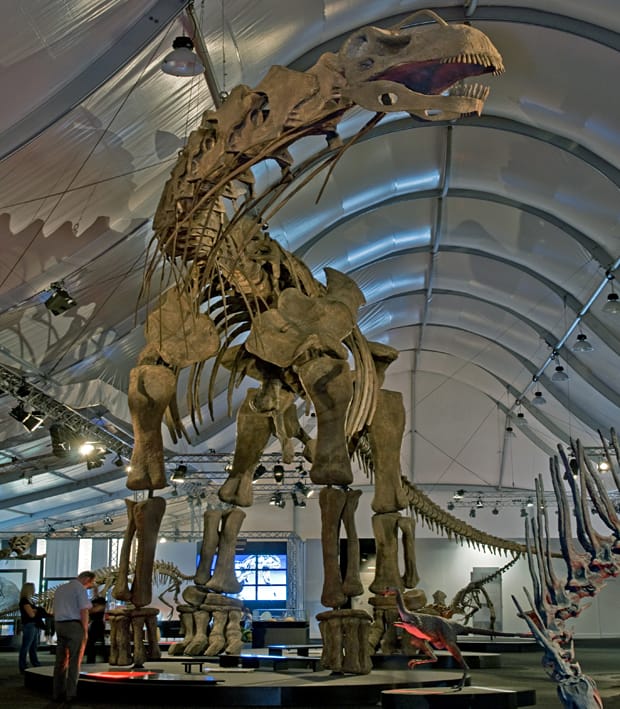
My researches reveal that, whilst M. parviflora Becc. is apparently the ‘official‘ name for the plant, M. herveyana Oliv. is listed as a synonym. And this latter taxon is critically endangered per the IUCN (International Union for Conservation of Nature) Red List, known only from a single collection found in Malacca (Malaysia). Could this endangered status be due in part to a seed coat that has actually now become too cracking-resistant? Whether the afore-mentioned ‘thick-shelled tropical seed’ was present in Antarctica at the time of the Cretaceous lithostrotian titanosaur (known rather inelegantly as MLP 11-II-20-1), whose discovery was announced by Ignacio Cerda et al., is not disclosed. But it may have been. In which case any resistance by the nut to the dietary attentions of the vegetarian sauropod may in part explain the demise of that group of dinosaurs in 65.5 million years bc/bce. Or, maybe they just couldn’t cope with the ‘cold snap’ that subsequently developed down there? Anyway, just another crazy notion I’m happy to toss into the pot!