


Bioengineer.org reports on a new study published in Communications Earth & Environment that shows the war in Ukraine is causing its soils to lose vital crop nutrients. It threatens to leave Ukraine with a long-term drop in crop production, & the repercussions could be felt far beyond Europe. The World Food Programme says that Ukraine’s exports of wheat, sunflower oil, and peas, help feed 400 million people worldwide. The WFP is working to overcome attacks on Black Sea ports, & ship food to Africa & the Middle East. This new study, by Medinets and colleagues finds a new challenge.
Sergiy Medinets and colleagues looked at three key nutrients, nitrogen (N), phosphorus (P) and potassium (K), for wheat, maize and sunflowers. The authors find a gradual decline in NPK in the soil, then the war started and things changed dramatically. They write: “The combined NPK deficits in 2023 for the three crops exceeded those of any year since 2000”
“We anticipate a substantial further increase in NPK deficits, leading to soil nutrient mining in Ukrainian agriculture, ultimately degrading soils and decreasing yields if the war continues.”
Ukraine’s farms are effectively mining their soil by taking out more nitrogen, phosphorus and potassium in harvests than they’re putting back. The war slashed fertiliser use by up to 54%, turning a manageable deficit into a severe threat to the world’s most fertile farmland. The fertility comes from Chernozem, “black earth” in Russian & Ukrainian, named as they’re so rich in organic matter they appear nearly black. Covering 60% of the country, these carbon-rich soils store approximately 7% of the planet’s total soil carbon. They’re the envy of farmers worldwide.
This natural fertility might make war’s environmental damage seem temporary. Craters fill in, vegetation returns, and life resumes. After World War II, European farmlands recovered. It’s easy to assume that Ukraine’s soils will simply bounce back after peace, fertilised by the dead. However, Certini et al. show modern warfare causes soil changes requiring “years or even centuries” to recover. Heavy tanks compact Ukraine’s naturally fluffy Chernozem soils. Explosives mix soil horizons. Fuel contaminates farmland. These impacts layer onto decades of erosion damage. Worse, the FAO/World Bank found Ukraine’s chernozems were already degraded by poor management and erosion, losing 500 million tonnes of soil yearly. That’s 10 tonnes of soil eroded for every tonne of grain produced. The war is turning a chronic problem into a catastrophe.
Medinets et al look at modernisation. Modern agriculture treats manure as a waste product not a resource. Livestock farms & crop farms operate separately, making it difficult to recycle nutrients. In Ukraine, this separation means 90% of manure produced, worth $2.2 billion, never reaches cropland. Zhang et al. (2015) show integrated management, blending organic manure with precision-applied synthetic fertilisers, can improve nutrient efficiency. The Medinets study recommends exactly this approach: recycle that wasted manure, apply fertilisers precisely, & restore soil health.
Medinets et al say action is urgent: “Developing such a plan, evidence-backed by our scenario analysis, should not wait until the war is over. While the war makes conditions harder, all the measures listed could already start with appropriate investment.”
“We propose that an Integrated Nutrient Management Plan for Ukraine be incorporated into the agriculture sector recovery under the Ukraine Recovery and Reconstruction (URR) budget, which currently accounts for 10.5% of the total planned URR budget of USD 524 billion.
Supporting Ukraine’s farmers is critical for food security and prosperity, but this proposal also offers aid to the environment. Surplus nutrients from fertilisers can result in toxic algal blooms, air pollution and greenhouse gas emissions. A post-war Ukraine could be both rich and healthy.
Medinets, S. et al. (2025) “Nutrient asymmetry challenges the sustainability of Ukrainian agriculture,” Communications earth & environment, 6(1). Available at: https://doi.org/10.1038/s43247-025-02826-9 (FREE)
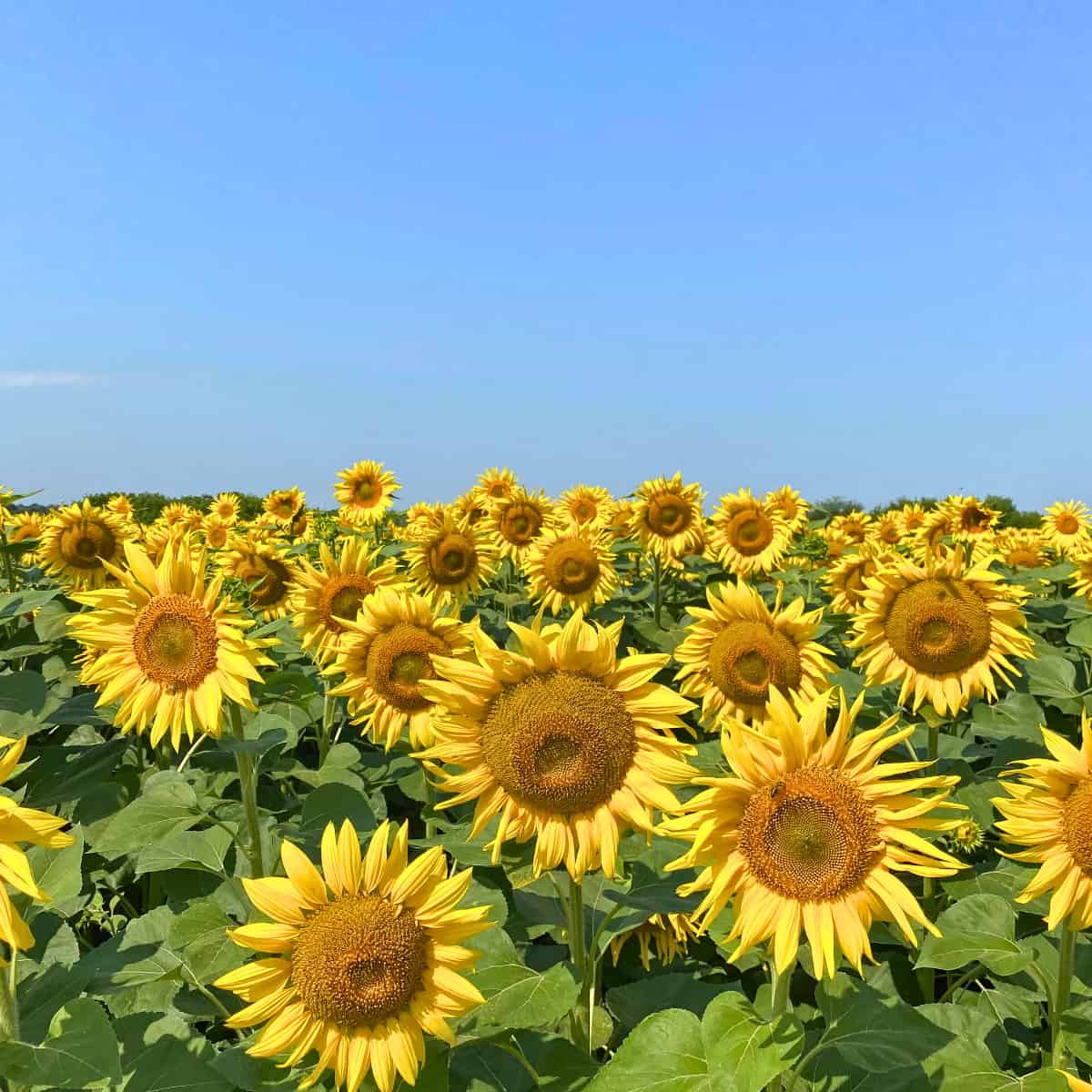
Cover Image: Sunflower field in Ukraine. Photo: samudri7 / Canva