


A team led by Monika Egerer at the Technical University of Munich is pioneering a novel approach to urban conservation. Their study, published in Urban Forestry & Urban Greening, proposes using community gardens as ‘biodiversity hubs’ – living laboratories where conservation strategies can be developed, tested, and then expanded into the wider urban environment.
The researchers are reimagining community gardens as catalysts for city-wide ecological change. These spaces are seen as perfect for experimenting with biodiversity interventions on a small scale before implementing them across neighbourhoods.
Citizen Scientists in Garden Gloves
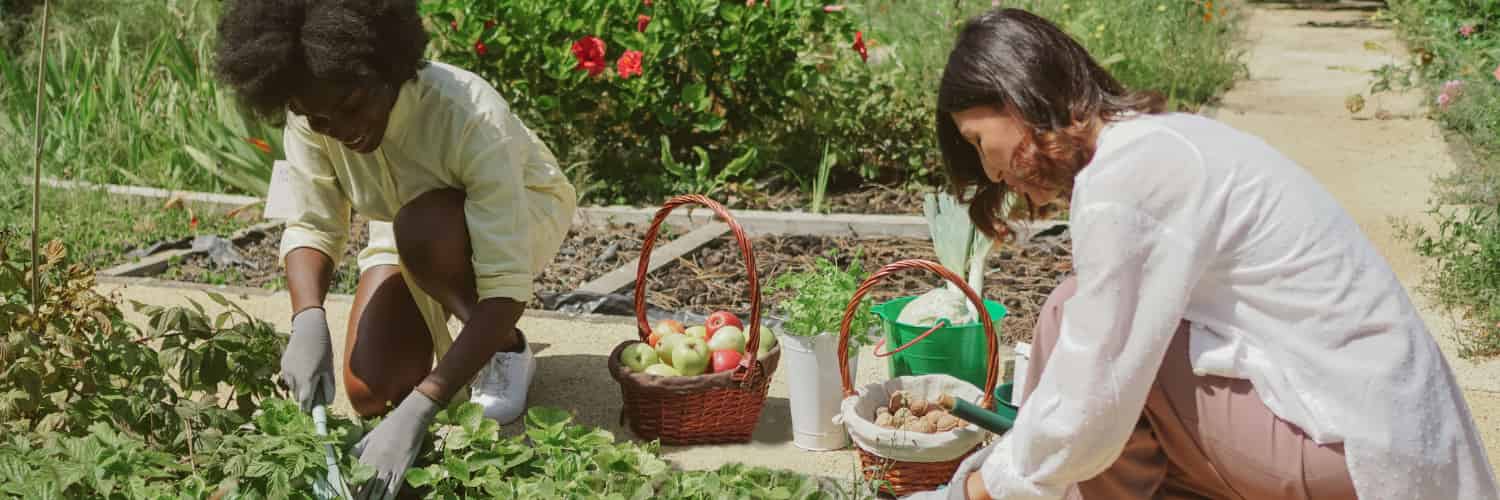
The researchers aren’t working alone. In a twist that brings citizen science to the forefront, they’ve enlisted the help of community gardeners in Munich and Berlin. These amateur horticulturists are actively involved in designing and implementing biodiversity-boosting interventions.
The study emphasises the importance of gardeners seeing this as an opportunity to shape their garden’s future. Their local knowledge and enthusiasm are described as invaluable to the project’s success.
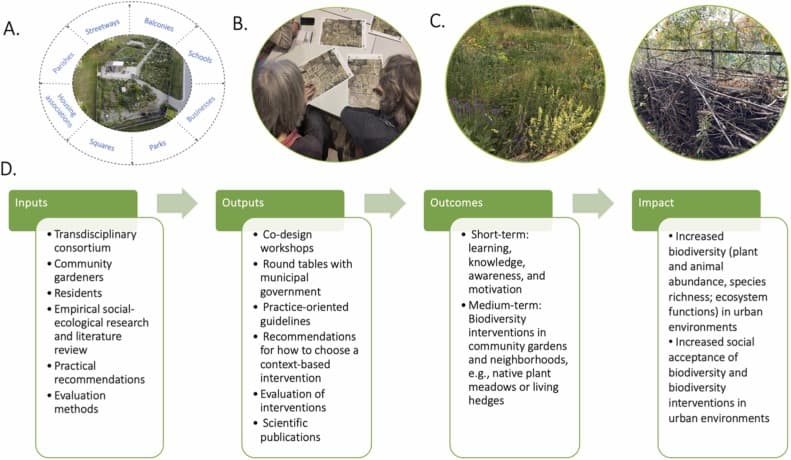
The team is testing a range of interventions, from creating sand structures for ground-nesting bees to establishing wildflower meadows that cater to specialist pollinators. They’re even experimenting with ‘dead wood structures’ – a somewhat counterintuitive approach that provides vital habitats for saproxylic organisms, organisms that require dead wood.
From Garden Patch to Urban Fabric
But the ambition of this project extends far beyond the garden fence. The researchers envision these interventions spreading throughout urban areas, transforming schoolyards, churchyards, and even private balconies into biodiversity hotspots. To achieve this, they’re building partnerships with civil society organizations and city administrators. The goal is to create a network that can turn these small-scale experiments into city-wide transformations.
How will they know if their efforts are paying off? The team plans to use both traditional ecological surveys and innovative citizen science approaches. Gardeners and residents will be trained to monitor plant health and conduct insect counts, while the researchers will use experimental ‘phytometer’ plants to measure pollination services across the city.
Our goal is to translate research to practice by accompanying urban gardeners and city residents to implement biodiversity interventions in their community gardens and in their neighborhoods. Whether in a garden or a churchyard or schoolyard, residents have the power to make meaningful changes to the ecological fabric of their neighborhoods.
Egerer et al. (2024). Growing gardens into neighborhoods through transdisciplinary research. Urban Forestry & Urban Greening, 100, 128481.) https://doi.org/10.1016/j.ufug.2024.128481