Thank you to everyone who sent in kind words for Sarah last week. I'm (Alun) back for a couple of weeks at least before we bring in our other editor Carlos to have a go. In a stroke of luck, I found out I have no need to take time off in the summer for a trip. Thanks go to the Bosnia & Herzegovina football team, and I'm sure they or Italy will bring excitement to the World Cup.
I'm sure there'll be some form of botanical tie-in with the World Cup this summer, so I was also a little disappointed to see New Caledonia were finally knocked out this week. It's a staggeringly interesting botanical hotspot as you can see (strong language from the off).
In other competition, Botanical University Challenge opened up crowdfunding for their final. They have a highlight video of last year's event.
I can try getting out some of time this week. I can see from Hot Botany that Snake's Head Fritillaries may be around where I live. Unless you live close by, you'll probably get other recommendations. There will be another email of the papers and the news stories you’re sharing on Mastodon and Bluesky, at the same time, next week.
Alun (webmaster@botany.one)
On Botany One
What if a Flower Never Needed a Pollinator at All?
New research shows that one small mountain orchid secures reproduction before its flowers even open and may fare better selfing than crossing with its neighbours.
Healing at What Cost? The Conservation Status of Britain’s Herbs
Researchers reveal that while few herbal ingredients are officially endangered, most remain conservation question marks in a growing global trade.
Luiza Teixeira-Costa: Strange Lives of Plants and Their Human Stories
Botany One interviews Dr Luiza Teixeira-Costa, a Brazilian botanist working in the integration of botany and environmental humanities.
Introducing Hot Botany
Wondering what plants might be visible near you? There's a tool for that.
When Beetles Take the Lead in Orchid Romance
A rare South African orchid reveals that beetles can be refined partners in one of nature’s most intricate pollination systems.
This week the Sudoku Garden celebrates National Weed Day while the Plant Hunt is in California. This week's Plant of the Week is Buxbaumia viridis, which was flagged as an endangered species, but it might not be as simple as that.
There was also last week's Week in Botany, with Notes From Nature, endangered plants in Brazil, bizarre floral scents, and more.
News & Views
When I proposed rejecting papers with hallucinated references, the support was overwhelming. But the critical voices revealed five argument patterns: from AI hype through TINA rhetoric to nihilism.
 Dr. Dorothea Baur
 Heraldo de Aragón
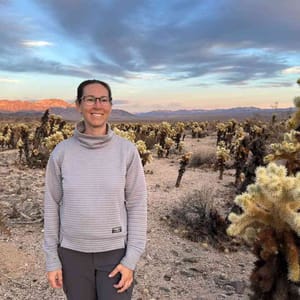
Cacti can survive in the harshest environments, and yet almost a third of species are threatened with extinction.
 sflorg.com
Scientists reveal why plants stop absorbing water in dry soil, pointing to soil physics rather than plant limits as the key factor.
 Earth.com
Once land plants, seagrasses staged one of evolution’s boldest reversals — returning to the ocean to thrive beneath the waves.
 Big Think
A long-running experiment in Colorado provides an ‘alarming’ view of how rapidly unchecked global heating could transform fragile ecosystems.
 The Guardian
A 40-year tree-planting initiative in China’s Taklamakan Desert, part of the Three-North Shelterbelt Forest Program, has successfully reduced CO2 concentration by approximately 3 ppm.
 plantcuttings.uk
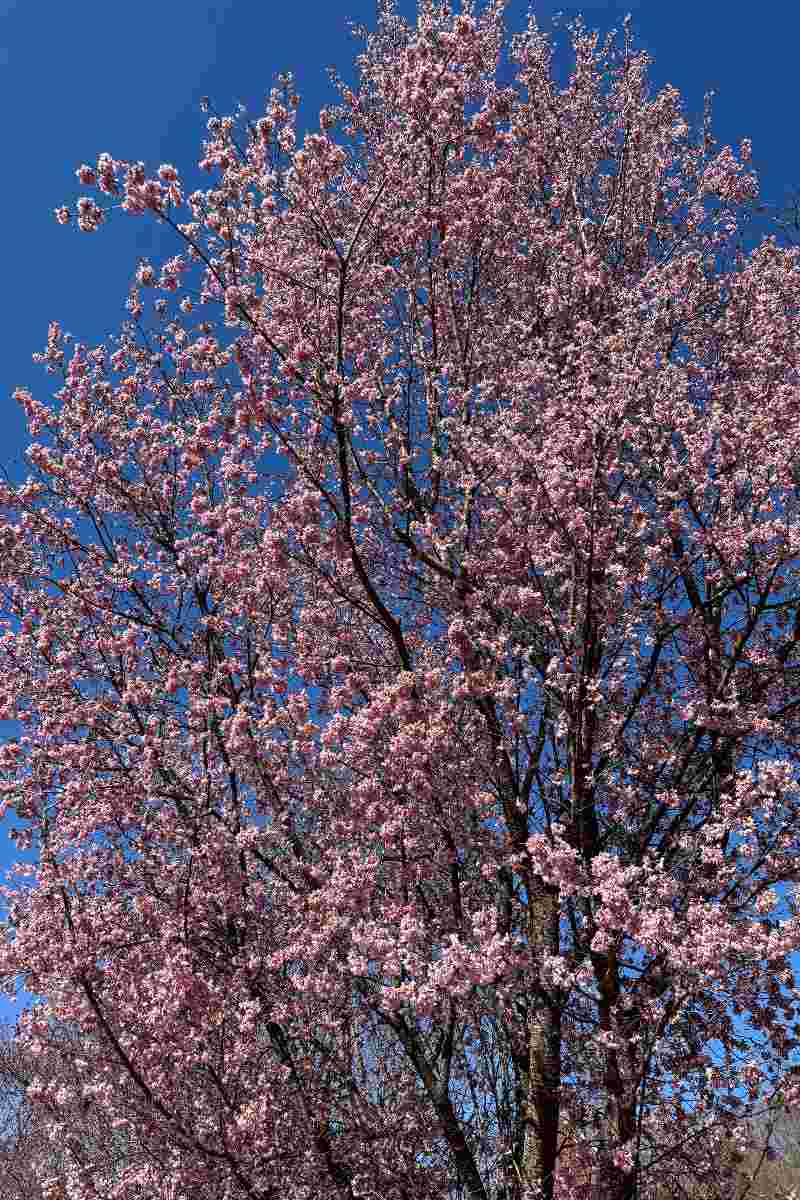
From soft peach to vivid pink and purple blooms, spring arrives in a burst of color across the Northern Hemisphere. In Washington, D.C. and Tokyo, streets and parks are awash in a sea of cherry blossoms.
 Conservation news
In the dry-season heat of northern Thailand, Hmong villagers zip through forested slopes, blasting tinder with leaf blowers and cutting through brush with machetes, while others scan for smoke on live feeds from their phones.
 The Standard 英文虎報
Cherry trees growing from material taken from the famous “Stumpy” along the Tidal Basin in Washington flowered for the first time this year, the National Arboretum said Thursday.
 The New York Ledger
A survivalist expert and master naturalist shares some tips on the kinds of plants to avoid and how to identify them properly.
 Outdoor Life
This Week in Botany
5 Years Ago: Advancing flowering is altering the dates of some cultural events
10 Years Ago: Decision time: Inorganic or Organic..?
15 Years Ago: The New Face of Science in the World
Scientific Papers
Guanghao Guo, He Zhao, Kaihong Bai, Jian Lu, Qiuhong Wu, Lei Lu et al.
“Here, we identified a gain-of-function mutant of wheat autoimmunity 3 (WAI3GOF), which encodes a constitutively active CCG10-NLR resulting from a residue substitution in the leucine-rich repeat (LRR) domain.”
 Cell (March 2026)
“We investigated the transcriptional basis of how drought stress reshapes Arabidopsis leaf development. We profiled 1,226 leaves at various developmental stages and levels of drought stress, and generated a single-nucleus transcriptome atlas comprising ~1 million individual nuclei.”
 Nature Plants (March 2026)
Pengfei Bai, Keiko U. Torii
“In this review, we first describe the developmental processes regulated by the EPF/EPFL-ERECTA family ligand-receptor module, including shoot apical meristem homeostasis, inflorescence stem growth, leaf serration, reproductive development, stomatal development, and vascular patterning. We then synthesize the signaling logic of the ERECTA family, with specific focus on the autocrine versus juxtacrine and paracrine modes of signaling as well as the mechanisms ensuring signal specificity. We further discuss the mechanisms of ERECTA-family receptor signaling, from ligand perception, receptor activation and attenuation, signal transduction, to subcellular trafficking. Lastly, we highlight emerging non-canonical functions of ERECTA-family receptors beyond the plasma membrane.”
 The Plant Journal (March 2026)
“This Review examines the impacts of key climate extremes on soil-borne pathogens, plant microbiomes and host physiology that ultimately determine disease outcomes. We explore evidence that suggests that the responses of pathogen–host–microbiome interactions to climate extremes may differ in many ways from those to long-term climate change.”
 Nature Reviews Microbiology (March 2026)
Haopeng Yu, Shasha Zhou, Mingyu Huang, Ling Ding, Yuxuan Chen, Yinru Wang et al.
“We created PlantScience.ai, a virtual plant biology scientist powered by our automated scientific knowledge graph construction pipeline (AutoSKG). PlantScience.ai exhibits expert-level reasoning in plant biology and maintains scholarly rigour in its citations. Through continuous learning, it integrates the latest research, ensuring that its knowledge base remains current and scientifically robust.”
Molecular Plant (March 2026)
“By reviewing recent findings on CLE functions, their receptors, and responses across different biotic interactions, we provide insights into the increasingly complex roles of CLEs in plant development and nutrient signaling.”
 New Phytologist (April 2026)
“Here, we review the molecular mechanisms underlying partner preference in beneficial plant–microbe interactions and discuss how host partner selection strategies maintain mutualistic stability in AMS and RNS, alongside microbial strategies to evade host control.”
New Phytologist (March 2026)
Yuandi Xu, Juan Jin, Yuhe Zhang, Xin Wang, Fan Yang, Shuang Wu et al.
“Here we show that Ustilaginoidea virens manipulates rice floret development and immune responses during early infection by targeting host lipid signalling. We identified secreted in xylem protein 1 (Sxp1) as a secreted apoplastic effector induced under nutrient-rich conditions and during early infection.”
Nature Plants (March 2026)
Runqi Zhang, Guoyu Liu, Shanshan Zhai, Xinhao Meng, Jiazheng Yu, Yuqi Zhang
et al.
“Here we cloned a heat stress tolerance (HST) gene, TaHST2, and revealed that it underwent functional silencing during wheat domestication. As a negative regulator of basal HST, TaHST2 was progressively suppressed through intronic sequence polymorphisms and epigenetic modifications, which might be an evolutionary consequence of hexaploidization.”
Nature Plants (March 2026)
“As the main nutrient reservoir in cereal grains, the endosperm largely determines grain yield, performance and nutrition. However, knowledge of genes that coordinate endosperm filling and nutrient deposition, which could offer potential for genetic improvement of grain traits, remain limited. Here we identified ZmMYB127, a filling-endosperm-specific MYB transcription factor.”
Nature Plants (March 2026)
Chao Yuan, Jie Jiang, Yu Cheng, Jian-Ping Lian, Yu-Hong Liao, Yang Yu et al.
“Lnc-eRNAs are long non-coding RNAs (lncRNAs) whose transcription initiation sites overlap with enhancers, but whether lnc-eRNAs exist in plants and whether they affect disease resistance remain unknown. Here, we identified lnc-eRNAs in rice (Oryza sativa L.) using transcriptome and chromatin accessibility data and characterized one lnc-eRNA, Xanthomonas Susceptible Enhancer RNA1 (XSER1), which was quickly activated under pathogen infection.”
Molecular Cell (March 2026)
In AoBC Publications
Careers
The College proposes to appoint a 6-hour Stipendiary Lecturer in Ecology from September 2026 to April 2027, based at Wadham College. The lecturer will be required to give on average six hours per week of tutorials for Wadham College during the eight-week term. They are also expected to be available during both term and for some periods of the students’ vacations to offer organizational, pastoral, and admissions support.

Wadham College
Our project aims to integrate forgotten knowledge of plant propagation from historical texts held at the Royal Horticultural Society (RHS) and manuscript repositories into modern science to improve plant production techniques. Alongside identifying and validating propagation techniques and peat-free alternatives, we will develop new AI search tools and explore cultural shifts in horticulture influenced by scientific advancements.
University of Nottingham
We are looking for a Research Associate to join our team exploring how horizontal gene transfer (HGT) shapes plant evolution. This position will use large-scale comparative genomics to uncover how genes move and persist across plant lineages. You will analyse over 400 flowering plant genomes from the Darwin Tree of Life initiative and use phylogenomic pipelines to quantify the frequency and diversity of HGT across angiosperms. The post will be supervised by Dr Luke Dunning at the University of Sheffield and embedded within the Ecology and Evolutionary Biology (EEB) Research Cluster.
University of Sheffield
The Postdoctoral Research Scientist will lead the project on engineer root architecture via cell fate-specific integrase switches. Using as a starting point previously generated A. thaliana transgenic line, the Postdoctoral Researcher will first aim to engineer A. thaliana with deeper root architecture to reach deeper sources of water via cell fate-specific integrase switches. Following from this, the aim is to engineer root architectures to adapt to various environmental conditions such as soil stratum of different compositions, extreme climate events, and to engineer plant-microbe communication.
Earlham Institute
Für die Koordination der Grünen Schule des Botanischen Gartens sowie anderer Vermittlungsprogramme und Veranstaltungen wird eine Karenzvertretung für 30 WST gesucht. Eine wesentliche Aufgabe ist die Betreuung der bestehenden Netzwerke, in Zusammenarbeit mit der Gartenleitung. Die Entlohnung erfolgt nach KV IVa für nichtwissenschaftliche Mitarbeiter/innen der Universität Wien. Relevante Vordienstzeiten werden teilweise oder zu 100% angerechnet. Die Stelle ist auf 9,5 Monate befristet.

Universität Wien
Au cours de cette mission vous participerez à l’analyse bioinformatique de la dynamique du génome dans des plantes soumises à des stress environnementaux pour mieux comprendre l’adaptation des plantes au changement climatique.

CNRS: Laboratoire Génome et Développement des Plantes
Implémentation et utilisation de méthodes d'analyse de données RNA-seq et RIP-seq pour étudier les fonctions des lncRNA de plantes.
CNRS: Institut de Biologie Intégrative de la Cellule
Le ou la stagiaire aura pour mission de participer à des relevés de végétation sur des sites du Valois dans des peuplements de chênes sessiles (Quercus petraea) et probablement en Nouvelle-Aquitaine dans des peuplements de pins maritimes (Pinus pinaster). La surface inventoriée sera de 400 m² par site, surface communément utilisée en forêt.
Outre la participation à l’identification de la flore vasculaire, le/la stagiaire prendra part à la caractérisation des stations via des relevés dendrométriques (DBH, quelques hauteurs d’arbres, bois mort) ainsi que des prélèvements de sols.
Il/Elle pourra enfin éventuellement assister le doctorant en charge du terrain pour prélever des échantillons de sols qui seront utilisés a posteriori pour travailler sur de l’ADN environnemental.
CNRS: Ecologie et dynamique des systèmes anthropisés
The appointment of this professorship aims to strategically strengthen the research priorities of Leipzig University within its potential and excellence areas “Molecular and Cellular Communication” and “Modern Diseases”. The new professorship is expected to integrate directly into the research focus areas of the Institute of Biochemistry and the faculty’s Center for Molecular Interactions in Biomedicine and Biotechnology (C-MIBB).

Universität Leipzig
Are you fascinated by gene regulatory networks and want to dissect how plants express the right genes at the right time and place? Do you want to be part of a European team working to resolve the regulatory interactions regulating suberin biosynthesis in different root cell types? And are you interested in combining gene expression analysis with developing new experimental methods, such as TurboCas? Then this Postdoc Position in the MYBstery project might be a great fit for you!

Utrecht University
The Faculty of Archaeology, Leiden University, is looking for a PhD candidate (4 years, 1.0 FTE) in the field of archaeobotany and digital archaeology to join the ERC-funded project WILDERFARM and carry out cutting-edge research on human-wildlife relationships during the Mesolithic-Neolithic.
University of Leiden
The successful candidate will study diversity at multiple taxonomic levels in space and time of selected groups within the petaloid monocots. The candidate will use an integrative approach to these studies, using a molecular phylogenetic framework to study a range of biodiversity aspects, such as taxonomy, character state evolution, historical biogeography, phylogenetic diversity, and speciation. Aims with this project are to use new methodologies to explore the evolution of taxa and characters and to infer centres of species/phylogenetic diversity and –origin, as well as dispersal trajectories.

University of Oslo
We are seeking a proactive and motivated farm attendant to conduct farm and research operations for the University as a member of the Crop & Field Research Unit (CFRU). You will assist with the day-to-day operations of the UQ Gatton Farm Units by setting up and conducting prestart maintenance of equipment and their operation, fodder production, chemical handling, irrigation activities and the related record keeping.

University of Queensland
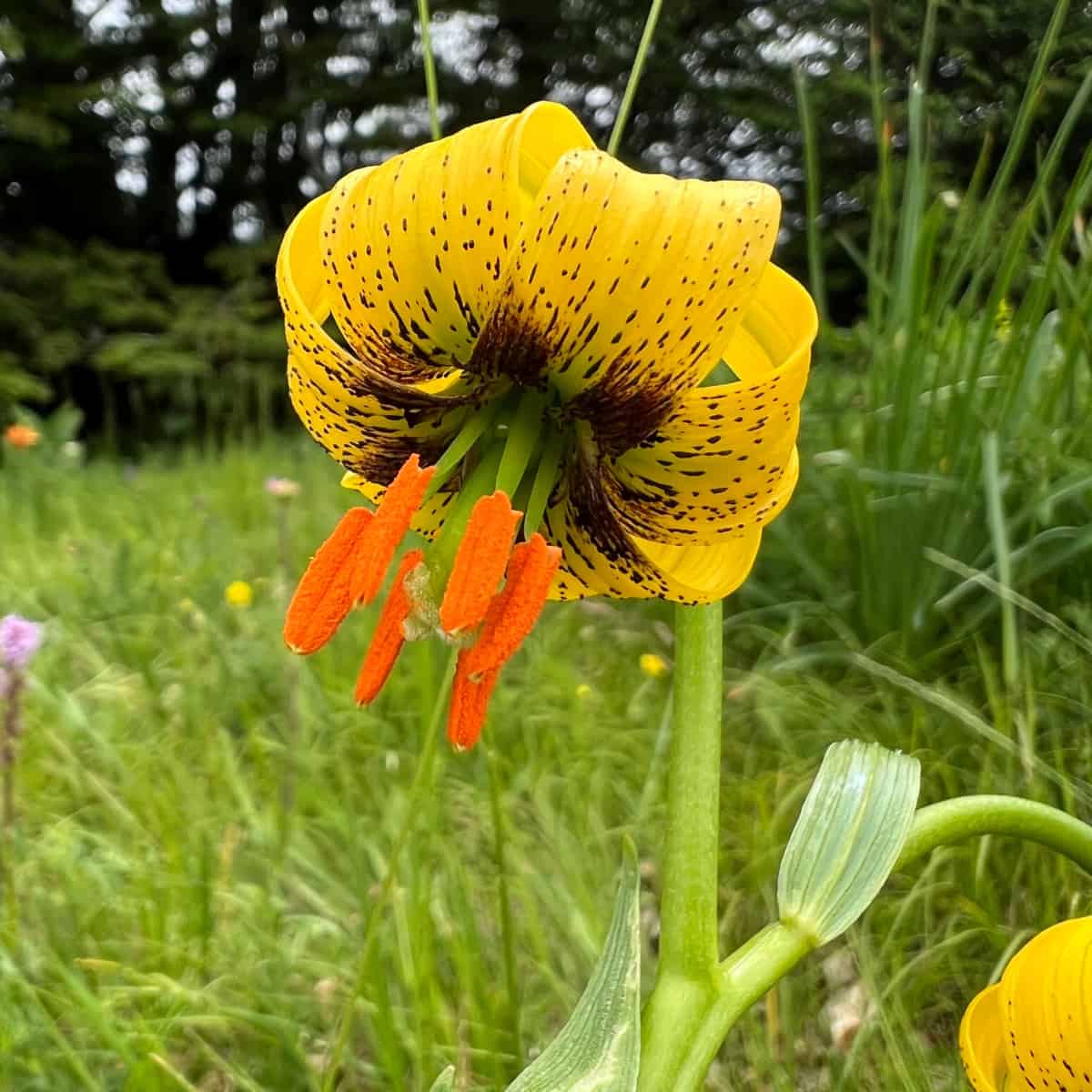
Cover image: Lilium bosniacum by Mirko Ubović / iNaturalist CC0