My thoughts are with everyone affected by this week's events. Unfortunately, because the audience is global, that's probably an opening I could use every time. However, this week it seems people are going out of their way to make it a difficult week.
I had an unusual experience yesterday. I found LinkedIn useful. I know people do, but I've never really bonded with the site since its early days when it would ransack your address book to send "Connect with me on LinkedIn" emails. Every so often I think I should make more of an effort, so I'll try again. This time I've signed up to follow the new in silico Plants page, along with a lot of botanic gardens.
The time sensitive bugs have been tracked down this week. There are more, but I can tackle them more slowly. That means I can start working on new things this week, which should be fun. There are a few papers where I'd like to contact the authors for comment.
Another thing I'm hoping to do is take next weekend off. February has been a month of 7 day weeks, which isn't sustainable. Ideally, I'll be tracking stories through the week, so that there'll be another email of the papers and the news stories you’re sharing on Mastodon and Bluesky loaded up Friday evening ready to send Monday. Until next time, take care.
Sur le Salon International de l’Agriculture, Laurent Buisson, directeur général d’AgroParisTech et Philippe Mauguin, président-directeur général d’INRAE ont signé le renouvellement d’une convention-cadre avec la volonté commune de structurer et d’amplifier leur coopération scientifique, pédagogique et partenariale. Les deux établissements consolident ainsi une alliance historique dans des domaines stratégiques tels que la sécurité alimentaire, la transition agroécologique, la gestion durable des ressources et l’innovation au service des territoires. AgroParisTech and INRAE strengthen their partnership in the service of agricultural, food and environmental transitions.
Newly identified autophagy receptor in liverworts found to recycle membraneless organelles – and to send Parkinson’s linked alpha-synuclein for degradation in human neurons. This was discovered by plant researchers at the OeAW in a new study.
Join botanist Richard Bate for a captivating journey into the world of Ireland’s wild orchids. In 2024, Richard made headlines with his rediscovery of the Ghost Orchid (Epipogium aphyllum) at a secret site in England.
For the second time we will be offering Black undergraduate students from universities across the UK the opportunity to undertake a research experience placement at a UK university or research institution of their choice.
Miltos was born in the UK and studied biology in Athens, Greece before obtaining his DPhil from the University of Oxford. He conducted postdoctoral research at Oxford holding a number of research fellowships and spent some of that time on research visits to Berkeley. He then started his lab in Oxford, where he became Professor. Since 2013, he has been a Director at the Max Planck Institute for Plant Breeding Research in Cologne.
With the Biodiversity Heritage Library now officially operating in its new chapter following its transition away from the Smithsonian Institution, we are delighted to announce that the Field Museum of Natural History, one of BHL’s longest-standing and most respected partners, will host BHL’s servers and core technical infrastructure.
“Plant roots release a wide array of metabolites into the rhizosphere, shaping microbial communities and their functions. While metagenomics has expanded our understanding of these communities, little is known about the physiology of their members in host environments. Transcriptome analysis via RNA sequencing is a common approach to learning more, but its use has been challenging because of low bacterial biomass and interference from plant RNA. To overcome this, we developed a randomly-barcoded promoter-library insertion sequencing (RB-PI-seq) combined with chassis-independent recombinase-assisted genome engineering (CRAGE).”
Stuart A. West, Anna E. Dewar, Ryosuke Iritani, Laurence. J. Belcher, Ashleigh S. Griffin
“Studies of birds, insects, and bacteria suggest that cooperation has major consequences for fundamental features of life, such as ecological niche range, genetic variation within species, and rates of species diversification. However, the role of cooperation in driving these changes is largely limited to hypotheses, as we lack both data and a general theoretical framework. We synthesize the progress that has been made and highlight the major gaps in our understanding for future study.”
Alibek Abdrakhmanov, Elizabeth Ethier, Aleksandra S. Anisimova, Nenad Grujic, Ranjith K. Papareddy, Marion Clavel et al.
“Processing bodies (P-bodies) are conserved ribonucleoprotein granules central to RNA metabolism across eukaryotes. Although the mechanisms underlying their assembly are well understood, the pathways governing their selective turnover remain unclear. Here, we identify the conserved decapping proteins Enhancer of mRNA decapping 4 (EDC4) and decapping protein 1 (DCP1) as a selective autophagy receptor pair responsible for P-body turnover in the model plant Marchantia polymorpha.”
“Convenient and economical genotyping methods and simplified bioinformatic workflows are critical for genetic studies and breeding. The declining cost of sequencing library construction, sample multiplexing, and the advent of skim sequencing has reduced costs and enabled large-scale genetic and genomic experiments. Here, we present a simple skim sequencing and bioinformatics pipeline sufficient for various genotyping applications.”
“In ecology, causal questions are ubiquitous, yet the literature describing systematic approaches to answering these questions is vast and fragmented across different traditions (e.g., randomization, structural equation modeling, convergent cross mapping). In our Perspective, we connect the causal assumptions, tasks, frameworks, and methods across these traditions, thereby providing a synthesis of the concepts and methodological advances for detecting and quantifying causal relationships in ecological systems.”
“Scholarly journals rely on peer review to identify the science most worthy of publication. Yet finding willing and qualified reviewers to evaluate manuscripts has become an increasingly challenging task, possibly even threatening the long-term viability of peer review as an institution. What can or should be done to salvage it? Here, we develop mathematical models to reveal the intricate interactions among incentives faced by authors, reviewers, and readers in their endeavors to identify the best science.”
“Hypoxia significantly impacts plant metabolism and growth by disrupting mitochondrial respiration, and oxygen sensing plays a vital role in regulating responses to low-oxygen conditions. Plants sense oxygen through the N-degron pathway, involving Plant Cysteine Oxidases (PCOs) that oxidize the Ethylene Response Factors belonging to group VII (ERF-VII), leading to their degradation under normoxia. Under hypoxic conditions, PCO activity decreases, stabilizing ERF-VII proteins and activating the transcription of Hypoxia-Responsive Genes (HRGs) to adapt to oxygen limitation. Recent research highlights additional factors, including the MBR1/MED25 complex, ERF-VII phosphorylation, and the integration of energy and oxygen signals via the Target of Rapamicin (TOR) pathway, which fine-tune the hypoxic response. Upon reoxygenation, PCOs restore activity and degrade ERF-VII, but this degradation is delayed, possibly due to reactive oxygen species (ROS) inhibiting PCO function.”
“Here, using the liverwort Marchantia polymorpha as a model bryophyte, we investigate phosphate uptake and transport. We show that rhizoids exhibit strong expression of multiple phosphate transporter genes and actively absorb phosphate.”
“The traditional publication process delays dissemination of new research, often by months, sometimes by years. Preprint servers decouple dissemination of research papers from their evaluation and certification by journals, allowing researchers to share work immediately, receive feedback from a much larger audience, and provide evidence of productivity long before formal publication. Launched in 2013 as a non-profit community service, the bioRxiv server has brought preprint practice to the life sciences and recently posted its 64,000th manuscript.”
Grace A. Johnston, Hannah M. Berry, Mikiko Kojima, Hitoshi Sakakibara, Cristiana T. Argueso
“Here, we show that constitutive activation of immunity suppresses cytokinin signaling and that complementation of the levels of cytokinin in Arabidopsis autoimmunity mutants reduces the growth tradeoff due to defense activation by changes in meristematic activity, resulting in increased yield and resistance to pathogens of both the biotrophic and necrotrophic lifestyles.”
“Root system architecture affects water and mineral uptake and is important for plant adaptation to fluctuating nutrient availability. Small signaling peptides and their receptors influence root traits associated with macronutrient uptake. In this study, genome-wide association analyses were performed using 2D images of agar plate-grown Medicago truncatula accessions to understand the impact of GOLVEN10 peptide (GLV10) treatment on three root traits: root tortuosity, lateral root (LR) branch angle, and the gravity setpoint angle (GSA). Upon GLV10 treatment, roots of wild-type M. truncatula Jemalong A17 and R108 accessions showed increased primary root coiling (or tortuosity), increased LR branch angle, and reduced GSA. We identified 88 significant single nucleotide polymorphisms (SNPs) associated with these traits in GLV10-treated plants, distinct from the 163 SNPs in untreated plants.”
The Kamoun Lab at The Sainsbury Laboratory (TSL) is seeking a highly motivated postdoctoral researcher or research assistant to join our team. This position focuses on the biology of plant immune receptors and the application of this knowledge to crop disease resistance, with particular emphasis on nucleotide-binding leucine-rich repeat (NLR) proteins and their interactions with pathogen virulence effectors.
We seek to strengthen the Department’s research portfolio and teaching activities in the broader area of plant molecular biology and genetics. All research directions within the theme of Plant Molecular Biology are welcome.
We are looking for a motivated postdoc candidate with a background in chemistry, biochemistry, molecular biology, or biotechnology, who is eager to uncover complex biosynthetic pathways and transport processes of plant-derived bioactive alkaloids, particularly those functioning as stimulants or pharmaceutical agents. Relevant experience includes natural product synthesis, elucidation of metabolic pathways, and/or discovery & characterization of transporters.
This postdoctoral position will be supervised by Aline Muyle and hosted at the Institute of Evolutionary Sciences of Montpellier (ISEM), within the CHANGE department and the Plant Reproductive Strategies (SRP) team. Our team focuses on the evolution of plant reproductive systems, using diverse approaches including theory, experimentation, bioinformatics, and statistics.
Join us at the newly established Institute for Crop Biology led by Korbinian Schneeberger at Heinrich Heine University (HHU) Düsseldorf! We're looking for a talented postdoc to develop cutting-edge computational tools for analyzing high-throughput sequencing data, mentor the next generation of scientists, and contribute to world-leading plant genomics research.
The Breeding Technology Team for Maize & Oilseed Crops is seeking a passionate and forward‑thinking Advanced Scientist in Quantitative Genetics and Biostatistics (m/f/d) for Trait Discovery to join us on a full‑time, permanent basis.
In this key role, you will help drive innovation in trait discovery and genetic analysis for some of the world’s most important crops. Working closely with breeders, biostatisticians, trait genetics specialists, marker development teams, and molecular genomics experts, you will develop novel analytical concepts and prototype advanced statistical approaches that support data‑driven breeding decisions.
The successful candidate will work within the framework of the SNSF‑funded project “The response to high plant density in a warmer climate: function and regulation of Phytochrome Interacting Factors.” The project will combine genome‑wide transcriptional analyses at high spatial resolution, molecular genetics, plant photobiology, biochemistry and cell biology. The candidate will work as part of a collaborative research team to address the overarching scientific questions. The successful candidate will also have the opportunity to gain teaching and mentoring experience by contributing to undergraduate and graduate courses and by supervising student research projects.
The Department of Biological Sciences at the University of Toronto Scarborough (UTSC) invites applications for a full-time teaching stream position in Molecular and Cell Biology. The appointment will be at the rank of Assistant Professor, Teaching Stream with an anticipated start date of July 1, 2026.



 Roxana Khoshravesh
 Olivia Walk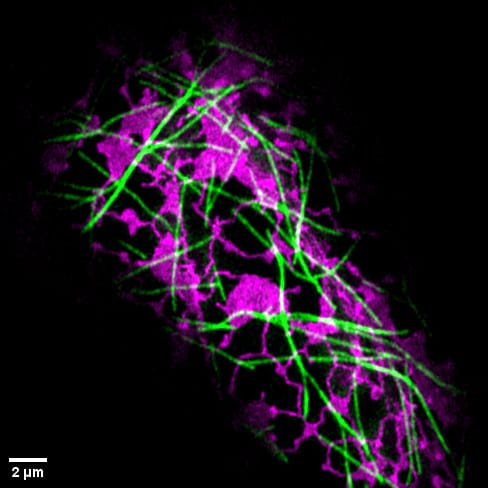
 The 19th
 BSBI
BSBI Black in Plant Science
 Nature
 RNZ
RNZ Biodiversity Heritage Library
 The Sainsbury Laboratory
 Aarhus University
 Universite de Montpellier
 Heinrich Heine University
 Université de Lausanne
 University of Toronto