


For a decade, scientists have believed that plants sensed temperature mainly through specialised proteins, and mainly at night when the air is cool. New research by Fan and colleagues suggest that during the day, another signal takes over. Sugar, produced in sunlight, helps plants detect heat and decide when to grow.
This study, led by Meng Chen, a University of California, Riverside professor of cell biology, shows that plants rely on multiple heat-sensing systems, and that sugar plays a central and previously unrecognised role in daytime temperature response. The findings, published in Nature Communications, reshape a long-standing view of how plants interact with their environment and could influence future strategies for climate-resilient agriculture.
“Our textbooks say that proteins like phytochrome B and early flowering 3 (ELF3) are the main thermosensors in plants,” Chen said. “But those models are based on nighttime data. We wanted to know what’s happening during the day, when light and temperature are both high because these are the conditions most plants actually experience.”
Knowing how hot it is is crucial for plants, as it helps them adapt to stress when things get warmer. A few years ago we covered a paper about an enzyme, HDA9, that helps plants cope with heat, but one of the unanswered questions was what thermosensor triggered HDA9. The authors of that paper, van der Woude and colleagues, were unclear on whether HDA9 was a thermosensor itself, or if it relied on another sensor they hadn’t examined.
Chen’s group dug into this puzzle by examining how Arabidopsis thaliana, a small flowering plant favoured in genetics labs, reacted to temperature. They exposed seedlings to a range of temperatures, from 12 to 27 degrees Celsius, under different light conditions, and tracked the elongation of their seedling stems, known as hypocotyls — a classic indicator of growth response to warmth.
Previous work by Li et al has shown that phytochrome B works through thermal reversion. Increasing heat switches phytochrome B from an active to inactive form, with cooler temperatures switching it back. Yet there’s a problem with using phytochrome B to sense heat.
The new research published by Chen’s group found that phytochrome B, a light-sensing protein, could only detect heat under low light. In bright conditions that mimic midday sunlight, its temperature-sensing function was effectively shut off, just when the plants are most likely to need it. Yet, the plants still responded to heat, growing taller even when the thermosensing role of phytochrome B was greatly diminished. That, Chen said, pointed to the presence of other sensors.
One clue came from studies of a phytochrome B mutant lacking its thermosensing function. These mutant plants could respond to warmth only when grown in the light. When grown in the dark, without photosynthesis, they lacked chloroplasts and did not grow taller in response to warmth. But when researchers supplemented the growing medium with sugar, the temperature response returned.
“That’s when we realized sugar wasn’t just fueling growth,” Chen said. “It was acting like a signal, telling the plant that it’s warm.”
Chen is not the first to conclude that sugar must be a signalling mechanism. Back in 2013, a review pointed the way to examining sucrose signalling, though I’m not sure who to credit, because Tognetti is first author on the PubMed version, while the journal version just credits Horacio & Martinez-Noel. More recently Asim et al concluded that sugar was involved in deciding when a plant loses leaves.
Chen’s group are now finding that sugar is part of a multi-sensor system for reacting to temperature. Further experiments showed that higher temperatures triggered the breakdown of starch stored in leaves, releasing sucrose. This sugar in turn stabilised a protein known as PIF4, a master regulator of growth. Without sucrose, PIF4 degraded quickly. With it, the protein accumulated but only became active when another sensor, ELF3, also responded to the heat by stepping aside.
“PIF4 needs two things,” Chen explained. “Sugar to stick around, and freedom from repression. Temperature helps provide both.”
The findings could have practical implications. As climate change drives temperature extremes, understanding how and when plants sense heat could help scientists breed crops that grow more predictably and more resiliently under stress.
“This changes how we think about thermosensing in plants,” Chen said. “It’s not just about proteins flipping on or off. It’s about energy, light, sugar, as well.”
READ THE ARTICLE
Fan, D., Hu, W., Xu, N., Seto, E.R., Lagarias, J.C., Chen, X. and Chen, M. (2025) “A multisensor high-temperature signaling framework for triggering daytime thermomorphogenesis in Arabidopsis,” Nature Communications, 16(1), p. 5197. Available at: https://doi.org/10.1038/s41467-025-60498-7.
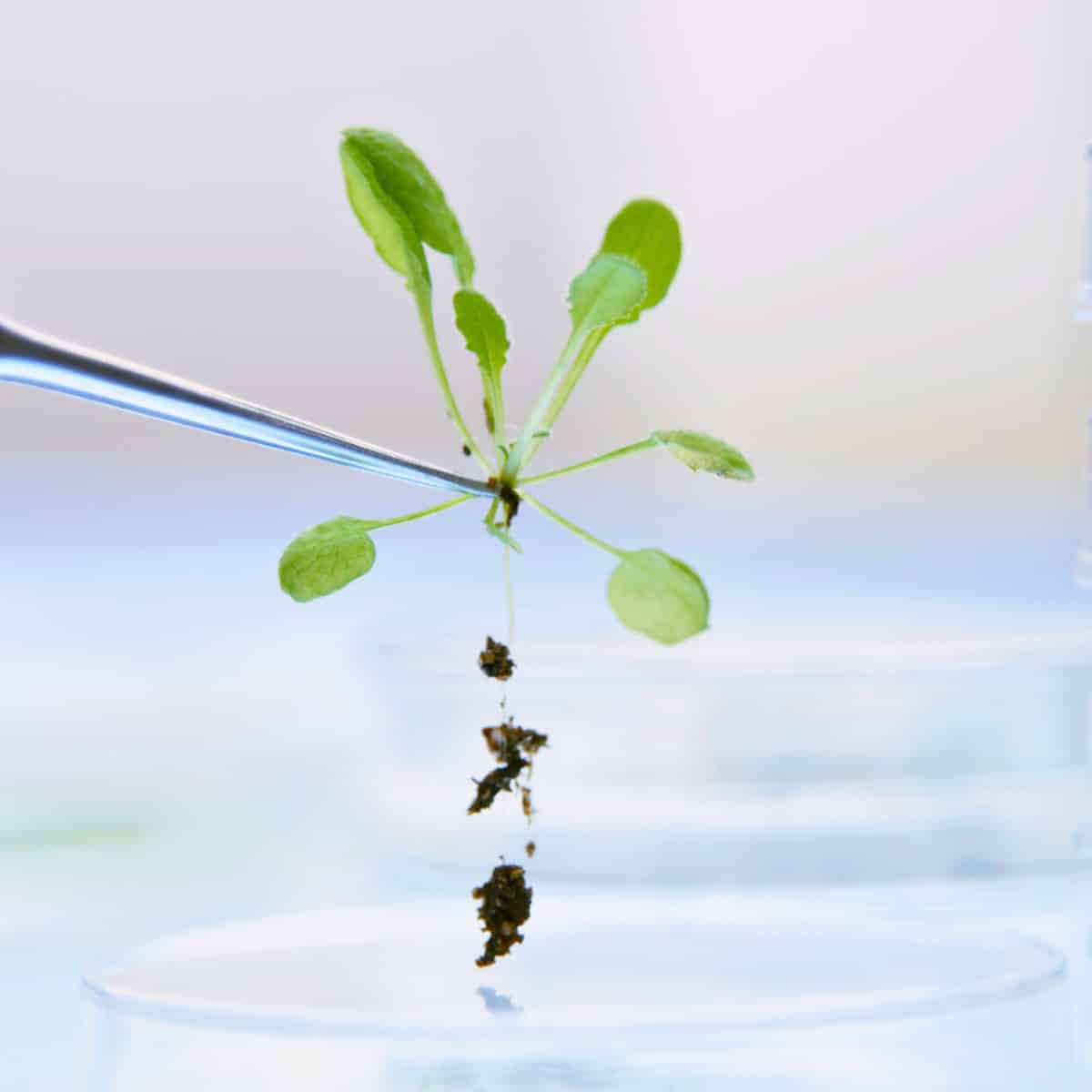
Cover image: Arabidopsis in tweezers. Photo: Kristopher Grunert / Corbis / VCG / Getty / Canva.