


For a long time, scientists thought nectar was just a sweet liquid made to feed pollinators — basically, a flower juice. Sweet? Yes. Simple? Not at all.
Recent research has revealed that nectar is more complex than we imagined: it can be colourful, flavourful, and filled with chemical signals that influence how animals behave. So, nectar is not just a snack but a smart strategy that helps plants attract the right visitors, protect themselves from microbes, and even communicate with tiny allies we cannot see.
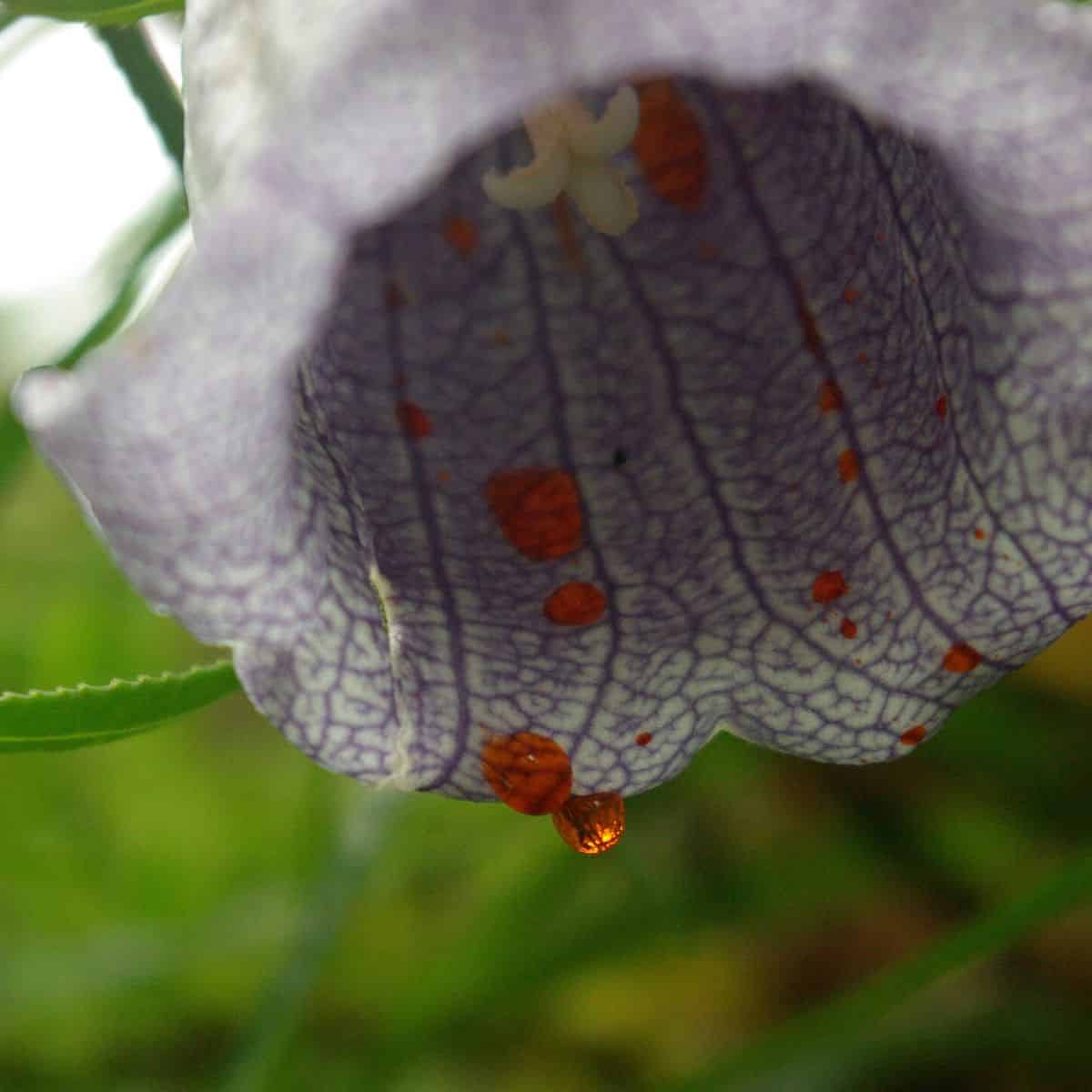
One of the most exciting discoveries in this topic is that there are more than 70 plant species around the world that produce coloured nectar. Yes, you read that right, nectar with vibrant colours. These colours not only grab attention, but they also contain substances called nectar specialised metabolites (NSMs) that serve as signals to attract pollinators, as antibiotics to fight germs, or even as repellents to keep away unwanted visitors, making them a unique tool for flowers.
Despite the growing knowledge on coloured nectar, there are a lot of questions that remain open. What exactly are these colourful nectars trying to communicate? How do the NSMs work together? Why did this trait evolve in the first place? These questions matter. Learning more about how nectar works could help us protect rare plant species, support pollinators, and even improve crop pollination in the future.
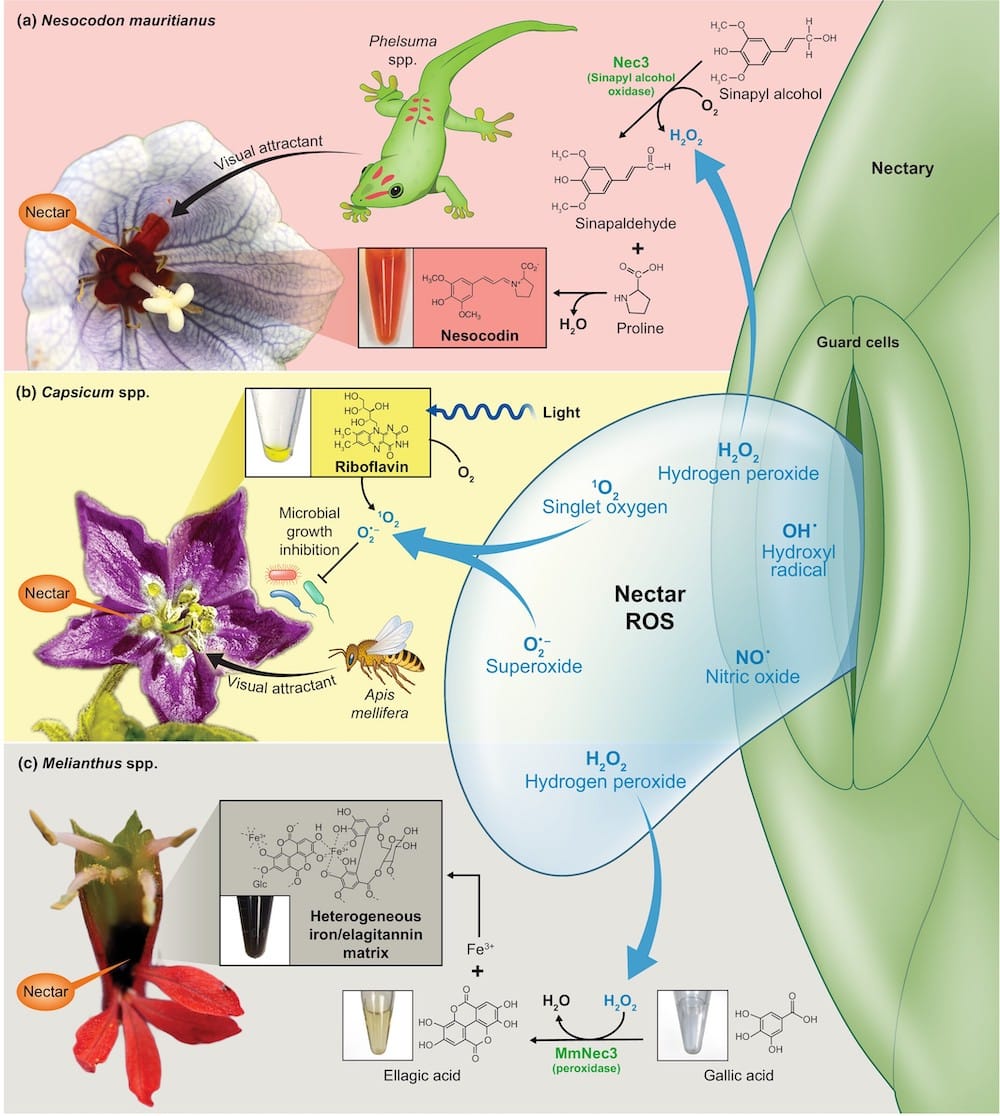
With this in mind, Evin T. Magner and his team reviewed how nectar pigments and NSMs influence pollinator behaviour, prevent microbial growth, and affect plant processes. They focused on how reactive oxygen species (ROS), unstable molecules that include oxygen in their structure and easily react with other substances, help produce, stabilise, and activate colourful nectar, and what that means for plant-pollinator interactions.
They showed that the specialised compounds in nectar affect how pollinators behave. First, these compounds can give nectar visible colours—red, yellow, brown, and even black. Therefore, coloured nectar can act as signals to attract the “right” pollinators or to deter less effective ones, improving pollination efficiency. Some pigments, such as riboflavin, might also act as nutrients or natural preservatives, keeping nectar fresh by fighting off microbes that could deter nectar quality.
When it comes to reactive oxygen species (ROS), the study shows that plants naturally produce them while making nectar, and in moderate amounts, they help keep it free of microorganisms. However, too much ROS can damage both nectar and its pigments. So, plants have found clever ways to balance things by making antioxidants or using pigments that help control ROS levels. In some cases, pigments are even created through chemical reactions involving ROS.
This journey into the chemistry of nectar isn’t just about curious colours or exotic flowers; it has real-world importance. With the ongoing and global decline in pollinator populations, understanding how nectar works could help us protect and even boost crop pollination, as the sweet liquid that lures bees and other pollinators may hold secrets to improving agricultural yields, maintaining biodiversity, and adapting to climate change. Coloured nectars, with their unique pigments and reactive molecules, show us that nature uses chemistry not only to attract but also to defend and communicate.
This research reminds us that even the smallest details, like a drop of nectar, a flicker of colour, can play a vital role in ecosystems. It is a field still full of mystery and discovery. As the authors note, the science of nectar is just beginning to unfold. With every answer, new questions emerge—pushing us further into the vibrant and complex world of plant chemistry.
READ THE ARTICLE:
Magner, E. T., Roy, R., Hegeman, A. D., & Carter, C. J. (2025). In the nectar, there are answers: exploring the intersection of colored nectars and reactive oxygen species in manipulating pollinator behavior. New Phytologist, 246(3), 901-910. https://doi.org/10.1111/nph.70031

Victor H. D. Silva
Victor H. D. Silva is a biologist passionate about the processes that shape interactions between plants and pollinators. He is currently focused on understanding how urbanisation influences plant-pollinator interactions and how to make urban green areas more pollinator-friendly. For more information, follow him on ResearchGate as Victor H. D. Silva.
Cover picture: Nescodon mauritianus, a flower with red-coloured nectar. Photo by El Funcionario (Wikimedia Commons).