

Müller and colleagues studied how different wildflower seed mixes affect flower abundance and blooming seasons. They found that mixing more flower species with fewer grass seeds produces the best results for pollinators. This research could help create better habitats for bees and butterflies.
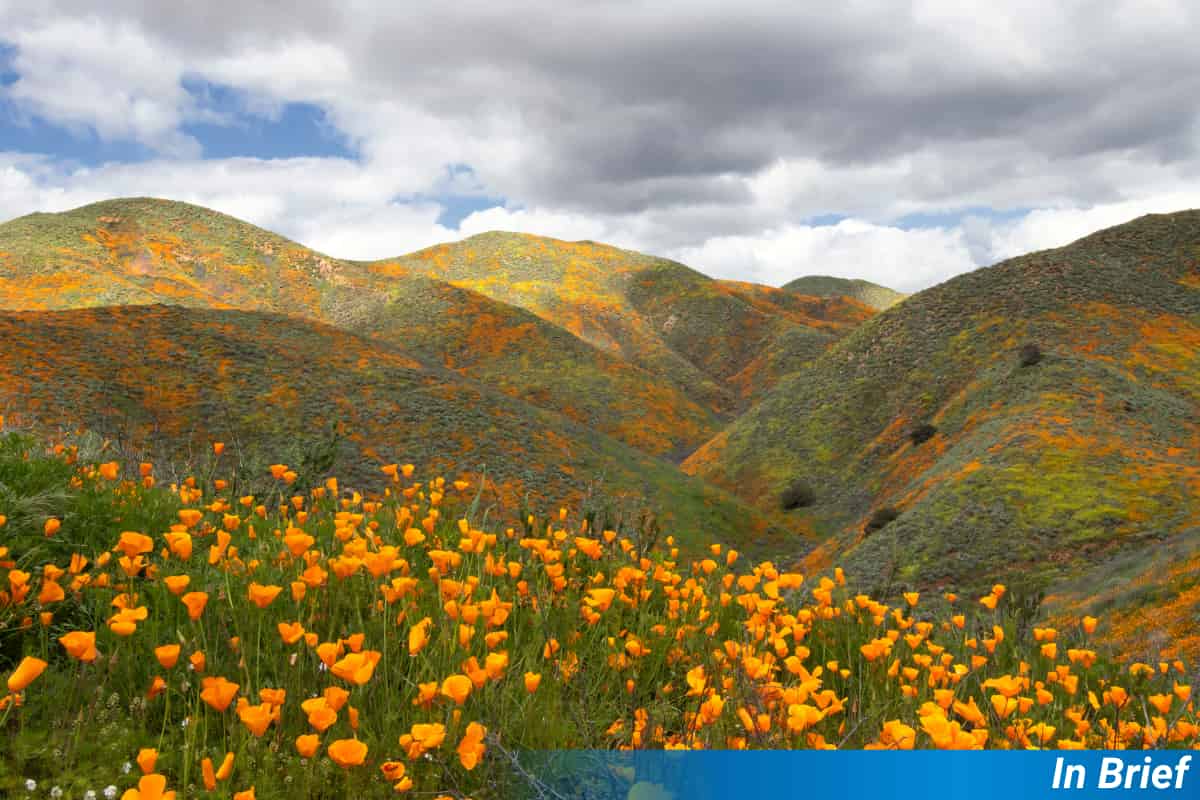
Researchers planted different seed mixes in California and Minnesota, varying the number of seeds, types of flowers, and amount of grass. They counted flowers and measured blooming times over three years to see which mixes performed best.
The most important finding was that adding grass to seed mixes reduced flower abundance and blooming time. Surprisingly, using more seeds didn’t always lead to more flowers. Instead, including various flower species in the mix was vital in having flowers throughout the season.
Previous studies showed that wildflower plantings help pollinators, but designing the best seed mixes wasn’t straightforward. This research builds on that knowledge by showing how to create mixes that provide more flowers for longer periods.
Rising costs and limited availability of wildflower seeds make it a challenge to purchase and plant mixes with high diversity and seeding density. Our results demonstrate that substituting some forb seeds with cheaper grass seeds hinders the goal of floral abundance and continuity, and therefore is not recommended for most pollinator seed mixes.
Müller, U., Bruninga-Socolar, B., Brokaw, J., Schreiber, J., Cariveau, D.P. and Williams, N.M., 2024. Successful pollinator seed mixes include low grass density and high forb richness across a range of total seeding densities. Restoration Ecology. e14262. https://doi.org/10.1111/rec.14262